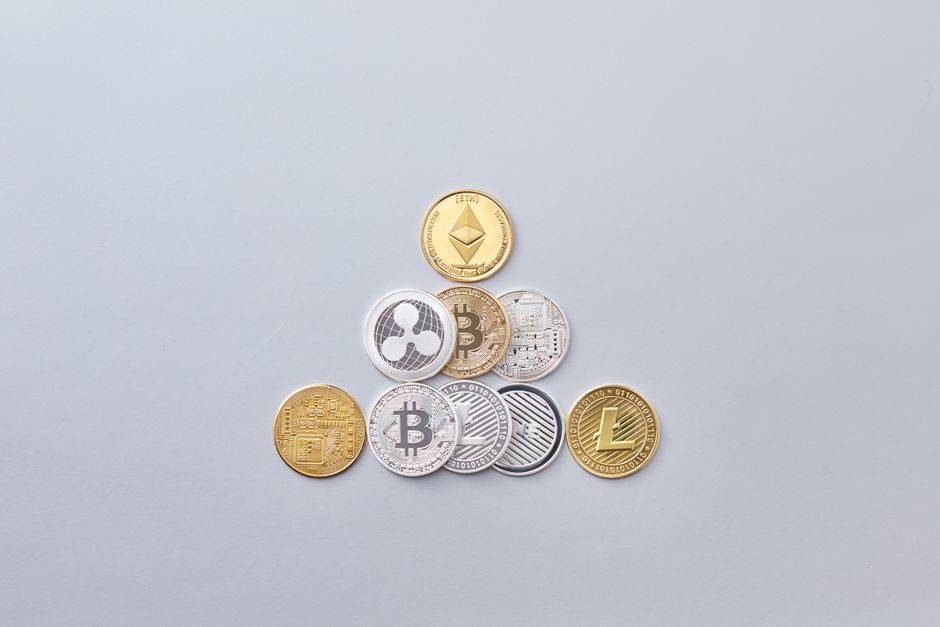
{## The Bottom Line Up Front: What You Need to Know Before Researching Altcoins in 2026
If you’re searching for the **best altcoins to research before buying in 2026**, here’s the honest starting point: the opportunity is real, the risks are significant, and the gap between informed and uninformed investors has never been wider. Altcoins — any cryptocurrency other than Bitcoin — now number in the tens of thousands, and the vast majority will never deliver meaningful returns. Understanding how to filter signal from noise is the entire game.
This guide is built for US investors who want an analytical, research-first framework — not hype. You’ll find no price predictions here, no guaranteed winners, and no shortcuts. What you will find is a structured approach to evaluation, risk management, and the practical US-specific considerations that most crypto content skips entirely.
—
Understanding Altcoins: Definition, Role, and Core Risks
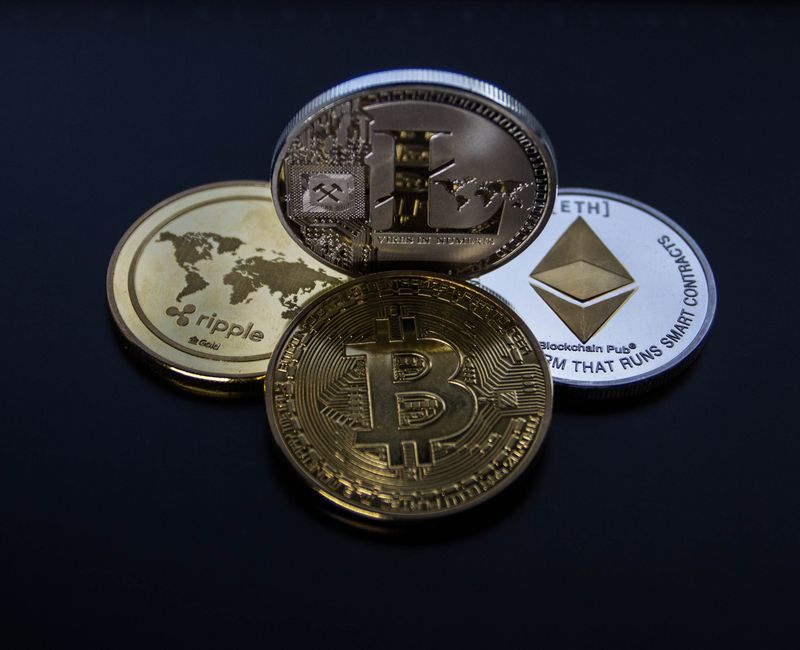
**Altcoins** (short for “alternative coins”) are any cryptocurrency that is not Bitcoin (BTC). The category spans an enormous range — from Ethereum (ETH), the second-largest crypto by market capitalization (commonly shortened to “market cap”), to micro-cap experimental tokens with negligible trading volume. Each operates on its own blockchain or as a token built on top of an existing network.
Bitcoin was designed as a decentralized store of value and payment system. Altcoins were built to extend blockchain technology into other use cases: smart contracts, decentralized finance (DeFi), gaming, identity verification, supply chain management, and more. That diversity of purpose is what makes altcoins both compelling and genuinely difficult to evaluate.
The core risks are structural. Altcoins are:
- **Far more volatile** than Bitcoin, which is itself highly volatile compared to traditional asset classes
- **More susceptible to liquidity risk** — meaning it can be difficult to exit a position quickly without moving the price against yourself
- **Exposed to project failure** — many development teams abandon projects, and some are outright fraudulent
- **Regulatory targets** — US regulators, including the SEC (Securities and Exchange Commission), have pursued enforcement actions against multiple altcoin issuers and exchanges
Understanding these risks before researching specific coins isn’t optional — it’s the foundation of responsible altcoin investing. Anyone skipping this step is working without a floor.
—
Top Altcoin Categories to Watch Heading Into 2026
Rather than naming specific coins as recommended purchases — which would be irresponsible without knowing your individual financial situation — the more durable approach is understanding which **categories** are drawing serious developer activity and institutional attention as 2026 approaches. For a broader view of how these categories are performing in real time, the altcoin market analysis section tracks ongoing developments across all major segments.
**Layer 1 blockchains** (base-layer networks that process and validate transactions independently) remain the most-researched category. Ethereum continues to dominate this space, but competing Layer 1s have built real user bases and are processing meaningful transaction volume.
**Layer 2 scaling solutions** (protocols built on top of Layer 1 networks to improve transaction speed and reduce fees) have seen significant growth. Networks that reduce Ethereum’s transaction costs while preserving its underlying security model are attracting developer migration at a measurable pace.
**DeFi (Decentralized Finance) protocols** enable users to lend, borrow, and trade without a centralized intermediary like a bank or brokerage. **TVL (Total Value Locked)** — the aggregate value of assets deposited across DeFi protocols — is the most commonly tracked metric for gauging health in this category.
**RWA (Real World Asset) tokenization** is one of the fastest-growing narratives in institutional crypto, with major financial institutions actively exploring blockchain-based representations of bonds, real estate, and commodities.
When filtering within any of these categories:
- Always check a project’s **market cap rank** on a reputable data aggregator before researching further
- Prioritize coins with **active GitHub repositories** that show consistent public development activity
- Look for **smart contract audits** from recognized, independent security firms
- Cross-reference on-chain metrics including **daily active addresses** and **transaction volume** to validate usage claims
—
Evaluating Altcoin Fundamentals Before You Buy

Fundamental analysis in crypto means assessing whether a project has genuine utility, a credible team, and a sustainable economic model — before price movement becomes the story. This is where most retail investors skip steps, and where more informed investors find their edge.
**Technology**: Does the project solve a real, documented problem? Is the codebase open-source and actively maintained? Has it been independently audited for security vulnerabilities? A project without a working product or publicly accessible code is a red flag at any market cap level.
**Tokenomics** (the economic structure governing a token’s supply, distribution, and incentive design) deserves careful attention. Key questions: What is the **total supply** versus **circulating supply**? Are large percentages of tokens held by insiders with short or nonexistent vesting periods? Is there a clear mechanism for value accrual — meaning does using the network actually require or reduce the supply of the token over time?
**Team and governance**: Anonymous teams are not automatically disqualifying — some credible projects operate pseudonymously — but verifiable credentials and a track record of delivery carry real weight. Check whether the project has a functioning governance structure where token holders can meaningfully participate in protocol decisions.
| Fundamental Factor | What to Look For | Red Flag |
|---|---|---|
| Technology | Working product, open-source code | No GitHub activity, no independent audit |
| Tokenomics | Reasonable supply schedule, clear utility | Heavy insider allocation, no vesting lock-up |
| Team | Verifiable credentials or delivery history | Anonymous with no documented track record |
| Community | Active, substantive discussion | Bot-heavy, purely price-focused |
| Partnerships | Named, verifiable integrations | Vague “strategic partnership” language |
| Revenue/Usage | On-chain activity, protocol fee generation | Zero real users or sustained volume |
—
Technical Analysis for Altcoin Research: Uses and Limits
**Technical analysis (TA)** is the practice of using historical price and volume data to identify patterns and assess potential price behavior. It is widely applied in crypto markets — in part because blockchain data is publicly accessible and these markets trade continuously, 24 hours a day, seven days a week.
Common TA tools applied to altcoin research include **moving averages** (which smooth price data to identify trend direction over a chosen period), the **RSI (Relative Strength Index)** (a momentum indicator that signals potentially overbought or oversold conditions on a 0–100 scale), and **volume analysis** (which helps confirm whether a price move is supported by genuine market participation or thin order flow).
The critical limitation is straightforward: TA reflects past behavior and does not predict future outcomes. In altcoin markets specifically, price action is routinely driven by factors that no chart pattern can capture:
- Sudden regulatory announcements from the SEC, CFTC, or international bodies
- Exchange delistings or security breaches
- Whale wallet movements (large holders executing outsized trades that move thin order books)
- Broad narrative shifts within the crypto market cycle
TA is most useful as a **timing and risk management tool** — helping define entry and exit levels relative to recent price structure — rather than as a standalone research method. Combining it with fundamental analysis produces a more complete and defensible picture.
—
Risk Management in Altcoin Investing: A Practical Framework
Risk management isn’t optional in altcoin markets — it’s the discipline that separates investors who survive multiple market cycles from those who don’t. The volatility in this asset class is not comparable to equities or fixed income, and position sizing must reflect that reality directly.
**Diversification within crypto** means spreading exposure across different altcoin categories and risk tiers rather than concentrating in one token or narrative. That said, during broad market downturns, most altcoins decline simultaneously — this is called **correlation risk**, and it’s a well-documented, repeating pattern in crypto market cycles. Diversification reduces single-project exposure but does not eliminate systemic drawdown risk.
**Position sizing** refers to how much of your total portfolio you allocate to any single asset. A common framework among experienced crypto investors is to treat the entire crypto allocation as a distinct risk bucket, and within that, to size individual altcoin positions according to conviction level, liquidity, and market cap tier.
Common mistakes that meaningfully increase risk:
- **Buying on hype** without completing fundamental research
- **Ignoring liquidity** — low-volume altcoins can be extremely difficult to exit at a fair price under real selling pressure
- **Overconcentration** in a single narrative, ecosystem, or market cap tier
- **FOMO-driven entries** (Fear Of Missing Out) at or near market cycle peaks
- **Neglecting custody** — holding large balances on centralized exchanges rather than in self-custody wallets introduces counterparty risk that the events of 2022–2023 made concrete
—
Staying Informed on Altcoin Market Trends
The information environment in crypto is noisy, fast-moving, and saturated with incentive-driven content. Building a reliable research stack is a genuine competitive advantage. For US investors specifically, prioritizing sources that cover regulatory developments alongside market data is essential — not optional. Tracking the latest altcoin news and trends from sources that cite verifiable data is a practical starting point for building that stack.
High-quality information sources tend to share recognizable characteristics: they cite on-chain data, they acknowledge uncertainty, they disclose conflicts of interest, and they do not primarily serve as promotional vehicles for specific tokens. Blockchain analytics platforms — those that provide wallet activity, exchange inflow and outflow data, and protocol revenue figures — offer a layer of verification that market commentary alone cannot.
For building a practical research stack:
- **On-chain analytics platforms** track wallet behavior, exchange flows, and protocol usage in real time
- **Crypto-focused research publications** provide longer-form analysis of market cycles and project-level developments
- **Developer activity trackers** measure GitHub commits and pull requests as a proxy for ongoing project health
- **Regulatory news aggregators** covering SEC, CFTC, and FinCEN developments are critical for US compliance awareness
Treat Twitter/X threads, YouTube content, and Telegram groups that emphasize price targets without underlying data with significant skepticism. The strongest research integrates multiple data types — on-chain metrics, fundamental project data, and macroeconomic context — before drawing any conclusions.
—
Practical Considerations for US Investors in 2026
The US regulatory environment for altcoins remains one of the most consequential variables for domestic investors — and one of the least predictable heading into 2026. The **SEC** has taken the position that many altcoins qualify as securities under the **Howey Test** (a legal framework for determining whether an asset constitutes an investment contract). This stance has produced enforcement actions against multiple exchanges and token issuers, with ongoing litigation still unresolved in several cases.
The **CFTC (Commodity Futures Trading Commission)** holds jurisdiction over crypto derivatives and has classified certain altcoins as commodities. Pending legislation in Congress may eventually clarify which agency has primary jurisdiction over spot crypto markets — a question with direct implications for which exchanges can operate legally and which tokens remain accessible to US-based users.
**Tax treatment** is non-negotiable to understand before you trade. The IRS classifies cryptocurrency as property, which means:
- Every trade — including altcoin-to-altcoin swaps — constitutes a **taxable event**
- **Short-term capital gains** (assets held under one year) are taxed at ordinary income rates
- **Long-term capital gains** (assets held over one year) qualify for reduced rates under current law
- Staking rewards, airdrops, and other forms of crypto income are reportable and generally taxable in the year received
For exchange selection, US investors should prioritize platforms registered with **FinCEN (Financial Crimes Enforcement Network)** as Money Services Businesses, compliant with **KYC/AML (Know Your Customer / Anti-Money Laundering)** requirements, and maintaining transparent proof-of-reserves practices — a standard the industry largely failed to uphold before the high-profile exchange collapses of 2022 and 2023.
—
Risk Disclaimer
The cryptocurrency market is highly volatile, and investing in altcoins carries significant financial risk, including the potential loss of your entire investment. Past performance is not indicative of future results. Nothing in this article constitutes financial, investment, tax, or legal advice. Always conduct independent research and consult with a qualified financial advisor and tax professional before making any investment decisions. Regulatory status of specific assets may change — verify current compliance requirements in your jurisdiction before trading.
—
Frequently Asked Questions (FAQ)
Q: What are the biggest risks of investing in altcoins in 2026?
A: The primary risks include extreme price volatility, liquidity risk in smaller-cap tokens, project failure or abandonment, and regulatory uncertainty — particularly in the US, where the SEC and CFTC have both maintained active enforcement postures. Fraud and rug pulls (where developers raise funds and then abandon the project) remain persistent threats in the lower market cap tiers. Thorough due diligence on technology, team credentials, tokenomics structure, and regulatory status is essential before committing capital to any altcoin position.
Q: How do I find reliable sources for altcoin research and analysis?
A: Prioritize sources that cite verifiable on-chain data, disclose potential conflicts of interest, and don’t primarily function as promotional vehicles for specific tokens. Blockchain analytics platforms, independently published crypto research, and regulatory filings provide layers of verification that social media commentary cannot replicate. Cross-reference any significant claim across multiple independent sources, and apply heightened skepticism to price-target content from anonymous or financially incentivized accounts.
Q: What’s the single most important factor to evaluate before buying an altcoin?
A: **Tokenomics and real utility** — specifically, whether the token has a credible, documented mechanism for value accrual tied to genuine network usage. A technically impressive project with poor token economics (heavy insider allocation, short or absent vesting periods, no functional utility for the token itself) can still deliver poor outcomes for investors regardless of technology quality. Start with the whitepaper and tokenomics documentation, verify the team’s track record independently, and confirm that on-chain usage metrics actually match the project’s stated narrative before anything else.
Q: Do I need to report altcoin trades to the IRS even if I didn’t convert to US dollars?
A: Yes. The IRS treats every cryptocurrency transaction — including swaps between altcoins — as a taxable event. You are required to report gains and losses whether or not you converted to USD. Staking rewards and airdrops are generally treated as ordinary income in the year they are received. Consult a qualified tax professional familiar with digital assets for guidance specific to your situation.
Q: How should I think about altcoin allocation within a broader investment portfolio?
A: Most risk-aware frameworks treat crypto as a distinct, high-risk allocation bucket separate from equities, fixed income, and other asset classes. Within that bucket, altcoins carry higher risk than Bitcoin due to lower liquidity, less established track records, and greater regulatory uncertainty. There is no universally correct allocation percentage — it depends entirely on your risk tolerance, time horizon, and financial situation. A qualified financial advisor can help you determine an appropriate allocation; this article cannot and does not do that.
Charting & Exchange Resources
| Platform | Use Case | Key Feature | Fee Model | Action |
|---|---|---|---|---|
| TradingView | Charting & technical analysis | Indicators, multi-timeframe charts | Free / Pro tiers | View Platform |
| Coinbase | Exchange (beginner-friendly) | Simple USD on-ramp, educational tools | Varies by region | View Platform |
| Binance | Exchange (advanced pairs) | Wide altcoin coverage, spot markets | Varies by region | View Platform |
Affiliate Disclosure: This post contains affiliate links. We may earn a commission if you buy through our links, at no extra cost to you. Investment Risk Disclaimer: Cryptocurrency and digital asset markets are highly volatile. This content is for informational and educational purposes only and is not financial, investment, or trading advice. You may lose some or all of your capital. Do your own research and consult a licensed financial advisor before making investment decisions.
Leave a Reply