What Is Altcoin Season and Why It Matters
Altcoin season refers to a specific phase in the broader cryptocurrency market when the total value of alternative digital assets rises faster than Bitcoin itself. During these windows, capital that has accumulated in the dominant coins begins rotating into smaller projects, tokens, and emerging blockchain platforms — often with dramatic price swings that can reward early participants or punish late arrivals. Understanding the mechanics behind these cycles is essential for any US-based investor trying to navigate crypto markets responsibly.
The altcoin season index chart is one of the most widely watched tools for identifying when this rotation begins and ends. Rather than guessing which tokens are about to surge, investors can use this chart to gauge the overall market’s appetite for risk and adjust their portfolio positioning accordingly. No chart tells the future with certainty, but reading the signals correctly can help you avoid common mistakes that catch inexperienced traders off guard.
This guide breaks down how to interpret the altcoin season index chart, what current market indicators suggest about the broader crypto cycle, and practical risk management steps that US investors should take before allocating capital to alternative digital assets.
Understanding the Altcoin Season Index Chart
The altcoin season index chart is typically a rolling metric that compares the performance of the top 50 cryptocurrencies — excluding Bitcoin and Ethereum — against the performance of Bitcoin over a 90-day window. When altcoins as a group outperform Bitcoin significantly, the index crosses a threshold that signals “altcoin season is here.” When Bitcoin reasserts dominance, the index drops back below that line.
Reading the chart comes down to three core readings. A reading **above 75** on the index generally means altcoins are outperforming Bitcoin by a wide margin — historically, this coincides with bull market rotations where smaller-cap tokens surge 50% to 300% in short periods. A reading **between 25 and 75** indicates a mixed market where neither Bitcoin dominance nor altcoin performance clearly dominates. A reading **below 25** signals Bitcoin dominance season, where capital concentrates in the largest digital assets and altcoins underperform or stagnate.
Most charting platforms that track this index display it as a line graph overlaid with Bitcoin price action, making it easier to spot divergences. A divergence occurs when Bitcoin price rises but the altcoin index falls — a classic warning sign that altcoin season may be cooling even as the headline market looks bullish.
How to Interpret Bullish vs. Bearish Signals
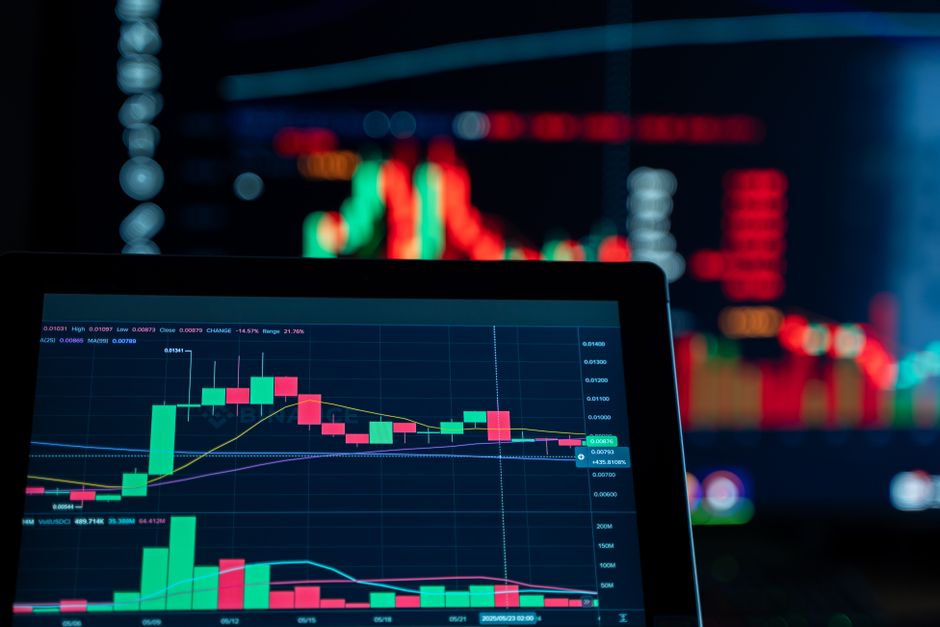
A bullish signal on the altcoin season index typically emerges after Bitcoin has posted significant gains and begins to consolidate. As Bitcoin’s price stabilizes, traders rotate profits into altcoins seeking higher percentage returns — this rotation is what pushes the index upward. During the 2021 market cycle, the altcoin season index spent roughly four months above the 75 threshold, during which time several tokens posted gains exceeding 500%.
Bearish signals, by contrast, often appear when the index begins declining from elevated levels while Bitcoin holds its price. This can trap altcoin investors who entered late, watching the index drop 30 to 40 points over just a few weeks while broader market sentiment still appears optimistic on social media. The discrepancy between what the index shows and what crypto influencers discuss on platforms like X (formerly Twitter) is one of the most consistent traps for US retail investors.
Key divergence patterns to watch for include the index making lower highs while Bitcoin makes higher highs — a technical signal that altcoin momentum is weakening relative to the dominant asset. Conversely, when the index makes higher lows while Bitcoin makes lower lows, it often foreshadows a coming rotation into altcoins before Bitcoin itself recovers.
Current State of the Altcoin Market
As of the most recent market data available, the cryptocurrency market continues to exhibit the characteristic ebb and flow between Bitcoin dominance and altcoin rotation phases. Bitcoin’s maturing status as a regulated asset class in the United States — bolstered by spot exchange-traded fund approvals — has shifted how capital flows through the ecosystem, often dampening the extreme volatility spikes that defined earlier altcoin seasons.
Several factors currently influence altcoin market trends. **Regulatory developments from US agencies** such as the SEC and CFTC have a direct impact on which tokens can be listed on US-regulated exchanges, effectively removing or restricting access to certain altcoins for American investors. Global macroeconomic conditions — including Federal Reserve interest rate policy and inflation data — also shape risk appetite across all digital assets. When traditional markets are volatile, Bitcoin tends to retain its safe-haven narrative while altcoins experience outsized selling pressure.
The rise of institutional participation in crypto has also changed the dynamics of altcoin season. Large market participants often trade in regulated futures markets rather than spot altcoin markets, which can dampen the explosive rallies that individual investors experienced in prior cycles. This does not mean altcoin seasons have disappeared — it means they may look different in terms of duration, magnitude, and which specific tokens lead the move.
Characteristics of High-Potential Altcoins
Not all altcoins behave the same way during a season. Understanding the characteristics that separate promising projects from speculative noise is critical before allocating capital. The most consistently successful altcoins during rotation phases tend to share several identifiable traits.
**Strong utility and real-world use cases** distinguish durable projects from tokens that exist purely for speculation. Chains that power decentralized finance protocols, layer-2 scaling solutions for Ethereum, or interoperability networks connecting different blockchain ecosystems tend to attract sustained developer and investor interest. Tokens tied to governance rights within functioning protocols also tend to hold value better than purely speculative assets.
**Active development activity** measured by GitHub commits, developer headcount, and protocol upgrades is another reliable indicator. An altcoin with a stagnant codebase and no recent updates is a warning sign regardless of what its price chart looks like. Comparing on-chain metrics — such as daily active addresses and transaction volume — against token price can reveal whether a rally is backed by genuine usage or just social media hype.
**Tokenomics** — the supply and distribution model of a specific asset — also matters significantly. Tokens with massive circulating supplies and concentrated early investor allocations often face selling pressure that suppresses price during bull runs. Projects with transparent vesting schedules, deflationary mechanisms, or proof-of-stake utility tend to weather volatile periods more gracefully.
Diversification Strategies for Altcoin Portfolios
Placing all your alternative digital asset capital into a single token — no matter how promising its technology appears — is one of the most common mistakes US investors make. The altcoin market’s fragmentation means that even during confirmed altcoin seasons, not every token rises equally. Some assets surge 200% while others drop 30% on the same day based on project-specific news.
A sound diversification approach typically involves spreading exposure across three to five distinct categories within the broader altcoin ecosystem. These categories might include a **large-cap layer-1 blockchain** for baseline exposure, a **mid-cap DeFi protocol token** for growth potential, and a **small-cap infrastructure or gaming token** for asymmetric upside. This tiered approach does not eliminate risk, but it structures your portfolio so that a single project failure does not wipe out your entire altcoin allocation.
Rebalancing on a quarterly basis — rather than reacting to daily price movements — tends to produce more disciplined outcomes. When a specific token grows to represent more than 30% of your altcoin portfolio, taking partial profits and rotating into underweight positions helps lock in gains and maintain your intended risk profile.
Risk Management for Volatile Crypto Markets
Cryptocurrency investments are subject to high levels of volatility and risk. This article provides general information and should not be considered as financial advice. Always conduct your own research and consult with a qualified financial advisor before making any investment decisions.
Volatility is the defining characteristic of altcoin investing, and managing it requires both structural safeguards and emotional discipline. Position sizing is the most powerful tool available to individual investors. Allocating no more than 5% to 10% of your total investment portfolio to any single altcoin — and keeping your entire altcoin allocation to a level you can afford to lose entirely — is a baseline risk management practice that experienced market participants universally recommend.
Stop-loss orders and take-profit targets are practical tools for managing individual positions, but they require discipline to use consistently. Many US investors set stop-loss levels optimistically wide during bull markets, then panic and sell at the bottom during corrections. Establishing clear rules before entering a position — and writing them down — removes emotional decision-making from high-stress moments.
Understanding your **tax obligations** is also a critical and often overlooked risk dimension. In the United States, every altcoin trade that results in a gain is a taxable event regardless of whether you converted it back to US dollars. Wash sale rules for crypto are still evolving under current IRS guidance, which means holding losing positions and repurchasing the same asset within a short window may have adverse tax consequences. Using tax-aware portfolio tracking software specifically designed for cryptocurrency can prevent surprises during tax season.
Practical Steps for US-Based Investors
Getting started with altcoin investing in the United States requires navigating a landscape shaped by state-level regulations, exchange availability, and banking relationships. The first practical step is selecting a regulated US exchange that offers the tokens you are interested in researching. Not all altcoins are available on US-compliant platforms, so confirming availability before opening an account prevents frustration later.
Before purchasing any altcoin, take time to review the project’s official documentation, including its technical whitepaper, token distribution schedule, and governance structure. Community forums, developer Discord channels, and on-chain analytics platforms such as Etherscan or Dune provide ground-level data that complements official project communications. Social media sentiment is useful for gauging short-term momentum, but it should never substitute for independent research.
US investors should also be aware that many altcoins are classified as securities by US regulators depending on their structure and marketing. Investing in tokens that later get classified as unregistered securities by the SEC can create legal complications, including forced divestment at unfavorable prices. Staying within tokens listed on major US-compliant exchanges significantly reduces this regulatory exposure.
Altcoin Season Index vs. Bitcoin Dominance: Key Comparison
| Metric | Altcoin Season Index | Bitcoin Dominance Chart |
|---|---|---|
| **What it measures** | Altcoin performance vs. Bitcoin over 90 days | Bitcoin’s market cap as % of total crypto market cap |
| **Bullish signal** | Reading above 75 | Dominance declining from highs |
| **Bearish signal** | Reading below 25 | Dominance rising toward 60%+ |
| **Primary use** | Timing altcoin rotation entries | Confirming broad market risk appetite |
| **Limitations** | Excludes Bitcoin and Ethereum from calculation | Does not show which altcoins are outperforming |
| **Best used with** | On-chain metrics, volume analysis | Altcoin season index, risk-on/risk-off indicators |
Frequently Asked Questions (FAQ)
What is the difference between an altcoin and a cryptocurrency?
Cryptocurrency is the broad term for any digital asset that uses cryptographic technology to operate on a decentralized network. An altcoin — short for “alternative coin” — refers specifically to any cryptocurrency other than Bitcoin. Ethereum, Solana, and Avalanche are all examples of altcoins. The distinction matters because Bitcoin and altcoins often behave differently during the same market cycle, and investors use tools like the altcoin season index chart to measure when altcoins as a group are outperforming the original cryptocurrency.
How can I use the altcoin season index chart to make informed investment decisions?
The altcoin season index chart helps you identify periods when alternative digital assets are outperforming Bitcoin on a rolling 90-day basis. A reading above 75 suggests that altcoin season is active and capital is rotating into smaller-cap assets — potentially a signal to increase altcoin exposure. A reading below 25 indicates Bitcoin dominance season, where capital is concentrating in the largest assets. Use the chart alongside other indicators such as trading volume, on-chain metrics, and regulatory news to build a more complete picture before making any investment decision.
What are some common mistakes that new investors make when investing in altcoins?
New investors frequently chase price spikes without understanding the underlying project, invest too large a percentage of their portfolio in a single token, and fail to account for US tax implications of frequent trading. Many also misinterpret a rising altcoin season index as a guarantee of future returns — the index measures past performance, not future price direction. Emotional decision-making during volatile periods, ignoring regulatory risks, and buying tokens that are not available on US-compliant exchanges are additional pitfalls that can be avoided with proper preparation and disciplined position management.
Charting & Exchange Resources
| Platform | Use Case | Key Feature | Fee Model | Action |
|---|---|---|---|---|
| TradingView | Charting & technical analysis | Indicators, multi-timeframe charts | Free / Pro tiers | View Platform |
| Coinbase | Exchange (beginner-friendly) | Simple USD on-ramp, educational tools | Varies by region | View Platform |
| Binance | Exchange (advanced pairs) | Wide altcoin coverage, spot markets | Varies by region | View Platform |
Affiliate Disclosure: This post contains affiliate links. We may earn a commission if you buy through our links, at no extra cost to you. Investment Risk Disclaimer: Cryptocurrency and digital asset markets are highly volatile. This content is for informational and educational purposes only and is not financial, investment, or trading advice. You may lose some or all of your capital. Do your own research and consult a licensed financial advisor before making investment decisions.
Leave a Reply