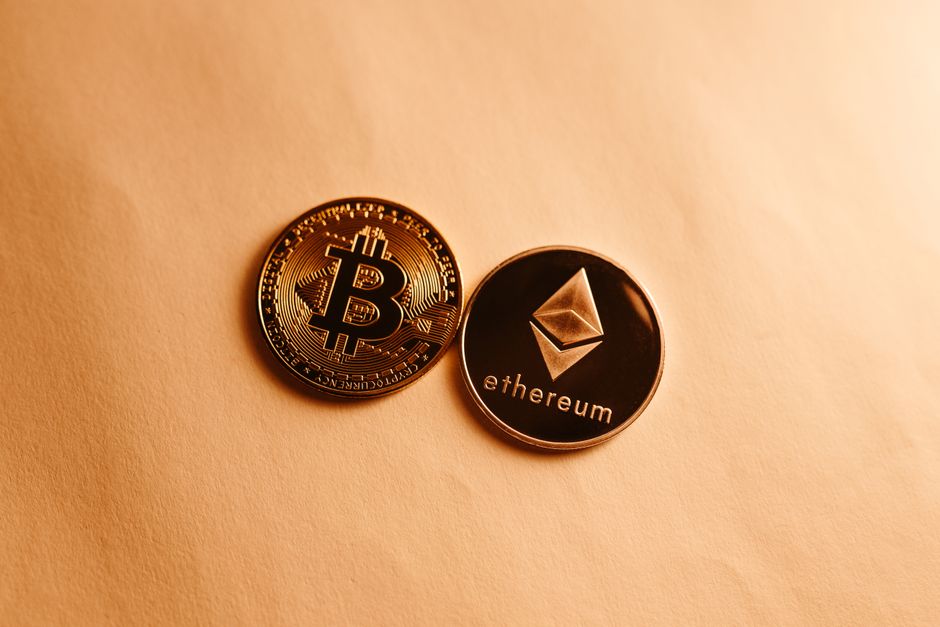
The altcoin market in 2026 sits at a crossroads. Institutional capital has matured, regulatory frameworks have tightened across the US and EU, and retail investors now have access to more sophisticated tools than ever before. Yet the core character of altcoins — higher risk, higher potential reward, and wild intraday swings — remains unchanged. If you have been researching the best altcoins to watch in 2026 through Reddit discussions and crypto forums, this guide cuts through the noise with an analytical breakdown grounded in market structure, on-chain metrics, and risk-aware strategy. By the end, you will understand which altcoin categories deserve attention, how to evaluate individual projects, and what disciplined risk management looks like in practice.
What Are Altcoins and Why Do They Exist?

Altcoins are every cryptocurrency built after Bitcoin launched in 2009. The term is broad by design, encompassing thousands of digital assets that operate on their own blockchains or as tokens on shared networks like Ethereum. Where Bitcoin was designed primarily as a decentralized peer-to-peer money system, altcoins were built to solve a range of problems Bitcoin could not address — from smart contract execution to supply chain transparency and decentralized governance.
The functional differences between Bitcoin and most altcoins are substantial. Bitcoin prioritizes security and scarcity, settling for slower transaction throughput as a trade-off. Most altcoins sacrifice some degree of decentralization or security to deliver faster finality, lower fees, or specialized use cases. **Ethereum**, for example, introduced a Turing-complete smart contract environment that enabled decentralized applications (DApps), decentralized finance (DeFi) protocols, and non-fungible token (NFT) marketplaces — capabilities Bitcoin does not natively support.
From a portfolio perspective, altcoins serve a diversification function. Because they respond to different technological narratives, developer communities, and adoption curves than Bitcoin, they do not always move in perfect correlation with the flagship cryptocurrency. That said, during broad market downturns, altcoin correlation tends to spike sharply, meaning diversification benefits are conditional on market regime.
The 2026 Altcoin Landscape: What Has Changed
The altcoin market of 2026 is structurally different from prior cycles in three measurable ways. First, regulatory clarity has reduced the number of fraudulent projects that once dominated retail attention. Second, layer-2 scaling solutions have matured, reducing transaction costs on major smart contract platforms and making decentralized applications genuinely usable for mainstream audiences. Third, real-world asset (RWA) tokenization has moved from theoretical to operational, with multiple billion-dollar issuance pipelines now live on-chain.
These shifts do not eliminate altcoin risk — they reshape it. Projects that survived the 2022–2023 bear market with working products and active developer communities now have a stronger foundation than those that relied purely on speculative narratives. When researching the best altcoins discussed on Reddit in 2026, prioritize projects with verifiable on-chain usage, transparent governance structures, and sustained developer activity over those with only marketing momentum.
How to Evaluate Altcoins for Investment Potential

No single metric tells the full story about an altcoin’s investment merit. The most reliable evaluation frameworks combine on-chain data, project fundamentals, and market structure analysis.
Key evaluation criteria to examine:
- **Network activity**: Daily active addresses and transaction volume indicate genuine user adoption rather than wash trading
- **Developer engagement**: Regular commits on public repositories signal an active engineering team committed to the roadmap
- **Token utility**: Does the token serve an actual function within the protocol, or is it purely speculative?
- **Token supply model**: Check both circulating and total supply — a low circulating supply with massive total supply can mask inflation risk
- **Team and governance transparency**: Anonymous teams carry higher operational risk; documented governance reduces single-point-of-failure exposure
Reddit communities are useful for surfacing projects early, but the signal-to-noise ratio requires discipline. Treat every altcoin recommendation as a starting point for your own research — never as a finished conclusion.
Smart Contract Platforms: The Foundation of the Altcoin Ecosystem
Most altcoin activity in 2026 flows through smart contract platforms. These networks host the DeFi protocols, gaming ecosystems, and token standards that define the broader market. Evaluating the underlying platform before buying any associated token is a risk management step most retail investors skip.
| Platform | Consensus Mechanism | Avg. Transaction Fee | Notable Use Case | Primary Risk |
|---|---|---|---|---|
| Ethereum | Proof-of-Stake | $0.50–$5.00 | DeFi, NFTs, DAOs | Network congestion during high demand |
| Solana | Proof-of-History + PoS | $0.001–$0.05 | High-speed DApps, DeFi | Centralization concerns; past outages |
| Avalanche | Avalanche Consensus | $0.01–$0.10 | Enterprise DeFi, subnets | Subnet adoption slower than projected |
| Polygon | PoS Sidechain | $0.001–$0.01 | Gaming, enterprise solutions | ZK-rollup competition pressures |
Ethereum remains the dominant smart contract platform by total value locked and ecosystem depth, but its transaction fees during peak activity make it unsuitable for smaller retail positions. Solana has captured significant high-frequency trading and gaming activity due to its throughput advantage. Avalanche targets enterprise and institutional use cases with its subnet architecture. Polygon continues to serve as a low-cost bridging layer for retail-facing applications.
How to Get Started With Altcoin Investing
Opening a position in the altcoin market requires three practical steps: selecting a regulated US exchange or compliant offshore platform, funding the account with fiat currency, and executing the first purchase with a clear position size in mind.
Practical steps for beginners:
1. **Choose a compliant exchange**: US residents should prioritize platforms registered with FinCEN or operating under state-level money transmitter licenses. Look for SIPC protection on cash balances where available.
2. **Start with a small position size**: Limit initial altcoin exposure to 1–5% of your total investable assets. Altcoin volatility makes gradual position building more sustainable than large lump-sum entries.
3. **Use dollar-cost averaging (DCA)**: Rather than timing a single entry, spread purchases over weeks or months to reduce the impact of short-term price swings on your average cost basis.
4. **Move assets off-exchange when not actively trading**: Keeping cryptocurrency on an exchange exposes your holdings to counterparty risk — exchange hacks or insolvency events have wiped out retail funds in prior cycles.
5. **Track your cost basis and portfolio allocation**: Spreadsheet or dedicated portfolio tracker tools help maintain discipline around target allocations and tax reporting requirements.
Recognizing Altcoin Season: Timing and Market Signals
**Altcoin season** describes a market regime in which alternative cryptocurrencies collectively outperform Bitcoin by a significant margin. Historically, altcoin seasons have occurred in the 12–18 months following Bitcoin’s own bull run, as capital rotates from the flagship asset into higher-beta positions in the broader market.
Indicators that may signal altcoin season is underway:
- **Bitcoin dominance chart declining**: When Bitcoin’s share of total crypto market capitalization drops, altcoins are collectively gaining ground
- **Rising aggregate altcoin market cap**: A sustained increase in total altcoin valuation beyond Bitcoin’s growth signals broader market participation
- **Surge in new project launches and token sales**: Increased on-chain activity and initial DEX offering (IDO) volume often precede or accompany altcoin seasons
- **Social media sentiment shifting**: Reddit, Twitter/X, and crypto forums shifting from Bitcoin-focused discussion to altcoin-specific narratives can indicate retail rotation
The risk of chasing altcoin season is buying near the peak of a rally. Disciplined practitioners scale into positions gradually rather than deploying full capital at the first sign of a seasonal shift.
Altcoin Trading Strategies That Work
Successful altcoin trading requires a framework that accounts for the market’s elevated volatility compared to traditional assets. Three strategies have demonstrated resilience across different market conditions.
**Swing trading** involves holding positions for days to weeks, capturing medium-term price moves driven by news events, protocol upgrades, or broader market trends. This approach suits retail investors who can monitor positions periodically without needing real-time screens.
**Trend-following with moving averages** provides an objective entry and exit framework. A simple strategy uses the 50-day moving average crossing above the 200-day moving average as a long entry signal and the reverse as an exit. While no indicator is infallible, systematic rules reduce emotional decision-making.
**Mean reversion** targets assets that have experienced sharp drawdowns relative to their historical trading ranges. This strategy requires identifying fundamentally sound projects that have sold off on sentiment rather than deteriorating fundamentals — a distinction that demands careful on-chain and news analysis.
Regardless of strategy, position sizing and stop-loss discipline are non-negotiable in altcoin markets. A single trade should not exceed 2–5% of your total portfolio, and a stop-loss at 15–20% below entry prevents a single losing position from becoming a portfolio-defining event.
Key Risks in the Altcoin Market — And How to Manage Them
**Volatility risk** defines the altcoin market more than any other factor. A 30–50% drawdown within a single week is not exceptional — it is common across mid-cap and small-cap altcoins. Before entering any position, define your maximum acceptable loss and set stop-loss orders accordingly.
**Liquidity risk** emerges when you attempt to exit a position and find insufficient market depth to execute at or near the prevailing price. This risk is most acute in low-cap altcoins with thin order books. Concentrating positions in highly liquid, mid-cap or larger assets reduces this exposure.
**Regulatory risk** remains relevant in 2026. The SEC, CFTC, and state regulators continue to refine their approach to digital asset classification. Projects that fail to comply with securities law — or that face enforcement actions — can see sudden and irreversible price declines.
**Project abandonment risk** is the most underappreciated danger for retail investors. Altcoin development teams can disband, grants can dry up, or competitive pressure can render a protocol obsolete. Investing only in projects with consistent developer activity, transparent governance, and real on-chain usage mitigates this risk materially.
**Diversification** is the most effective broad-spectrum risk management tool available to retail investors. Spreading exposure across 4–8 projects in different categories — smart contract platforms, DeFi protocols, infrastructure tokens, and privacy coins — reduces the impact of any single project failing.
> **Risk Disclaimer**: Cryptocurrency markets are highly volatile and speculative. Nothing in this article constitutes financial, legal, or investment advice. All investments in digital assets carry the risk of partial or total loss. Consult a licensed financial advisor before making investment decisions.
Choosing the Right Altcoin Exchange
Your choice of exchange directly affects execution quality, security, and regulatory exposure. US residents face specific constraints that make platform selection more consequential than for investors in other jurisdictions.
Criteria to evaluate when selecting an altcoin exchange:
- **Regulatory compliance**: Platforms that have registered with US authorities or limited services to US-compliant offerings reduce your legal exposure
- **Supported assets**: Confirm the exchange lists the specific altcoins you intend to trade before opening an account
- **Fee structure**: Maker-taker fees, withdrawal fees, and spread costs compound over time and meaningfully affect net returns on small positions
- **Security features**: Two-factor authentication (2FA), cold storage policies, and insurance funds are minimum baseline requirements
- **Withdrawal flexibility**: Ensure there are no unreasonable withdrawal limits or delays that could lock you out of your assets during market volatility
Major platforms serving US retail investors offer varying combinations of these features. Smaller offshore exchanges may list more altcoins but expose US users to regulatory risk and fund recovery challenges.
Frequently Asked Questions (FAQ)
What is the difference between Bitcoin and altcoins?
Bitcoin was the first cryptocurrency, designed as a decentralized digital money system with a capped supply of 21 million coins and a proof-of-work consensus mechanism. Altcoins encompass every other cryptocurrency — including assets that run on Bitcoin’s own blockchain (like Stacks) as well as tokens on entirely separate networks. Altcoins generally serve broader or different use cases than Bitcoin, including smart contract execution, decentralized governance, privacy preservation, and supply chain tracking. The key distinction is that Bitcoin functions primarily as a store of value and medium of exchange, while most altcoins are utility or governance tokens built on programmable blockchain infrastructure.
How do I choose the best altcoins to invest in?
No single approach guarantees success, but a structured evaluation framework improves decision quality. Focus on projects with verifiable on-chain activity (daily active addresses, transaction volume), transparent and active development teams, a clear and functional token utility model, and reasonable token supply dynamics. Avoid projects that rely primarily on social media hype without underlying product traction. Dollar-cost averaging into established mid-cap and large-cap altcoins with strong track records is generally less risky than concentrating in small-cap or newly launched tokens.
What are the most important risks to understand before investing in altcoins?
The primary risks include price volatility (30–70% drawdowns can occur within days), liquidity risk (difficulty exiting positions at fair prices), regulatory risk (enforcement actions or classification changes), and project abandonment risk (teams disbanding or projects becoming obsolete). Mitigating these risks requires diversifying across multiple projects and categories, using disciplined position sizing, setting stop-loss orders, and only allocating capital you can afford to lose entirely. Always conduct your own research before entering any position, and treat all information — including Reddit recommendations and social media sentiment — as a starting point rather than investment advice.
Charting & Exchange Resources
| Platform | Use Case | Key Feature | Fee Model | Action |
|---|---|---|---|---|
| TradingView | Charting & technical analysis | Indicators, multi-timeframe charts | Free / Pro tiers | View Platform |
| Coinbase | Exchange (beginner-friendly) | Simple USD on-ramp, educational tools | Varies by region | View Platform |
| Binance | Exchange (advanced pairs) | Wide altcoin coverage, spot markets | Varies by region | View Platform |
Affiliate Disclosure: This post contains affiliate links. We may earn a commission if you buy through our links, at no extra cost to you. Investment Risk Disclaimer: Cryptocurrency and digital asset markets are highly volatile. This content is for informational and educational purposes only and is not financial, investment, or trading advice. You may lose some or all of your capital. Do your own research and consult a licensed financial advisor before making investment decisions.
Leave a Reply