Understanding Altcoins: What They Are and Why They Matter

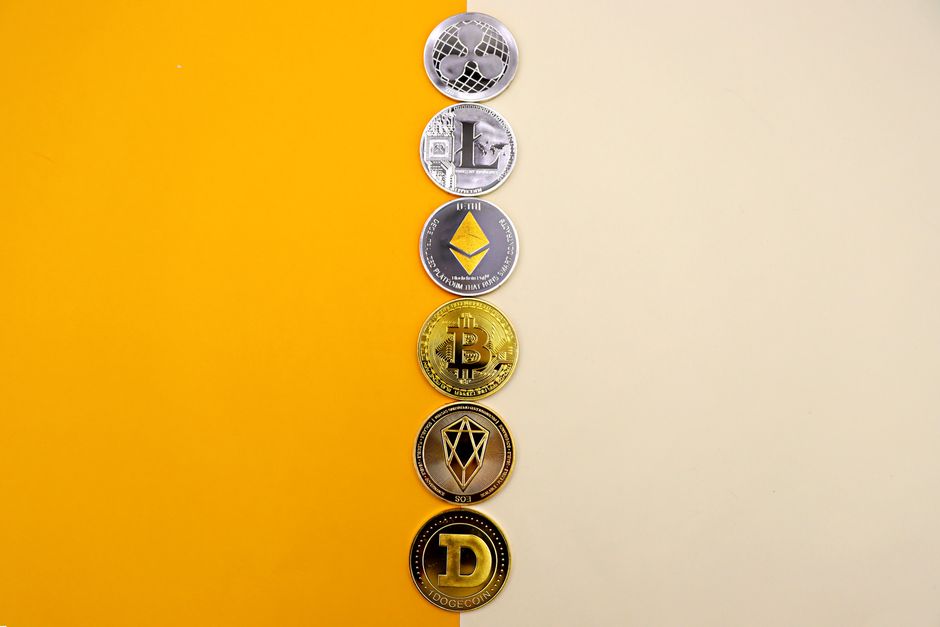
Altcoins refer to any cryptocurrency other than Bitcoin. The term is a portmanteau of “alternative” and “coin,” and the space has grown from a handful of projects in Bitcoin’s shadow into a multi-thousand-coin ecosystem representing tens of billions of dollars in market value. While Bitcoin remains the dominant cryptocurrency by market capitalization, altcoins serve a wide range of functions — from smart-contract platforms to decentralized finance (DeFi) protocols, stablecoins, and utility tokens that power specific blockchain applications.
The key distinction between Bitcoin and most altcoins lies in their underlying technology and purpose. Bitcoin was designed primarily as a peer-to-peer digital cash system and a store-of-value asset. Altcoins, by contrast, often introduce additional features such as programmable contracts, faster transaction speeds, proof-of-stake consensus mechanisms, or specialized use cases in gaming, supply chain tracking, and data storage. This diversity is both the appeal and the risk: altcoins offer exposure to innovative technologies and potentially higher returns than Bitcoin, but they also carry significantly greater volatility, lower liquidity in many cases, and higher regulatory uncertainty.
For US investors, understanding the altcoin landscape requires a disciplined, research-first approach. The cryptocurrency market operates 24/7, and altcoin prices can swing dramatically based on news, social media sentiment, regulatory announcements, or broader macro market conditions. This guide walks through the most important factors to evaluate when considering altcoin investments in 2026, with a focus on educational context rather than financial advice.
Top Altcoins to Watch in 2026
Identifying the most promising altcoins requires examining several quantitative and qualitative factors: real-world adoption, active developer communities, total value locked (TVL) in DeFi protocols, trading volume, and the robustness of the underlying blockchain’s infrastructure.
- **Ethereum (ETH)** remains the backbone of the smart-contract ecosystem. Its transition to proof-of-stake significantly reduced energy consumption, and its extensive DeFi and NFT ecosystems give it a structural advantage. However, competition from faster, lower-cost layer-2 networks and rival smart-contract platforms continues to pressure its dominance.
- **Solana (SOL)** has attracted attention for its high transaction throughput and relatively low fees compared to Ethereum, making it popular among DeFi traders and NFT minters. Its ecosystem of decentralized applications (dApps) has expanded substantially, though network stability incidents in prior years have raised questions about long-term reliability.
- **Cardano (ADA)** takes a research-first, peer-reviewed approach to blockchain development. Its emphasis on formal verification and academic rigor appeals to investors who prioritize scientific methodology over rapid feature deployment.
- **Polkadot (DOT)** enables cross-chain interoperability, allowing different blockchains to communicate and share data. This “internet of blockchains” concept addresses one of the crypto ecosystem’s most persistent fragmentation problems.
- **Avalanche (AVAX)** offers fast finality and low transaction costs through its unique consensus architecture. Its subnet model allows developers to create customized, application-specific blockchains.
- **Chainlink (LINK)** serves as a decentralized oracle network, bridging real-world data with smart contracts. As DeFi protocols require increasingly sophisticated off-chain data feeds, oracle services like Chainlink play a critical infrastructure role.
| Altcoin | Primary Use Case | Consensus Mechanism | Notable Ecosystem Metric |
|---|---|---|---|
| Ethereum (ETH) | Smart contracts, DeFi, NFTs | Proof-of-Stake | Largest DeFi TVL |
| Solana (SOL) | High-speed dApps, DeFi | Proof-of-History | ~65,000 TPS throughput |
| Cardano (ADA) | Smart contracts, academic research | Proof-of-Stake | Peer-reviewed development |
| Polkadot (DOT) | Cross-chain interoperability | Nominated PoS | Multi-chain relay system |
| Avalanche (AVAX) | Custom subnets, DeFi | Avalanche Consensus | Sub-second finality |
| Chainlink (LINK) | Decentralized oracles | Decentralized network | Leading oracle provider |
No single altcoin is suitable for every investor. Each represents a different risk-reward profile, and performance relative to Bitcoin and the broader market varies significantly over time. The altcoins listed above are not investment recommendations; they represent categories of projects with notable activity worth monitoring in 2026.
Investing in Altcoins: Strategies and Best Practices

A structured approach to altcoin investing begins with defining your investment thesis and risk tolerance before making any allocation decisions. The following strategies represent commonly discussed frameworks among US retail investors and crypto analysts — not personalized financial advice.
- **Fundamental analysis (FA)** involves evaluating an altcoin’s underlying technology, team, tokenomics, and real-world adoption before committing capital. Questions to ask include: Does the project solve a genuine problem? Is the development team transparent and technically credible? Are there institutional or enterprise partnerships that signal long-term viability?
- **Technical analysis (TA)** examines price charts, trading volume, moving averages, and chart patterns to identify trends and potential entry or exit points. While TA is widely used, it is less reliable in the highly volatile and sentiment-driven altcoin market than in traditional equities markets.
- **Dollar-cost averaging (DCA)** involves buying fixed dollar amounts at regular intervals regardless of price. This strategy reduces the impact of short-term price swings and avoids the emotional trap of trying to time the market — a challenge that is particularly acute in the altcoin space.
- **Position sizing and allocation** should reflect the higher risk profile of altcoins relative to Bitcoin or traditional assets. Many experienced crypto investors cap altcoin exposure at 10–20% of their total cryptocurrency portfolio, reserving the majority for higher-cap, more established assets.
- **Diversification across sectors** within the altcoin space — such as DeFi, layer-1 infrastructure, oracle networks, and gaming/metaverse tokens — can help manage idiosyncratic risk, where a single project’s failure does not disproportionately damage the overall portfolio.
Altcoin Trading Platforms and Exchanges
Selecting the right exchange is a foundational decision for any US-based altcoin investor. The platform you choose determines which coins you can access, how much you pay in fees, how secure your holdings are, and how smoothly you can manage your portfolio.
The most regulated and reputable platforms available to US investors include:
- **Coinbase** — publicly traded on NASDAQ, offering a user-friendly interface and strong regulatory compliance. It supports a curated selection of altcoins and provides a secure custodial option, making it popular among beginners.
- **Kraken** — known for its strong security track record and wide range of supported trading pairs. Kraken offers both a simple buy/sell interface and more advanced trading tools for active traders.
- **Gemini** — a New York-based exchange founded by the Winklevoss twins, emphasizing regulatory compliance and institutional-grade custody solutions.
- **Binance.US** — the US-compliant arm of the world’s largest cryptocurrency exchange, offering a broad selection of altcoins and competitive fee structures, though its parent company’s regulatory challenges have created some investor uncertainty.
Key factors to evaluate when choosing an exchange:
- **Security features** — Look for two-factor authentication (2FA), cold storage of the majority of customer funds, and proof-of-reserves audits.
- **Fee structure** — Trading fees, withdrawal fees, and deposit fees vary significantly. Maker-taker fee models are standard, with volume-based discounts available on most major platforms.
- **Coin availability** — Not all exchanges list every altcoin. If you have specific projects in mind, confirm they are available before opening an account.
- **User experience** — Beginners generally prefer platforms with straightforward interfaces, while active traders need advanced charting tools, API access, and deep order book liquidity.
Altcoin Investment Risks and How to Mitigate Them
The altcoin market presents a distinct set of risks that every US investor must understand before allocating capital. Awareness of these risks is not a reason to avoid the space entirely, but it is a prerequisite for responsible participation.
- **Volatility risk** — Altcoin prices can move 20–50% in a single day, far exceeding the daily swings seen in traditional stocks or bonds. A position that seems small in dollar terms can become disproportionately large — or wiped out entirely — due to sudden market moves.
- **Liquidity risk** — Many altcoins trade on thin order books, meaning large orders can move the price significantly against you. Selling a large position in a low-volume altcoin may be difficult without materially affecting the market price.
- **Regulatory risk** — US regulators, including the SEC and CFTC, continue to refine their approach to cryptocurrency oversight. Projects that are deemed securities may face enforcement action, and regulatory changes can rapidly alter the viability of certain tokens.
- **Project failure risk** — The cryptocurrency space has seen thousands of projects launch and subsequently collapse, often due to abandoned development, poor tokenomics, or outright fraud. Due diligence on team backgrounds, code audits, and community engagement is essential.
- **Scam and fraud risk** — Rug pulls, honeypot tokens, phishing schemes, and fake ICOs remain prevalent. Only use verified exchanges, never share private keys, and be skeptical of promises of guaranteed returns.
**Risk mitigation checklist for US altcoin investors:**
- Verify the exchange is registered with FinCEN and licensed in your state
- Use hardware wallets (such as Ledger or Trezor) for long-term holdings
- Never invest more than you can afford to lose entirely
- Enable two-factor authentication on every exchange and wallet
- Cross-reference project information across multiple independent sources
Tax Implications and Reporting for Altcoin Investors in the US
The IRS treats cryptocurrency as property for federal tax purposes. This means every taxable event involving your altcoin holdings — including selling, trading, or converting one cryptocurrency for another — may trigger a capital gains or loss event subject to reporting requirements.
- **Capital gains tax** applies when you sell an altcoin for more than your cost basis (the original purchase price plus any associated fees). Short-term capital gains (assets held for one year or less) are taxed at ordinary income tax rates. Long-term capital gains (assets held longer than one year) benefit from lower preferential rates.
- **Capital losses** can offset capital gains in a process called tax-loss harvesting. If your losses exceed your gains, you may deduct up to $3,000 per year against ordinary income, with the remainder carried forward to future tax years.
- **Trading between altcoins** is generally considered a taxable disposition in the US, meaning each swap from one token to another may be treated as a sale of the first asset.
- **Form 8949 and Schedule D** on your annual tax return are required to report crypto capital gains and losses. The IRS has intensified its focus on crypto tax compliance, and failure to report can result in penalties.
- **Staking and DeFi rewards** may be treated as ordinary income at their fair market value on the date of receipt, with any appreciation when you later sell subject to capital gains tax.
**Disclaimer:** This section provides general educational information about US cryptocurrency tax rules. Tax laws and regulations in this area are evolving and can be complex. Individual circumstances vary. Always consult a qualified tax professional or CPA who specializes in cryptocurrency taxation before making tax-related decisions.
Frequently Asked Questions (FAQ)
What are the key factors to consider when selecting altcoins for investment?
The most important factors include **market capitalization** and **trading volume** — higher market cap generally indicates a more established project, while healthy trading volume ensures you can enter and exit positions without significant slippage. Evaluate the **technology and innovation** behind the altcoin: Is the underlying blockchain scalable, secure, and sustainable? Does the project have real-world **adoption and use cases**? Active developer communities, institutional interest, and transparent tokenomics (supply schedules, inflation rates, and token utility) are additional signals worth examining. No single metric tells the full story; a holistic evaluation combining several data points is the most prudent approach.
How can I protect my altcoin investments from market volatility and scams?
**Portfolio diversification** is the most fundamental protection against volatility — spreading exposure across multiple asset classes and sectors reduces the impact of any single altcoin’s price collapse. **Thorough due diligence** before buying any altcoin means researching the team, reviewing publicly available code audits, checking for verified smart contracts, and cross-referencing information across independent sources. **Using reputable exchanges** with strong security records and enabling two-factor authentication on every account are non-negotiable baseline practices. For holdings you plan to hold long-term, **hardware wallets** that keep private keys offline offer the strongest protection against hacking and unauthorized access.
What tax implications should US investors expect when investing in altcoins?
US investors must treat cryptocurrency as property for tax purposes. **Every sale, trade, or conversion of an altcoin is a taxable event** that may trigger capital gains or losses. Short-term gains are taxed at ordinary income rates, while long-term gains (on assets held longer than one year) benefit from lower preferential rates. Staking rewards and DeFi income are generally treated as ordinary income when received. US taxpayers are required to report all cryptocurrency transactions on **Form 8949 and Schedule D** as part of their annual federal tax return. Given the complexity of cryptocurrency tax rules and their ongoing evolution, working with a qualified CPA or tax professional experienced in digital assets is strongly recommended.
Charting & Exchange Resources
| Platform | Use Case | Key Feature | Fee Model | Action |
|---|---|---|---|---|
| TradingView | Charting & technical analysis | Indicators, multi-timeframe charts | Free / Pro tiers | View Platform |
| Coinbase | Exchange (beginner-friendly) | Simple USD on-ramp, educational tools | Varies by region | View Platform |
| Binance | Exchange (advanced pairs) | Wide altcoin coverage, spot markets | Varies by region | View Platform |
Affiliate Disclosure: This post contains affiliate links. We may earn a commission if you buy through our links, at no extra cost to you. Investment Risk Disclaimer: Cryptocurrency and digital asset markets are highly volatile. This content is for informational and educational purposes only and is not financial, investment, or trading advice. You may lose some or all of your capital. Do your own research and consult a licensed financial advisor before making investment decisions.
Leave a Reply