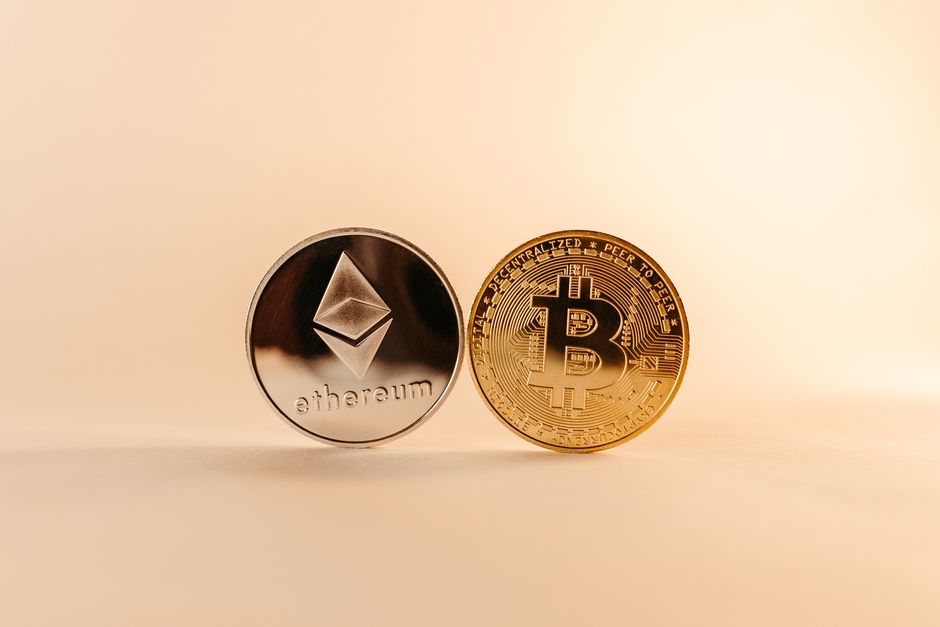
Why Comparing Ethereum and Solana Matters in 2026
The cryptocurrency market has matured considerably, but choosing between Ethereum and Solana remains one of the most common decisions new investors face. Both platforms are **altcoins** — meaning any cryptocurrency other than Bitcoin — yet they take fundamentally different technical approaches to solving the same core problem: how to process transactions quickly and cheaply while staying secure and decentralized. Understanding those differences matters more than ever as we move through 2026, because the right choice can shape your entire crypto experience, from decentralized finance participation to NFT minting and beyond. Before diving into any investment, remember that cryptocurrency markets are highly volatile, and all investing involves real risk of loss. Nothing here constitutes personalized financial advice.
Ethereum launched in 2015 and built the smart contract ecosystem that exists today. Solana arrived later and has carved out a reputation for speed and low transaction costs. Both have passionate communities and active development teams, but they are not interchangeable. This guide breaks down every major difference so you can make an informed decision that fits your goals and risk tolerance.
Understanding What Makes Ethereum the Pioneer
Ethereum was created by Vitalik Buterin and launched in 2015, making it one of the oldest altcoins still operating at scale. It introduced the concept of **smart contracts** — self-executing programs stored on the blockchain that automatically enforce agreements without needing a middleman. This innovation sparked an entire ecosystem of decentralized applications (DApps), decentralized finance protocols, and non-fungible token (NFT) platforms.
Ethereum operates using a **Proof-of-Stake (PoS)** consensus mechanism. In simple terms, instead of miners solving complex puzzles with raw computing power, validators stake their own Ethereum coins as collateral to confirm transactions. This shift from the old energy-intensive Proof-of-Work system happened through a major upgrade called The Merge, which completed in September 2022. Proof-of-Stake makes Ethereum more energy efficient and lays the groundwork for future scalability improvements.
Key characteristics of Ethereum:
- **Market capitalization**: Consistently the second-largest cryptocurrency by total market value, giving it deep liquidity
- **Ecosystem size**: Thousands of DApps, DeFi protocols, and NFT marketplaces built on its network
- **Developer community**: The largest in the blockchain space, with extensive documentation and tooling
- **Token standard**: ERC-20 (the industry standard for fungible tokens) and ERC-721 (for NFTs)
Ethereum’s first-mover advantage has created a self-reinforcing network effect — more developers build on it, which attracts more users, which attracts more developers. That said, this dominance comes with trade-offs that newcomers should understand.
Understanding Solana as the Rising Contender
Solana was founded in 2017 by Anatoly Yakovenko and officially launched its mainnet in 2020. From the start, its primary value proposition was solving the scalability problems that plagued early blockchains, particularly Ethereum during periods of high demand when fees spiked dramatically. Solana’s answer was a novel combination of consensus mechanisms that together aim to deliver both speed and low cost.
At the heart of Solana’s architecture is **Proof-of-History (PoH)**, a unique innovation that creates a historical record proving that an event happened at a specific moment in time. Combined with Proof-of-Stake and other technical optimizations, PoH allows Solana to process thousands of transactions per second (TPS) compared to Ethereum’s roughly 15–30 TPS under normal conditions. Transaction fees on Solana typically cost a fraction of a cent, making it far more accessible for frequent small transfers or micro-transactions.
Key characteristics of Solana:
- **Speed**: Theoretical throughput of up to 65,000 TPS, with real-world performance regularly exceeding thousands of TPS
- **Low fees**: Average transaction costs under $0.01, significantly cheaper than Ethereum’s gas fees
- **Growing ecosystem**: Rapidly expanding DeFi and NFT presence, with projects migrating from Ethereum
- **High-performance focus**: Appeals to developers building gaming, payment, and high-frequency trading applications
Solana’s speed and low cost have made it a favorite for new users who want to experiment with blockchain applications without spending large sums just to move assets. However, its younger age means it has faced more uptime challenges and is still building out the depth of its developer ecosystem compared to Ethereum’s established base.
Key Technological Differences Explained
Understanding how Ethereum and Solana differ technically is essential for any beginner evaluating them as investments or platforms to use. These are not minor variations — they represent fundamentally different philosophies about how blockchains should work.
Consensus Mechanisms
Ethereum’s **Proof-of-Stake** system requires validators to lock up at least 32 ETH to participate in block production. This creates economic security because bad actors risk losing their staked funds for malicious behavior. The system is decentralized by design, with hundreds of thousands of validators participating globally.
Solana combines **Proof-of-Stake** with **Proof-of-History**, which functions like a cryptographic clock. By embedding time-stamped data into the blockchain itself, Solana reduces the communication overhead between validators, allowing them to process blocks in sequence faster. This architectural choice is what enables Solana’s remarkable throughput but also introduces different trust assumptions than Ethereum’s pure PoS model.
Transaction Speed and Scalability
| Feature | Ethereum | Solana |
|---|---|---|
| Avg. Transactions Per Second | 15–30 TPS | 3,000–5,000 TPS |
| Theoretical Max TPS | ~100,000 (future upgrades) | 65,000 TPS |
| Average Transaction Fee | $1–$10+ (varies widely) | Under $0.01 |
| Block Time | ~12 seconds | ~400 milliseconds |
| Consensus | Proof-of-Stake | Proof-of-Stake + Proof-of-History |
Ethereum is actively working on Layer 2 scaling solutions — rollups that process transactions off the main chain and bundle them together — to dramatically increase throughput. Solana relies more on its base layer performance but has also faced network outages that highlight the challenges of optimizing for maximum speed.
Smart Contracts and Developer Ecosystem
Ethereum’s **EVM (Ethereum Virtual Machine)** is the runtime environment where smart contracts execute. It has become an industry standard, and many other blockchains — including Avalanche, Polygon, and BNB Chain — have built EVM-compatible layers. This means Solidity, Ethereum’s native programming language, is one of the most widely deployed blockchain languages in existence.
Solana uses **Rust** and **C/C++** for smart contract development, which appeals to developers with systems programming backgrounds but presents a steeper learning curve for those new to blockchain development. Solana’s Sealevel runtime can process tens of thousands of smart contracts in parallel, a significant technical advantage, though it means developers must account for parallel execution semantics when building applications.
Investment Potential and Risks for Beginners
Both Ethereum and Solana have delivered outsized returns compared to traditional assets over their histories, but past performance does not guarantee future results. Cryptocurrency investing carries specific risks that every beginner must understand before committing capital. If you are exploring altcoin opportunities, make sure to review our altcoin market overview for broader context before building a portfolio.
Ethereum’s investment case rests on its established network effects, institutional adoption, and the continued growth of its ecosystem. Its transition to Proof-of-Stake reduced new ETH issuance, effectively making it partially deflationary under certain market conditions through the EIP-1559 fee burn mechanism. Institutional interest, including futures markets and ETF products, adds a layer of legitimacy that few altcoins can match.
Solana’s investment case centers on its potential for mass adoption through speed and affordability. If blockchain technology becomes mainstream for everyday payments, gaming, or decentralized social media, Solana’s architecture positions it well to capture that growth. Solana’s lower entry price compared to Ethereum also makes it more accessible for new investors building a position over time.
Critical risks for both platforms:
- **Volatility**: Both ETH and SOL can swing 20% or more in a single week, far exceeding stock market moves
- **Regulatory uncertainty**: Governments worldwide are still determining how to tax and regulate cryptocurrency assets
- **Technological competition**: New Layer 1 blockchains and Ethereum Layer 2 solutions could erode each platform’s market share
- **Network reliability**: Solana has experienced multiple outages, raising questions about its production readiness for mission-critical applications
- **Adoption risk**: Utility depends on ecosystem growth, developer adoption, and end-user demand — all of which are unpredictable
Diversification across multiple blockchain platforms and asset classes is one of the most practical risk management strategies available to beginners. Never invest more than you can afford to lose entirely.
Where and How to Trade Ethereum and Solana in the US
For US-based readers, the regulatory environment shapes which platforms you can use to buy and trade Ethereum and Solana. Major US-regulated exchanges including Coinbase and Kraken offer both assets with full compliance with US securities and commodities frameworks. These platforms provide secure custody, FDIC insurance on US dollar deposits, and user-friendly interfaces ideal for beginners.
International exchanges such as Binance and Bybit also list both coins but may operate under different regulatory jurisdictions. If you use offshore platforms, understand that US investor protections may not apply. Always verify your exchange is licensed to operate in your state — cryptocurrency regulation varies significantly by US state.
Basic steps to start trading:
- **Create an account** on a regulated US exchange and complete identity verification (KYC)
- **Fund your account** via bank transfer, ACH, or debit card — each method has different processing times and fees
- **Place an order**: Market orders execute immediately at the current price; limit orders execute only when the price reaches your specified level
- **Store assets securely**: Consider transferring holdings to a personal hardware wallet rather than leaving them on the exchange — this is known as self-custody
When evaluating exchanges for active trading, pay attention to withdrawal fees, trading fee tiers, API availability for advanced charting, and the depth of the order book for each trading pair. Deeper order books mean less slippage on larger orders, which matters if you plan to trade meaningful amounts. Hardware wallets such as those from Ledger and Trezor are widely used tools for secure self-custody of ETH and SOL holdings.
Future Outlook: What 2026 and Beyond May Bring
Both Ethereum and Solana have active development roadmaps that will shape their competitiveness over the coming years. Ethereum’s upcoming upgrades — including proto-danksharding and full danksharding — aim to dramatically increase data throughput while keeping fees low. These improvements should make Ethereum’s Layer 2 ecosystem significantly more powerful and cost-effective.
Solana is pushing forward with its own roadmap, including improvements to transaction prioritization, improved validator performance, and continued expansion of its DeFi and NFT tooling. The Firedancer client, developed by Jump Crypto, promises to significantly increase network throughput and resilience once deployed.
Key trends to monitor in 2026:
- **Institutional adoption**: More traditional financial institutions exploring on-chain settlement and tokenized assets
- **Layer 2 competition**: Ethereum L2s like Arbitrum, Optimism, and Base maturing while Solana’s base layer evolves
- **Real-world asset tokenization**: Both platforms positioning for trillion-dollar markets in tokenized bonds, real estate, and commodities
- **Regulatory clarity**: Expected developments from US federal agencies that could reshape how retail investors access these markets
- **Interoperability**: Bridges and cross-chain protocols becoming more sophisticated, reducing the need to choose a single blockchain
Neither platform is guaranteed to dominate. The cryptocurrency market has repeatedly surprised observers by defying consensus predictions. The most prudent approach is to research both ecosystems, understand your own risk tolerance, and build a strategy that doesn’t depend on any single outcome.
Risk Disclaimer
**Important**: Cryptocurrency investing is highly speculative and involves substantial risk of loss. Prices for assets such as ETH and SOL can fluctuate dramatically within short periods — sometimes 20% or more in a single day. This article is for informational and educational purposes only and does not constitute personalized financial advice. Always consult a qualified financial advisor before making investment decisions. Never invest money you cannot afford to lose entirely. The altcoin market remains one of the most volatile asset classes available to US investors.
Frequently Asked Questions (FAQ)
What are the main differences between Ethereum and Solana?
Ethereum is the older, more established blockchain known for its massive developer ecosystem and smart contract capabilities, while Solana is a newer platform that prioritizes raw transaction speed and ultra-low fees. Ethereum uses Proof-of-Stake alone, while Solana combines Proof-of-Stake with Proof-of-History for faster block processing. Ethereum processes roughly 15–30 TPS under normal conditions; Solana regularly handles thousands of TPS with fees under a penny per transaction.
Which cryptocurrency is better suited for beginners in terms of investment?
Ethereum is generally considered the more conservative choice for beginners due to its longer track record, institutional adoption, deeper liquidity, and massive developer ecosystem. Solana offers a lower entry price and cheaper transaction costs for experimentation but carries higher execution risk and has experienced more network outages. Beginners should start with small positions, understand the volatility involved, and invest only what they can afford to lose regardless of which platform they choose.
How do Ethereum and Solana differ in their technological foundations and capabilities?
Ethereum’s EVM-compatible environment runs smart contracts that power thousands of decentralized applications, using a pure Proof-of-Stake consensus with approximately 12-second block times. Solana’s Sealevel runtime can process smart contracts in parallel using Rust or C, achieving sub-second block times through its unique Proof-of-History mechanism. These architectural differences affect speed, cost, developer tooling, and the types of applications each platform best supports.
Are Ethereum and Solana safe investments in 2026?
All cryptocurrency investments carry significant risk due to price volatility, regulatory uncertainty, and the inherent technical complexity of blockchain systems. Both Ethereum and Solana have strong fundamentals and active development communities, but neither is immune to market downturns, security vulnerabilities, or competitive displacement. Diversification, dollar-cost averaging, and holding assets in secure self-custody wallets are practical strategies to manage risk as a new investor.
Can I use both Ethereum and Solana without choosing just one?
Yes. Many investors hold both ETH and SOL as part of a diversified altcoin strategy. You can interact with DeFi protocols, NFT marketplaces, and other blockchain applications on both platforms using a single hardware wallet, provided you use the correct address format for each network. Cross-chain bridges exist but carry their own smart contract risks, so it is worth understanding the trade-offs before moving assets between networks.
What role do transaction fees play in choosing between the two platforms?
Transaction fees, often called gas fees on Ethereum, can significantly impact your experience. Ethereum fees vary widely based on network congestion — during peak periods, simple transfers can cost several dollars, while interacting with smart contracts can run into double digits. Solana’s fees remain consistently under a penny per transaction regardless of network activity, making it more practical for frequent small transfers, gaming micro-transactions, and low-balance accounts where high fees would represent a large percentage of the value being moved.
Charting & Exchange Resources
| Platform | Use Case | Key Feature | Fee Model | Action |
|---|---|---|---|---|
| TradingView | Charting & technical analysis | Indicators, multi-timeframe charts | Free / Pro tiers | View Platform |
| Coinbase | Exchange (beginner-friendly) | Simple USD on-ramp, educational tools | Varies by region | View Platform |
| Binance | Exchange (advanced pairs) | Wide altcoin coverage, spot markets | Varies by region | View Platform |
Affiliate Disclosure: This post contains affiliate links. We may earn a commission if you buy through our links, at no extra cost to you. Investment Risk Disclaimer: Cryptocurrency and digital asset markets are highly volatile. This content is for informational and educational purposes only and is not financial, investment, or trading advice. You may lose some or all of your capital. Do your own research and consult a licensed financial advisor before making investment decisions.
Leave a Reply