What Are Meme Coins? A Plain-English Introduction
A **meme coin** is a cryptocurrency that originated from an internet meme, joke, or viral cultural moment rather than from a defined technological purpose or financial use case. Unlike **Bitcoin (BTC)** or **Ethereum (ETH)** — which were designed around specific technology goals like decentralized payments or smart contract execution — meme coins typically derive their value almost entirely from community sentiment and social media momentum.
The most recognized examples include **Dogecoin (DOGE)**, launched in 2013 as a parody of Bitcoin, and **Shiba Inu (SHIB)**, which positioned itself as the “Dogecoin killer” in 2020. Since then, hundreds of meme coins have emerged — many lasting only days or weeks before collapsing entirely.
- Meme coins usually have **unlimited or very large token supplies**, which structurally suppresses per-unit price
- They rely on **viral marketing, celebrity endorsements, and social platforms** (Reddit, X/Twitter, TikTok) to generate interest
- Most lack a **whitepaper** with substantive technical detail or a clear long-term development roadmap
Meme Coin Market Overview for US Investors
As of mid-2026, the combined market capitalization of the top meme coins represents a volatile but meaningful slice of the broader **crypto market cap** — often fluctuating between $40 billion and $80 billion depending on market conditions. Trading volumes can spike dramatically during viral moments, sometimes rivaling those of top-tier Layer 1 blockchains for short windows.
Meme coin prices are disproportionately sensitive to factors that don’t typically move institutional assets:
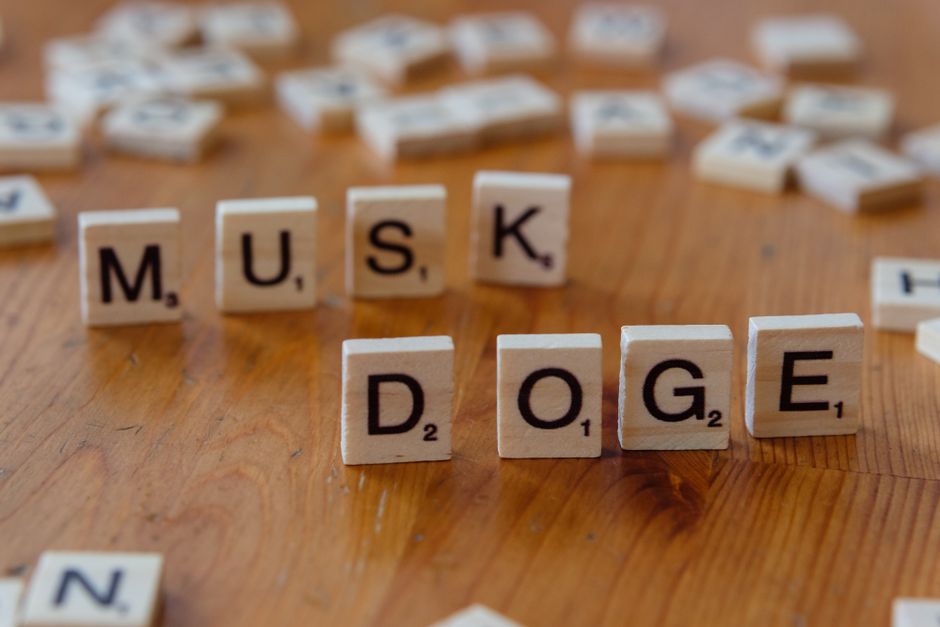
- **Celebrity tweets or endorsements** — Elon Musk’s posts have historically moved DOGE price by double-digit percentages within hours
- **Exchange listings** — being added to a major centralized exchange (CEX) like Coinbase or Kraken often triggers short-term price surges
- **Macro crypto sentiment** — meme coins tend to amplify both bull and bear market moves compared to Bitcoin
| Factor | Bitcoin (BTC) | Typical Meme Coin |
|---|---|---|
| Primary price driver | Institutional demand, halving cycles, macro | Social media hype, influencer posts |
| Market cap stability | High | Extremely low |
| Liquidity depth | Very deep | Often shallow |
| Development activity | Continuous | Minimal or none |
| Regulatory scrutiny | Significant | Growing |
Understanding Meme Coin Risks and Volatility
**Volatility** — the rate and magnitude of price change — is extreme in meme coin markets. It is not uncommon to see a meme coin gain 500% in a week and then lose 90% of that value in the following two weeks. This isn’t speculation; it’s a documented pattern across dozens of assets in this category.
The core risks US investors should understand include:
- **Rug pulls**: Developers abandon the project after accumulating investor funds, leaving token holders with worthless assets. This is the single most common cause of meme coin failure.
- **Pump-and-dump schemes**: Coordinated groups artificially inflate a coin’s price through coordinated buying and hype, then sell simultaneously — crashing the price and burning late buyers.
- **Liquidity risk**: Many meme coins trade on **decentralized exchanges (DEXs)** with thin order books. Selling a large position can be difficult without significantly moving the price against you.
- **Smart contract vulnerabilities**: Many meme coins are deployed hastily with unaudited code, creating exploit risks.
The **lack of intrinsic utility** means there is no fundamental floor to a meme coin’s value. When sentiment turns, there is no revenue, no user base, and no technology to justify any minimum price level.
The US Regulatory Landscape for Meme Coins
The **regulatory environment** for cryptocurrencies in the United States is evolving rapidly. The **SEC (Securities and Exchange Commission)** and **CFTC (Commodity Futures Trading Commission)** have both asserted jurisdiction over various crypto assets. Some meme coins — particularly those sold with promises of profits — may be classified as **securities** under the **Howey Test**, which could expose promoters and certain exchanges to legal liability.
For US taxpayers, the **IRS (Internal Revenue Service)** treats cryptocurrency as property. This means:
- Every **taxable event** — selling, trading, or using crypto to buy goods — triggers a capital gains or loss calculation
- **Short-term capital gains** (assets held under one year) are taxed at ordinary income rates, which can be as high as 37%
- **Long-term capital gains** (assets held over one year) receive preferential rates of 0%, 15%, or 20% depending on income
- Losses from meme coin failures can generally be claimed as **capital losses**, subject to the $3,000 annual deduction cap against ordinary income
Best practices for US investors considering meme coin exposure include using a **hardware wallet** (such as a hardware wallet for crypto security) or reputable custody solution to avoid leaving funds on obscure DEX platforms, documenting every transaction for tax purposes using dedicated crypto tax software, and consulting a **CPA (Certified Public Accountant)** familiar with digital asset taxation.
Analyzing Meme Coin Fundamentals Before Investing
The term “fundamentals” applies loosely to meme coins, but due diligence steps still exist and matter significantly for risk reduction.
**Technology assessment:**
- Is the smart contract code **audited** by a reputable third-party firm (e.g., CertiK, Hacken)?
- Is the token contract **verified** and publicly readable on a block explorer like Etherscan?
- Does the token have a **mint function** that could allow developers to create new supply indefinitely?
**Team credibility:**
- Is the development team **publicly identified (doxxed)**, or are they anonymous?
- Anonymous teams are not automatically fraudulent, but they face zero accountability if they exit scam
- Look for **prior project history** and a track record of delivery
**Community and adoption signals:**
- Organic community growth on Telegram and Discord vs. paid bot activity
- Whether the project has any **partnerships, integrations, or utility** beyond the token itself
- **Token distribution** — if the top 10 wallets control 50%+ of supply, price manipulation risk is extremely high
Real-World Case Studies: Wins, Wipeouts, and Lessons
Dogecoin represents the rare long-term meme coin survivor. Launched as a joke, it benefited from years of organic community development, a recognizable brand, and repeated celebrity attention. Early holders from 2013–2020 saw extraordinary returns — but those who bought at peak 2021 prices are still deeply underwater years later.
Shiba Inu (SHIB) briefly entered the top 10 cryptocurrencies by market cap in late 2021, generating life-changing returns for early buyers. However, the token subsequently lost over 90% of its peak value and has failed to regain those levels despite ongoing development efforts on its **Shibarium Layer 2 network**.
On the failure side, hundreds of meme coins launched during the 2021 bull market have gone to zero. Projects like **Squid Game Token (SQUID)** — which was not affiliated with the Netflix show — executed a classic rug pull in 2021, with developers making off with an estimated $3.4 million while the price crashed to near zero in minutes. These cases are the norm, not the exception.
- The ratio of failed-to-successful meme coins is estimated at **well above 95%**
- Survivorship bias leads investors to focus on DOGE and SHIB while ignoring thousands of total failures
- Past performance in this asset class has **no predictive value** for future results
Risk Management Strategies for Meme Coin Exposure
If an investor chooses to allocate to meme coins despite the above risks, structured risk management is non-negotiable.
**Diversification and position sizing:**
- Meme coin allocation should represent a small, defined percentage of a total crypto portfolio — many risk managers suggest capping speculative assets at 5–10% of overall investable assets
- Spread exposure across multiple assets rather than concentrating in one meme coin
**Order management tools:**
- **Stop-loss orders** automatically sell a position if it falls to a pre-set price, limiting downside in fast-moving markets
- Take-profit targets lock in gains before sentiment reverses — one of the most common mistakes is holding through a pump with no exit plan
- Avoid using **leverage or margin** on meme coins; the volatility makes liquidation risk near-certain
**Staying informed:**
- Monitor **on-chain data** through tools that track large wallet movements (whale alerts)
- Follow reliable crypto news aggregators for regulatory developments that could affect the asset
- Set price alerts rather than constantly watching charts — emotional trading is a primary driver of retail losses in this market
For ongoing market analysis and trend tracking in the broader trending cryptocurrencies space, investors should monitor multiple data sources and cross-reference claims before making allocation decisions.
—
> **Investment Risk Disclaimer:** Investing in cryptocurrencies, including meme coins, is highly speculative and carries substantial risk of loss due to extreme market volatility, potential for manipulation, thin liquidity, and evolving regulatory conditions. Nothing in this article constitutes personalized financial, tax, or investment advice. Always conduct thorough independent research and consult a qualified financial advisor and tax professional before making any investment decisions.
Frequently Asked Questions (FAQ)
Q: What are the tax implications of investing in meme coins for US investors?
A: The IRS treats all cryptocurrency — including meme coins — as property. Every sale, trade, or use triggers a capital gains or loss event. Short-term gains (under one year held) are taxed at ordinary income rates; long-term gains (over one year) receive lower preferential rates. Losses can offset gains, and up to $3,000 in net losses can be deducted annually against ordinary income. Use dedicated crypto tax software and consult a CPA familiar with digital assets.
Q: How can I identify a credible meme coin project?
A: Look for a third-party smart contract audit from a reputable firm, a publicly identified (doxxed) or verifiably accountable development team, transparent token distribution without excessive whale concentration, and organic community growth rather than bot-inflated metrics. A verified contract on a public block explorer and a clear development roadmap are also positive signals — though none of these eliminate risk entirely.
Q: What are the biggest red flags that a meme coin is likely to fail or be a scam?
A: Key red flags include an anonymous team with no prior verifiable history, no smart contract audit, a mint function allowing unlimited new token creation, top wallets controlling a majority of token supply, promises of guaranteed returns or aggressive influencer marketing, and a total lack of utility or development activity beyond the token launch itself. If a project cannot answer basic questions about its code or team, treat it as a near-certain loss.
Q: How do US crypto exchanges handle meme coin regulation?
A: US-based exchanges like Coinbase and Kraken operate under registered money services business (MSB) status and are subject to SEC and CFTC oversight. These platforms conduct their own listing due diligence, which means many meme coins are excluded from US-accessible trading pairs. Offshore exchanges may list more speculative assets, but US investors using them may face additional legal exposure, including state-level securities violations.
Charting & Exchange Resources
| Platform | Use Case | Key Feature | Fee Model | Action |
|---|---|---|---|---|
| TradingView | Charting & technical analysis | Indicators, multi-timeframe charts | Free / Pro tiers | View Platform |
| Coinbase | Exchange (beginner-friendly) | Simple USD on-ramp, educational tools | Varies by region | View Platform |
| Binance | Exchange (advanced pairs) | Wide altcoin coverage, spot markets | Varies by region | View Platform |
Affiliate Disclosure: This post contains affiliate links. We may earn a commission if you buy through our links, at no extra cost to you. Investment Risk Disclaimer: Cryptocurrency and digital asset markets are highly volatile. This content is for informational and educational purposes only and is not financial, investment, or trading advice. You may lose some or all of your capital. Do your own research and consult a licensed financial advisor before making investment decisions.
Leave a Reply