{# Meme Coin Risks and Volatility Explained for US Investors
What Are Meme Coins? A US Market Overview
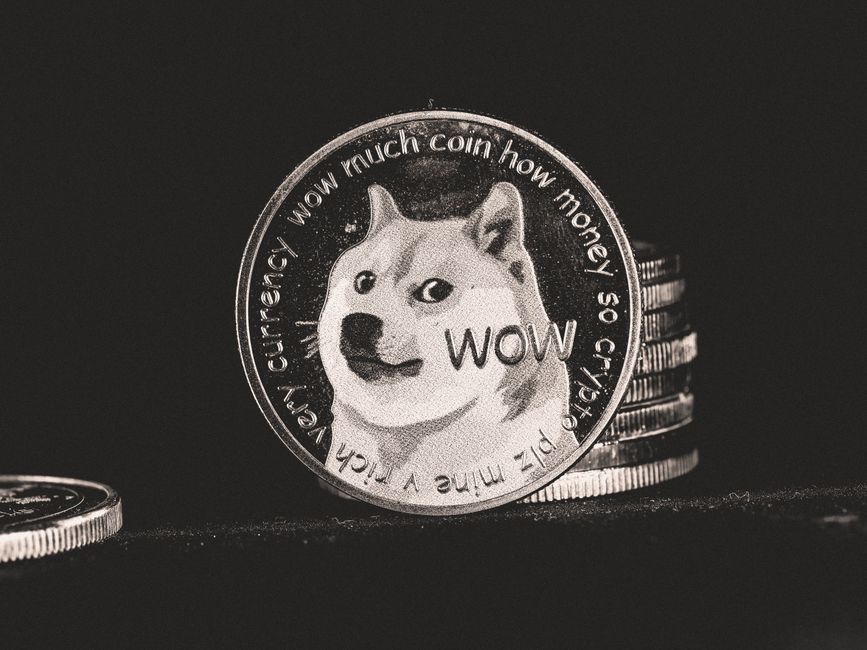
Understanding **meme coin risks and volatility** starts with knowing what these assets actually are. A **meme coin** is a cryptocurrency that originated from an internet meme, joke, or viral cultural moment rather than a specific technological use case. Unlike **Bitcoin (BTC)** or **Ethereum (ETH)** — both built around defined blockchain utility — meme coins derive their value almost entirely from community sentiment and speculative demand. The first widely recognized example, **Dogecoin (DOGE)**, launched in 2013 as a lighthearted parody of Bitcoin featuring the Shiba Inu “Doge” meme.
Over the following decade, the category expanded dramatically. **Shiba Inu (SHIB)**, launched in 2020, became Dogecoin’s most prominent rival and briefly reached a market capitalization in the tens of billions of dollars. By 2024–2025, thousands of meme coins existed across multiple blockchains, with new tokens launching daily — particularly on the **Solana (SOL)** network. For US investors, this space represents one of the highest-risk segments of an already volatile asset class.
Key characteristics that define meme coins:
- **No intrinsic utility** — most lack a defined product, service, or technical roadmap
- **Community-driven value** — price is almost entirely sentiment-based
- **Extreme supply variability** — many tokens have trillions of units in circulation
- **Short lifecycle risk** — many coins lose 90%+ of value within weeks of launch
—
Social Media’s Outsized Role in Meme Coin Prices
No mainstream asset class is as directly tied to social media activity as meme coins. A single post from a high-follower account on X (formerly Twitter), Reddit, or TikTok can push a meme coin’s price several hundred percent within hours. This pattern repeated throughout the 2021 bull cycle, when celebrity endorsements drove dramatic short-term price spikes in DOGE and comparable tokens.
The mechanism runs through **FOMO** (Fear of Missing Out) — a psychological trigger that compels retail investors to buy an asset they fear will keep rising. Social platforms amplify this effect by surfacing trending content to millions of users simultaneously, producing rapid and unsustainable price inflation followed by equally sharp corrections once the initial excitement fades.
Specific risks tied to social media-driven investing include:
- **Coordinated pump-and-dump schemes** — groups artificially inflate prices, then sell en masse
- **Undisclosed paid promotions** — some influencers accept payment to promote tokens without transparency
- **Herd behavior** — retail investors frequently buy at peak prices set by early holders
- **Rapid sentiment reversal** — a single negative news cycle can erase days of gains
US regulators, including the **SEC (Securities and Exchange Commission)**, have pursued enforcement actions against celebrities who promoted crypto assets without disclosing compensation. This regulatory scrutiny reinforces why acting on social media tips alone carries real legal and financial risk.
—
Investment Risks Every US Investor Must Understand
Meme coin investing carries risks that measurably exceed those of mainstream cryptocurrencies. **Price volatility** — the degree to which an asset’s value fluctuates — is routinely three to ten times higher for meme coins than for established assets like BTC or ETH. A coin can rise 500% in a week and surrender 80% of that gain the following week.
**Market manipulation** is a documented and serious concern. Because many meme coins carry low **market capitalization** (the total value of all coins in circulation) and thin trading volume, relatively little capital is needed for a coordinated group to move the price dramatically. This creates an uneven playing field where early insiders and large holders — commonly called **”whales”** — can profit at the expense of retail buyers entering later.
Investors tracking trending crypto assets should keep these additional risks in view:
- **Rug pulls** — developers abandon a project and withdraw all liquidity, leaving investors with worthless tokens
- **Smart contract vulnerabilities** — poorly audited code can be exploited to drain funds
- **Liquidity risk** — thin markets mean large sell orders can crash the price before an investor exits
- **No consumer protections** — unlike FDIC-insured bank accounts, crypto holdings carry no federal insurance backstop
—
US Crypto Exchanges and Trading Platforms Compared
Platform selection matters for US residents who trade meme coins. Not all major exchanges list every token, and regulatory compliance varies considerably. The table below outlines key features relevant to meme coin trading.
| Platform | Meme Coin Selection | US Regulatory Status | Approx. Trading Fees | Notes |
|---|---|---|---|---|
| Coinbase | Limited (major coins only) | SEC/FinCEN registered | 0.5–1.5% spread | Highest compliance standards |
| Kraken | Moderate | FinCEN registered | 0.16–0.26% maker/taker | Strong security track record |
| Binance.US | Moderate | Operates under restrictions | 0.1% base | Reduced US service vs. global version |
| DEX (e.g., Uniswap, Raydium) | Very broad | Decentralized; user-regulated | 0.25–1% swap fee | No KYC; higher rug-pull exposure |
**Decentralized exchanges (DEXs)** provide the broadest access to new and obscure meme coins but carry significantly higher risk: no customer support, no fraud recourse, and direct exposure to smart contract exploits. US investors using DEXs remain responsible for **KYC (Know Your Customer)** compliance and accurate tax reporting regardless of which platform they use.
—
Technical Analysis Basics for Meme Coin Traders
**Technical analysis (TA)** involves studying historical price charts and trading volume data to identify patterns that may suggest future price movement. While TA has limitations across all markets, it is especially unreliable for meme coins because price action is driven more by social sentiment than by supply-and-demand fundamentals. Several concepts still serve a practical risk-management purpose.
**Support and resistance levels** mark price zones where buying or selling pressure has historically concentrated. **Trading volume** — the number of coins exchanged in a given period — can confirm whether a price move reflects genuine market participation or is artificially thin. **RSI (Relative Strength Index)** is a momentum indicator that signals when an asset may be overbought (reading above 70) or oversold (reading below 30).
Practical risk-management steps for meme coin traders:
- **Set stop-loss orders** to automatically exit a position if price drops a defined percentage
- **Limit position size** — most risk-aware traders cap meme coin exposure at 1–5% of total portfolio
- **Take partial profits** at predetermined price targets rather than holding for a theoretical maximum
- **Avoid leverage** — borrowed capital amplifies losses in volatile markets and can exceed the initial investment
—
Legal and Regulatory Considerations in the United States
The US regulatory environment for cryptocurrencies is actively evolving. Both the **SEC** and the **CFTC (Commodity Futures Trading Commission)** have asserted jurisdiction over various crypto assets, and enforcement actions against exchanges and token issuers increased significantly after 2022. As of mid-2026, no comprehensive federal crypto legislation has been enacted, though multiple bills have advanced through Congress.
For meme coin investors, the most immediately relevant legal obligations involve **taxation**. The **IRS (Internal Revenue Service)** classifies cryptocurrency as property, meaning every taxable event — including trading one crypto for another — triggers a capital gains reporting requirement. Failing to report crypto gains can result in penalties, interest, and in serious cases, criminal liability.
Key regulatory points for US investors:
- **Capital gains tax applies** to all crypto disposals, including meme coin sales
- **Wash-sale rules** do not currently apply to crypto (as of 2026), though legislative changes remain possible
- **Airdropped or earned tokens** are taxable as ordinary income at fair market value upon receipt
- **Foreign account reporting (FBAR/FATCA)** may apply if accounts on non-US platforms exceed $10,000
—
Case Studies: Lessons from Meme Coin Market History
The meme coin market offers instructive examples of both extraordinary short-term returns and catastrophic losses. **Dogecoin** reached an all-time high in May 2021 after rising approximately 12,000% from its January 2021 price — then fell roughly 90% over the following year. Investors who purchased near peak prices faced devastating losses; those who entered early and exited before the top saw exceptional returns. The divergence illustrates how timing, far more than asset selection alone, determines outcomes in this market.
The **SQUID token** episode in 2021 remains one of the most cited rug-pull cases on record. Named after a popular streaming series, the token climbed over 75,000% before its developers drained the liquidity pool and disappeared, leaving investors holding tokens worth fractions of a cent. The incident demonstrated how quickly a meme-driven narrative can mask fraudulent intent — and why due diligence matters even in high-momentum markets.
Investors staying current on the latest meme coin and crypto market developments can apply these hard lessons from market history:
- **Early, organic community formation** is a stronger signal than a sudden viral spike
- **Anonymous development teams** substantially increase rug-pull risk
- **Token lock-up periods and third-party audit disclosures** are minimum due-diligence checkpoints
- **Hype cycles compress and collapse faster** with each market cycle as retail participants become more experienced
—
> **Risk Disclaimer:** Meme coins are highly speculative assets subject to extreme price volatility. Past price performance does not indicate future results. Nothing in this article constitutes personalized financial, investment, tax, or legal advice. Cryptocurrency investments are not FDIC insured and may result in a total loss of principal. Consult a licensed financial advisor before making any investment decisions.
—
Frequently Asked Questions (FAQ)
What are the most popular meme coins available to US investors right now?
As of mid-2026, **Dogecoin (DOGE)** and **Shiba Inu (SHIB)** remain the two highest-market-cap meme coins with the broadest availability on US-regulated exchanges. **Pepe (PEPE)** and several Solana-based tokens also maintain significant trading volume, though rankings shift rapidly with market sentiment.
How can I spot a potentially legitimate meme coin project before it gains widespread attention?
Look for verifiable — meaning non-anonymous — development teams, published smart contract audits from reputable security firms, genuine organic community growth on platforms like Reddit and Discord, and transparent tokenomics (the distribution and vesting schedules for a project’s total token supply). High social media activity alone is not a reliable signal and is frequently manufactured by promotional campaigns.
What is the core difference between meme coins and established cryptocurrencies like Bitcoin?
**Bitcoin (BTC)** has defined scarcity (a hard cap of 21 million coins), a decade-plus market history, significant institutional adoption, and US spot ETF approval. Meme coins typically lack all of these attributes. The risk-to-reward profile is fundamentally different: meme coins offer higher potential short-term upside alongside a substantially higher probability of near-total loss.
Are meme coin gains taxable in the United States?
Yes. The IRS treats all cryptocurrency — including meme coins — as property. Every disposal event, including selling, swapping for another token, or spending crypto, is a taxable event subject to capital gains reporting. Accurate record-keeping of purchase prices (cost basis) and sale prices is essential to avoid penalties.
What is a rug pull, and how can US investors protect themselves?
A rug pull occurs when a project’s developers — often anonymous — abruptly withdraw all funds from a liquidity pool and abandon the project, leaving token holders with assets that are effectively worthless. Protective steps include verifying that a project has undergone a third-party smart contract audit, that developer wallets are subject to lock-up periods, and that the team’s identities are publicly verifiable before committing any capital.
Charting & Exchange Resources
| Platform | Use Case | Key Feature | Fee Model | Action |
|---|---|---|---|---|
| TradingView | Charting & technical analysis | Indicators, multi-timeframe charts | Free / Pro tiers | View Platform |
| Coinbase | Exchange (beginner-friendly) | Simple USD on-ramp, educational tools | Varies by region | View Platform |
| Binance | Exchange (advanced pairs) | Wide altcoin coverage, spot markets | Varies by region | View Platform |
Affiliate Disclosure: This post contains affiliate links. We may earn a commission if you buy through our links, at no extra cost to you. Investment Risk Disclaimer: Cryptocurrency and digital asset markets are highly volatile. This content is for informational and educational purposes only and is not financial, investment, or trading advice. You may lose some or all of your capital. Do your own research and consult a licensed financial advisor before making investment decisions.
Leave a Reply