{## Introduction to Reading Crypto Market Charts
If you’re just getting started in cryptocurrency, learning **how to read crypto market charts for beginners** is one of the most practical skills you can build. Charts translate raw price data into visual patterns that reflect the push and pull of supply and demand — and in a market as fast-moving as crypto, that kind of situational awareness matters.
Crypto chart analysis draws from traditional technical analysis (TA), a discipline with decades of use in stock and forex markets, and applies it to digital assets like Bitcoin (BTC) and Ethereum (ETH). The difference is that crypto markets trade 24/7 and can move dramatically within hours, making chart literacy more consequential here than in most traditional asset classes. Understanding what a chart communicates can help separate an informed decision from a costly emotional reaction.
This guide is written for US readers starting from scratch. Every term is explained in plain English, and risk context is built into every section — because understanding what can go wrong is just as important as spotting an opportunity.
—
Types of Crypto Market Charts
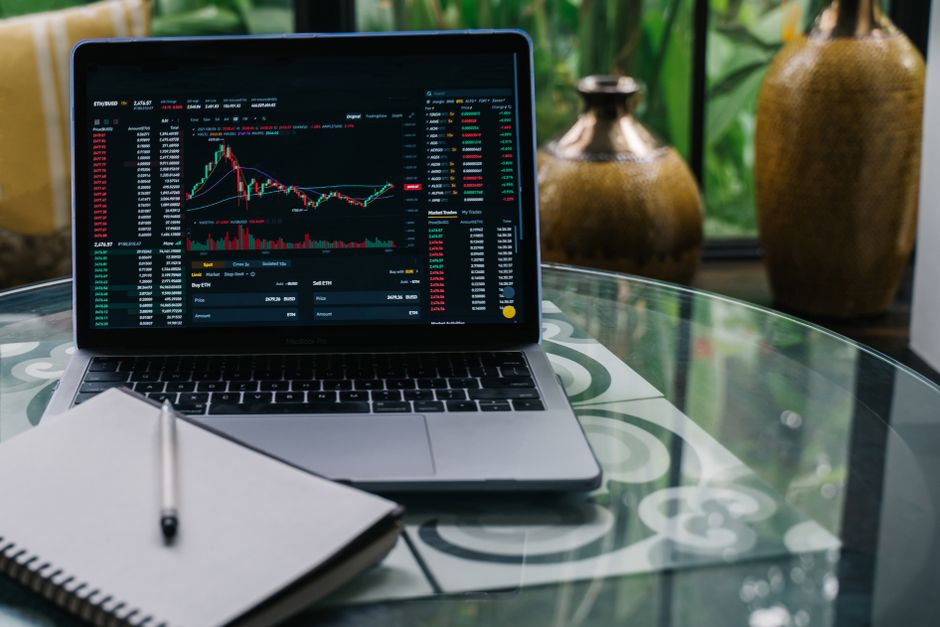
Three chart formats appear across virtually every cryptocurrency exchange and charting platform. Knowing which one you’re looking at — and why it matters — is the first step.
**Line charts** plot a single price point (typically the closing price) at each time interval. They’re useful for visualizing long-term trends at a glance but omit a significant amount of intraday detail.
**Candlestick charts** are the industry standard for crypto analysis. Each “candle” captures four data points for a set time period: the open price, close price, intraday high, and intraday low. That density of information per interval makes candlestick charts far more useful than line charts for anyone doing active analysis.
**Bar charts** display the same four data points — open, high, low, close (OHLC) — as candlestick charts but in a vertical bar format. Most traders in the crypto space find candlesticks more intuitive, so bar charts are less commonly encountered.
| Chart Type | Data Shown | Best Use |
|---|---|---|
| Line | Closing price only | Long-term trend overview |
| Candlestick | Open, high, low, close | Detailed price action and patterns |
| Bar | Open, high, low, close | Alternative OHLC view; less common in crypto |
—
Interpreting Candlestick Charts for Beginners
The candlestick chart’s anatomy is worth understanding in detail, since you’ll encounter it on every major platform. Each candle has two components: the **body** (the wider rectangle showing the range between the open and close prices) and the **wicks**, sometimes called shadows — the thin lines extending above and below the body that mark the session’s high and low extremes.
A **bullish candle** closes higher than it opened, typically rendered in green. A **bearish candle** closes lower than it opened, typically in red. The ratio of body size to wick length offers clues about buying and selling pressure during that period — a long lower wick, for instance, suggests s rs pushed price down but buyers stepped in and drove it back up before the close.
Several recurring patterns signal potential shifts in momentum:
- **Hammer**: Small body, long lower wick — often appears at the bottom of a downtrend and may suggest a bullish reversal
- **Doji**: Open and close prices are nearly identical, forming a cross — indicates market indecision
- **Engulfing pattern**: A candle that fully “engulfs” the previous candle’s body — a bullish engulfing suggests buying pressure is overcoming s rs; a bearish engulfing suggests the reverse
One important caution: no candlestick pattern is a reliable standalone signal. Treat patterns as hypotheses, not conclusions, and always look for confirmation from volume or other indicators before acting.
—
Analyzing Market Trends and Trading Volume

Trend identification is the structural core of chart analysis. Markets broadly move in three directions: **uptrends** (characterized by higher highs and higher lows), **downtrends** (lower highs and lower lows), and **sideways markets**, where price consolidates within a defined range without clear directional momentum.
**Trading volume** — the total quantity of an asset exchanged in a given period — functions as a confirmation mechanism. A price move on high volume carries more analytical weight than the same move on thin volume. A breakout above a resistance level accompanied by a volume spike, for example, is generally considered a stronger signal than one that occurs quietly.
**Support and resistance levels** are among the most fundamental concepts in technical market analysis:
- **Support**: A price zone where buying pressure has historically emerged and halted declines
- **Resistance**: A price zone where selling pressure has historically capped advances
- **Trendlines**: Diagonal lines connecting a series of swing highs or lows to visualize the trend’s trajectory
These are zones, not exact price points. A brief pierce of a support or resistance level that quickly reverses — commonly called a “fakeout” — is a normal market behavior beginners often misread as a confirmed break.
—
Utilizing Technical Indicators for Crypto Analysis
Technical indicators are mathematical calculations applied to price and volume data, displayed as chart overlays or separate panels. Three of the most widely used in crypto analysis:
**Moving Average (MA)**: Smooths price data over a defined period (for example, the 50-day or 200-day MA). When a short-term MA crosses above a long-term MA, the event is called a **golden cross** — broadly interpreted as a bullish signal. The reverse, a **death cross**, occurs when a short-term MA drops below a long-term MA.
**Relative Strength Index (RSI)**: A momentum oscillator that measures the speed and magnitude of price changes on a 0–100 scale. An RSI reading above 70 is conventionally interpreted as **overbought** (potentially due for a pullback); below 30 is considered **oversold** (potentially due for a bounce). RSI is not a timing tool on its own — it identifies conditions, not guaranteed reversals.
**Bollinger Bands**: Three lines plotted on a chart — a central moving average flanked by two bands set at a standard deviation above and below it. When price approaches the upper band, it may reflect overbought conditions; near the lower band may indicate oversold conditions. Periods of narrow band spacing (called a “squeeze”) often precede significant price moves in either direction.
| Indicator | What It Measures | Common Use Case |
|---|---|---|
| Moving Average (MA) | Smoothed average price | Trend direction, golden/death cross |
| RSI | Momentum; overbought/oversold | Gauging entry and exit zones |
| Bollinger Bands | Volatility range | Spotting breakouts and reversals |
Using multiple indicators together — a practice called **confluence** — reduces the likelihood of acting on a false signal. When two or more independent indicators agree on a condition, that agreement adds analytical weight.
—
Managing Risk When Reading Crypto Charts
Risk management is the section most beginners skip, and it’s arguably the most consequential part of any analytical framework. Crypto assets can move 20–50% within days — sometimes within hours — making position sizing and exit planning essential, not optional.
Chart analysis helps identify **risk invalidation zones**: price levels at which your original thesis is no longer supported by the data. If you’ve identified a support level and price decisively breaks below it on strong volume, that’s a signal to reassess — not to average down hoping for a recovery.
**Stop-loss orders** — automated sell orders that execute if price reaches a predetermined level — are among the most practical risk tools available on US-accessible exchanges. Setting a stop-loss before entering a position removes the emotional component from the exit decision, which is where most beginner mistakes occur.
Practical risk principles for beginners reading charts as part of crypto market analysis:
- Never risk more capital on a single position than you can afford to lose entirely
- Define your maximum acceptable loss (your stop-loss level) before entering, not after
- Avoid margin trading (borrowed funds) until you have substantial experience — leverage amplifies losses as readily as gains
- Diversify across assets rather than concentrating exposure in a single coin
—
Practical Tips for Beginners Reading Crypto Market Charts
Effective chart analysis doesn’t require a finance background or paid software. A few disciplined habits produce most of the improvement beginners need.
**Platform selection matters.** Free tools like TradingView and CoinGecko offer professional-grade charting with extensive indicator libraries. Most major US-accessible exchanges also include native charting features. Start with one platform and learn it thoroughly before branching out.
**Time frame selection** is one of the most overlooked variables for new chart readers. The same asset looks entirely different on a 5-minute chart versus a weekly chart. Longer time frames — daily and weekly — filter out short-term noise and surface more structurally significant trends. Shorter time frames are more relevant for active, short-duration trading.
Foundational habits worth building early:
- Begin with the **daily chart** to establish the broader trend before zooming into shorter intervals
- Maintain consistency — pick a time frame that matches your investment horizon and don’t switch frames based on what looks more favorable
- Keep a simple chart journal: record the patterns you identified and what the market did afterward. Reviewing this regularly accelerates learning faster than any other single practice
- Watch for **confirmation bias** — the tendency to see patterns on a chart that support a position you already want to take. It’s one of the most common errors in beginner analysis
—
Crypto Chart Analysis Tools: What US Readers Use
**TradingView** is the most widely used platform among retail traders in the US and globally. It offers fully customizable charts, hundreds of built-in indicators, a scripting language for custom indicators (Pine Script), and a community where traders publish annotated chart ideas publicly. The free tier is sufficient for most beginner needs.
**CoinGecko** excels at aggregating market data across thousands of tokens — market capitalization (market cap, meaning the total value of all coins in circulation), 24-hour trading volume, and multi-year price history. It’s particularly useful for researching smaller altcoins where exchange-specific data may be inconsistent or incomplete.
Recommended setup for a first charting session:
- Add a **volume indicator** to every chart by default — price action without volume context is systematically incomplete
- Apply the **200-day moving average** for an immediate read on long-term trend direction
- Add **RSI** as a separate panel to track momentum without cluttering the price chart
- Save your indicator configuration as a default template so every new chart opens with a consistent analytical baseline
These tools surface objective historical data. They don’t predict markets — they help you organize and interpret what has already happened, which is the foundation of any rational analysis.
—
Risk Disclaimer
**Important:** Cryptocurrency markets are highly volatile and speculative. The content in this article is provided for **educational purposes only** and does not constitute financial, investment, or trading advice of any kind. Historical chart patterns do not guarantee future price behavior. Always conduct your own independent research and consult a licensed financial advisor before making any investment decisions. You may lose some or all of your invested capital.
—
Frequently Asked Questions (FAQ)
Q: What are the most important things to look for when reading crypto market charts as a beginner?
A: Prioritize three core elements: the **price trend** (is the asset forming higher highs or lower lows?), **trading volume** (does volume confirm the direction of the price move?), and at least one supporting indicator — RSI or a moving average — to gauge momentum and potential overbought or oversold conditions. These three factors together provide a more reliable read than any single data point alone.
Q: How often should I check crypto market charts?
A: It depends on your strategy. Long-term holders (commonly called **HODLers**) may review daily or weekly charts once or twice a week. Swing traders — those holding positions for days to weeks — typically analyze daily charts each morning. Compulsive short-interval monitoring tends to generate noise rather than insight and often leads to emotionally driven decisions.
Q: Can reading crypto market charts guarantee profitable trades?
A: No. Chart analysis improves decision quality by grounding it in objective, historical price data — but it cannot guarantee outcomes. Crypto markets are shaped by regulatory developments, macroeconomic shifts, large-holder (whale) activity, and breaking news events that no chart can anticipate. Risk management discipline, not prediction accuracy, is the most consistent differentiator between experienced and inexperienced market participants.
Q: What’s the difference between support and resistance levels?
A: **Support** is a price zone where buying demand has historically emerged and prevented further declines — think of it as a floor. **Resistance** is a price zone where selling pressure has historically capped advances — a ceiling. Neither level is absolute; price can and does break through both. When a former resistance level is broken convincingly, it often becomes a new support level, and vice versa.
Q: Is TradingView free to use for crypto chart analysis?
A: Yes — TradingView offers a free tier that includes access to most core charting features and a broad indicator library, which is more than sufficient for beginner-level analysis. Paid tiers add features like multiple chart layouts, more simultaneous indicators, and faster data refresh rates, but are not necessary when starting out.
Charting & Exchange Resources
| Platform | Use Case | Key Feature | Fee Model | Action |
|---|---|---|---|---|
| TradingView | Charting & technical analysis | Indicators, multi-timeframe charts | Free / Pro tiers | View Platform |
| Coinbase | Exchange (beginner-friendly) | Simple USD on-ramp, educational tools | Varies by region | View Platform |
| Binance | Exchange (advanced pairs) | Wide altcoin coverage, spot markets | Varies by region | View Platform |
Affiliate Disclosure: This post contains affiliate links. We may earn a commission if you buy through our links, at no extra cost to you. Investment Risk Disclaimer: Cryptocurrency and digital asset markets are highly volatile. This content is for informational and educational purposes only and is not financial, investment, or trading advice. You may lose some or all of your capital. Do your own research and consult a licensed financial advisor before making investment decisions.
Leave a Reply