If you’ve watched Dogecoin spike 40% overnight or seen a new meme token trend on Reddit before collapsing within days, you already understand that **meme coin risks and volatility** operate on a different level than anything else in financial markets. This guide gives US retail investors a risk-first framework for understanding these assets before committing any real capital.
What Is a Meme Coin? A Plain-English Definition
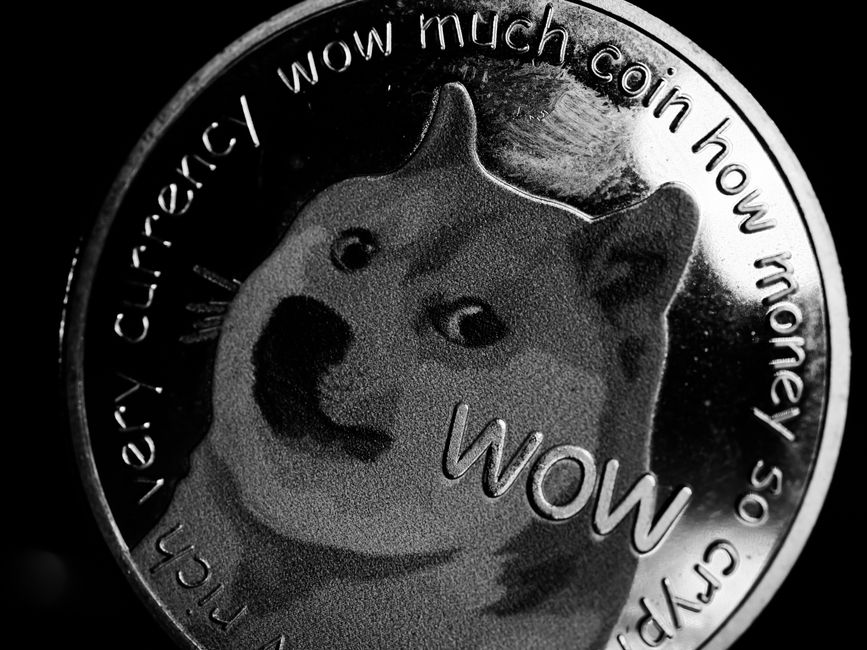
A **meme coin** is a cryptocurrency that originates from internet culture or social media trends rather than a specific technological use case. Unlike **Bitcoin (BTC)** — designed as decentralized digital money — or **Ethereum (ETH)** — a platform for programmable smart contracts — most meme coins have no underlying utility anchoring their value. Price is driven almost entirely by community enthusiasm and speculative demand.
**Dogecoin (DOGE)**, launched in 2013 as a parody of Bitcoin, became the prototype. Its creators openly called it a joke, yet it reached a market capitalization exceeding $80 billion at its 2021 peak. That cycle triggered thousands of copycat tokens — **Shiba Inu (SHIB)**, **Floki**, **SafeMoon**, and many more.
- **Utility token:** value tied to platform use (e.g., Ethereum gas fees)
- **Meme coin:** value tied to sentiment, virality, and speculation
- No whitepaper, no development team, no roadmap = significantly elevated risk
If you want broader context on which assets are gaining traction right now, the trending cryptos market guide tracks current activity across the meme coin segment.
How Meme Coin Prices Are Set — and Why That Creates Risk
**Market cap** — total circulating supply multiplied by current price — can look impressive while masking the fact that only a tiny fraction of supply trades on any given day. This is the **thin liquidity problem**. When trading volume is low relative to market cap, even a modest sell order can move price dramatically.
A $50,000 sell order that barely registers on Bitcoin’s order book could drop a low-cap meme token 15% in minutes. Most meme coins lack the **order book depth** — the stacked buy and sell orders at various price levels — that stabilizes major assets. The line between **price discovery** and coordinated price manipulation is dangerously blurry in this segment.
- Low market cap + low liquidity = outsized price swings on small trades
- No fundamental anchor means price can fall toward zero without a structural trigger
- Thin order books make meme coins easy targets for coordinated trading activity
The Six Core Drivers of Meme Coin Volatility
Six factors consistently move meme coin prices in both directions. Understanding them helps investors distinguish opportunity from danger signals.
**1. Social media sentiment** is the dominant force. A viral tweet or Reddit post can push a token 30–50% higher within hours, and reversals are equally fast. **2. Whale wallets** — addresses holding a disproportionate share of total supply — can crash a token instantly by selling in size. **3. Macro crypto correlation** means when Bitcoin drops sharply, meme coins fall harder and faster, reflecting their high **beta** (sensitivity to broader market moves).
**4. Exchange listing and delisting events** act as immediate price catalysts. **5. Celebrity and influencer endorsements** have repeatedly inflated meme coin prices before reversing — sometimes triggering **SEC (Securities and Exchange Commission)** investigations into undisclosed paid promotions. **6. Macroeconomic conditions**, including interest rate decisions and risk-off sentiment, can drain speculative capital from meme coins quickly.
- Monitor on-chain data for whale movement before entering any position
- Never treat a celebrity endorsement as a fundamental signal
- Cross-reference social volume spikes with price movement — divergence is a warning
Pump-and-Dump Schemes: Mechanics and Warning Signs
A **pump-and-dump (P&D)** is a coordinated fraud. Insiders accumulate a low-cap token cheaply, inflate the price through coordinated buying and social media hype, then sell into the retail buying frenzy — leaving late buyers holding near-worthless tokens. This pattern predates crypto by decades in penny stock markets, but blockchain’s pseudonymity accelerates it.
Common mechanics include private Telegram groups coordinating timed buys, fake presale announcements, and manufactured influencer endorsements. **Token vesting schedules** — the timeline over which early investors can sell — are a critical on-chain signal. If founding wallets have no lock-up period, early holders can dump immediately after a price spike.
The SEC and the **CFTC (Commodity Futures Trading Commission)** have pursued enforcement actions against crypto pump-and-dump schemes. Despite this, prosecution is difficult and restitution for US retail investors remains rare.
- **On-chain red flags:** wallet concentration above 20% in top 10 holders, no liquidity lock, unlocked team tokens
- Verify vesting schedules on blockchain explorers like Etherscan or BscScan
- Treat urgent “buy now before launch” messaging as a manipulation signal
Rug Pulls and Exit Scams: What US Investors Need to Know
A **rug pull** is distinct from an organic price crash. Developers deliberately drain the **liquidity pool** — the reserve of funds backing trading — and disappear with investor capital, sometimes within hours of a token launch. There are two main types.
A **hard rug** involves developers draining liquidity or exploiting a smart contract backdoor to steal funds directly. A **soft rug** is slower: the team stops developing, deletes communication channels, and quietly sells holdings while the token dies. Both result in near-total capital loss for retail holders.
Reading a token’s **smart contract** — the self-executing code governing how a token behaves — doesn’t require coding skills at a basic level. Free audit tools like Token Sniffer, GoPlus Security, and RugDoc scan contracts for red flags including mint functions allowing unlimited token creation, hidden fee functions, and owner-only sell restrictions.
- Check Token Sniffer or GoPlus before buying any new meme token
- Verify **liquidity lock** duration and provider on platforms like Team Finance or Unicrypt
- Anonymous team + no audit + no lock = highest documented risk category
Key Volatility Metrics US Traders Should Understand
Quantifying volatility provides a more objective framework than gut feeling. **Annualized volatility** expresses expected price fluctuation over a year as a percentage. Bitcoin’s typically runs 50–80%. Many meme coins register 200–500% or higher — meaning daily swings that would be catastrophic events in stock markets are routine.
Look for **divergence between trading volume and price movement**: if price rises sharply but volume doesn’t confirm the move, the rally is likely unsustainable. The **Crypto Fear and Greed Index** aggregates multiple sentiment signals into a 0–100 score — readings above 75 (extreme greed) historically precede corrections, and meme coins correct harder than the broader market.
| Metric | What It Shows | Risk Signal |
|---|---|---|
| Annualized Volatility | Expected yearly price range | Above 200% = extreme risk |
| Volume vs. Price | Confirms or questions a move | Price up, volume flat = warning |
| Fear and Greed Index | Broad market sentiment | Above 75 = overheated |
| Holder Concentration | Who controls the supply | Top 10 wallets above 30% = danger |
| Liquidity Depth | Trade capacity without slippage | Thin book = manipulation risk |
For ongoing coverage of how these metrics are playing out across trending crypto assets, market analysis is updated regularly with data-driven breakdowns.
Tax and Regulatory Exposure for US Meme Coin Investors
The **IRS (Internal Revenue Service)** classifies all cryptocurrency — including meme coins — as **property**, not currency. Every trade, swap, or sale is a taxable event. Profits from tokens held under one year are taxed as **short-term capital gains** at your ordinary income rate — potentially as high as 37% for high earners.
The **wash-sale rule** — which prevents stock investors from claiming a tax loss by immediately rebuying the same asset — does not currently apply to crypto under existing IRS guidance, though legislation to extend it has been proposed. US investors must report crypto transactions on **Form 8949** and carry totals to **Schedule D** of their federal return. Crypto tax platforms like Koinly, CoinTracker, and TaxBit can automate this tracking.
- Every meme coin trade is a US taxable event — maintain detailed records
- Short-term gains taxed as ordinary income; consult a crypto-specialized CPA
- Regulatory status of individual tokens under SEC and CFTC guidelines is subject to change
Psychological Traps That Amplify Meme Coin Losses
**FOMO (Fear of Missing Out)** is the primary entry driver in meme coin markets. Watching a token rise 300% on social media creates psychological distress that overrides rational risk assessment. Most late retail entries into major meme coin pumps occurred within 48 hours of peak price.
**Loss aversion bias** — the documented tendency to feel losses roughly twice as intensely as equivalent gains — causes holders to refuse selling a crashing token. The **sunk cost fallacy** compounds this: irrational attachment to a position because of prior investment causes investors to hold all the way to near-zero. Social media echo chambers reinforce these tendencies by suppressing bearish analysis.
- Define entry criteria before a pump begins — FOMO enters at the worst moment
- Set a stop-loss or exit target before buying, not during the emotional heat of a rally
- Treat crypto social media as a sentiment data source, not investment research
Risk Management Basics for Meme Coin Exposure
The foundational principle experienced traders apply to speculative assets: only allocate capital you can afford to lose entirely. Meme coins have a documented history of returning to near-zero, and treating any position as potentially irreversible helps calibrate sizing rationally.
Many risk-aware traders cap total meme coin exposure at **1–5% of their total crypto portfolio**. **Dollar-cost averaging (DCA)** — spreading purchases across multiple dates — reduces the impact of buying at a local peak but provides limited protection against a genuine rug pull or exchange delisting. **Stop-loss orders** — instructions to automatically sell if price drops below a set level — are available on major US exchanges and represent one of the few mechanical tools that can override emotional decision-making.
- Cap meme coin exposure at 1–5% of total crypto holdings
- Set stop-loss orders on any exchange that supports them
- Pair speculative positions with large-cap crypto assets for portfolio balance
How US Crypto Exchanges Handle Meme Coins
Not all meme coins are available on **tier-1 US exchanges** like Coinbase, Kraken, or Gemini. These platforms apply listing standards — legal review, security audits, and liquidity minimums — that filter out many new tokens. Tokens that clear this bar have passed at least some institutional scrutiny.
Meme coins that fail centralized exchange standards are typically only available on **DEXs (decentralized exchanges)** like Uniswap or PancakeSwap, where any token can be listed without vetting. Trading on a DEX requires a self-custody wallet like MetaMask, carries higher technical risk, and offers no exchange-level customer support. **Slippage** — the difference between expected and executed trade price due to thin liquidity — is also significantly higher on DEX trades for low-cap tokens.
| Exchange Type | Listing Standards | Insurance/Custody | Meme Coin Access |
|---|---|---|---|
| Tier-1 US (Coinbase, Kraken) | High — legal and audit review | Yes — regulated | Limited selection |
| Tier-2 US (Crypto.com) | Medium | Partial | Broader selection |
| DEX (Uniswap, PancakeSwap) | None — permissionless | None | All tokens |
| Offshore CEX | Variable | Minimal or none | Widest selection |
—
Investment Risk Disclaimer
**Nothing in this article constitutes financial, investment, tax, or legal advice.** Meme coins are among the highest-risk assets in any market — speculative by design, historically prone to near-total value loss, and subject to manipulation, fraud, and rapidly evolving US regulation. Many meme tokens that reached peak valuations between 2021 and 2023 are currently trading 95–99% below those highs. US investors should consult a **licensed financial advisor** and a **crypto-specialized CPA** before allocating any capital. Past price performance provides no reliable indication of future results.
—
Frequently Asked Questions
Are meme coins legal to buy in the United States?
Buying most meme coins is currently legal for US residents, but legal to purchase does not mean protected as an investment. The SEC has scrutinized specific tokens as potential unregistered securities, which can result in delistings from US exchanges without notice. No regulatory oversight applies to the project itself.
Why do meme coins crash so much faster than Bitcoin or Ethereum?
Meme coins have a fraction of Bitcoin’s market cap and liquidity, meaning far less capital is required to move price in either direction. More importantly, demand is almost purely speculative — there is no underlying utility creating independent demand when sentiment turns negative. High whale wallet concentration accelerates any sell-off into a near-vertical drop.
How do I know if a meme coin project is a scam before investing?
Run the token contract address through free tools like Token Sniffer or GoPlus Security before buying. Look for verified liquidity locks, a transparent and publicly identified development team, an independently audited smart contract, and a realistic roadmap. Absence of any one of these is a serious warning sign; absence of all four fits the documented profile of a rug pull setup.
What happens to my meme coin taxes if the token goes to zero?
Under current IRS guidance, a crypto asset that becomes completely worthless may qualify as a **capital loss**, which can offset capital gains elsewhere in your portfolio. You need records of your original purchase price (cost basis), date of purchase, and evidence of the token’s near-zero or zero value. Work with a crypto-specialized CPA to report the loss correctly on Form 8949, as the rules around worthless crypto assets are still evolving.
Charting & Exchange Resources
| Platform | Use Case | Key Feature | Fee Model | Action |
|---|---|---|---|---|
| TradingView | Charting & technical analysis | Indicators, multi-timeframe charts | Free / Pro tiers | View Platform |
| Coinbase | Exchange (beginner-friendly) | Simple USD on-ramp, educational tools | Varies by region | View Platform |
| Binance | Exchange (advanced pairs) | Wide altcoin coverage, spot markets | Varies by region | View Platform |
Affiliate Disclosure: This post contains affiliate links. We may earn a commission if you buy through our links, at no extra cost to you. Investment Risk Disclaimer: Cryptocurrency and digital asset markets are highly volatile. This content is for informational and educational purposes only and is not financial, investment, or trading advice. You may lose some or all of your capital. Do your own research and consult a licensed financial advisor before making investment decisions.
Leave a Reply