
Why Reading Crypto Market Charts Matters
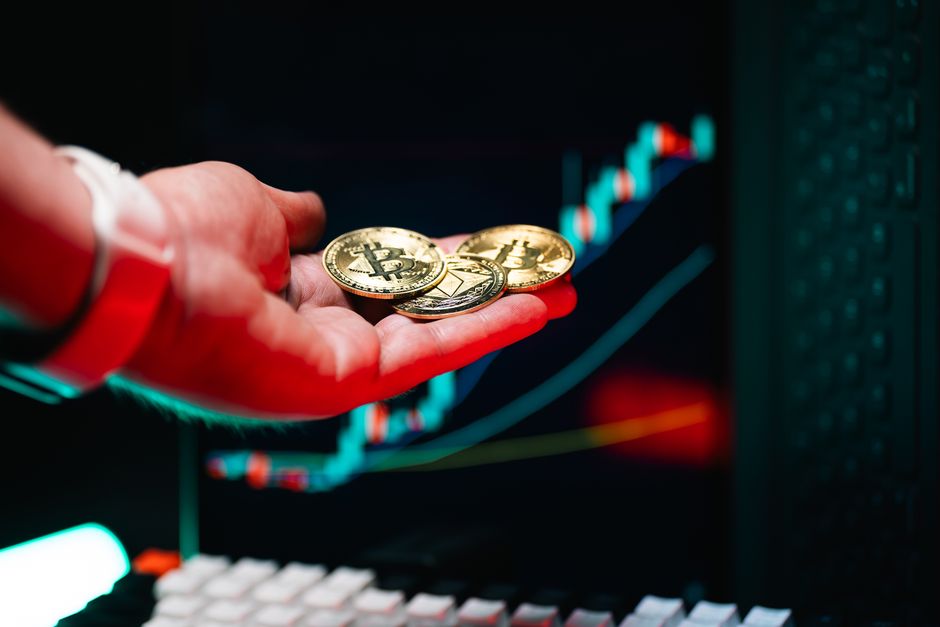
Crypto markets never sleep. Bitcoin, Ethereum, and hundreds of altcoins swing by double-digit percentages in a single day, and without a basic framework for reading charts, you are essentially navigating the market blind. Learning **how to read crypto market charts** gives you the vocabulary to interpret price action, recognize trends, and understand when the market is signaling a meaningful shift. Charts are not crystal balls — they will not tell you tomorrow’s price — but they do offer a visual shorthand for collective market sentiment across millions of participants worldwide.
For beginners, the learning curve can feel steep. Between candlestick patterns, moving averages, volume bars, and a dozen different time frames, the average chart can look like a foreign language. This guide cuts through that complexity. We will walk you through each major component of a crypto chart, explain what it means in plain English, and show you how to use it as one tool within a broader, disciplined investment strategy. Chart analysis is one tool among many, and no indicator guarantees outcomes in a market known for extreme volatility.
Types of Crypto Market Charts
Three chart types dominate cryptocurrency platforms. Each tells the same basic story — where price has been — in a different visual format.
**Line Charts** plot a single data point, typically the **closing price**, for each time interval. A dot is placed at the closing price and connected to the next period’s closing price by a continuous line. Line charts are the simplest format, ideal for quickly grasping the overall direction of a coin over days, weeks, or months. They work best for long-term trend identification rather than precise entry timing.
**Candlestick Charts** show four data points per period: the **opening price**, **closing price**, **high**, and **low**. Each candlestick has a body — the range between open and close — and wicks or shadows extending above and below, representing the full high-low range. Green or white candles typically signal that buyers won the period; red or black candles signal s rs won. This format is the industry standard for technical analysis because it packs the most information into the smallest visual space.
**Bar Charts** (sometimes called OHLC bars) convey the same four data points as candlesticks but display them as vertical lines with horizontal ticks. The top tick marks the high, the bottom tick marks the low, the left tick shows the open, and the right tick shows the close. Bar charts are popular among professional traders who prefer a cleaner, less visually busy interface.
| Chart Type | Data Shown | Best For | Complexity |
|---|---|---|---|
| Line | Closing prices only | Long-term trend spotting | Beginner |
| Candlestick | Open, High, Low, Close | Pattern recognition, timing | Intermediate |
| Bar (OHLC) | Open, High, Low, Close | Precise price analysis | Intermediate |
Key Components Found on Every Crypto Chart
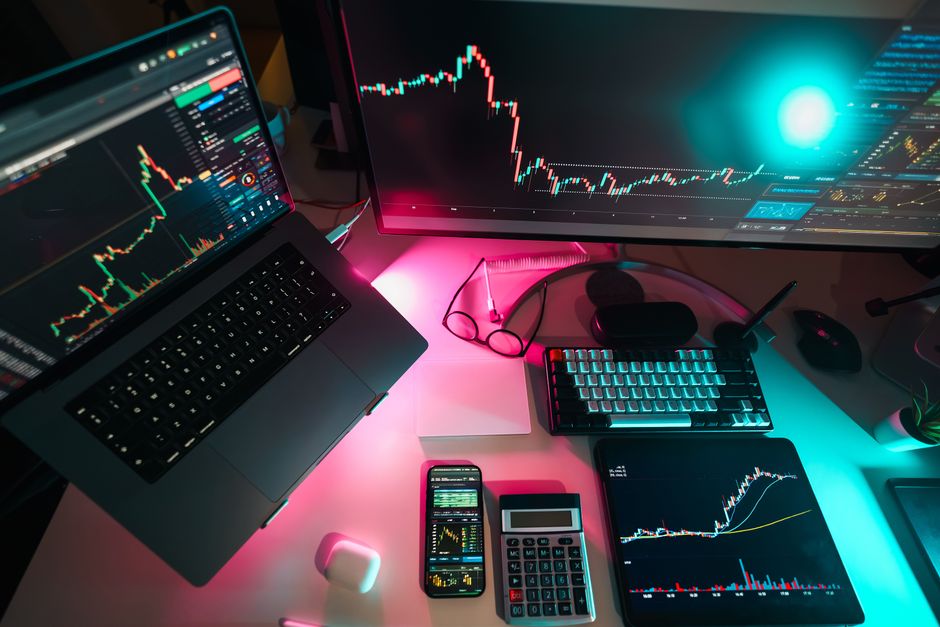
Before analyzing patterns, you need to understand the structural elements that frame every chart. These components apply regardless of which platform you use — whether Coinbase, Kraken, TradingView, or Binance.
**Time Frame** controls how much data each candle or bar represents. Common intervals include 1-minute (1m), 5-minute (5m), 1-hour (1H), daily (1D), and weekly (1W). Shorter time frames show fine-grained intraday noise; longer time frames smooth that noise and reveal the broader trend. Beginners often check a 1-minute chart and panic at what turns out to be normal daily volatility.
**Price Axis** runs vertically along the right side of the chart and shows the price scale. Some charts use linear scaling — each price step is an equal distance — while others use logarithmic scaling — each step represents an equal percentage move. Logarithmic scales are generally better for assets that have moved dramatically over time, which describes most cryptocurrencies.
**Trading Volume** appears as bars beneath the main price chart. Each volume bar corresponds to one price candle and represents the total number of coins traded during that period. Volume is a critical confirmation tool: a breakout that occurs on low volume is less convincing than one that occurs on high volume.
**Moving Averages** (MAs) are calculated by averaging the closing price over a set number of periods. They overlay the price chart as smooth lines that filter out short-term noise. The most common are the 50-day MA — used for short-term trend — and the 200-day MA — used for long-term trend identification.
Reading Candlestick Charts for Beginners
Candlestick charts are the most widely used format in crypto trading for good reason. Each candlestick encodes four pieces of information and communicates market psychology at a glance.
The **body** of a candlestick is the distance between the opening and closing price. A long green body means buyers dominated that period and pushed price firmly higher. A long red body means s rs overwhelmed buyers. The **wicks** — also called shadows — show how far price extended in either direction before the period closed. Long upper wicks suggest s rs stepped in at the high; long lower wicks suggest buyers stepped in at the low.
Certain candlestick patterns have earned names through decades of observation:
- **Doji**: A candlestick where open and close are nearly equal, forming a cross shape. Signals indecision and a potential trend reversal.
- **Hammer**: A small body at the top with a long lower wick. In a downtrend, this can signal buying pressure building at the bottom.
- **Shooting Star**: The opposite of a hammer — a small body at the bottom with a long upper wick, potentially signaling rejection at a high.
- **Engulfing Pattern**: When a candle’s body completely covers the previous candle’s body. A bullish engulfing in a downtrend can signal a shift in momentum.
No single candlestick pattern guarantees a move. Always confirm signals with additional indicators or volume data before acting on any chart observation.
Analyzing Trading Volume on Crypto Charts
Volume is the engine behind price movement, and reading it correctly separates casual observers from more experienced analysts.
High volume accompanying a price move confirms the move has broad market participation. If Bitcoin’s price jumps 5% on a day when volume is triple the 30-day average, that surge carries more weight than the same 5% jump on a below-average volume day. Low volume breakouts are a classic warning sign — the move may lack staying power.
**Volume divergence** occurs when price and volume move in opposite directions. If price is climbing but volume is declining, the rally may be losing steam — fewer participants are willing to buy at higher prices. Conversely, if price is falling but volume is drying up, selling pressure may be exhausted. These divergences do not predict exact reversals, but they flag situations worth monitoring more closely.
Many platforms display a moving average of volume directly on the chart, making it easy to spot whether current activity is above or below typical levels. Pairing price chart analysis with volume confirmation is one of the simplest habits that improves the quality of market observations over time.
Using Moving Averages in Crypto Market Analysis
Moving averages (MAs) are among the most widely used tools for identifying trends and potential support and resistance levels. Understanding how they work is essential for anyone learning **how to read crypto market charts**.
A **Simple Moving Average (SMA)** calculates the arithmetic mean of closing prices over a specified period. A 20-period SMA sums the last 20 closing prices and divides by 20. Each new period drops the oldest price and adds the newest, creating a continuously updated average line.
An **Exponential Moving Average (EMA)** applies more weight to recent prices, making it more responsive to current market conditions. This responsiveness makes EMAs popular for shorter-term analysis, though they can generate more false signals during choppy periods.
A **Weighted Moving Average (WMA)** assigns linearly decreasing weights to older prices. It falls between SMA and EMA in terms of responsiveness.
**Moving average crossovers** occur when a shorter MA crosses above or below a longer MA. The **Golden Cross** — when the 50-day MA crosses above the 200-day MA — has historically been associated with extended upward trends. The **Death Cross** is the opposite signal. These are lagging by nature — both averages are calculated from historical data — so they work best as confirmation tools rather than predictive ones.
| MA Type | Formula | Responsiveness | Common Use |
|---|---|---|---|
| SMA | Simple average | Low | Long-term trend |
| EMA | Exponential weighted | Medium-High | Short-term signals |
| WMA | Linear weighted | Medium | Trend confirmation |
Risk Factors Every Crypto Chart Reader Should Know
Technical analysis tools are powerful, but they come with significant limitations — especially in cryptocurrency markets, which are younger, less regulated, and more prone to manipulation than traditional securities markets.
Crypto markets operate 24 hours a day, 7 days a week. There is no closing bell and no standardized trading session, which means gaps that appear on stock charts show up differently in crypto. A Bitcoin chart might display a 10% gap between Friday’s close and Monday’s open — a move that would be extremely unusual for a stock.
**Whale activity** — large wallet holders moving significant amounts of crypto — can create chart patterns that mislead retail traders. A single large sell order can trigger cascading stop-losses, creating a sharp dip that looks like a breakdown on the chart but actually reflects one holder’s portfolio decision rather than broad market sentiment.
Leveraged trading and **perpetual futures contracts** amplify price movements in ways that do not reflect spot market conditions. When reading charts, know whether you are looking at spot prices or futures prices, as they can diverge meaningfully.
**Past performance and chart patterns do not guarantee future results.** A support level that held three times in the past may break on the fourth attempt. Markets adapt, and patterns that worked historically may lose effectiveness as more traders learn to recognize them. A disciplined approach to risk management is not optional in this environment.
**Disclaimer:** The information in this article is for educational purposes only and does not constitute financial or investment advice. Cryptocurrency markets are highly volatile and speculative. All chart analysis involves risk, and past patterns do not guarantee future results. Consult a qualified financial advisor before making any investment decisions.
Frequently Asked Questions (FAQ)
What is the best time frame for beginners reading crypto market charts?
Daily (1D) charts are generally the best starting point for beginners. They offer enough data to identify meaningful trends and patterns without the noise and rapid fluctuations that come with intraday time frames like 5-minute or 15-minute charts. Once you feel comfortable reading daily charts, you can experiment with longer weekly charts for strategic positioning or shorter hourly charts for timing entries — but daily should be your foundation.
How do candlestick patterns help in crypto market analysis?
Candlestick patterns help you read market sentiment at a glance by encoding four data points — open, high, low, and close — into a single visual element. Patterns like doji candles, hammers, and engulfing candles can signal potential reversals or continuations in the trend. However, these patterns should always be confirmed with additional tools like volume analysis or moving averages, because a single candlestick pattern alone is not a reliable trading signal.
What common mistakes do beginners make when reading crypto charts?
Three mistakes appear most frequently. First, beginners often use too many indicators simultaneously, creating analysis paralysis. Second, they check very short time frames like 1-minute charts and react emotionally to normal market noise. Third, they treat chart patterns as predictions rather than probabilistic signals — no pattern guarantees a price move, and all analysis carries risk in crypto markets where volatility is amplified by leverage and thin order books.
Should I rely solely on chart analysis to make crypto investment decisions?
No. Chart analysis should be one component of a broader due diligence process that includes understanding the fundamentals of the asset, your personal risk tolerance, and your overall portfolio strategy. Even professional traders combine technical analysis with risk management protocols and broader market context. No single tool — or combination of tools — eliminates the inherent risks of cryptocurrency investing.
Charting & Exchange Resources
| Platform | Use Case | Key Feature | Fee Model | Action |
|---|---|---|---|---|
| TradingView | Charting & technical analysis | Indicators, multi-timeframe charts | Free / Pro tiers | View Platform |
| Coinbase | Exchange (beginner-friendly) | Simple USD on-ramp, educational tools | Varies by region | View Platform |
| Binance | Exchange (advanced pairs) | Wide altcoin coverage, spot markets | Varies by region | View Platform |
Affiliate Disclosure: This post contains affiliate links. We may earn a commission if you buy through our links, at no extra cost to you. Investment Risk Disclaimer: Cryptocurrency and digital asset markets are highly volatile. This content is for informational and educational purposes only and is not financial, investment, or trading advice. You may lose some or all of your capital. Do your own research and consult a licensed financial advisor before making investment decisions.


Leave a Reply