What Is an Altcoin and Why Should US Investors Care in 2026?
The word **altcoin** is short for “alternative coin” — any cryptocurrency launched after Bitcoin entered the market. While Bitcoin remains the dominant digital asset by market capitalization, thousands of altcoins now compete for trader attention, each promising unique use cases, faster transaction speeds, or innovative blockchain architecture. For US investors navigating an increasingly complex crypto landscape, understanding altcoins is no longer optional — it is essential for building a diversified digital asset strategy.
Altcoins generally fall into several categories: **smart contract platforms** (like Ethereum), **DeFi tokens**, **governance tokens**, **stablecoins**, and **Layer-2 protocols** built on top of existing blockchains. Each category carries its own risk profile, utility potential, and market behavior. The altcoin market in 2026 reflects a maturing ecosystem where regulatory clarity in the United States, institutional adoption, and real-world asset tokenization are reshaping how traders evaluate these digital assets.
The key distinction from Bitcoin for most investors is **volatility**. Altcoins tend to experience price swings far exceeding Bitcoin, creating both greater loss risk and larger reward potential. This dynamic is central to any altcoin investment thesis and shapes every strategy discussed in this guide.
Altcoin Market Trends and Predictions for 2026
The 2026 altcoin market is defined by three intersecting forces: **regulatory development**, **institutional participation**, and **technological maturation**. Following the SEC’s evolving guidance on digital assets and the passage of cryptocurrency-specific legislation discussions in Congress, market sentiment has shifted from pure speculation toward infrastructure-backed investing.
**Layer-2 scaling solutions** have moved from experimental to essential. Solutions built on Ethereum — such as those reducing transaction fees and increasing throughput — are now integral to the ecosystem’s functionality. Developers are prioritizing interoperability, allowing value and data to move across different blockchain networks more seamlessly.
Decentralized finance continues to mature, with protocols offering lending, staking, and yield generation services that resemble traditional financial instruments. **Real-world asset tokenization** — including tokenized US Treasury instruments and private credit — represents a significant trend blurring the line between conventional finance and on-chain markets. These developments suggest the altcoin market is growing beyond pure speculation into a legitimate alternative financial infrastructure.
However, macro economic pressures including Federal Reserve interest rate policy and inflation data continue to influence risk-on assets broadly, and altcoins remain highly sensitive to broader market sentiment shifts.
Ethereum (ETH): The Leading Smart Contract Platform
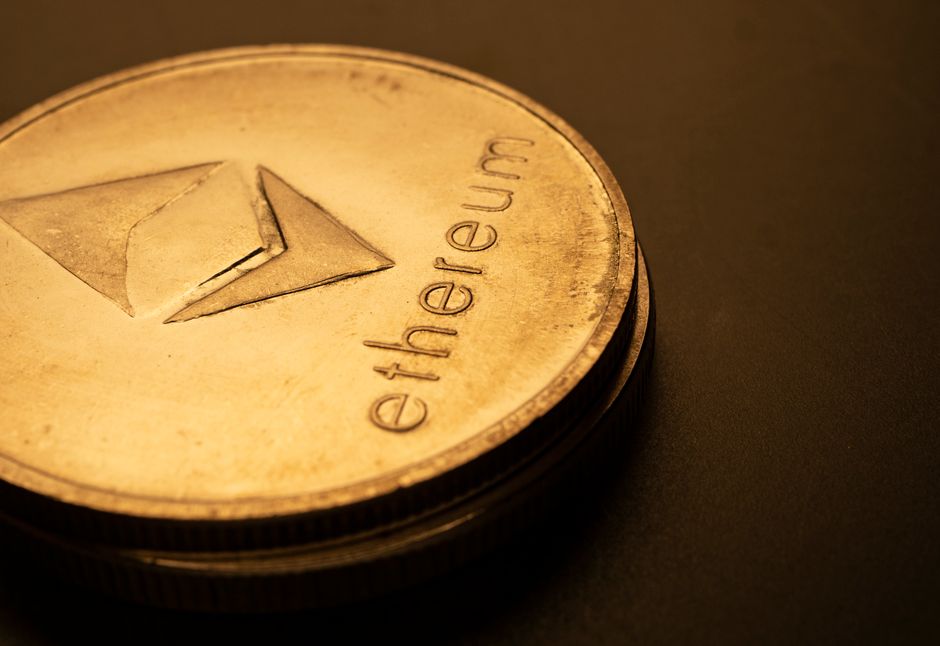
**Ethereum** stands as the largest altcoin by market capitalization and the dominant smart contract platform globally. Its transition to a proof-of-stake consensus mechanism dramatically reduced energy consumption and altered the investment narrative around sustainability-focused investing.
Ethereum’s developer ecosystem is the largest in the industry, with thousands of decentralized applications (dApps), DeFi protocols, and NFT platforms built on its infrastructure. Network upgrade cycles continue to improve scalability, though transaction fees during peak demand periods remain a pain point for smaller investors.
From a risk perspective, Ethereum faces competition from faster, cheaper smart contract platforms. That competitive pressure is real, but Ethereum’s network effects, institutional adoption, and proven track record provide a stronger foundation than most competitors. For US investors, ETH is widely available on major regulated US exchanges, making it one of the more accessible large-cap altcoin positions to establish and manage.
Cardano (ADA): Blockchain Technology and Adoption Prospects
**Cardano** takes a research-first approach to blockchain development, positioning itself as a peer-reviewed, academically rigorous alternative to faster-moving competitors. Its layered architecture separates settlement and computation, a design choice intended to improve security and upgradeability.
Cardano’s proof-of-stake model — called Ouroboros — consumes significantly less energy than proof-of-work systems, aligning with environmental, social, and governance (ESG) criteria increasingly demanded by institutional investors. The network has expanded its DeFi and NFT ecosystems gradually, though adoption metrics trail Ethereum’s activity levels.
For investors, ADA represents a **higher-risk, higher-conviction position** compared to Ethereum. The Cardano roadmap includes significant protocol upgrades, and its academic rigor appeals to analysts who prioritize thorough technical foundations over speed-to-market. The trade-off is slower real-world utility deployment, which can impact price performance during bull market cycles.
Polkadot (DOT): Interoperability Features and Market Outlook
**Polkadot** solves a fundamental problem in the blockchain space: isolated networks that cannot communicate efficiently. Its relay chain architecture connects multiple specialized parachains, enabling cross-chain data and value transfers without relying on centralized bridges.
This interoperability thesis is compelling because the future of blockchain likely involves **multi-chain environments** rather than a single dominant network. Polkadot’s shared security model reduces the burden on individual parachains to secure their own networks, lowering entry barriers for new blockchain projects.
The project’s governance mechanism — which allows token holders to vote on network upgrades — demonstrates a commitment to decentralized decision-making. However, parachain slot auctions and the complexity of the ecosystem can make Polkadot more difficult for new investors to evaluate compared to simpler single-chain platforms.
Other Promising Altcoins Worth Monitoring in 2026
Beyond the three largest platforms, several altcoins represent distinct thematic exposures for portfolio consideration:
- **Solana (SOL)**: High-throughput blockchain prioritizing speed and low transaction costs; faces ongoing scrutiny over network stability during peak usage
- **Avalanche (AVAX)**: Subnet architecture designed for enterprise and institutional use cases with fast finality
- **Chainlink (LINK)**: Decentralized oracle network providing real-world data to smart contracts — a critical infrastructure piece across DeFi
- **Arbitrum and Optimism**: Layer-2 rollups that batch Ethereum transactions off-chain, offering lower fees while maintaining Ethereum security
Each of these serves a distinct function within the broader crypto ecosystem. Investors should evaluate altcoins based on **actual utility adoption metrics** — active addresses, transaction volume, and developer activity — rather than social media momentum alone.
Key Differences: Bitcoin vs. Altcoin Investment Profiles
| Factor | Bitcoin (BTC) | Altcoins (General) |
|---|---|---|
| Market Dominance | ~50–60% of total crypto market cap | Combined ~40–50% |
| Volatility | Moderate-High | Very High |
| Use Case | Store of value, digital gold | Smart contracts, DeFi, utilities |
| Regulatory Clarity | Most established | Varies significantly by coin |
| Availability on US Exchanges | Universal | Varies by platform |
**Bitcoin** is generally considered the least risky cryptocurrency exposure, serving as a macro asset and digital store of value. Altcoins offer broader functional utility but carry substantially higher volatility. This comparison underscores why most financial advisors recommend establishing Bitcoin or Ethereum positions before adding altcoin exposure.
Investment Risks Every Altcoin Investor Must Understand
Altcoin investing carries **significant risk** that every US investor must evaluate honestly before committing capital. The following risk categories deserve particular attention:
- **Extreme volatility**: Many altcoins can lose 30–70% of their value within weeks during market corrections, and some have gone to zero entirely when projects failed or were abandoned
- **Regulatory risk**: The SEC, CFTC, and state regulators continue to evolve their frameworks; a token’s classification as a security could dramatically impact its availability on US-regulated exchanges
- **Project failure**: The majority of blockchain projects will not succeed commercially; even technically sound projects can fail due to insufficient adoption, funding, or competitive pressure
- **Liquidity risk**: Smaller altcoins may lack sufficient trading volume, making it difficult to enter or exit positions without significant slippage
- **Technology risk**: Smart contract vulnerabilities, network outages, and protocol-level bugs have resulted in hundreds of millions in losses across the industry
**Due diligence is non-negotiable**. Before investing in any altcoin, review the project’s whitepaper, examine on-chain metrics, assess the development team’s track record, and understand the token’s utility within its native ecosystem. Social media hype and influencer promotion are not substitutes for fundamental analysis.
Practical Tips for Investing in Altcoins Safely
For US investors ready to explore altcoin positions, the following framework provides a structured starting point:
- **Start on regulated US exchanges**: Platforms registered with FinCEN and operating under US regulatory oversight offer the strongest investor protections for cryptocurrency trading
- **Use hardware wallets for long-term holdings**: Storing altcoins on exchange platforms exposes investors to counterparty risk; hardware wallets keep private keys offline
- **Track on-chain data**: Block explorers provide real-time data on transaction volumes, active addresses, and token flows — free tools that inform investment decisions
- **Set clear position sizing rules**: Many advisors recommend limiting any single altcoin position to 1–5% of total crypto allocation given the volatility profile
- **Maintain tax records**: The IRS treats cryptocurrency as property, requiring capital gains reporting on every taxable disposition including trades and swaps
Managing altcoin exposure requires **discipline and a long-term perspective**. Short-term trading of altcoins is statistically challenging — most retail traders underperform simple buy-and-hold strategies even in volatile crypto markets.
Altcoin Investment Strategies: Long-Term vs. Short-Term Approaches
Two dominant strategies dominate altcoin investing discourse, each with meaningful trade-offs for US investors to consider.
**Buy and hold (long-term)** strategies focus on identifying projects with strong fundamental value and holding through market cycles. This approach reduces the impact of short-term volatility and aligns with long-term capital gains tax treatment in the United States — a significant advantage over short-term trading. Ethereum and other established platforms have rewarded long-term holders over multi-year horizons, though past performance does not guarantee future results.
**Dollar-cost averaging (DCA)** — investing a fixed dollar amount at regular intervals regardless of price — is particularly well-suited to altcoin investing. DCA removes emotional decision-making from the process and ensures investors accumulate assets during both dips and rallies. Over 12–24 month periods, DCA typically outperforms lump-sum investing in highly volatile asset classes.
**Active trading strategies** including swing trading and scalping appeal to some investors but require significant time investment, technical analysis skill, and emotional discipline. These approaches generate short-term capital gains taxed at ordinary income rates, increasing the tax complexity of altcoin trading. Most retail investors lack the edge needed to consistently outperform passive strategies after accounting for fees and taxes.
No strategy eliminates the inherent volatility of altcoins. **Risk management — not return maximization — should be the primary focus** of any altcoin investment approach.
Frequently Asked Questions (FAQ)
What are the key factors to consider when choosing an altcoin to invest in?
Evaluate three primary categories before committing capital. First, **fundamental metrics**: market capitalization, trading volume, liquidity, and the token’s supply economics (inflation rate, max supply, token distribution schedule). Second, **technical merit**: assess whether the underlying blockchain solves a real problem, review the development roadmap, and examine on-chain adoption data such as active wallet addresses and transaction growth. Third, **team and community quality**: experienced development teams with verifiable track records and active open-source communities tend to navigate market downturns more successfully than projects relying on a small core group.
How can I minimize the risks associated with investing in altcoins?
Effective risk management for altcoin investing starts with **portfolio construction discipline**. Avoid concentrating more than 5% of your total investment portfolio in any single altcoin. Spread exposure across different categories — smart contract platforms, DeFi utilities, and infrastructure tokens — to reduce single-point-of-failure risk. Use dollar-cost averaging to avoid buying large positions at market peaks. Store long-term holdings in hardware wallets rather than leaving funds on exchange platforms. Finally, continuously monitor your positions and set predetermined exit conditions based on fundamental changes to the project rather than price movements alone.
What are the tax implications of investing in altcoins?
In the United States, the IRS classifies cryptocurrency as property, meaning every trade, swap, or disposition triggers a **capital gains or loss event**. Short-term capital gains (assets held under one year) are taxed at ordinary income tax rates, while long-term capital gains benefit from reduced rates. Investors must report the fair market value of altcoins at the time of each transaction. Loss harvesting — strategically realizing losses to offset gains — is a legitimate tax strategy available to altcoin investors. Maintaining detailed transaction records using cryptocurrency tax software is strongly recommended, as the IRS has increased audit scrutiny on crypto reporting in recent filing seasons.
—
**Risk Disclosure**: This article is for informational and educational purposes only. It does not constitute financial advice, investment recommendation, or a solicitation to buy or sell any cryptocurrency. Cryptocurrency markets are highly volatile and speculative. Investing in altcoins involves substantial risk of loss including the potential total loss of invested capital. Always conduct independent research and consult with a qualified financial professional before making investment decisions.
Charting & Exchange Resources
| Platform | Use Case | Key Feature | Fee Model | Action |
|---|---|---|---|---|
| TradingView | Charting & technical analysis | Indicators, multi-timeframe charts | Free / Pro tiers | View Platform |
| Coinbase | Exchange (beginner-friendly) | Simple USD on-ramp, educational tools | Varies by region | View Platform |
| Binance | Exchange (advanced pairs) | Wide altcoin coverage, spot markets | Varies by region | View Platform |
Affiliate Disclosure: This post contains affiliate links. We may earn a commission if you buy through our links, at no extra cost to you. Investment Risk Disclaimer: Cryptocurrency and digital asset markets are highly volatile. This content is for informational and educational purposes only and is not financial, investment, or trading advice. You may lose some or all of your capital. Do your own research and consult a licensed financial advisor before making investment decisions.
Leave a Reply