{Here is the fully edited article:
—
How to Read Crypto Market Charts for Beginners: A Practical Market Analysis Guide
Understanding Crypto Market Charts
Learning **how to read crypto market charts for beginners** is one of the most practical skills any new market participant can develop. Charts are the primary window into price history, trading activity, and market psychology — all compressed into a visual format that, once understood, tells a coherent story. Without this foundation, navigating the cryptocurrency (crypto) market is essentially guesswork.
Crypto market charts share DNA with traditional financial charts used in stock and forex (foreign exchange) markets, but there are meaningful differences. Crypto markets operate 24 hours a day, seven days a week, with no official open or close — meaning charts capture continuous, uninterrupted price action. Traditional equity markets close on weekends and holidays, creating gaps you simply won’t see as often in crypto charts.
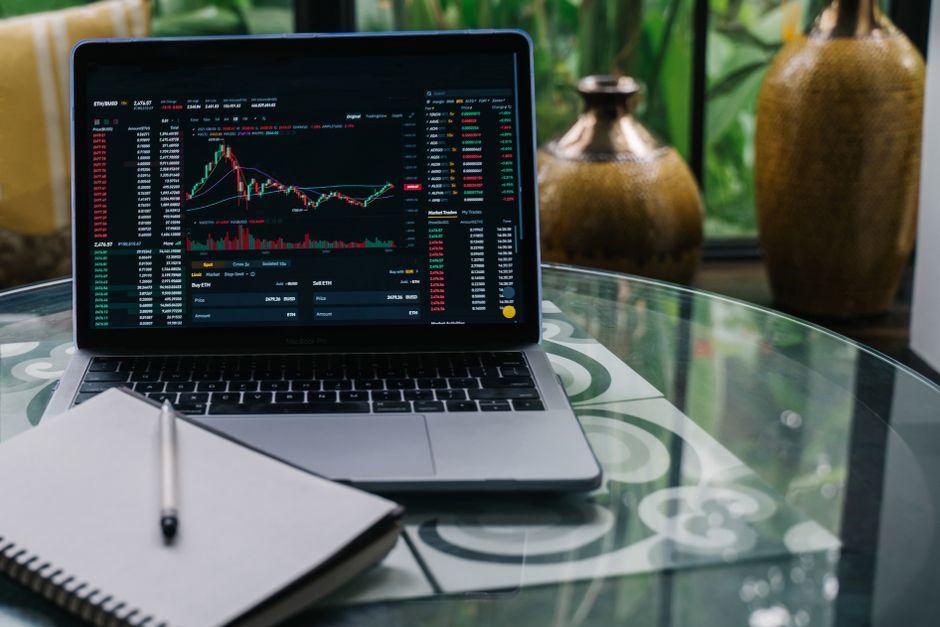
Key components of every crypto market chart include the **price axis** (vertical, showing value in USD or another base currency), the **time axis** (horizontal, showing the period covered), **candlesticks or bars** representing price movement within each time interval, and **volume bars** at the bottom showing how much of the asset was traded. Understanding each element separately before combining them is the most efficient path to chart literacy.
—
The Basics of Reading Crypto Market Charts

Every crypto chart offers multiple **time frame** options — from one-minute (1M) views used by short-term traders to weekly or monthly views preferred by longer-horizon analysts. Beginners should start with the daily (1D) time frame, which smooths out intraday noise and makes trends easier to identify. As your confidence grows, you can layer in shorter time frames for more granular context.
The three most common chart types are **line charts**, **bar charts**, and **candlestick charts**. Line charts plot only closing prices and are the simplest to read. Bar charts show the open, high, low, and close (OHLC) for each period. Candlestick charts display the same OHLC data in a visually richer format — the body of the candle shows the open-to-close range, while the wicks (thin lines above and below) mark the high and low. Most crypto analysts default to candlestick charts because the color-coded bodies (typically green for up, red for down) make pattern recognition faster.
Chart **patterns** are recurring formations that analysts use to contextualize price behavior. Common beginner-friendly patterns include:
- **Uptrend**: a series of higher highs and higher lows
- **Downtrend**: a series of lower highs and lower lows
- **Consolidation/range**: price moving sideways between a ceiling and a floor
- **Head and shoulders**: a reversal pattern signaling a potential trend change
- **Double top / double bottom**: another reversal signal at key price levels
**Support** is a price level where buying interest has historically been strong enough to halt a decline. **Resistance** is the opposite — a level where selling pressure has previously capped advances. Identifying these levels on a chart helps frame where price may react, slow down, or reverse. For a broader view of how these concepts fit into current market conditions, the latest crypto market analysis covers real-time support and resistance dynamics across major assets.
—
Analyzing Trading Volume and Price Movements
**Trading volume** measures how many units of a cryptocurrency changed hands during a given period. Volume bars appear at the bottom of most charts and are color-coded to match the corresponding candle — green volume on an up-candle, red on a down-candle. Volume is a confirmation tool: a price move accompanied by high volume is generally considered more significant than the same move on thin volume.
Price **volatility** in crypto is substantially higher than in most traditional asset classes. It is not unusual for major cryptocurrencies to move 10–20% in a single day during active market conditions. This volatility is precisely why reading charts matters — it gives you historical context for what “normal” price swings look like for a specific asset before you decide how much exposure makes sense for your situation.
Recognizing **trend reversals** is one of the harder skills to develop but one of the most valuable. Key signals analysts watch for include:
- A volume spike accompanying a large candle in the opposite direction of the prevailing trend
- Price breaking through a well-established support or resistance level
- **Divergence** between price action and an indicator (covered in the next section)
- A series of candles with long wicks in the direction of the prior trend, suggesting exhaustion
No signal is infallible. Reversals that look clear in hindsight are often ambiguous in real time, which is why risk management — discussed in detail below — is inseparable from chart reading.
—
Using Technical Indicators in Crypto Market Analysis
**Technical indicators (TIs)** are mathematical calculations applied to price and volume data, displayed as overlays on or beneath a chart. They do not predict the future — they describe historical data in a way that highlights patterns or momentum. Three of the most widely used TIs in crypto analysis are:
| Indicator | What It Measures | Common Use Case |
|---|---|---|
| **Moving Average (MA)** | Average price over a set period (e.g., 50-day, 200-day) | Identifying trend direction and dynamic support/resistance |
| **RSI (Relative Strength Index)** | Momentum on a 0–100 scale | Spotting overbought (>70) or oversold (<30) conditions |
| **MACD (Moving Average Convergence Divergence)** | Relationship between two MAs | Identifying momentum shifts and potential trend changes |
The **RSI** is often the first indicator beginners learn because it’s straightforward to interpret visually. When the line climbs above 70, analysts flag the asset as potentially overbought; a reading below 30 suggests potentially oversold conditions. Neither reading is a trade signal on its own — context from the broader chart always matters.
**MACD** consists of two lines and a histogram. When the MACD line crosses above the signal line, analysts read it as bullish momentum building; a cross below is read as bearish. These are descriptive observations, not guarantees of future direction.
Combining indicators reduces the risk of acting on a single misleading signal. A practical beginner framework is to check trend direction with a moving average, confirm momentum with RSI, and watch MACD for crossovers. When two or more indicators align, analysts call it **confluence** — and confluence generally makes a read more meaningful than any single indicator alone.
—
Fundamental Analysis in Cryptocurrency Trading
**Fundamental analysis (FA)** in crypto differs from FA in traditional equity markets because cryptocurrencies are not companies with earnings reports. Instead, crypto FA focuses on the underlying project, its use case, and the economic design of its token. This discipline complements chart reading by helping you assess *why* a particular asset might be in demand — or why it might not be.
A project’s **whitepaper** is the starting document for fundamental research. It outlines the protocol’s goals, technology, and token distribution model. **Tokenomics** (token + economics) describes how a coin is issued, distributed, and whether mechanisms exist to reduce supply over time — such as Bitcoin’s halving events, which cut the block reward that miners receive roughly every four years.
Key FA checkpoints for beginners include:
- **Team credibility**: Are the founders and developers publicly identifiable and verifiable?
- **On-chain activity**: Is the network actually being used? Blockchain explorers show real transaction volumes that don’t lie.
- **Community strength**: Active developer communities on platforms like GitHub suggest ongoing project health.
- **Regulatory context**: US regulatory clarity — or the absence of it — affects demand for specific tokens, particularly those the SEC (Securities and Exchange Commission) has flagged as potential securities.
FA and technical analysis (TA) work best together. TA tells you *when* market sentiment is shifting; FA helps you assess *whether* the underlying asset warrants that shift. Keeping up with ongoing crypto market analysis is one practical way to stay informed on how regulatory and fundamental developments are affecting major assets in real time.
—
Sentiment Analysis and Crypto Markets
**Market sentiment** refers to the collective mood of participants — fear, greed, optimism, or panic — and it can move crypto prices dramatically even when no fundamental news has changed. Sentiment analysis attempts to quantify this mood using external data sources beyond price charts.
Two widely referenced sentiment tools in the US crypto community are:
- **Crypto Fear & Greed Index**: A composite score (0 = extreme fear, 100 = extreme greed) that aggregates volatility, market momentum, social media activity, and survey data. Scores below 20 have historically coincided with market bottoms; scores above 80 have often preceded pullbacks.
- **Social media volume analysis**: Platforms that track mention frequency and sentiment tone for specific coins across Twitter/X, Reddit, and Telegram. A sudden spike in negative mentions often precedes or accompanies sharp sell-offs.
Sentiment analysis is most useful as a **contrarian** signal. When the Fear & Greed Index reads extreme greed, risk-aware analysts treat it as a caution flag — not a buy signal. When extreme fear dominates, it may indicate oversold conditions, though timing any entry remains difficult and uncertain.
Combining sentiment data with TA and FA creates a three-layer analytical framework that most professional crypto analysts use in some form. No layer is sufficient on its own, and all three carry inherent uncertainty in a market as young and volatile as crypto.
—
Risk Management and Crypto Trading
No guide on reading crypto market charts is complete without a direct discussion of **risk management**. Charts help you understand market conditions — they do not eliminate risk. Crypto markets are among the most volatile asset classes available to retail (individual, non-institutional) investors in the US, and losses can be severe and rapid.
Core risk management principles for beginners:
- **Position sizing**: Never allocate more capital to a single trade or asset than you can afford to lose entirely. Many experienced analysts cap any single position at 1–5% of their total portfolio.
- **Stop-loss orders**: A stop-loss is a pre-set price level at which your position automatically closes to limit further loss. Placing a stop-loss below a key support level is a common approach grounded directly in chart analysis.
- **Take-profit levels**: Defining a price level at which you’ll exit with a gain helps remove emotion from trading decisions and locks in returns before sentiment shifts.
- **Diversification**: Holding multiple uncorrelated assets reduces the impact of any single asset’s collapse on your overall portfolio. In crypto, this means not concentrating entirely in one coin or sector — for example, holding only DeFi (decentralized finance) tokens or only layer-1 protocols.
A practical **risk-reward checklist** before any trade:
- [ ] Have I identified a clear support level for my stop-loss?
- [ ] Is my potential reward at least 2x my defined risk (2:1 risk-reward ratio)?
- [ ] Does this position size represent less than 5% of my total portfolio?
- [ ] Have I checked volume and at least one momentum indicator for confluence?
- [ ] Am I acting on analysis — or reacting to social media hype?
This checklist is not financial advice — it’s a disciplined framework for reducing impulsive decision-making. Risk management is the skill that separates participants who last in this market from those who don’t.
—
Choosing the Right Charting Platform
The tools you use to read charts matter. For US-based beginners, several platforms provide free, professional-grade charting without requiring an account:
- **TradingView** is the most widely used charting platform in the crypto community. It offers a full suite of indicators, drawing tools, and multi-timeframe analysis in a browser-based interface. The free tier covers most beginner needs.
- **Coinigy** integrates with multiple US-accessible exchanges and is oriented toward active traders who want consolidated portfolio tracking alongside charting.
- **Exchange-native charts** on platforms like Coinbase Advanced Trade or Kraken Pro offer basic candlestick charting directly within the trading interface — useful for executing trades without switching tabs, though less feature-rich than dedicated tools.
When evaluating any platform, confirm it supports real-time data for the specific trading pair you’re analyzing (e.g., BTC/USD, ETH/USD), offers customizable time frames, and allows you to overlay the indicators covered in this guide. Starting with one platform and learning it thoroughly is more productive than switching between tools before you’ve built fluency with any of them.
—
> **Risk Disclaimer**: Cryptocurrency markets are highly volatile and speculative. The content of this article is for educational and informational purposes only and does not constitute financial, investment, or trading advice. Past chart patterns and indicator readings do not guarantee future results. Always conduct your own research and consult a qualified financial professional before making any investment decisions.
—
Frequently Asked Questions (FAQ)
Q: What are the most important things to look for in crypto market charts?
A: Start with trend direction (higher highs and higher lows vs. lower highs and lower lows), key support and resistance levels, and trading volume. Adding one momentum indicator like RSI gives you a second data point to cross-check price action before drawing any conclusions.
Q: How often should I check crypto market charts?
A: It depends on your time horizon. Long-term holders may review daily or weekly charts once or twice a week. Active traders monitoring shorter time frames may check charts multiple times per day. Over-checking charts often leads to emotional decision-making, which is one of the most common sources of losses for beginners — discipline around when you look matters as much as how you look.
Q: What are the most common mistakes beginners make when reading crypto charts?
A: The most frequent errors include reading price action in isolation without volume context, acting on a single indicator signal without confluence, ignoring Bitcoin’s broader market influence on altcoins, and mistaking short-term noise on a 1-minute or 5-minute chart for a meaningful trend. Starting on the daily time frame and keeping your indicator stack simple reduces most of these mistakes significantly.
Q: Do technical indicators work the same way in crypto as in stock markets?
A: The mechanics are identical — RSI, MACD, and moving averages calculate the same way regardless of the asset class. The key difference is that crypto markets run 24/7 with no closing bell, which means indicators respond to continuous data without the gaps you see in traditional equity charts. Crypto also tends to have sharper momentum swings, which means RSI can stay in overbought or oversold territory for longer stretches than equity traders might expect.
Q: Is fundamental analysis necessary if I’m only using charts?
A: Technical analysis alone can support short-term trading decisions, but ignoring fundamentals entirely creates blind spots. A chart might show strong bullish momentum for a token that has serious underlying project issues — security vulnerabilities, team departures, or regulatory scrutiny. Combining at least a basic FA review with your TA process reduces the risk of acting on technically strong setups in fundamentally weak assets.
Charting & Exchange Resources
| Platform | Use Case | Key Feature | Fee Model | Action |
|---|---|---|---|---|
| TradingView | Charting & technical analysis | Indicators, multi-timeframe charts | Free / Pro tiers | View Platform |
| Coinbase | Exchange (beginner-friendly) | Simple USD on-ramp, educational tools | Varies by region | View Platform |
| Binance | Exchange (advanced pairs) | Wide altcoin coverage, spot markets | Varies by region | View Platform |
Affiliate Disclosure: This post contains affiliate links. We may earn a commission if you buy through our links, at no extra cost to you. Investment Risk Disclaimer: Cryptocurrency and digital asset markets are highly volatile. This content is for informational and educational purposes only and is not financial, investment, or trading advice. You may lose some or all of your capital. Do your own research and consult a licensed financial advisor before making investment decisions.
Leave a Reply