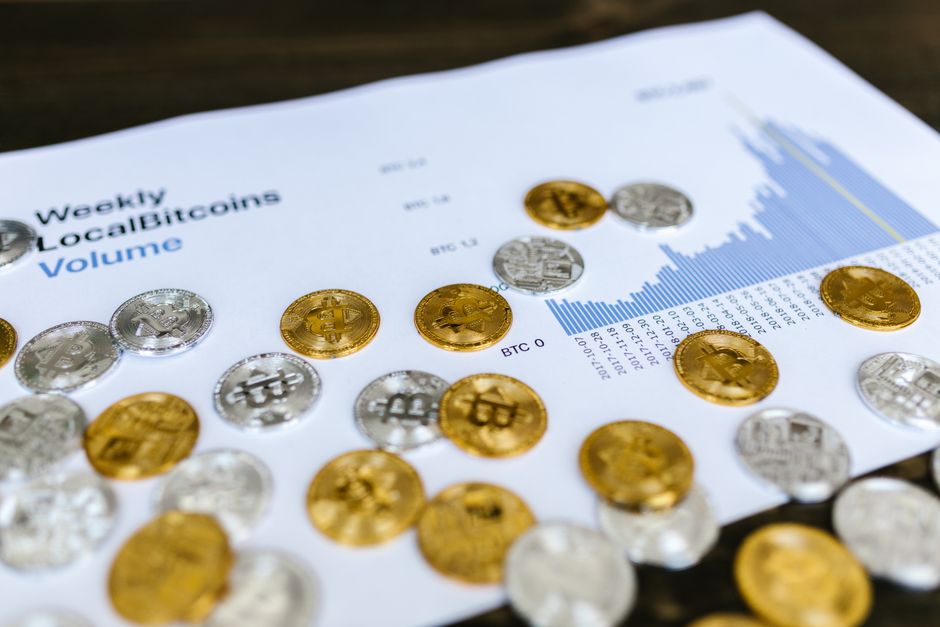
Market Overview: Understanding the Latest Trends in Crypto
The cryptocurrency market continues to move at a rapid pace, and understanding the current landscape is essential for anyone tracking trending cryptocurrencies this week. As of the most recent trading period, the total market capitalization of all cryptocurrencies has fluctuated between $2.4 trillion and $2.8 trillion, reflecting ongoing volatility that investors have come to expect. Bitcoin continues to command the largest share of this total, representing roughly 50–54% of overall market capitalization depending on the day.
Trading volume across major exchanges has seen a notable uptick, with daily volumes regularly exceeding $80 billion on leading platforms. This surge in activity often signals increased retail and institutional interest, though it can also reflect speculative positioning ahead of key macroeconomic announcements. Market sentiment indicators, such as the Crypto Fear & Greed Index, have oscillated between neutral and greed territory, suggesting a cautiously optimistic tone among market participants.
Key movements this week include continued interest in large-cap assets alongside renewed attention on emerging blockchain projects. Investors are advised to monitor macroeconomic factors—including Federal Reserve policy signals and U.S. Treasury yields—as these traditional market drivers increasingly influence cryptocurrency price action.
- Bitcoin (BTC) and Ethereum (ETH) remain the dominant assets by market cap
- Altcoin activity has increased, with traders rotating into select DeFi and Layer-2 tokens
- Trading volume spikes often coincide with macroeconomic news releases
- Sentiment indicators can shift rapidly; treat them as one data point among many
Bitcoin (BTC): The Dominant Force in Digital Assets
Bitcoin remains the undisputed leader of the cryptocurrency market by total value locked and public awareness. Its market dominance is backed by over 15 years of operational history, a decentralized mining network, and growing institutional adoption through Bitcoin exchange-traded products (ETPs). For U.S. investors, Bitcoin futures and spot ETFs have made accessing BTC exposure more straightforward through traditional brokerage accounts.
Recent price action for Bitcoin has been influenced by several macro-level factors. Hash rate data—representing the total computational power securing the Bitcoin network—has continued to climb, reflecting network health and miner confidence. Meanwhile, on-chain metrics such as active wallet addresses and exchange outflows suggest that long-term holders continue to accumulate rather than sell during periods of price volatility.
However, BTC is not immune to risk. Regulatory developments in the United States, including ongoing debates around digital asset custody and classification by the Securities and Exchange Commission (SEC), can trigger sharp intraday price swings. **All cryptocurrency investments carry inherent volatility risk, and past performance does not guarantee future results.**
- BTC holds the largest market capitalization of any single cryptocurrency
- Institutional products like spot ETFs have expanded access for retail investors
- Network health indicators such as hash rate and active addresses offer analytical signals
- U.S. regulatory developments remain a key risk factor for BTC price action
Ethereum (ETH): The Backbone of Decentralized Finance
Ethereum is the cornerstone of the decentralized finance (DeFi) ecosystem, hosting the majority of smart contract applications and blockchain-based financial tools. The network completed its transition to a Proof-of-Stake (PoS) consensus mechanism, reducing energy consumption by an estimated 99.95% compared to its earlier Proof-of-Work (PoW) model. This shift has made Ethereum more environmentally sustainable and altered the asset’s economic structure for holders.
The growth of DeFi on Ethereum has been substantial. Total value locked (TVL) across Ethereum-based DeFi protocols has stabilized in the hundreds of billions, with applications spanning decentralized exchanges (DEXs), lending platforms, and yield farming protocols. Layer-2 scaling solutions—including Optimism, Arbitrum, and Base—have emerged to address Ethereum’s throughput limitations, offering faster and lower-cost transactions while maintaining security from the Ethereum mainnet.
For U.S. investors, understanding Ethereum’s utility beyond price speculation is important. The network’s native token, ETH, is used to pay transaction fees (gas) and serves as collateral within DeFi applications. While ETH has historically shown a high correlation with Bitcoin’s price movements, its utility-driven demand provides a structural dimension that distinguishes it from purely speculative assets.
- Ethereum hosts the majority of DeFi applications and smart contracts
- Proof-of-Stake transition significantly reduced energy use and changed token economics
- Layer-2 solutions improve scalability and reduce transaction costs
- ETH utility—gas fees, DeFi collateral—adds structural demand factors
Altcoins: Evaluating the Broader Digital Asset Landscape
The altcoin market encompasses every cryptocurrency other than Bitcoin, and it has grown to include thousands of individual projects spanning diverse use cases. While Bitcoin and Ethereum dominate by market capitalization, altcoins represent the vast majority of total crypto assets and often exhibit higher volatility—offering both greater risk and, potentially, greater reward for investors with higher risk tolerance.
Promising altcoin categories this cycle include Layer-1 blockchain networks building specialized infrastructure, modular blockchain projects, and real-world asset (RWA) tokenization platforms. When evaluating altcoins, key metrics to examine include token utility within the project ecosystem, the size and activity of the development community, and the project’s audited smart contract history. On-chain analytics platforms can help investors evaluate wallet activity and token distribution before committing capital.
The risks associated with altcoin investing are significant. Many projects fail to deliver on their roadmaps, and token prices can collapse rapidly if a team abandons development or if a smart contract vulnerability is exploited. Additionally, altcoin markets are generally less liquid than Bitcoin or Ethereum, meaning large trades can move prices substantially. Due diligence is not optional—it is a minimum standard for responsible participation in altcoin markets.
- Altcoins encompass thousands of assets beyond Bitcoin and Ethereum
- High volatility requires careful position sizing and risk assessment
- Key evaluation criteria: token utility, developer activity, smart contract audits
- Lower liquidity in altcoin markets can amplify price swings
Initial Coin Offerings (ICOs): Separating Signal from Noise
Initial Coin Offerings (ICOs) remain a popular fundraising mechanism for blockchain startups, though they carry substantial risk for investors. In an ICO, a project sells a portion of its native tokens to early backers in exchange for established cryptocurrencies such as Bitcoin or Ethereum—or, in some cases, fiat currency. While some ICOs have generated significant returns, many others have resulted in total losses for investors.
The U.S. Securities and Exchange Commission (SEC) has taken an increasingly active role in regulating ICOs, treating many token sales as securities offerings subject to federal securities laws. This means that projects accessible to U.S. investors may face legal scrutiny, and investors should be aware that participating in certain ICOs could expose them to regulatory risk.
Red flags that investors should watch for include anonymous or unverifiable development teams, promises of guaranteed returns, vague or missing whitepapers, and projects that lack a functioning product or clear use case for their token. Legitimate projects typically publish detailed technical documentation, maintain transparent communication channels, and have their smart contracts audited by recognized security firms.
- ICOs offer early access to blockchain projects but carry high failure risk
- SEC regulation means many token sales may qualify as securities under U.S. law
- Red flags: anonymous teams, guaranteed return promises, missing whitepapers
- Audited smart contracts and transparent roadmaps signal higher credibility
| Feature | Legitimate ICO | High-Risk ICO |
|---|---|---|
| Development Team | Public, verifiable identities | Anonymous or unverified |
| Whitepaper | Detailed, technical, reviewed | Vague, generic, copy-pasted |
| Smart Contract Audit | Independently audited | No audit on record |
| Regulatory Compliance | Legal review completed | No disclosed legal review |
| Community Transparency | Active updates, open channels | Minimal communication |
Blockchain Technology: Key Innovations Driving the Market
Beyond price speculation, blockchain technology continues to evolve with new developments that could reshape how value is transferred and recorded. Among the most discussed innovations are zero-knowledge proof (ZK-proof) systems, which allow one party to verify information without revealing the underlying data. This technology has significant implications for privacy, scalability, and interoperability between blockchain networks.
Cross-chain interoperability protocols have also gained traction, enabling assets and data to move between different blockchain networks without relying on centralized intermediaries. These developments are particularly relevant for investors evaluating long-term structural trends in the crypto space, as interoperability reduces fragmentation and could increase overall network utility.
For U.S. readers, staying informed about these technological foundations helps frame why certain projects attract developer interest and capital. Whether you are actively investing or simply monitoring the space, understanding the underlying technology provides essential context for evaluating market movements.
Risk Disclaimer
**Important:** The cryptocurrency market is highly volatile, and all investments carry risk of partial or total loss. Nothing in this article constitutes financial, investment, or legal advice. Always conduct your own research and consult a qualified financial advisor before making any investment decisions. Regulatory changes, technological vulnerabilities, and market sentiment shifts can all affect cryptocurrency prices unpredictably.
Frequently Asked Questions (FAQ)
**What does “trending cryptocurrencies” mean?**
Trending cryptocurrencies refer to digital assets currently gaining attention based on trading volume, news coverage, social media activity, and price momentum. Trending status can shift rapidly and should not be interpreted as an endorsement or investment recommendation.
**Is Bitcoin still a good investment in 2025?**
Bitcoin remains the largest cryptocurrency by market cap and has the longest operational track record. Whether it fits your portfolio depends on your individual risk tolerance, investment goals, and time horizon—factors only you and a qualified financial advisor can determine.
**What is the difference between a cryptocurrency and a token?**
A cryptocurrency operates on its own independent blockchain network (e.g., Bitcoin, Ethereum). A token is built on top of an existing blockchain and relies on that network’s infrastructure. Many altcoins are technically tokens operating on networks like Ethereum.
**Are altcoins riskier than Bitcoin?**
Altcoins generally carry higher volatility and lower liquidity compared to Bitcoin and Ethereum. Many altcoin projects also carry additional risks related to project development, smart contract security, and tokenomics. Higher potential reward typically comes with higher potential risk.
**What should I look for before investing in a new crypto project?**
Key factors include a transparent and verifiable development team, a detailed and technically sound whitepaper, independently audited smart contracts, an active and engaged community, and a clear real-world use case for the token. Be skeptical of guaranteed return promises or anonymous teams.
**How do regulatory developments affect cryptocurrency prices?**
In the United States, agencies like the SEC and Commodity Futures Trading Commission (CFTC) can influence market sentiment through enforcement actions, proposed regulations, or public statements. Positive regulatory clarity can boost prices, while uncertainty or restrictive rules can trigger sell-offs—especially in smaller-cap assets.
Explore more trending cryptos guides on our site.
Charting & Exchange Resources
| Platform | Use Case | Key Feature | Fee Model | Action |
|---|---|---|---|---|
| TradingView | Charting & technical analysis | Indicators, multi-timeframe charts | Free / Pro tiers | View Platform |
| Coinbase | Exchange (beginner-friendly) | Simple USD on-ramp, educational tools | Varies by region | View Platform |
| Binance | Exchange (advanced pairs) | Wide altcoin coverage, spot markets | Varies by region | View Platform |
Affiliate Disclosure: This post contains affiliate links. We may earn a commission if you buy through our links, at no extra cost to you. Investment Risk Disclaimer: Cryptocurrency and digital asset markets are highly volatile. This content is for informational and educational purposes only and is not financial, investment, or trading advice. You may lose some or all of your capital. Do your own research and consult a licensed financial advisor before making investment decisions.
Leave a Reply