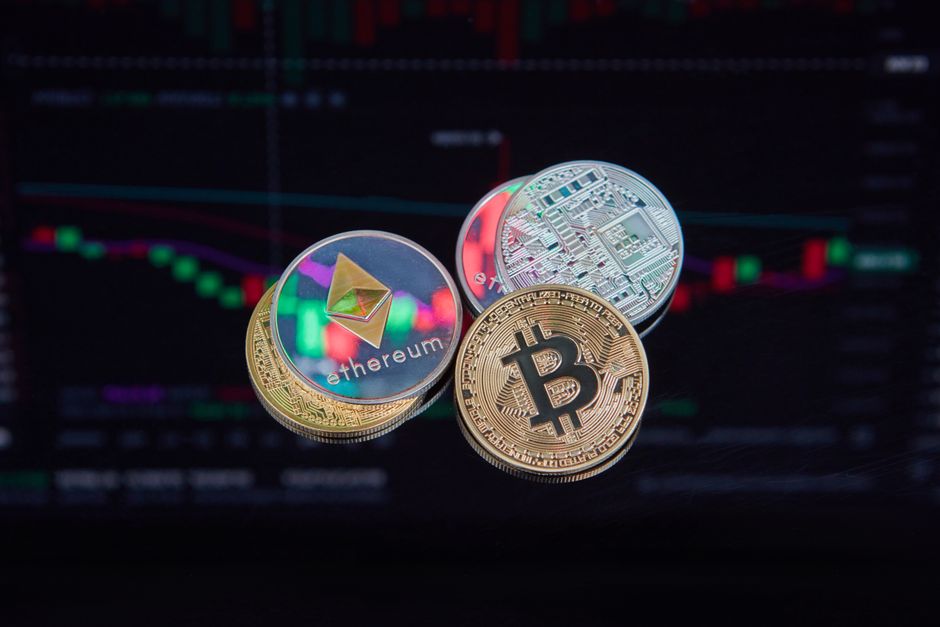
What’s Driving Crypto Markets Right Now

If you’ve been watching **trending cryptocurrencies** this week, you already know the market never sleeps. Whether it’s a regulatory headline, a protocol upgrade, or a sudden shift in institutional sentiment, prices can swing dramatically in hours. Understanding *why* assets trend — not just *that* they trend — is the foundation of any informed crypto strategy.
This week’s market activity reflects a mix of macroeconomic pressure, renewed interest in **Layer 2 (L2)** scaling solutions, and continued debate around **ETFs (Exchange-Traded Funds)** tied to digital assets. Before diving into specific trends, it’s essential to anchor every analysis in one hard truth: crypto markets are among the most volatile asset classes on earth. For a broader view of what’s capturing trader attention right now, explore our trending cryptos overview.
> **Risk Disclaimer:** Cryptocurrency investments carry substantial risk of loss. Nothing in this article constitutes financial advice. Always consult a licensed financial professional before making investment decisions.
—
Understanding Crypto Volatility
**Volatility** refers to the rate and magnitude at which an asset’s price changes over time. In traditional finance, high volatility is a warning sign. In crypto, it’s the baseline. Bitcoin (BTC) — the largest cryptocurrency by **market capitalization (market cap)** — has historically swung 10–20% in a single week during active periods.
Several factors amplify crypto volatility:
- **Thin liquidity:** Compared to equities or forex, crypto order books can be shallow, meaning large trades move prices significantly.
- **24/7 trading:** Unlike stock markets, crypto never closes, so news hits prices at any hour.
- **Sentiment-driven cycles:** Social media, influencer posts, and fear-of-missing-out (**FOMO**) cycles create feedback loops.
- **Regulatory uncertainty:** A single government announcement can trigger market-wide sell-offs or rallies.
Volatility is typically measured using **standard deviation** of returns or the **VIX-equivalent** indexes built for crypto. For US investors, understanding this metric helps calibrate position sizing and risk tolerance before entering any trade.
—
Managing Crypto Volatility as a US Investor
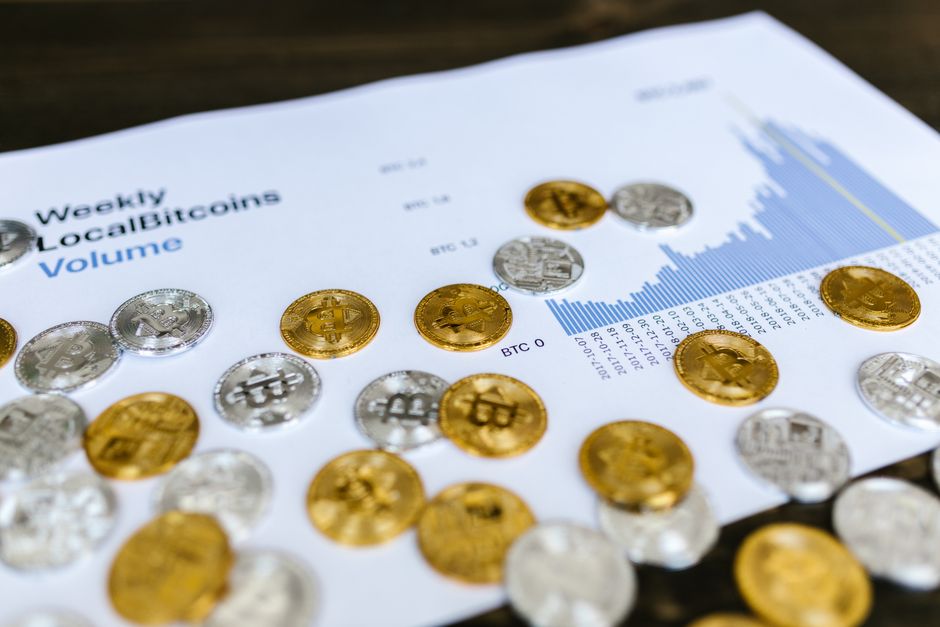
Managing volatility starts with having a written investment plan before you buy a single token. Emotional decisions made during a 30% drawdown are almost always regrettable. A pre-defined plan eliminates the guesswork.
Key strategies for staying steady in a volatile market include:
- **Dollar-cost averaging (DCA):** Investing a fixed dollar amount at regular intervals (weekly or monthly) regardless of price. DCA smooths out entry points and removes the pressure of timing the market.
- **Position sizing:** Never allocate more to a single crypto asset than you can afford to lose entirely. Many experienced investors cap any single position at 1–5% of their total portfolio.
- **Stop-loss orders:** Automated sell orders triggered at a preset price floor. They limit downside without requiring you to watch charts constantly.
**Diversification** plays a critical role as well. Spreading exposure across Bitcoin, **Ethereum (ETH)**, and select **altcoins (alternative cryptocurrencies)** reduces the impact of any single asset collapsing. However, note that crypto assets are highly correlated during broad market sell-offs — diversification within crypto alone does not eliminate systemic risk.
—
Common Mistakes Made by Beginner Crypto Investors
The crypto space has a steep learning curve, and beginners tend to repeat the same costly errors. Recognizing these patterns early can save significant capital.
The most common mistakes include:
- **Buying based on hype or social media trends** without researching the underlying technology or team.
- **Ignoring fees:** Gas fees on Ethereum, withdrawal fees on exchanges, and spread costs can erode returns faster than expected.
- **Storing assets on exchanges long-term:** Exchanges can be hacked or go bankrupt. Keeping large holdings on a centralized platform exposes you to **counterparty risk**.
- **Panic selling during corrections:** Selling at the bottom of a dip locks in losses. Most experienced investors plan exit points before entering, not during the chaos.
- **Over-leveraging:** Using **margin (borrowed funds)** amplifies both gains and losses. A 10x leveraged position can be liquidated entirely on a 10% adverse move.
The unifying thread across all these mistakes is the absence of a strategy. Crypto investing without a plan is speculation. With a plan, it becomes a calculated risk.
—
Practical Advice for First-Time Crypto Investors
Seasoned crypto investors who survived multiple **bear markets (prolonged price declines)** share a consistent set of lessons. These aren’t theories — they’re hard-won insights from watching portfolios drop 80–90% and recovering.
Practical steps for first-timers:
- **Start small:** Allocate only what you’re genuinely prepared to lose entirely. Many advisors suggest starting with no more than 1–3% of investable assets.
- **Use reputable US-regulated platforms:** Look for exchanges registered with **FinCEN (Financial Crimes Enforcement Network)** and compliant with **KYC (Know Your Customer)** and **AML (Anti-Money Laundering)** regulations.
- **Learn to read a whitepaper:** A project’s whitepaper explains its technology, tokenomics, and roadmap. If you can’t understand it or it doesn’t exist, that’s a red flag.
- **Track your cost basis:** US taxpayers must report crypto gains and losses to the **IRS (Internal Revenue Service)**. Keeping clean records from day one avoids major headaches at tax time.
- **Ignore short-term noise:** Daily price action is largely noise. If your investment thesis is sound, short-term volatility is irrelevant to your long-term position.
The most important step is research — not YouTube thumbnails or Twitter threads, but primary sources: on-chain data, developer activity, and verified market metrics.
—
Cryptocurrency Investment Strategies Compared
There is no single “correct” strategy for crypto investing. The right approach depends on your risk tolerance, time horizon, and familiarity with the technology. Below is a comparison of the most widely used strategies:
| Strategy | Time Horizon | Risk Level | Key Requirement |
|---|---|---|---|
| **HODLing** (long-term holding) | Years | Medium–High | Conviction in the asset |
| **Dollar-Cost Averaging (DCA)** | Months–Years | Medium | Consistent capital, discipline |
| **Swing Trading** | Days–Weeks | High | Technical analysis skills |
| **Yield Farming / Staking** | Ongoing | High | DeFi knowledge, smart contract risk |
| **Index-style diversification** | Years | Medium | Research across multiple assets |
**HODLing** — originally a typo for “holding” that became a crypto meme — is the simplest strategy. Buy, hold, and ignore volatility. It has historically outperformed active trading for most retail investors in Bitcoin specifically, though past performance does not guarantee future results.
**Swing trading** requires reading **candlestick charts**, understanding **support and resistance levels**, and managing trades actively. It carries significantly higher risk and is not suitable for beginners.
**Staking** involves locking tokens to support a **Proof-of-Stake (PoS)** blockchain and earning rewards in return. It generates yield but carries **smart contract risk** — the possibility that bugs in code could result in lost funds.
—
Analyzing Cryptocurrency Market Trends
Understanding market trends is non-negotiable for any informed crypto participant. Trends reveal whether the market is in **accumulation (buying phase)**, **distribution (selling phase)**, or **consolidation (sideways movement)**.
Essential tools for trend analysis include:
- **On-chain analytics platforms** (e.g., tracking wallet activity, exchange inflows/outflows, and **hash rate** for Bitcoin): These reveal what large holders — often called **whales** — are doing.
- **Technical analysis (TA) charts:** Price action tools like **moving averages (MA)**, **Relative Strength Index (RSI)**, and **Bollinger Bands** help identify momentum shifts.
- **Market sentiment indexes:** The **Crypto Fear & Greed Index** aggregates social data, volatility, and volume into a single score ranging from 0 (extreme fear) to 100 (extreme greed).
- **Macroeconomic indicators:** Interest rate decisions by the **Federal Reserve (Fed)**, inflation data (**CPI — Consumer Price Index**), and dollar strength (**DXY index**) all impact crypto markets significantly.
The goal of trend analysis is not to predict prices — no tool can do that reliably — but to understand the current market environment and adjust your strategy accordingly. Informed investors reduce exposure during extreme greed phases and consider accumulation during extreme fear, always within their pre-defined risk parameters.
—
Risk Disclaimer
Cryptocurrency markets are highly speculative and unregulated in many jurisdictions. Prices can fall to zero. Past performance of any digital asset is not indicative of future results. This article is for **educational and informational purposes only** and does not constitute financial, investment, tax, or legal advice. US investors should consult a licensed financial advisor and a tax professional familiar with digital asset regulations before making any investment decisions.
—
Frequently Asked Questions (FAQ)
Q: What is the most common mistake beginner crypto investors make?
A: The most common mistake is investing without a defined plan — buying based on hype or social media trends rather than researching the underlying technology, tokenomics, and team behind a project. This leads to panic selling during corrections and significant capital loss.
Q: How can I start investing in trending cryptocurrencies safely as a US investor?
A: Start by using a **FinCEN-registered, KYC-compliant exchange**, allocate only what you can afford to lose entirely, and apply dollar-cost averaging rather than lump-sum buying. Keep detailed records for IRS tax reporting, and store significant holdings in a hardware wallet rather than on an exchange.
Q: Why does understanding market trends matter more than tracking daily prices?
A: Daily price moves are largely noise driven by short-term sentiment. Understanding broader trends — through on-chain data, macroeconomic signals, and technical analysis — helps you identify whether the market is in an accumulation or distribution phase, enabling more rational, strategy-driven decisions rather than emotional reactions.
Charting & Exchange Resources
| Platform | Use Case | Key Feature | Fee Model | Action |
|---|---|---|---|---|
| TradingView | Charting & technical analysis | Indicators, multi-timeframe charts | Free / Pro tiers | View Platform |
| Coinbase | Exchange (beginner-friendly) | Simple USD on-ramp, educational tools | Varies by region | View Platform |
| Binance | Exchange (advanced pairs) | Wide altcoin coverage, spot markets | Varies by region | View Platform |
Affiliate Disclosure: This post contains affiliate links. We may earn a commission if you buy through our links, at no extra cost to you. Investment Risk Disclaimer: Cryptocurrency and digital asset markets are highly volatile. This content is for informational and educational purposes only and is not financial, investment, or trading advice. You may lose some or all of your capital. Do your own research and consult a licensed financial advisor before making investment decisions.
Leave a Reply