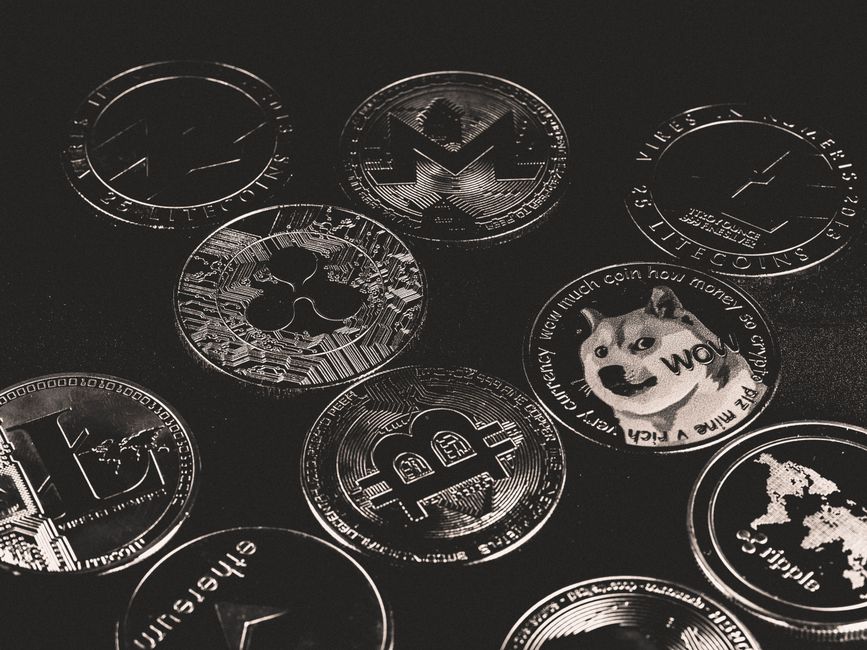
Cryptocurrency Market Overview
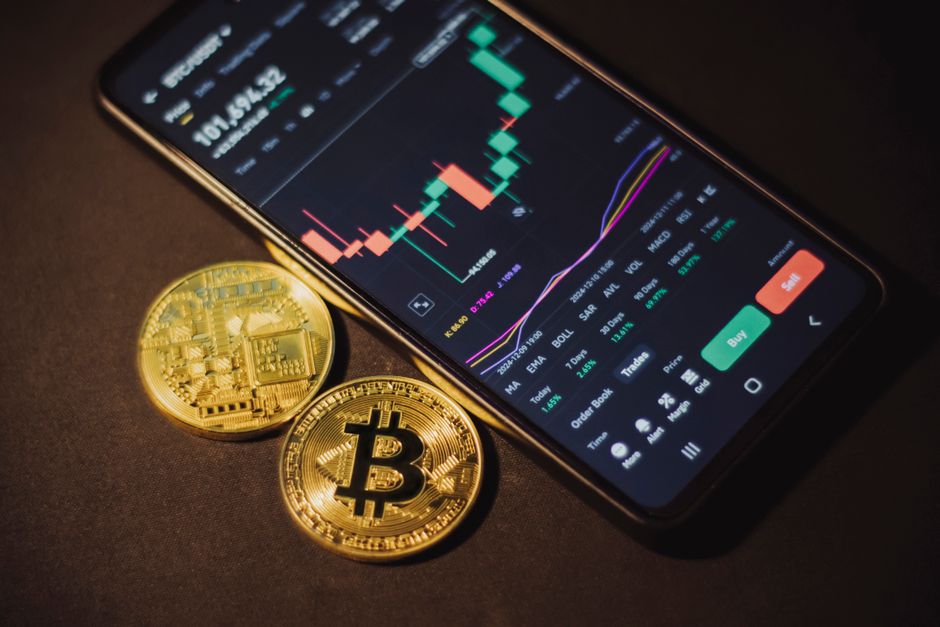
The cryptocurrency market continues to evolve rapidly in 2025, with digital assets experiencing significant volatility and growth cycles. Understanding current market trends is essential for anyone considering exposure to trending cryptos. The market capitalization of the entire crypto ecosystem fluctuates between $1.5 trillion and $2.5 trillion, driven by institutional adoption, regulatory developments, and technological innovations.
Several factors influence which cryptocurrencies gain traction among investors and traders. Bitcoin halving events historically create supply shocks that impact the broader market, typically occurring every four years and reducing miner rewards by half. Regulatory changes from the U.S. Securities and Exchange Commission (SEC) and other global authorities shape market sentiment, as clearer guidelines can encourage institutional participation while restrictive policies may dampen enthusiasm.
Market participants must recognize both the potential rewards and substantial risks inherent in cryptocurrency investing. Price swings of 20-30% within a single week are not uncommon, even for established assets. While some investors have realized significant gains, others have experienced substantial losses. The decentralized nature of cryptocurrencies means limited consumer protections compared to traditional financial products, and the technology remains relatively nascent despite over a decade of development.
Top Trending Cryptos This Month
Several cryptocurrencies have captured market attention based on trading volume, social media engagement, and price momentum. **Bitcoin (BTC)** remains the dominant cryptocurrency with approximately 45-50% market share, serving as the benchmark against which other digital assets are measured. Its limited supply of 21 million coins and widespread recognition make it the gateway asset for most new investors entering the space.
**Ethereum (ETH)** continues trending due to its smart contract functionality and role as the foundation for decentralized finance (DeFi) applications and non-fungible tokens (NFTs). The Ethereum network processes thousands of decentralized applications, creating ongoing demand for ETH tokens to pay transaction fees. Recent network upgrades have improved scalability and reduced energy consumption, addressing previous criticisms.
**Solana (SOL)** has gained momentum as a high-performance blockchain capable of processing over 50,000 transactions per second at lower costs than Ethereum. Developers favor Solana for building consumer-facing applications that require fast confirmation times. The ecosystem has recovered from previous network outages, demonstrating improved reliability.
**Cardano (ADA)** attracts attention through its research-driven development approach and focus on sustainability. The platform emphasizes peer-reviewed academic research before implementing protocol changes. Recent smart contract capabilities have expanded use cases beyond simple value transfer.
**Avalanche (AVAX)** trends due to its subnet architecture allowing customized blockchain networks. Financial institutions exploring private blockchain solutions often evaluate Avalanche’s technology. The platform offers compatibility with Ethereum applications while providing faster transaction finality.
Investing in Trending Cryptos: What You Need to Know

Identifying promising cryptocurrencies requires examining multiple factors beyond social media hype and short-term price movements. **Fundamental analysis** starts with understanding the problem each cryptocurrency aims to solve and evaluating whether blockchain technology offers a superior solution compared to existing alternatives. Many trending cryptos lack clear use cases or face limited adoption despite technical capabilities.
Investors should examine the development team’s credentials, track record, and transparency. Open-source code repositories on platforms like GitHub provide insights into development activity and community contributions. Active development with regular updates suggests ongoing commitment, while abandoned projects with no recent code changes raise red flags.
Tokenomics—the economic model governing token supply and distribution—directly impacts long-term value potential. Cryptocurrencies with uncapped supply face inflationary pressure, while those with significant portions held by founders or early investors risk price manipulation through large sell-offs. Understanding vesting schedules and unlock dates helps anticipate potential selling pressure.
Network adoption metrics provide objective data about real-world usage. Daily active addresses, transaction volume, and total value locked in protocols indicate genuine utility rather than speculative interest. Cryptocurrencies with growing user bases and ecosystem activity demonstrate stronger fundamentals than those relying solely on marketing.
**Risk management** is non-negotiable in cryptocurrency investing. Allocate only capital you can afford to lose completely without impacting your financial stability. Most financial advisors recommend limiting cryptocurrency exposure to 5-10% of an investment portfolio maximum. Never invest borrowed money or funds needed for essential expenses.
Technical Analysis: Key Indicators to Watch
Technical analysis helps traders identify potential entry and exit points by studying price charts and trading patterns. While not predictive, these tools provide probabilistic frameworks for decision-making. The **Relative Strength Index (RSI)** measures momentum on a scale from 0 to 100, with readings above 70 suggesting overbought conditions and below 30 indicating oversold territory. However, trending cryptos can remain overbought for extended periods during bull markets.
**Moving averages** smooth price data to identify trends and potential support or resistance levels. The 50-day and 200-day moving averages are widely monitored, with crossovers generating buy or sell signals. When the 50-day moving average crosses above the 200-day average—called a “golden cross”—it suggests bullish momentum. The opposite pattern, a “death cross,” signals potential downward pressure.
**Trading volume** analysis reveals the strength behind price movements. Rising prices on increasing volume suggest genuine buying interest and trend sustainability. Conversely, price increases on declining volume may indicate weakening momentum and potential reversals. Volume spikes often precede significant price movements in either direction.
**Fibonacci retracement levels** help identify potential support and resistance zones during pullbacks. Traders plot these levels between significant highs and lows, watching for price reactions at 38.2%, 50%, and 61.8% retracement levels. These mathematical ratios appear frequently in financial markets, though their predictive power remains debated.
**On-chain metrics** unique to cryptocurrencies provide additional analytical dimensions. Exchange inflows and outflows indicate whether holders are moving assets to sell or accumulating for long-term holding. Network hash rate for proof-of-work coins reflects mining security and investment. Active addresses and transaction counts measure real network usage beyond speculative trading.
Case Studies: Successful Investments in Trending Cryptos
Early Ethereum investors who recognized its smart contract potential in 2015-2016 realized extraordinary returns as the platform became the foundation for DeFi and NFT ecosystems. Those who studied the whitepaper, understood the value proposition of programmable money, and maintained conviction through 80% drawdowns were rewarded when Ethereum increased from under $10 to over $4,000 at peak valuations. The key insight was identifying genuine technological innovation rather than following short-term hype.
Solana investors in early 2021 benefited from timing their entry during a broader cryptocurrency bull market while identifying a scalable blockchain addressing Ethereum’s congestion issues. Purchasing SOL tokens between $1-5 before mainstream awareness resulted in 100x+ returns as the ecosystem attracted developers and users. Success factors included evaluating technical specifications, monitoring developer activity, and recognizing institutional backing from major venture capital firms.
Chainlink (LINK) investors who understood the oracle problem—how blockchains access external data—positioned themselves in a crucial infrastructure layer. Despite lacking the viral appeal of consumer-facing applications, Chainlink’s role providing real-world data to smart contracts created sustainable demand. Patient investors who accumulated during 2018-2019 market doldrums saw significant appreciation as DeFi adoption accelerated.
These case studies share common themes: **fundamental research** beyond price charts, **long-term conviction** despite volatility, and **strategic timing** during early development phases. Successful investors identified genuine problems being solved and evaluated team execution capabilities. They also practiced disciplined profit-taking rather than holding indefinitely based on hopes of unlimited appreciation.
Common Mistakes When Investing in Trending Cryptos
**FOMO (Fear of Missing Out)** drives countless poor investment decisions in cryptocurrency markets. Seeing a coin double in days creates emotional urgency to participate, often causing investors to buy near short-term peaks. Trending cryptos by definition have already experienced significant price appreciation, meaning early adopters are taking profits while newcomers provide exit liquidity. Disciplined investors wait for pullbacks or skip opportunities rather than chase parabolic moves.
**Neglecting fundamental analysis** in favor of technical patterns or social media sentiment leads to investments in projects with no viable future. Many trending cryptos gain attention through coordinated marketing campaigns or influencer promotions rather than genuine technological merit. Without understanding the underlying value proposition, investors cannot distinguish between temporary hype and sustainable growth. Always ask: “What problem does this solve, and why does it require blockchain technology?”
**Over-concentration in single assets** magnifies portfolio risk unnecessarily. Some investors allocate their entire cryptocurrency budget to one trending coin based on conviction or recommendations, exposing themselves to project-specific risks like technical failures, regulatory action, or team departures. Diversification across multiple cryptocurrencies, while still maintaining concentrated positions compared to traditional portfolios, provides risk mitigation without excessive dilution.
**Ignoring tax implications** creates unexpected liabilities that erode returns. In the United States, cryptocurrency transactions trigger taxable events under current IRS guidance. Trading one crypto for another, not just selling for dollars, generates capital gains or losses. Frequent traders can accumulate significant tax obligations without setting aside funds, creating financial pressure to sell holdings at inopportune times. Consult tax professionals familiar with cryptocurrency reporting requirements.
**Using excessive leverage** through margin trading or derivatives amplifies both gains and losses, often resulting in complete position liquidation during normal volatility. Exchanges offer 10x, 50x, or even 100x leverage, allowing traders to control large positions with small capital. However, a 2% adverse price movement with 50x leverage results in total loss. Most retail traders using leverage eventually lose money, with liquidation events enriching counterparties and exchanges.
Risk Disclosure
Cryptocurrency investing carries substantial risk and may not be suitable for all investors. Digital assets are highly volatile, with prices capable of declining 50-90% from peak values during bear markets. Past performance does not guarantee future results, and many cryptocurrencies that were once trending have declined to near-zero value.
Regulatory uncertainty remains significant as governments worldwide develop frameworks for digital assets. Adverse regulatory decisions can dramatically impact cryptocurrency values overnight. The technology is still maturing, with smart contract vulnerabilities, network outages, and security breaches occurring regularly across the ecosystem.
This article provides educational information only and does not constitute financial advice, investment recommendations, or endorsement of specific cryptocurrencies. Readers should conduct independent research and consult licensed financial advisors before making investment decisions. Never invest more than you can afford to lose completely.
Frequently Asked Questions
Q: What are the risks of investing in trending cryptocurrencies?
A: Trending cryptocurrencies carry extreme price volatility, with 30-50% corrections common even during bull markets. Regulatory changes can eliminate value overnight, as seen when certain countries banned cryptocurrency trading or mining. Scams, fraudulent projects, and Ponzi schemes are prevalent, with professional-looking websites and whitepapers masking illegitimate operations. Exchange hacks and wallet compromises have resulted in billions in losses. Additionally, trending status often indicates late-stage price discovery, meaning early adopters are selling to new buyers attracted by recent gains.
Q: How can I identify the best trending cryptocurrencies to invest in?
A: Start with fundamental analysis by reading the project whitepaper and evaluating whether the problem being solved requires blockchain technology. Review the development team’s credentials and track records on platforms like LinkedIn and GitHub. Examine tokenomics including total supply, distribution schedules, and inflation rates. Monitor on-chain metrics like active addresses, transaction volume, and developer activity. Use technical analysis to identify favorable entry points rather than buying during parabolic price increases. Most importantly, verify genuine adoption and use cases rather than relying on social media hype or influencer endorsements.
Q: What are the most important factors to consider when investing in trending cryptos?
A: Evaluate the core technology and whether it offers meaningful improvements over existing solutions, not just marketing claims. Assess the team’s ability to execute their roadmap based on past delivery and current progress. Understand your personal risk tolerance and investment timeline—trending cryptos may experience 70-80% drawdowns that test conviction. Consider market timing, as entering during euphoric peaks typically results in extended holding periods before reaching breakeven. Implement proper security measures including hardware wallets and two-factor authentication. Finally, maintain realistic expectations—life-changing returns are rare and usually require early adoption before an asset becomes widely known as “trending.”
Charting & Exchange Resources
| Platform | Use Case | Key Feature | Fee Model | Action |
|---|---|---|---|---|
| TradingView | Charting & technical analysis | Indicators, multi-timeframe charts | Free / Pro tiers | View Platform |
| Coinbase | Exchange (beginner-friendly) | Simple USD on-ramp, educational tools | Varies by region | View Platform |
| Binance | Exchange (advanced pairs) | Wide altcoin coverage, spot markets | Varies by region | View Platform |
Affiliate Disclosure: This post contains affiliate links. We may earn a commission if you buy through our links, at no extra cost to you. Investment Risk Disclaimer: Cryptocurrency and digital asset markets are highly volatile. This content is for informational and educational purposes only and is not financial, investment, or trading advice. You may lose some or all of your capital. Do your own research and consult a licensed financial advisor before making investment decisions.
Leave a Reply