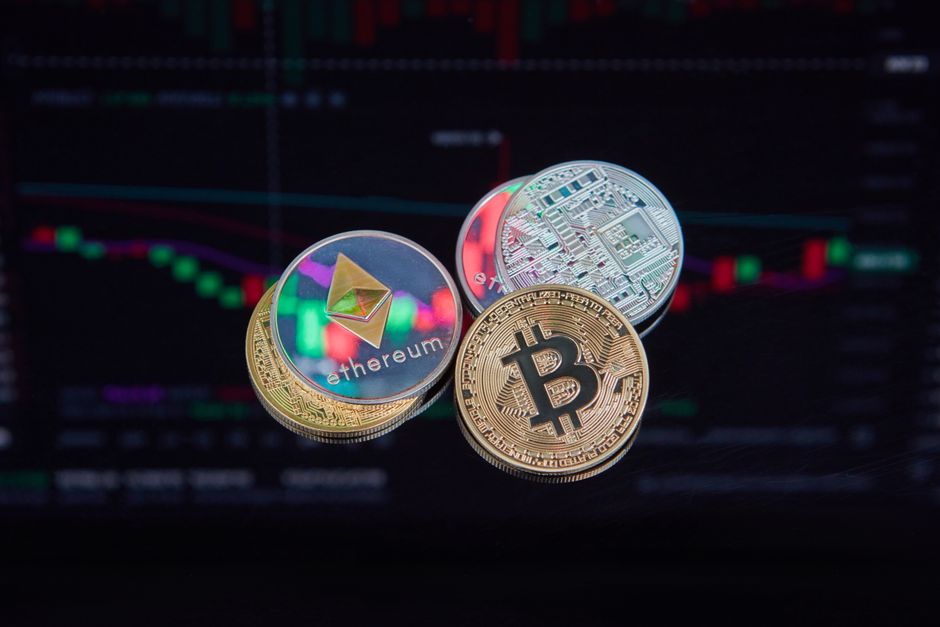
What ‘Trending’ Actually Means in Crypto Markets
When you search for **trending cryptocurrencies this week**, you’re seeing coins that have surged in trading volume, social media mentions, or exchange ranking algorithms — not necessarily coins with strong fundamentals. Platforms like CoinGecko and CoinMarketCap surface trending assets based on **24-hour volume spikes**, search traffic, and community engagement signals. Understanding that distinction is the first line of defense for any new investor.
**Trending does not mean investment-ready.** A coin can trend because a celebrity tweeted about it, because a coordinated group bought in simultaneously, or because a minor news item got amplified beyond its actual significance. Short-term price momentum and long-term market relevance are two entirely different things.
Key concepts to anchor this:
- **Market cap**: total value of all coins in circulation (price × circulating supply)
- **24-hour volume**: how much of an asset traded hands in the last day — a proxy for real interest
- **Liquidity**: how easily you can buy or sell without moving the price significantly
- **Price momentum**: the rate and direction of recent price change, not a forecast of future movement
—
Why Crypto Prices Move So Fast — Volatility Basics
**Volatility** in plain English means how much an asset’s price swings over a given period. A stock like a large S&P 500 company might move 1–2% on a big news day. A trending altcoin (any cryptocurrency other than Bitcoin) can move 20–50% in the same 24 hours. That difference isn’t random — it’s structural.
Crypto markets are smaller and less liquid than traditional financial markets. According to Investopedia’s crypto coverage, the total crypto market cap, even at recent highs, remains a fraction of the US equity market. Thinner markets mean a single large order can shift prices dramatically, a dynamic known as **low market depth**.
Comparing asset class volatility:
| Asset Class | Typical Daily Swing | Extreme Event Swing |
|---|---|---|
| US Treasury Bonds | 0.1–0.3% | 1–2% |
| S&P 500 Large Cap | 0.5–1.5% | 5–10% |
| Bitcoin (BTC) | 2–5% | 15–25% |
| Small-cap altcoins | 5–15% | 30–70%+ |
This table is illustrative of historical ranges, not a guarantee of future behavior.
—
Six Core Forces Driving This Week’s Price Swings

No single week in crypto ever has just one driver. Prices respond to a layered set of forces simultaneously, and understanding each one helps you avoid misattributing cause and effect.
**1. Macroeconomic signals.** Inflation data releases and Federal Reserve interest rate decisions shift overall risk appetite. When rates rise or inflation surprises to the upside, investors often rotate out of speculative assets — including crypto — into safer holdings. This is called **risk-off sentiment**.
**2. Liquidity and order book depth.** On smaller exchanges or for lower-cap coins, the **order book** (the list of pending buy and sell orders) can be thin. A whale — a single large holder — moving even a moderate position can cause outsized price swings.
**3. Regulatory headlines.** US policy announcements from the SEC (Securities and Exchange Commission) or CFTC (Commodity Futures Trading Commission) can send prices sharply in either direction. A surprise enforcement action or a positive ETF (exchange-traded fund) ruling both move markets fast.
**4. Institutional activity.** Large asset managers and hedge funds entering or exiting positions create volume patterns that retail traders often misread as organic demand.
**5. Social media amplification.** Coordinated communities on Reddit, X (formerly Twitter), and Telegram can drive short-term pumps that reverse just as quickly. This is distinct from genuine adoption news.
**6. Token unlock events.** Many newer projects release locked tokens on a schedule. When a large batch of previously locked tokens becomes tradable, sell pressure often follows — a dynamic first-time investors frequently miss.
—
How to Read a Trending Coin Without Getting Burned
Price charts alone tell you what happened — they don’t tell you why, or whether it will continue. **On-chain analysis** — examining actual blockchain transaction data — gives you a second layer of signal. Tools like Glassnode or Nansen (used by institutional analysts) show whether volume is coming from many unique wallets or a handful of addresses cycling funds back and forth, a red flag known as **wash trading**.
Before you take any trending coin seriously, check these red flags:
- **Team anonymity**: no verifiable identities attached to the project
- **Whitepaper vagueness**: a project document that describes ambitions without technical specifics
- **Tokenomics imbalance**: a small percentage of wallets holding the majority of supply
- **No audit**: smart contract code that hasn’t been reviewed by an independent security firm
‘Up 200% this week’ is a data point, not a thesis. It tells you something happened. It does not tell you whether that something is repeatable, sustainable, or even real.
—
Understanding Market Cycles and Where We Are in 2025
Crypto markets move in cycles that broadly follow Bitcoin’s **halving events** — periodic reductions in the rate at which new Bitcoin is created. The 2024 halving set the stage for the current 2025 market phase, which has seen increased institutional participation, several spot Bitcoin ETF approvals in the US, and early-stage regulatory frameworks emerging from Congress.
The four broad phases of a crypto market cycle:
- **Accumulation**: prices are flat or slowly recovering; low public interest
- **Bull market (markup)**: prices rise, media coverage increases, new investors enter
- **Distribution**: insiders begin selling into retail demand; euphoria peaks
- **Bear market (markdown)**: prices fall sharply; late entrants experience the largest losses
Even in a maturing market with more institutional infrastructure, **significant downside risk remains** — particularly for altcoins and tokens without established use cases. The **FOMO** (fear of missing out) entry trap — buying because a coin ‘keeps going up’ — historically produces the worst outcomes for retail investors who enter near local price tops.
—
Key Metrics Every US Investor Should Check Before Buying
Before acting on any trending coin, run through this due diligence checklist:
- **Market cap vs. FDV (fully diluted valuation)**: FDV is what the market cap would be if all tokens that will ever exist were already in circulation. A wide gap between current market cap and FDV signals heavy future dilution.
- **Volume-to-market-cap ratio**: high volume relative to market cap suggests genuine interest; very low volume suggests thin liquidity and manipulation risk.
- **Token unlock schedule**: check project documentation for when locked tokens vest — these create predictable sell pressure.
- **Exchange listing quality**: is the coin only available on obscure offshore exchanges? US-based investors face specific withdrawal and compliance risks on exchanges without proper KYC/AML (Know Your Customer / Anti-Money Laundering) procedures.
- **CEX vs. DEX access**: centralized exchanges (CEX) like Coinbase offer customer support and recourse; decentralized exchanges (DEX) are permissionless but carry smart contract risk and no customer support.
—
Risk Management Strategies That Actually Work
Volatile markets punish both overconfidence and panic equally. The strategies below don’t eliminate risk — nothing does — but they reduce the damage of being wrong.
**Dollar-cost averaging (DCA)** means buying a fixed dollar amount of an asset at regular intervals regardless of price. Instead of trying to time a perfect entry, you spread your cost basis over multiple price points. According to Bankless and 99Bitcoins educational content, DCA is consistently cited as the most practical entry strategy for non-professional investors in volatile markets.
**Position sizing** is the discipline of never allocating so much of your portfolio to a single asset that a 70% drop in that asset materially damages your overall financial situation. A commonly cited framework: no single speculative position should exceed 2–5% of your total investable assets.
**Stop-loss orders** automatically sell your position if price drops to a set level. They work well in liquid markets but can fail in thin-market conditions where price gaps through your stop level — known as **slippage**.
**Stablecoin hedging** means holding a portion of your crypto portfolio in assets pegged to the US dollar (like USDC or USDT) so you have dry powder to buy during dips without selling into a down market.
—
Security Fundamentals Before You Buy Anything Trending
Security is not optional — it is the prerequisite to everything else. New coins trending on social media are also magnets for scammers running parallel campaigns.
**Hot wallet vs. cold wallet:**
- A **hot wallet** is connected to the internet (browser extensions, mobile apps). Convenient but exposed to phishing and malware.
- A **cold wallet** (hardware wallet) stores your private keys offline. The most secure option for any holding you don’t plan to trade daily.
Scams specifically tied to trending coins include:
- **Fake airdrops**: promise of free tokens that require you to connect your wallet to a malicious site
- **Impersonation channels**: Telegram or Discord servers mimicking official project communities
- **Phishing links**: fake exchange login pages that capture your credentials
For **two-factor authentication (2FA)**, avoid SMS-based 2FA — SIM-swapping attacks are a documented and growing threat. Use an authenticator app (like Google Authenticator or Authy) or a hardware security key instead.
—
How US Regulatory Context Shapes Trending Crypto Risk
Investing in US markets means operating under a specific and evolving legal framework. The SEC and CFTC are both actively involved in crypto oversight, and their positions affect which tokens are legally available to US retail investors and on which platforms.
Key regulatory factors to understand:
- **Token classification**: the SEC has argued that many tokens qualify as securities under the Howey Test — meaning they carry registration and disclosure requirements. Tokens classified as securities that aren’t properly registered can be delisted from US exchanges.
- **Capital gains tax**: in the US, crypto is treated as property by the IRS. Short-term gains (held under one year) are taxed at ordinary income rates; long-term gains (held over one year) qualify for lower rates.
- **Form 1099-DA**: starting in 2025, US cryptocurrency brokers are required to issue this new tax form, making crypto transaction reporting more transparent to the IRS.
- **KYC/AML compliance**: reputable US exchanges require identity verification. Using non-compliant offshore platforms creates both legal and financial risk.
Regulatory uncertainty is itself a risk factor — one that traditional stock investors don’t face in the same way.
—
What Experienced Investors Know That Beginners Don’t
Surviving multiple crypto market cycles — the 2017–2018 crash, the 2020–2021 run and subsequent 2022 bear market — teaches lessons that can’t be learned from a trending coin list.
The most consistent finding across market cycle veterans: **the loudest trending coins most often produce the worst outcomes for late buyers.** By the time a coin is everywhere on social media, the early holders are looking for liquidity to sell into.
**Behavioral finance** research documents the same patterns in crypto that appear in all speculative markets: investors systematically panic-sell near price lows and chase pumps near local tops. The emotional cost of doing this repeatedly — not just the financial cost — is significant.
Building a **repeatable research process** — checking the same metrics, asking the same questions, applying the same risk framework every time — is more valuable than any single trade insight. Consistency beats cleverness in volatile markets over time.
—
Investment Risk Disclaimer
**Cryptocurrency investments involve substantial risk of loss and are not suitable for all investors.** Past price performance does not indicate future results, and nothing in this article constitutes personalized financial, tax, or legal advice. All trending coin references in this article are for **educational context only**. Crypto markets are highly speculative, largely unregulated compared to traditional securities markets, and can result in total loss of invested capital. Consult a licensed financial advisor, tax professional, or attorney before making any investment decisions.
—
Frequently Asked Questions (FAQ)
Q: What does it mean when a cryptocurrency is ‘trending’ this week?
A: A coin trends when it sees a spike in trading volume, social media mentions, or exchange search rankings — not because it has improved fundamentals. Trending reflects short-term attention, not long-term value, and should be treated as a starting point for research, not a buy signal.
Q: Why do crypto prices swing so dramatically compared to stocks?
A: Crypto markets are significantly smaller and less liquid than equity markets. Thin order books mean large trades move prices dramatically. Regulatory uncertainty, 24/7 global trading, and high speculative participation all amplify volatility beyond what traditional asset classes typically experience.
Q: How can a beginner tell if a trending coin is worth researching further?
A: Start with verifiable team identities, a technically specific whitepaper, an independent smart contract audit, reasonable tokenomics with no single wallet holding a dominant share, and availability on reputable US-compliant exchanges. If multiple items on that checklist are missing, the research process stops there.
Q: What should a US investor do before buying any cryptocurrency they see trending online?
A: Run the full due diligence checklist: check market cap versus FDV, review token unlock schedules, confirm exchange compliance for US users, set up secure 2FA and a cold wallet if holding significant value, and understand the tax reporting obligations that apply to every crypto transaction under US law.
Explore more trending cryptos guides on our site.
Charting & Exchange Resources
| Platform | Use Case | Key Feature | Fee Model | Action |
|---|---|---|---|---|
| TradingView | Charting & technical analysis | Indicators, multi-timeframe charts | Free / Pro tiers | View Platform |
| Coinbase | Exchange (beginner-friendly) | Simple USD on-ramp, educational tools | Varies by region | View Platform |
| Binance | Exchange (advanced pairs) | Wide altcoin coverage, spot markets | Varies by region | View Platform |
Affiliate Disclosure: This post contains affiliate links. We may earn a commission if you buy through our links, at no extra cost to you. Investment Risk Disclaimer: Cryptocurrency and digital asset markets are highly volatile. This content is for informational and educational purposes only and is not financial, investment, or trading advice. You may lose some or all of your capital. Do your own research and consult a licensed financial advisor before making investment decisions.
Leave a Reply