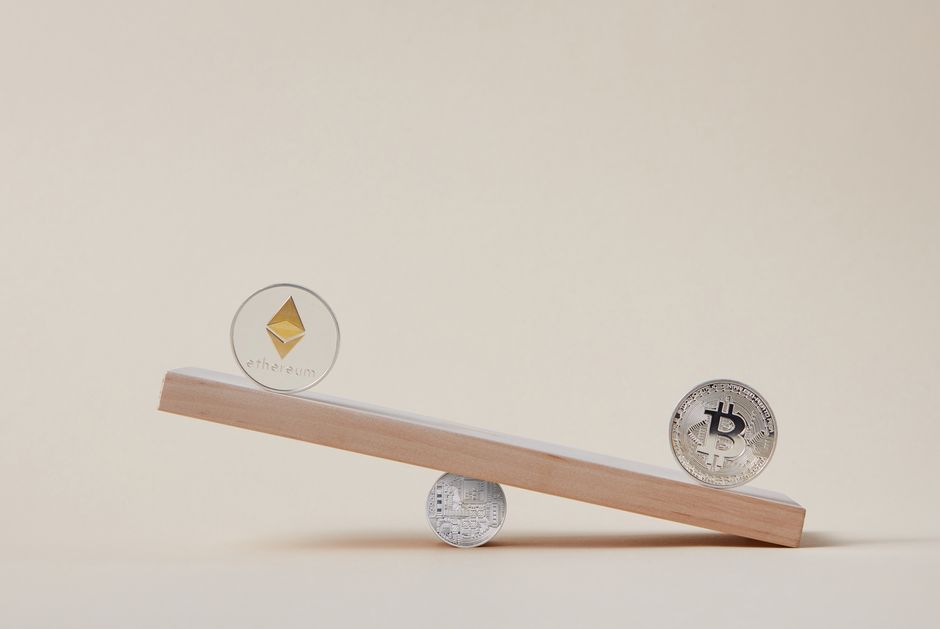
Ethereum vs Solana: Understanding the Two Giants
If you are new to cryptocurrency and trying to decide between Ethereum and Solana, you are stepping into one of the most active debates in the entire digital asset space. Both networks are blockchain platforms that support decentralized applications, but their underlying technology, governance philosophy, and market positioning differ in ways that matter enormously for investors and developers alike. This guide breaks down everything a US-based beginner investor needs to understand before committing capital to either ecosystem, with a clear focus on risk awareness and practical analysis.
What Is Ethereum? Background and Origins
Ethereum was conceived by Vitalik Buterin and launched in 2015, making it one of the oldest smart contract platforms in existence. It introduced the concept of a programmable blockchain, meaning developers could build applications directly on top of the network rather than just transfer value. Ethereum pioneered the decentralized finance movement, and its ecosystem has grown to include thousands of decentralized applications, NFT marketplaces, and decentralized autonomous organizations. As the second-largest cryptocurrency by market capitalization, Ethereum commands significant institutional attention and a deep liquidity pool that US investors find attractive.
Ethereum operates on a proof-of-stake consensus mechanism, which it transitioned to in 2022 after the Merge upgrade. Under proof-of-stake, network validators lock up existing Ether tokens as collateral to confirm transactions rather than solving complex mathematical puzzles. This design shift reduced energy consumption dramatically and altered the supply dynamics of Ether, introducing a burning mechanism called EIP-1559 that removes transaction fees from circulation. These mechanics are critical for understanding why Ethereum investors track network activity so closely, as higher usage burns more Ether and can influence supply-side pressure on the asset.
What Is Solana? Background and Origins
Solana was founded by Anatoly Yakovenko and launched in 2020 with a stated mission to solve the blockchain trilemma — the challenge of achieving decentralization, security, and scalability simultaneously. Solana takes a different technical approach, relying on a proof-of-history consensus mechanism layered atop proof-of-stake, which creates a historical record of transactions that validators can process in parallel rather than sequentially. This architectural decision is the primary reason Solana can advertise theoretical throughput rates far exceeding Ethereum’s, though real-world performance varies under heavy network demand.
The Solana ecosystem has attracted a loyal developer community and a growing portfolio of DeFi protocols, NFT platforms, and blockchain gaming projects. It has positioned itself as a high-performance, low-cost alternative to Ethereum, particularly appealing to users frustrated by Ethereum’s gas fees during periods of peak network congestion. Solana’s relatively shorter track record compared to Ethereum means it lacks the same depth of battle-testing, a factor US investors should weigh carefully when evaluating long-term risk exposure.
Ethereum vs Solana: Technical Comparison
Understanding the technical differences between these two networks helps beginners move beyond surface-level marketing and evaluate each platform on its actual merit. The table below outlines the most critical performance metrics side by side.
| Feature | Ethereum | Solana |
|---|---|---|
| Consensus Mechanism | Proof-of-Stake (PoS) | Proof-of-History + PoS |
| Theoretical TPS | ~15–30 | ~65,000 |
| Average Transaction Fee | $1–$20+ (varies widely) | $0.001–$0.10 (lower avg.) |
| Average Block Time | ~12 seconds | ~400 milliseconds |
| Smart Contract Language | Solidity | Rust, C, C++ |
| Year Launched | 2015 | 2020 |
| TVL (Total Value Locked) | Billions (dominant) | Lower but growing |
Transaction speed and cost are where the two platforms diverge most visibly. Ethereum’s throughput is intentionally limited by its design, which prioritizes decentralization and security over raw speed. During periods of high demand, Ethereum transaction fees — commonly called gas fees — can spike to double-digit dollar amounts, making small transfers economically impractical. Solana’s architecture allows for dramatically faster finality and lower fees, but it has experienced repeated network outages and performance degradations under stress, raising legitimate questions about reliability.
Investment Risk Profile: What Beginners Must Understand
Before allocating any capital to either Ethereum or Solana, US investors need to internalize a fundamental truth: cryptocurrency markets are among the most volatile asset classes available. Both ETH and SOL have experienced drawdowns exceeding 80% from their all-time highs within single market cycles. Past performance does not guarantee future results, and digital asset prices are influenced by regulatory announcements, macroeconomic conditions, speculative sentiment, and technological developments simultaneously.
Ethereum carries risks tied to its network upgrade schedule, competition from layer-2 scaling solutions, and the broader regulatory environment surrounding proof-of-stake assets. Solana’s risks include its shorter operational history, higher concentration of validator infrastructure, and the network’s demonstrated vulnerability to congestion-related outages. Neither asset should be considered a safe haven or a substitute for a diversified portfolio strategy.
Practical Use Cases: Where Each Platform Excels
Ethereum’s primary strength lies in its ecosystem maturity. It hosts the largest decentralized finance infrastructure, including lending protocols, decentralized exchanges, and stablecoin systems that collectively hold billions in user funds. The network’s first-mover advantage has attracted deep developer talent, extensive documentation, and robust tooling that makes it the default choice for serious blockchain projects. For US investors interested in DeFi participation, Ethereum remains the foundational platform, though high fees have driven many small-scale users toward layer-2 networks like Arbitrum and Optimism that settle transactions back to Ethereum.
Solana has carved out significant territory in high-frequency and consumer-facing applications. NFT marketplaces on Solana operate at a fraction of the cost of their Ethereum counterparts, and blockchain gaming projects have found Solana’s throughput sufficient for real-time in-game transactions. Its growing presence in mobile and Web3 consumer applications gives it a distinct use case advantage for projects that require near-instant settlement at low cost. However, the depth of financial infrastructure on Solana remains shallower than Ethereum’s, which can limit options for more sophisticated DeFi strategies.
Regulation and the US Market Context
US cryptocurrency investors operate within an evolving regulatory landscape that could meaningfully impact both Ethereum and Solana. The Securities and Exchange Commission has signaled increasing scrutiny over digital asset markets, and classification decisions about whether specific tokens qualify as securities could affect trading availability on US-regulated exchanges. Ethereum’s transition to proof-of-stake has also raised questions about whether Ether could be classified differently under existing securities frameworks.
Solana has faced additional scrutiny due to its association with certain decentralized finance protocols that have drawn regulatory attention. US investors should monitor SEC and Commodity Futures Trading Commission statements, as well as Congressional legislative developments, as these bodies shape the legal environment in which both assets will compete. Using regulated US-based exchanges for purchasing and holding either asset remains the recommended approach for staying within current legal boundaries.
Long-Term Outlook and What to Watch
Both Ethereum and Solana are actively developed platforms with clear upgrade roadmaps. Ethereum’s upcoming phases — including proto-danksharding and full danksharding — aim to improve data availability and reduce costs further, potentially addressing some of the fee concerns that push users toward competitors. The success of these upgrades will be a critical factor in Ethereum’s ability to maintain its dominant ecosystem position against not only Solana but also competing layer-1 networks like Avalanche, Polygon, and Sui.
Solana’s roadmap includes continued work on Firedancer, a validator client developed by Jump Crypto that promises to improve network reliability and throughput significantly. If Firedancer delivers on its performance targets, Solana could address one of its most significant criticisms. However, the network must demonstrate resilience under adversarial conditions — something it has struggled with historically — before it can earn the level of institutional trust that Ethereum currently enjoys. Investors should track network uptime reports, developer activity metrics on platforms like GitHub, and total value locked in DeFi protocols as proxies for ecosystem health.
Frequently Asked Questions (FAQ)
What are the key differences between Ethereum and Solana?
The core differences come down to architecture and market maturity. Ethereum uses proof-of-stake with a focus on decentralization and security, accepting slower throughput and higher fees in exchange for a more robust and battle-tested network. Solana prioritizes speed and low transaction costs through proof-of-history but has experienced more network instability. Ethereum has a larger ecosystem and deeper liquidity, while Solana offers a more accessible cost structure for everyday transactions.
Why should beginners consider investing in Ethereum or Solana?
Both platforms represent exposure to the broader growth of blockchain technology, decentralized finance, and digital asset adoption. Ethereum benefits from its status as the most established smart contract platform, while Solana offers a potentially faster and cheaper alternative with a growing developer ecosystem. Beginners should approach both as high-risk, high-volatility assets and invest only what they can afford to lose entirely.
What are the main risks and challenges associated with investing in Ethereum or Solana?
Crypto volatility is the most obvious risk, with both assets capable of losing significant portions of their value during market downturns. Ethereum faces regulatory uncertainty and competition from layer-2 scaling solutions. Solana carries risks related to network reliability, shorter operational history, and potential regulatory classification issues. Both assets also expose investors to technology risk — meaning bugs, exploits, or design failures in the underlying protocol could negatively impact holdings.
How can investors make informed decisions when choosing between Ethereum and Solana?
Start by defining your investment goals, risk tolerance, and time horizon. Evaluate each platform’s technical fundamentals, developer activity, and real-world adoption rather than relying on social media hype or short-term price movements. Diversification across multiple blockchain ecosystems is generally considered a lower-risk approach than concentrating in a single asset. Consult publicly available resources, on-chain analytics platforms, and reputable financial news outlets before making any investment decision.
Explore more altcoin guides on our site.
Charting & Exchange Resources
| Platform | Use Case | Key Feature | Fee Model | Action |
|---|---|---|---|---|
| TradingView | Charting & technical analysis | Indicators, multi-timeframe charts | Free / Pro tiers | View Platform |
| Coinbase | Exchange (beginner-friendly) | Simple USD on-ramp, educational tools | Varies by region | View Platform |
| Binance | Exchange (advanced pairs) | Wide altcoin coverage, spot markets | Varies by region | View Platform |
Affiliate Disclosure: This post contains affiliate links. We may earn a commission if you buy through our links, at no extra cost to you. Investment Risk Disclaimer: Cryptocurrency and digital asset markets are highly volatile. This content is for informational and educational purposes only and is not financial, investment, or trading advice. You may lose some or all of your capital. Do your own research and consult a licensed financial advisor before making investment decisions.
Leave a Reply