What Is an Altcoin? Market Overview
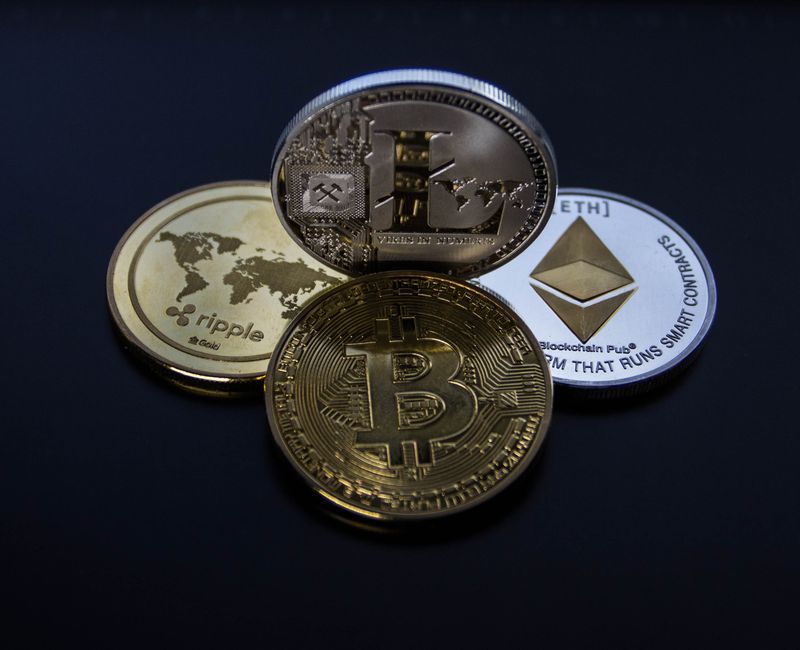
An altcoin is any cryptocurrency other than Bitcoin. Since Bitcoin launched in 2009, thousands of alternative digital currencies have entered the market, each offering different technical features, use cases, and investment profiles. The term combines “alternative” and “coin,” and these assets now represent a significant portion of total crypto market capitalization. Many altcoins were created to solve specific limitations in Bitcoin’s original design, such as transaction speed, energy consumption, or smart contract capability. Understanding the altcoin landscape is essential for anyone exploring cryptocurrency beyond the original digital cash system.
Altcoins differ from Bitcoin in several meaningful ways. Bitcoin operates primarily as a store of value and peer-to-peer electronic cash, while altcoins often serve specialized purposes like powering decentralized applications, facilitating fast cross-border payments, or enabling privacy-focused transactions. Some altcoins use proof-of-stake consensus mechanisms that consume far less energy than Bitcoin’s proof-of-work model. Others introduce novel programming languages for smart contracts or implement unique tokenomics structures that govern supply, inflation, and staking rewards. These differences create a diverse ecosystem where investors can choose assets aligned with specific goals or risk tolerances.
The major categories of altcoins include utility tokens, stablecoins, security tokens, and meme coins. Utility tokens provide access to a platform’s services, while stablecoins aim to maintain a fixed value tied to real-world assets like the US dollar. Security tokens represent ownership stakes in real-world assets, and meme coins derive value primarily from community hype and internet culture. Each category carries distinct risk profiles and regulatory considerations that US investors should understand before allocating capital.
Current Altcoin Market Analysis
The altcoin market has grown substantially in recent years, with the combined market cap of all altcoins now representing a meaningful share of total crypto market capitalization. While Bitcoin still dominates in absolute terms, the relative performance of altcoins varies dramatically based on market cycles, technological developments, and macroeconomic conditions. During periods of heightened crypto optimism, altcoins often outperform Bitcoin in percentage terms due to their smaller market caps and higher volatility. Conversely, during market downturns, altcoins typically experience sharper drawdowns than Bitcoin, making them higher-risk investments overall.
Several key factors drive altcoin price movements. Network activity metrics like daily active addresses, transaction volumes, and smart contract deployments signal genuine user adoption versus speculative trading. Developer activity on public code repositories indicates ongoing project maintenance and innovation. Token unlock schedules and supply dynamics can create selling pressure that depresses prices independent of broader market trends. Macroeconomic factors, including interest rate policy, inflation expectations, and regulatory developments, influence risk appetite across all crypto assets, including altcoins.
Comparing market capitalizations reveals the relative scale of major cryptocurrencies. Bitcoin holds the largest share, followed by Ethereum, which pioneered smart contract functionality. Smaller altcoins like Solana, Cardano, and Polkadot occupy different segments of the market based on their technical approaches and target use cases. This tiered structure helps investors contextualize individual altcoin valuations relative to established leaders and understand where growth potential and risk concentrate within the ecosystem.
Risks and Benefits of Altcoin Investing
Investing in altcoins offers both opportunities and significant challenges that require careful consideration. The potential benefits include higher growth upside compared to Bitcoin, exposure to emerging technologies and use cases, portfolio diversification effects, and access to innovative projects that may reshape industries. Some altcoin investors have achieved substantial returns during bull markets, particularly when allocating to projects that subsequently gained widespread adoption. Additionally, many altcoins offer staking rewards or yield-generating mechanisms that provide income independent of price appreciation.
The risks are equally substantial and should not be underestimated. Altcoin prices are far more volatile than Bitcoin, with many assets experiencing 50% or greater drawdowns within weeks or months. Many altcoin projects ultimately fail, leaving investors with total losses. Rug pull scams, where developers abandon projects after attracting investment, remain prevalent in the space. Liquidity risk can prevent investors from exiting positions at desired prices, especially for smaller altcoins with thin trading markets. Technical obsolescence also poses a threat, as blockchain technology evolves rapidly and today’s dominant altcoin could become outdated within a few years.
US investors should approach altcoin allocation with clear risk management principles. Position sizing should reflect the higher volatility of altcoins relative to Bitcoin or traditional assets. Diversification across multiple altcoins can reduce idiosyncratic project risk, though it does not eliminate market-wide drawdown risk. Understanding each project’s fundamentals, including its team, technology, tokenomics, and competitive position, provides the foundation for informed decision-making rather than purely speculative trading.
How to Buy and Trade Altcoins
Purchasing altcoins requires selecting a cryptocurrency exchange that supports the specific assets under consideration. Major US-friendly platforms include Coinbase, Kraken, Gemini, and Bitwise, each offering different selections of altcoins, fee structures, and security features. Account verification through Know Your Customer (KYC) procedures is mandatory on regulated US exchanges, requiring government-issued identification and proof of address. These requirements exist to prevent money laundering and comply with financial regulations, so the process, while sometimes cumbersome, protects both users and the broader financial system.
After funding an account through bank transfers, wire transfers, or debit cards, investors can execute trades on exchange order books. Market orders fill immediately at current prices, while limit orders allow specification of desired purchase prices. For altcoins with lower trading volumes, limit orders often provide better execution by avoiding wide bid-ask spreads. Understanding order types, trading fees, and withdrawal processes helps investors manage costs and execute trades efficiently. Some investors prefer using decentralized exchanges (DEXs) to trade altcoins without centralized intermediaries, though this introduces additional technical complexity and counterparty risk.
Trading Strategies for Altcoin Portfolios
Successful altcoin trading requires disciplined strategy development aligned with individual risk tolerance and investment horizons. Diversification remains a cornerstone principle, spreading capital across multiple projects with different technical approaches, market segments, and risk profiles. This strategy does not guarantee protection from market-wide declines but reduces the impact of any single project failure on overall portfolio performance. Rebalancing periodically, whether on a fixed schedule or when positions drift significantly from target allocations, helps maintain desired risk levels as prices fluctuate.
Technical analysis involves studying price charts and trading volume patterns to identify trends and potential reversal points. Common tools include moving averages, relative strength indicators, and support-resistance levels. While technical analysis works better for Bitcoin and high-volume altcoins due to deeper liquidity, chart patterns can still provide useful timing signals for mid-cap and smaller altcoins. Fundamental analysis complements technical approaches by evaluating project quality through code audits, team credentials, partnerships, and real-world adoption metrics. Combining both methodologies creates a more complete investment framework than relying on either approach alone.
Dollar-cost averaging (DCA) offers a systematic approach that removes emotional decision-making from altcoin investing. By purchasing fixed dollar amounts at regular intervals regardless of price, investors buy more tokens when prices are low and fewer when prices are high. This technique reduces the impact of volatility over time and proves especially valuable for investors who believe in long-term altcoin growth but lack confidence in short-term price timing. Stop-loss orders provide another risk management tool, automatically selling positions if prices fall below predetermined thresholds, though they carry risks in illiquid markets where gaps can occur.
Notable Altcoin Successes and Failures
Examining historical altcoin performance provides valuable lessons for current investors navigating the market. Ethereum stands as the most successful altcoin, establishing the dominant platform for decentralized applications and becoming the foundation for the DeFi and NFT ecosystems. Its market capitalization ranks second only to Bitcoin, demonstrating how altcoins can achieve substantial long-term value when they deliver genuine utility and attract strong developer communities. Other projects like Chainlink, Polkadot, and Avalanche have built meaningful market positions by solving specific technical challenges in blockchain infrastructure.
Not all altcoin stories end positively. Numerous projects have collapsed due to code vulnerabilities, team abandonment, regulatory action, or simple lack of market interest. The 2022 crypto market downturn eliminated many mid-cap altcoins entirely, while earlier cycles saw the demise of prominent projects including Mt. Gox, QuadrigaCX, and numerous initial coin offering (ICO) failures. These events highlight the importance of project due diligence, position sizing, and accepting that many altcoin investments will ultimately be worthless. The asymmetric risk profile of altcoin investing requires managing winners effectively while limiting losses on the inevitable failures.
Regulatory Environment for Altcoins in the US
The regulatory landscape for altcoins in the United States continues to evolve as policymakers grapple with how to apply existing financial frameworks to digital assets. The Securities and Exchange Commission (SEC) has pursued enforcement actions against several altcoin projects, arguing that certain tokens constitute securities subject to registration requirements. The Commodity Futures Trading Commission (CFTC) claims jurisdiction over cryptocurrency derivatives and has argued that Bitcoin and Ethereum qualify as commodities rather than securities. This jurisdictional overlap creates uncertainty that complicates compliance planning for altcoin projects and investors alike.
Global regulatory trends also influence US altcoin markets since cryptocurrency operates across borders. The European Union’s Markets in Crypto-Assets (MiCA) regulation establishes a comprehensive framework for crypto assets, while jurisdictions like the United Kingdom, Singapore, and Switzerland have developed tailored regulatory approaches. These international developments affect how multinational altcoin projects structure their operations and disclosures, which in turn impacts US investor access and protections. Monitoring regulatory developments remains essential for anyone holding altcoin positions over medium to long time horizons.
Blockchain Technology and Altcoin Innovations
Altcoins drive much of the innovation in blockchain technology, experimenting with consensus mechanisms, scalability solutions, and application architectures that Bitcoin does not explore. Proof-of-stake (PoS) consensus, pioneered by altcoins like Tezos and s, replaces energy-intensive mining with validator stake-based participation. Delegated proof-of-stake (DPoS) and other variants further modify this model to prioritize throughput and governance efficiency. These innovations have influenced Bitcoin’s own development trajectory, as demonstrated by the increasing discussion of PoS alternatives within the broader cryptocurrency community.
Layer 2 scaling solutions represent another area where altcoin innovation has flourished. Projects building on Ethereum’s base layer, including Arbitrum, Optimism, and Base, create secondary networks that process transactions more efficiently while inheriting Ethereum’s security guarantees. Alternative base layer architectures like Solana and Sui pursue high-throughput designs capable of processing thousands of transactions per second. Each approach involves trade-offs between decentralization, security, and performance that investors should understand when evaluating competing blockchain platforms.
Smart contract functionality, first enabled by Ethereum, enables programmable logic that extends cryptocurrency utility far beyond simple value transfer. Decentralized finance (DeFi) protocols built on altcoin platforms allow lending, borrowing, and trading without traditional financial intermediaries. Non-fungible token (NFT) marketplaces enable digital ownership and provenance tracking for art, music, and virtual assets. Gaming and metaverse platforms create play-to-earn economies where in-game assets hold real monetary value. These applications demonstrate how altcoin technology can reshape industries beyond finance, though many remain speculative and unproven at scale.
The Altcoin Community and Ecosystem
Community engagement represents a critical factor in altcoin success that often determines project trajectories more than technical merit alone. Strong developer communities contribute code improvements, security audits, and third-party integrations that enhance platform value. Active user communities drive organic adoption through word-of-mouth promotion, social media engagement, and real-world event participation. Governance communities participate in on-chain voting to direct protocol upgrades and treasury allocations, giving stakeholders direct influence over project direction.
Open-source development models distinguish most altcoins from traditional technology companies, allowing anyone to examine, fork, or build upon existing codebases. This transparency builds trust through verifiability while enabling rapid innovation through collaborative contribution. GitHub repositories, Discord channels, and governance forums provide windows into project activity that sophisticated investors use for due diligence. Monitoring these channels regularly helps track progress against roadmaps and identify warning signs before they manifest in price declines.
Strategic partnerships extend altcoin reach by integrating blockchain solutions into existing products and services. Collaborations with traditional financial institutions bring crypto services to mainstream audiences through regulated wrappers and custodial solutions. Gaming and entertainment partnerships create new distribution channels for blockchain-based assets. Enterprise blockchain initiatives adapt altcoin technology for supply chain tracking, identity verification, and institutional settlement. These partnerships validate real-world utility claims and often precede significant price appreciation, though partnerships alone do not guarantee project success.
Investment Risk Disclaimer
Before considering any altcoin investment, understand that cryptocurrency markets carry substantial risk. Prices can decline 50% or more within short periods, and many altcoin projects ultimately fail entirely, resulting in total loss of invested capital. Nothing in this article constitutes financial, investment, or legal advice. Always consult qualified financial advisors before making investment decisions. Regulatory changes, technological obsolescence, security breaches, and market manipulation can affect altcoin values in ways that are impossible to predict or prevent. Only invest capital that you can afford to lose entirely, and maintain diversified portfolios that do not concentrate risk in any single cryptocurrency or market segment.
Frequently Asked Questions (FAQ)
What are the benefits of investing in altcoins?
Altcoins offer potential for higher growth than Bitcoin due to smaller market caps and emerging use cases. They provide exposure to innovative blockchain technologies, staking rewards, and portfolio diversification. Some altcoins serve specialized purposes like privacy, fast transactions, or decentralized application hosting that Bitcoin does not directly address.
How do I choose the right altcoin to invest in?
Evaluate altcoin projects based on team credibility, technology differentiation, real-world adoption, tokenomics, and community strength. Research the problem each project solves and whether competitors exist. Review code audits, governance structures, and regulatory compliance. Consider position sizing appropriate to the project’s risk profile and your overall portfolio allocation.
What are the risks associated with investing in altcoins?
Altcoin investing carries volatility risk, project failure risk, liquidity risk, regulatory risk, and security risk including hacks and scams. Many altcoins experience 80-90% drawdowns from peak prices. Some projects are outright frauds. Always conduct thorough due diligence and never invest more than you can afford to lose.
Charting & Exchange Resources
| Platform | Use Case | Key Feature | Fee Model | Action |
|---|---|---|---|---|
| TradingView | Charting & technical analysis | Indicators, multi-timeframe charts | Free / Pro tiers | View Platform |
| Coinbase | Exchange (beginner-friendly) | Simple USD on-ramp, educational tools | Varies by region | View Platform |
| Binance | Exchange (advanced pairs) | Wide altcoin coverage, spot markets | Varies by region | View Platform |
Affiliate Disclosure: This post contains affiliate links. We may earn a commission if you buy through our links, at no extra cost to you. Investment Risk Disclaimer: Cryptocurrency and digital asset markets are highly volatile. This content is for informational and educational purposes only and is not financial, investment, or trading advice. You may lose some or all of your capital. Do your own research and consult a licensed financial advisor before making investment decisions.
Leave a Reply