Understanding Altcoins
The term **altcoin** refers to any cryptocurrency created after Bitcoin, serving as a broad category that includes thousands of digital assets beyond the original blockchain network. Altcoins emerged as developers sought to build on Bitcoin’s foundational technology while addressing perceived limitations in scalability, transaction speed, or functionality. From early forks like Namecoin to sophisticated smart contract platforms today, the altcoin market has grown into a diverse ecosystem that accounts for a significant portion of total cryptocurrency market capitalization.
The history of altcoins is closely tied to Bitcoin’s development. When Bitcoin launched in 2009, it introduced the concept of decentralized digital money for the first time. By 2011, developers began creating alternative cryptocurrencies, initially using Bitcoin’s open-source code as a starting point. These early altcoins experimented with changes to consensus mechanisms, supply limits, and transaction features. As blockchain technology matured, altcoins expanded into areas Bitcoin could not easily address, including decentralized applications, automated agreements, and privacy-enhanced transactions.
The key distinction between Bitcoin and altcoins lies in their design goals and technical architectures. Bitcoin was built primarily as a store of value and peer-to-peer electronic cash. Altcoins, by contrast, often target specific use cases such as decentralized finance protocols, non-fungible token ecosystems, or enterprise-grade blockchain networks. This specialization creates meaningful differences in volatility profiles, adoption curves, and risk characteristics that every investor should understand before allocating capital.
Types of Altcoins
Altcoins are not a monolithic asset class. They span several distinct categories, each with its own risk-reward profile and technological foundation.
**Stablecoins** are designed to maintain a fixed value, typically pegged to the US dollar or another fiat currency. They achieve this through various mechanisms, including algorithmic supply adjustments and collateralized reserves. Stablecoins serve a critical function in cryptocurrency markets by providing a temporary safe harbor during periods of extreme volatility, allowing traders to exit positions without converting back to traditional banking systems.
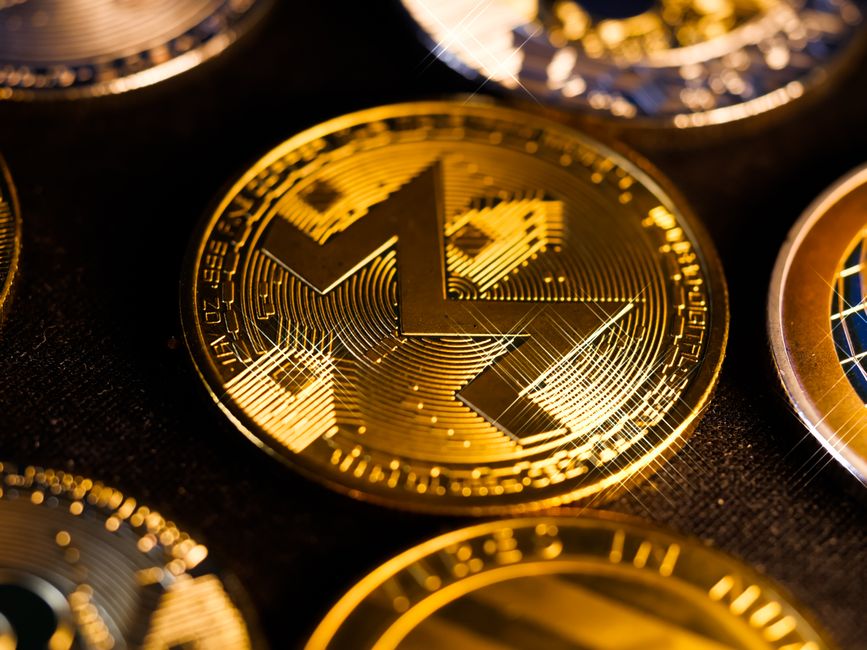
**Privacy coins** such as Monero and Zcash incorporate advanced cryptographic techniques to obscure transaction details. These altcoins offer users enhanced financial privacy, which appeals to participants in regions with strict financial surveillance or individuals with legitimate confidentiality needs. However, privacy coins have faced heightened regulatory scrutiny in several jurisdictions, which introduces unique compliance risks.
**Exchange tokens** power decentralized exchange platforms and often provide holders with fee discounts, staking rewards, or governance rights. These tokens derive value from the utility of the underlying platform and from the trading volume generated by users. Exchange tokens represent a hybrid category that blurs the line between a utility product and a speculative investment vehicle.
**Layer-one blockchain tokens** fund the development of competing smart contract platforms. These altcoins support ecosystems of decentralized applications, from lending protocols to gaming networks. Examples include tokens associated with alternative blockchain networks that process thousands of transactions per second at lower costs compared to older networks.
| Category | Example Assets | Primary Use Case | Volatility Level |
|---|---|---|---|
| Stablecoins | USDC, USDT, DAI | Price stability, trading exit | Very low |
| Privacy coins | XMR, ZEC | Anonymous transactions | Moderate to high |
| Exchange tokens | UNI, CAKE, DYDX | DEX governance, fee discounts | Moderate to high |
| Layer-one tokens | SOL, ADA, AVAX | DApp ecosystems, smart contracts | High |
Altcoin Market Analysis
The altcoin market in recent years has demonstrated a complex relationship with Bitcoin and with broader traditional financial markets. During periods of aggressive monetary policy and risk-on sentiment, altcoins have frequently outperformed Bitcoin in percentage terms. Conversely, during risk-off environments driven by interest rate hikes or macroeconomic uncertainty, altcoins tend to experience disproportionately sharp drawdowns.
Several structural factors shape altcoin performance. Network activity metrics, including daily transaction counts, active wallet addresses, and decentralized application usage, provide insight into whether an altcoin’s price is supported by genuine adoption or speculative trading. Developers building on a specific blockchain also signal long-term viability; projects with active, growing communities tend to sustain value better than those with stagnant developer ecosystems.
Macro conditions matter significantly for altcoin markets. Cryptocurrencies as an asset class have increasingly shown correlation with equity markets, particularly during periods of financial stress. When major stock indices decline sharply, altcoins often follow, reflecting the broader risk-off posture of institutional and retail investors. Understanding this correlation helps contextualize why altcoin prices may rise during bull markets but plunge faster than Bitcoin during corrections.
The total altcoin market capitalization swings dramatically relative to Bitcoin’s dominance. When Bitcoin dominance rises, capital tends to rotate into Bitcoin as the relatively safer cryptocurrency. When altcoin season begins — a period when altcoins broadly outperform Bitcoin — retail enthusiasm, social media momentum, and new project launches combine to drive aggregate altcoin values higher. Recognizing these cycles requires monitoring on-chain data, funding rates on exchanges, and sentiment indicators rather than relying on price charts alone.
Investing in Altcoins
For readers considering altcoin exposure, a disciplined framework is essential. The cryptocurrency market lacks the regulatory protections of traditional securities, meaning investors must conduct their own due diligence without relying on Securities and Exchange Commission oversight or broker-dealer safeguards.
Start by establishing clear investment objectives. Ask yourself whether you are seeking long-term exposure to emerging blockchain technology, short-term speculative gains, or portfolio diversification beyond traditional assets. Each goal implies a different strategy, position sizing, and risk tolerance. Never allocate capital you cannot afford to lose entirely, especially in a market segment known for extreme price swings.
**Diversification** remains one of the most practical risk management tools available to altcoin investors. Rather than concentrating capital in a single altcoin, spreading exposure across multiple categories — stablecoins for stability, established layer-one tokens for core blockchain exposure, and smaller allocations to emerging projects — reduces the impact of any single asset’s failure on your overall portfolio.
When evaluating specific altcoins, review the whitepaper to understand the project’s technical goals and economic model. Examine whether the team is publicly identified or anonymous, assess the quality of the codebase through public GitHub activity, and verify the token distribution schedule. Projects with excessive centralization of tokens held by founders or early investors carry higher manipulation risk and may face selling pressure that suppresses prices over time.
Altcoin Trading Strategies
Active trading in altcoins requires a different skill set than buy-and-hold investing. Two prevalent strategies dominate altcoin trading circles: **day trading** and **swing trading**.
Day trading involves opening and closing positions within a single 24-hour period, capturing intraday price movements driven by news flow, social sentiment shifts, or short-term technical patterns. This approach demands real-time market monitoring, fast execution on a reputable exchange, and strict position sizing rules. Most retail day traders lose money due to transaction fees, emotional decision-making, and inadequate risk controls. If you pursue day trading, start with a demo account or very small position sizes until you develop a repeatable process.
Swing trading targets multi-day to multi-week trends, allowing traders to capture medium-term momentum without the intensity of intraday management. Swing traders rely on a combination of technical analysis tools — moving averages, relative strength indicators, and volume profiles — alongside fundamental catalysts such as upcoming protocol upgrades or ecosystem announcements.
Technical analysis for altcoins follows the same principles used in equity and forex markets, but altcoins present unique challenges. Thin order books on smaller altcoins mean that even moderate buy or sell orders can produce outsized price movements. Liquidity varies dramatically between the largest altcoins by market capitalization and smaller tokens, affecting how reliably technical indicators predict price direction.
Fundamental analysis for altcoins focuses on on-chain metrics, development activity, and ecosystem growth. Tools such as Dune Analytics, Glassnode, and Nansen provide accessible ways to monitor wallet activity, token flows, and protocol revenue. Combining these data sources with technical signals produces a more robust trading framework than relying on either approach in isolation.
Altcoin Risks and Challenges
The altcoin market carries risks that demand explicit acknowledgment before any capital commitment. **Volatility** is the most visible challenge: altcoins routinely move 10%, 20%, or more in a single day, with smaller-cap tokens showing even wider daily ranges. A position that declines 50% requires a 100% subsequent gain just to return to the original value, illustrating why position sizing and stop-loss discipline are non-negotiable.
**Regulatory risk** has intensified globally and particularly in the United States. Securities regulators have signaled willingness to pursue enforcement actions against altcoin projects that resemble unregistered securities offerings. The Howey Test, the legal standard used to determine whether an asset qualifies as a security, has been applied to several cryptocurrency tokens, creating legal uncertainty for projects with centralized development teams or profit-sharing structures. Readers should monitor regulatory developments in their state of residence, as state-level rules can diverge significantly from federal guidance.
**Security concerns** are equally pressing. Decentralized finance protocols built on altcoin networks have suffered billions of dollars in losses from smart contract exploits, flash loan attacks, and phishing schemes. Before interacting with any DeFi protocol, verify the contract addresses through official channels, review independent security audits, and never share private keys or seed phrases with any platform or individual claiming to offer technical support.
Bitcoin’s dominance over the cryptocurrency market also shapes altcoin performance in ways that can surprise unprepared investors. When Bitcoin’s price rallies strongly, capital frequently rotates out of altcoins into Bitcoin, causing altcoin portfolios to underperform even in otherwise bullish market conditions. Monitoring Bitcoin dominance charts alongside your altcoin positions provides early warning of shifting market dynamics.
Altcoin Case Studies
Examining specific examples from altcoin history reveals patterns that remain relevant today. Several layer-one blockchain tokens delivered extraordinary returns during the 2020–2021 bull market cycle, driven by surging decentralized application adoption and institutional interest in proof-of-stake networks. These tokens benefited from a combination of strong developer ecosystems, growing user bases, and narratives around environmental sustainability compared to energy-intensive proof-of-work networks.
However, the same cycle produced cautionary tales. Multiple altcoins launched with minimal technical substance and inflated valuations collapsed entirely when market conditions shifted. Projects that lacked working products, identifiable development teams, or genuine user adoption tended to experience the steepest declines. The common thread across both successes and failures is the outsized role of narrative: cryptocurrency markets reward compelling stories, but those stories must eventually be validated by real usage data to sustain long-term value.
The collapse of certain algorithmic stablecoins during market downturns offers a particularly instructive lesson. These tokens attempted to maintain a fixed value through algorithmic mechanisms rather than collateral reserves, betting that market participants would always provide necessary support. When panic selling accelerated, these mechanisms failed catastrophically, illustrating that theoretical stability models can break down under real market stress.
These case studies underscore the importance of distinguishing between projects with genuine technological differentiation and those driven primarily by speculative momentum. Due diligence applied before investment is far more valuable than reactive research after a price has already moved dramatically.
Future of Altcoins
The altcoin landscape is evolving rapidly as institutional adoption, regulatory clarity, and technological innovation reshape the market. Several development trajectories merit attention from investors monitoring the space over the next several years.
**Interoperability** between blockchain networks is becoming a defining theme. Cross-chain bridges and layer-two scaling solutions are reducing the friction that previously limited users to a single blockchain ecosystem. This connectivity enables capital to flow more freely between altcoin networks, which may benefit well-established platforms while intensifying competition for newer projects.
**Decentralized governance** models continue to mature, with many altcoin networks now governed by decentralized autonomous organizations that vote on protocol changes and treasury allocations. This shift distributes power more broadly but also introduces governance risks, including low voter participation and the potential for plutocratic control by large token holders.
**Institutional participation** in altcoin markets has grown as regulated investment products bring digital asset exposure to a broader audience. While institutional capital has historically favored Bitcoin, growing familiarity with cryptocurrency markets is gradually expanding interest in altcoin allocations, particularly for assets with strong utility functions in decentralized finance or Web3 ecosystems.
Challenges remain substantial. Regulatory uncertainty, particularly in the United States, could suppress innovation or drive development offshore. Technical competition among layer-one blockchains remains intense, and the market may not support dozens of competing smart contract platforms at current valuations. Investors should approach future-facing altcoin investments with the same rigorous analysis applied to early-stage technology companies, acknowledging that most projects will not achieve their most ambitious goals.
Risk Disclaimer
Before proceeding to the FAQ section, it is essential to understand that cryptocurrency investing, including altcoin investments, carries significant risk. **Cryptocurrency markets are highly volatile, and prices can fluctuate dramatically within short timeframes.** Nothing in this article constitutes financial, investment, legal, or tax advice. Always consult qualified professionals before making investment decisions. Never invest more than you can afford to lose entirely, and recognize that past performance of any cryptocurrency does not guarantee future results.
Frequently Asked Questions (FAQ)
What is the best time to invest in altcoins?
There is no universally optimal time to invest in altcoins, as market timing consistently proves difficult even for experienced traders. Dollar-cost averaging — committing a fixed amount at regular intervals regardless of price — has historically reduced the impact of volatility for long-term investors. Avoiding investment decisions made during periods of extreme emotional stress or market euphoria generally improves outcomes compared to reactive buying during sharp rallies.
How can I identify promising altcoins for investment?
Evaluate altcoins using a combination of on-chain metrics, team transparency, code quality, token economics, and community engagement. Review publicly available development activity on platforms like GitHub, assess whether the project’s use case solves a genuine problem, and check token distribution data to understand how much supply is controlled by insiders versus the broader community. Projects with active development, clear roadmaps, and transparent governance structures tend to demonstrate more durable value than those relying primarily on marketing narratives.
What are the risks associated with investing in altcoins?
Altcoin investing carries multiple overlapping risks including extreme price volatility, smart contract vulnerabilities, regulatory enforcement actions, project failure, and liquidity constraints during market downturns. Smaller altcoins with limited trading volume can be particularly difficult to exit without significant price impact. Conduct thorough independent research before committing capital, and treat any cryptocurrency investment as a high-risk allocation suitable only for capital you can afford to lose entirely.
How can I protect my altcoin investments from market volatility?
Protect your portfolio through position sizing discipline, diversification across multiple altcoin categories, and secure storage practices using hardware wallets rather than leaving assets on exchange platforms. Establishing pre-defined exit conditions and stop-loss levels before entering a position removes emotional decision-making during periods of acute price movement. Maintaining adequate liquidity reserves outside cryptocurrency markets ensures that you never face forced selling during a downturn.
Charting & Exchange Resources
| Platform | Use Case | Key Feature | Fee Model | Action |
|---|---|---|---|---|
| TradingView | Charting & technical analysis | Indicators, multi-timeframe charts | Free / Pro tiers | View Platform |
| Coinbase | Exchange (beginner-friendly) | Simple USD on-ramp, educational tools | Varies by region | View Platform |
| Binance | Exchange (advanced pairs) | Wide altcoin coverage, spot markets | Varies by region | View Platform |
Affiliate Disclosure: This post contains affiliate links. We may earn a commission if you buy through our links, at no extra cost to you. Investment Risk Disclaimer: Cryptocurrency and digital asset markets are highly volatile. This content is for informational and educational purposes only and is not financial, investment, or trading advice. You may lose some or all of your capital. Do your own research and consult a licensed financial advisor before making investment decisions.
Leave a Reply