
Understanding Altcoin Season
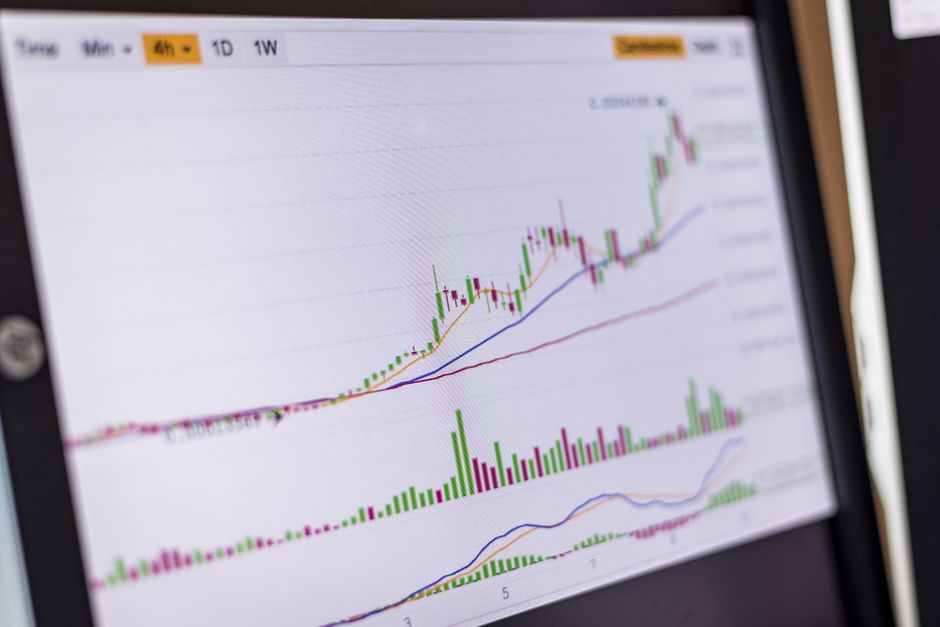
Altcoin season refers to a period in the cryptocurrency market when alternative coins (altcoins) outperform Bitcoin in terms of price gains and market momentum. During these phases, investors often see dramatic price increases across a wide range of smaller cryptocurrencies. The **Altcoin Season Index (ASI)** is a data-driven tool that measures whether the market is currently experiencing an altcoin season by tracking the performance of the top 50 altcoins against Bitcoin over a 90-day rolling window.
The ASI chart displays a score from 0 to 100, where a score above 75 indicates altcoin season and below 25 suggests Bitcoin is dominating. When 75% or more of the top 50 altcoins outperform Bitcoin during the measurement period, the market is officially in altcoin season. This metric helps traders and investors identify market cycles and adjust their portfolios accordingly.
Understanding these cycles is critical for making informed investment decisions in the volatile crypto space. The ASI provides objective data rather than speculation, allowing investors to spot trends before they become obvious to the broader market. However, past performance never guarantees future results, and all cryptocurrency investments carry substantial risk.
Key Altcoin Market Trends
Current market analysis shows significant variation in altcoin performance across different sectors. **Layer-1 blockchain alternatives** like Solana, Cardano, and Avalanche have demonstrated strong trading volumes, often exceeding $1 billion daily during active market periods. These projects compete directly with Ethereum by offering faster transaction speeds and lower fees.
**DeFi tokens** (decentralized finance) represent another major category, with protocols focused on lending, borrowing, and yield generation. Market capitalization for leading DeFi projects ranges from $500 million to over $5 billion. Trading volume spikes typically correlate with new protocol launches or significant upgrades to existing platforms.
Several factors drive altcoin success during these seasons:
- **Technological innovation** that solves real scalability or cost problems
- **Developer activity** and ecosystem growth measured by GitHub commits and new applications
- **Institutional adoption** through partnerships or integration with traditional finance systems
- **Community engagement** reflected in social media activity and active user growth
- **Market sentiment shifts** away from Bitcoin as a store of value toward utility-focused projects
Historical data indicates altcoin seasons often follow Bitcoin bull runs, as profits rotate from Bitcoin into higher-risk, higher-reward alternative projects. This pattern has repeated across multiple market cycles since 2017.
Risks and Challenges in Altcoin Investing
Cryptocurrency markets exhibit extreme volatility, with daily price swings of 10-30% being common for many altcoins. Unlike traditional stocks, crypto assets trade 24/7 with no circuit breakers, meaning flash crashes can occur at any time. **Over 90% of altcoins launched since 2017 have lost more than 95% of their peak value**, making this one of the highest-risk investment categories.
Liquidity risk presents a major challenge. Smaller altcoins may have thin order books, meaning large trades can move prices significantly. During market downturns, selling positions quickly becomes difficult without accepting substantial losses. Many altcoin projects also face **regulatory uncertainty**, with potential for sudden government action that could impact value or accessibility.
Technical risks include smart contract vulnerabilities, which have led to hundreds of millions in losses through hacks and exploits. Projects may also face development delays, team departures, or complete abandonment. To manage these risks effectively:
- Never invest more than you can afford to lose completely
- Diversify across multiple projects rather than concentrating in one altcoin
- Research the team, technology, and use case thoroughly before investing
- Use dollar-cost averaging to reduce timing risk
- Store assets in secure wallets rather than keeping large amounts on exchanges
- Set stop-loss orders to limit downside exposure
- Stay informed about regulatory developments in your jurisdiction
Understand that altcoin investing is speculative. No chart, index, or analysis tool can predict future prices with certainty.
Analyzing the Altcoin Season Index Chart
The ASI chart displays a single line graph that fluctuates between 0 and 100 over time. When the line crosses above 75, the market has entered altcoin season. When it drops below 25, Bitcoin is dominating. The middle range (25-75) indicates a balanced or transitional market. The index updates daily based on the trailing 90-day performance window.
Key metrics used in the calculation include:
- **Percentage of top 50 altcoins** outperforming Bitcoin by market cap
- **90-day rolling window** to smooth short-term volatility
- **Equal weighting** across the top 50 to prevent large-cap dominance
- **Bitcoin as the benchmark** since it represents the market standard
To use the ASI chart effectively, look for trend changes rather than absolute numbers. A rising ASI (even if below 75) suggests increasing altcoin strength. A falling ASI indicates money flowing back to Bitcoin. Sharp spikes often precede corrections, while gradual increases may signal sustained altcoin momentum.
Combine ASI readings with other indicators:
| Indicator | What It Measures | How to Use It |
|---|---|---|
| Bitcoin Dominance | BTC market cap as % of total crypto | Inverse relationship with ASI |
| Trading Volume | Daily dollar value traded | Confirms trend strength |
| Social Sentiment | Community engagement metrics | Leading indicator for interest |
| Developer Activity | GitHub commits and updates | Long-term project health |
The ASI works best as a confirmation tool rather than a predictive signal. Use it to validate what you’re seeing in price action and volume, not as a standalone trading trigger.
Practical Takeaways for US Readers
For US-based investors, altcoin season presents both opportunities and compliance challenges. The **regulatory landscape** in the United States remains uncertain, with the SEC classifying many altcoins as securities. This means purchasing, trading, or holding certain tokens may have tax implications or legal restrictions. Always consult a qualified tax professional about cryptocurrency reporting requirements.
US investors should focus on exchanges that maintain regulatory compliance and serve American customers. Not all altcoins available globally are accessible through US platforms due to regulatory restrictions. When incorporating altcoin trends into your investment strategy, consider these approaches:
- **Core-satellite allocation**: Keep 70-80% in established assets (Bitcoin, Ethereum) and 20-30% in altcoins
- **Sector diversification**: Spread altcoin exposure across DeFi, Layer-1s, and utility tokens
- **Rebalancing discipline**: Take profits during altcoin season and reallocate to Bitcoin during downturns
- **Tax-loss harvesting**: Use losses strategically to offset capital gains (consult tax advisor)
Timing the market perfectly is impossible. The ASI chart helps identify when altcoin momentum is building, but individual project research remains essential. Strong fundamentals matter more than short-term index movements. US investors must also consider the impact of capital gains taxes, which can reach 37% for short-term trades held under one year.
Protect yourself by using **two-factor authentication**, hardware wallets for significant holdings, and never sharing private keys. Scams proliferate during altcoin seasons when new investors enter the market seeking quick gains.
Comparing Cryptocurrency Exchanges
Choosing the right exchange is critical for accessing altcoins and executing trades efficiently. US-based platforms vary significantly in terms of coin selection, fees, security features, and regulatory compliance. Major exchanges serving American customers include Coinbase, Kraken, Gemini, and Binance.US, each with distinct advantages.
**Coinbase** offers the most beginner-friendly interface and strong regulatory compliance but charges higher fees (0.5-4% depending on payment method). Its coin selection is more limited than competitors due to strict listing standards. **Kraken** provides lower fees (0.16-0.26% for makers) and broader altcoin access, with advanced trading tools for experienced users. Customer support response times average 24-48 hours.
**Gemini** emphasizes security and insurance, with all digital assets covered against theft or exchange failure. Fees are moderate (0.35% maker, 1.49% taker for small volumes). **Binance.US** offers the widest altcoin selection among compliant US exchanges, with fees as low as 0.1%. However, it’s not available in all US states due to varying local regulations.
When selecting an exchange, prioritize:
- State availability and full regulatory compliance
- Availability of specific altcoins you want to trade
- Fee structure for your typical trade size
- Withdrawal limits and processing times
- Security track record and insurance coverage
- Quality of customer support and educational resources
Many experienced traders use multiple exchanges to access different altcoins and take advantage of varying fee structures. Always verify an exchange’s legitimacy before depositing funds—check for proper licensing and read recent user reviews.
Investment Risk Disclaimer
**Cryptocurrency investing carries extreme risk and is not suitable for all investors.** Altcoins are highly volatile, speculative assets that can lose value rapidly. The information in this article is educational and does not constitute financial, investment, legal, or tax advice. Market conditions change constantly, and historical patterns do not guarantee future results.
The Altcoin Season Index and other analytical tools provide data-driven insights but cannot predict price movements. Always conduct your own research, understand the technology and team behind any project, and never invest money you cannot afford to lose completely. Consult qualified financial and tax professionals before making investment decisions.
Past performance of any cryptocurrency is not indicative of future results. Regulatory changes, technological failures, security breaches, and market manipulation can all impact altcoin values. No content in this article should be interpreted as a recommendation to buy, sell, or hold any specific cryptocurrency.
Frequently Asked Questions
Q: What is the Altcoin Season Index (ASI) chart and how does it work?
A: The Altcoin Season Index is a quantitative tool that measures whether altcoins are outperforming Bitcoin. It tracks the top 50 cryptocurrencies by market cap over a 90-day rolling window. If 75% or more of these altcoins perform better than Bitcoin during that period, the index registers an altcoin season (score above 75). The chart updates daily and uses equal weighting to prevent large-cap coins from dominating the calculation. It provides an objective, data-driven way to identify market cycles rather than relying on subjective sentiment.
Q: How can investors use the ASI chart to make informed investment decisions?
A: Investors should use the ASI as a confirmation tool rather than a predictive signal. When the index rises above 75, it confirms that altcoins are gaining momentum, which may justify increasing allocation to alternative projects. Conversely, when it falls below 25, rotating back to Bitcoin may reduce risk. However, never base decisions solely on the ASI—combine it with fundamental analysis of individual projects, trading volume data, and overall market sentiment. The chart works best for identifying broader market cycles over weeks and months, not for day-to-day trading decisions. Always maintain proper risk management regardless of index readings.
Q: What are the key risks and challenges associated with investing in altcoins?
A: Altcoins carry substantially higher risk than Bitcoin or traditional investments. Major risks include extreme price volatility (daily swings of 10-30%), liquidity problems during selloffs, smart contract vulnerabilities leading to hacks, regulatory uncertainty that could restrict access or value, and project abandonment by development teams. Over 90% of altcoins launched have lost more than 95% of their peak value. Additional challenges include tax complexity, limited consumer protections, 24/7 trading with no circuit breakers, and prevalence of scams during market hype cycles. Only invest capital you can afford to lose completely, diversify across multiple projects, and never use leverage or borrowed money for crypto investments.
Charting & Exchange Resources
| Platform | Use Case | Key Feature | Fee Model | Action |
|---|---|---|---|---|
| TradingView | Charting & technical analysis | Indicators, multi-timeframe charts | Free / Pro tiers | View Platform |
| Coinbase | Exchange (beginner-friendly) | Simple USD on-ramp, educational tools | Varies by region | View Platform |
| Binance | Exchange (advanced pairs) | Wide altcoin coverage, spot markets | Varies by region | View Platform |
Affiliate Disclosure: This post contains affiliate links. We may earn a commission if you buy through our links, at no extra cost to you. Investment Risk Disclaimer: Cryptocurrency and digital asset markets are highly volatile. This content is for informational and educational purposes only and is not financial, investment, or trading advice. You may lose some or all of your capital. Do your own research and consult a licensed financial advisor before making investment decisions.
Leave a Reply