What Are Altcoins and Why Do They Matter?
In the cryptocurrency market, **altcoins** are every digital asset that isn’t Bitcoin (BTC). The term comes from “alternative coin,” and it covers thousands of projects — from Ethereum (ETH) and Solana (SOL) to smaller, speculative tokens with limited track records. Understanding this distinction is the starting point for any serious crypto analysis.
Bitcoin is widely treated as the market’s benchmark asset — often called “digital gold” — while Ethereum introduced programmable smart contracts (self-executing code on a blockchain). Altcoins build on or diverge from these foundations, offering everything from decentralized finance (DeFi) protocols to gaming tokens and Layer 2 scaling solutions. The sheer variety is both the appeal and the risk.
For US investors, altcoins represent a higher-risk, higher-variance segment of an already volatile asset class. Portfolio diversification across multiple crypto assets can reduce single-coin exposure, but it doesn’t eliminate systemic market risk. Always treat altcoin allocation as a distinct risk bucket in any broader investment plan.
—
The Altcoin Season Index Chart Explained
The **Altcoin Season Index** is a numerical indicator — typically scored on a scale of 1 to 100 — that measures whether altcoins as a group are outperforming Bitcoin over a defined trailing period (usually 90 days). A score of 75 or above is generally categorized as “Altcoin Season,” meaning at least 75% of the top 50 altcoins have outperformed BTC in that window. A score below 25 signals “Bitcoin Season.”
The index was popularized by platforms that track on-chain and price performance data in real time. It functions as a market-sentiment gauge rather than a predictive tool — it tells you where momentum has been, not necessarily where it’s going. Think of it like a moving average: useful for context, not a crystal ball.
For new traders, the index chart is most valuable as a **macro-context tool**. Before executing any trade on an individual altcoin, checking the index helps frame whether the broader altcoin market is in a favorable or unfavorable cycle. A rising index reading during a bull market can signal broad capital rotation out of Bitcoin into altcoins.
- **Score 75–100:** Altcoin Season — altcoins broadly outperforming BTC
- **Score 26–74:** Mixed or transitional market conditions
- **Score 1–25:** Bitcoin Season — BTC dominance rising, altcoins lagging
—
How to Read an Altcoin Season Index Chart
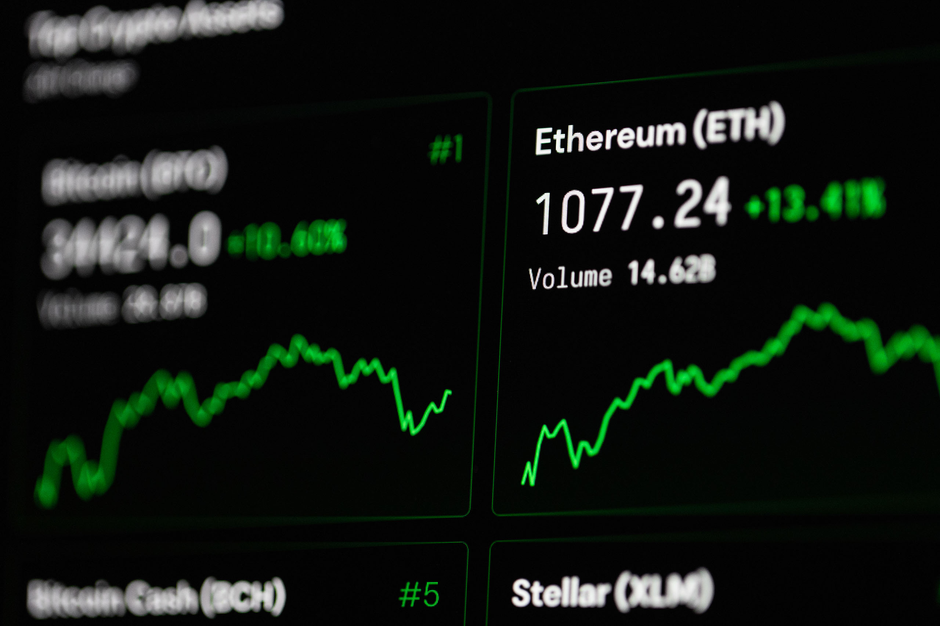
Reading the chart requires more than glancing at the current number. The **trend line** over weeks and months matters as much as the single data point. A score climbing from 40 to 65 over three weeks suggests building momentum in altcoins — even though neither reading technically qualifies as “Altcoin Season.”
Key data points to analyze alongside the index include **Bitcoin Dominance (BTC.D)** — the percentage of total crypto market capitalization held in BTC. When BTC dominance falls, capital is typically flowing into altcoins, which often correlates with rising index scores. Monitoring both together gives a clearer picture of market rotation dynamics.
Chart patterns worth noting:
- **Sustained index above 75 for 4+ weeks:** Historically associated with speculative altcoin rallies
- **Sharp index drop from 70+ to below 40:** Often signals a risk-off event or Bitcoin price spike pulling capital back
- **Flat index between 40–60 for weeks:** Suggests an indecisive, range-bound market — elevated caution is warranted
- **Divergence between index and BTC price:** If BTC rises while the index falls, altcoin investors may be getting squeezed
Some traders cross-reference the index with **Total3** — a chart metric representing total market cap excluding BTC and ETH — to isolate how smaller altcoins specifically are performing.
—
Altcoin Season Index vs. Other Market Indicators
No single indicator should drive investment decisions. The Altcoin Season Index works best when compared against complementary data sources. The table below summarizes how it stacks up against commonly used crypto market tools.
| Indicator | What It Measures | Best Used For |
|---|---|---|
| Altcoin Season Index | % of top 50 altcoins beating BTC (90-day) | Macro cycle positioning |
| Bitcoin Dominance (BTC.D) | BTC share of total crypto market cap | Capital rotation signals |
| Fear & Greed Index | Market sentiment score (0–100) | Entry/exit sentiment checks |
| Total3 Chart | Market cap ex-BTC and ETH | Small-cap altcoin health |
| RSI (Relative Strength Index) | Overbought/oversold signals per coin | Individual asset timing |
| On-chain Active Addresses | Network usage and adoption trends | Fundamental verification |
Using the Altcoin Season Index alongside BTC Dominance and the Fear & Greed Index gives traders a three-axis view of market conditions: trend, capital flow, and sentiment. None of these tools eliminates risk — they reduce blind spots.
—
Understanding Altcoin Market Risks
Altcoins carry risks that go beyond standard equity market volatility. **Liquidity risk** is a significant concern — many altcoins trade with thin order books, meaning a moderately large sell order can move the price dramatically. This is especially true outside of the top 20 coins by market capitalization.
**Regulatory risk** is heightened in the US, where the SEC (Securities and Exchange Commission) has pursued enforcement actions against several altcoin projects, arguing they qualify as unregistered securities. Projects that operate in regulatory gray areas face potential delistings from major US-compliant exchanges, which can cause sudden, severe price drops.
Additional risk categories every altcoin investor should understand:
- **Smart contract vulnerabilities:** Bugs in code can result in protocol hacks and total loss of funds
- **Rug pulls and exit scams:** Particularly common in low-cap, newly launched tokens
- **Market correlation:** Most altcoins fall harder than BTC during broad market downturns
- **Concentration risk:** A handful of wallets may hold a dominant share of a coin’s supply
- **Exchange counterparty risk:** Holding assets on centralized exchanges exposes investors to platform insolvency
Volatility benchmarks give useful perspective: while the S&P 500 historically sees annual volatility around 15–20%, many altcoins regularly experience 50–80% drawdowns within a single market cycle. Sizing positions accordingly is not optional — it’s essential risk management.
—
Choosing Altcoins Worth Researching
With thousands of altcoins listed across global exchanges, filtering for quality requires a structured approach. The **altcoin season index chart** tells you when the category is performing — it doesn’t tell you which specific coins are worth your time. That judgment requires independent research.
Factors to evaluate before allocating to any altcoin:
- **Market capitalization:** Higher-cap coins (top 50 by market cap) generally carry lower delisting and liquidity risk
- **Development activity:** GitHub commit frequency signals whether a project is actively maintained
- **Token utility:** Does the token have a genuine use case within its protocol, or is it primarily speculative?
- **Tokenomics:** Check total supply, inflation schedule, and vesting cliffs (when early investors or team members can sell)
- **Exchange listings:** Presence on regulated US exchanges (such as Coinbase or Kraken) reduces some counterparty and compliance risk
- **Audit history:** Has the smart contract code been audited by a reputable third-party security firm?
Avoid anchoring decisions solely on past price performance during previous altcoin seasons. A coin that surged 1,000% in 2021 is not automatically positioned to do so again. Fundamental changes in the competitive landscape, team composition, or regulatory environment all affect future prospects.
—
Altcoin Trading Strategies for New Market Participants
New traders often make the mistake of entering the altcoin market without a defined strategy. The result is reactive trading — buying after sharp rallies and selling during sharp dips — which is statistically the least favorable pattern for retail investors. A disciplined framework matters more than market timing.
**Dollar-cost averaging (DCA)** is a straightforward entry strategy: investing a fixed dollar amount at regular intervals regardless of price. DCA reduces the psychological pressure of trying to time the market and smooths out average entry costs over time. It doesn’t maximize gains in a bull market, but it significantly reduces the damage of mistiming a peak entry.
**Position sizing** is arguably more important than entry timing. A common framework used by risk-aware traders is limiting any single altcoin to no more than 2–5% of total portfolio value, with higher-risk small-cap coins kept below 1%. This approach allows participation in upside while capping catastrophic single-coin losses.
Other practical techniques for beginners:
- **Set stop-loss levels before entry:** Define in advance the price at which you’ll exit to limit downside — don’t wait until you’re emotional
- **Use the altcoin season index as a cycle filter:** Consider reducing altcoin exposure when the index drops sharply from elevated readings
- **Avoid leverage until deeply experienced:** Leveraged altcoin positions can be liquidated in hours during volatile sessions
- **Keep records for taxes:** The IRS treats cryptocurrency as property; every trade is a taxable event in the US
- **Cold storage for longer holds:** Hardware wallets reduce exchange counterparty risk for assets held beyond active trading
No strategy works consistently in every market environment. The altcoin market is cyclical, and even well-researched positions can underperform during Bitcoin-dominant phases. Accepting uncertainty is part of the discipline.
—
Risk Disclaimer
**Cryptocurrency investments — including altcoins — involve substantial risk of loss.** The altcoin market is highly volatile and speculative. Past performance of any coin or index reading is not indicative of future results. The information in this article is for educational purposes only and does not constitute personalized financial, investment, tax, or legal advice. US investors should consult a qualified financial advisor before making any investment decisions. Regulatory status of specific crypto assets may change; verify compliance with applicable US laws before trading.
—
Frequently Asked Questions (FAQ)
Q: What is the difference between an altcoin and a token?
A: An **altcoin** typically refers to a cryptocurrency that operates on its own independent blockchain — examples include Litecoin (LTC) and Solana (SOL). A **token**, by contrast, is built on top of an existing blockchain (most commonly Ethereum) and relies on that network’s infrastructure. All tokens are technically altcoins in the broad sense, but not all altcoins are tokens. The distinction matters for evaluating technical risk and network dependency.
Q: How can I protect my altcoin investments from market volatility?
A: No method eliminates volatility risk entirely in the altcoin market. Practical mitigation strategies include position sizing limits (keeping individual altcoin allocations small relative to your total portfolio), pre-set stop-loss orders, avoiding leverage, and diversifying across asset classes beyond crypto. Monitoring the altcoin season index chart can also help you recognize when broader market conditions are shifting toward risk-off sentiment, prompting a reassessment of open positions.
Q: What are some common mistakes beginners make when investing in altcoins?
A: The most common mistakes include: entering positions during the peak of an altcoin season rally (buying high due to FOMO — fear of missing out), failing to research tokenomics and team credibility before investing, using money they cannot afford to lose, ignoring tax obligations on trades, and storing assets exclusively on centralized exchanges rather than using self-custody solutions. Tracking the altcoin season index chart regularly and cross-referencing it with Bitcoin dominance data helps beginners avoid purely reactive decision-making.
Charting & Exchange Resources
| Platform | Use Case | Key Feature | Fee Model | Action |
|---|---|---|---|---|
| TradingView | Charting & technical analysis | Indicators, multi-timeframe charts | Free / Pro tiers | View Platform |
| Coinbase | Exchange (beginner-friendly) | Simple USD on-ramp, educational tools | Varies by region | View Platform |
| Binance | Exchange (advanced pairs) | Wide altcoin coverage, spot markets | Varies by region | View Platform |
Affiliate Disclosure: This post contains affiliate links. We may earn a commission if you buy through our links, at no extra cost to you. Investment Risk Disclaimer: Cryptocurrency and digital asset markets are highly volatile. This content is for informational and educational purposes only and is not financial, investment, or trading advice. You may lose some or all of your capital. Do your own research and consult a licensed financial advisor before making investment decisions.
Leave a Reply