
What Is Cryptocurrency Volatility — And Why It Matters Now
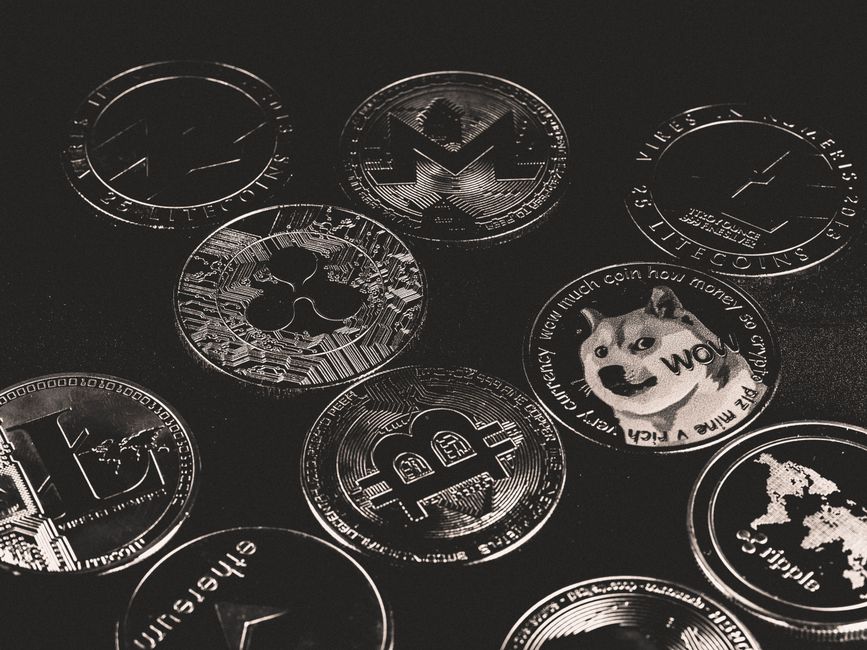
If you’re researching the **best trending cryptos** right now, one term will follow you everywhere: **volatility**. In financial markets, volatility refers to the rate at which an asset’s price increases or decreases over a given period. In crypto, that movement can be extreme — Bitcoin (BTC) has historically swung 10–20% in a single week, and smaller altcoins (alternative cryptocurrencies) can double or collapse within days.
Understanding volatility is not optional for US investors entering this market. It shapes how you size positions, when you enter or exit, and whether your portfolio survives a down cycle. This guide breaks down the mechanics, the risks, and the practical steps US readers can take to navigate it.
—
Key Concepts and Definitions Every Crypto Investor Should Know
Before diving into market dynamics, it helps to lock in a few core terms.
- **Volatility**: The statistical measure of price dispersion over time, often expressed as a percentage or as the **VIX** equivalent for crypto (e.g., the **BVIV** — Bitcoin Volatility Index).
- **Short-term volatility**: Price swings measured in hours, days, or weeks — often driven by news, tweets, or macro events.
- **Long-term volatility**: Broader price cycles measured in months or years — more reflective of adoption trends and structural market changes.
- **Drawdown**: The peak-to-trough percentage decline from a recent high. Bitcoin saw an approximately 77% drawdown from its 2021 peak to its 2022 low.
- **Market cap (market capitalization)**: Total value of all coins in circulation — a larger market cap generally means slightly lower volatility, though no crypto is stable by traditional standards.
Short-term traders often embrace volatility as opportunity. Long-term holders, sometimes called **HODLers** (a crypto community term for “hold on for dear life”), typically accept short-term swings in exchange for potential multi-year appreciation. Neither approach eliminates risk — they just allocate it differently.
The impact on your portfolio depends heavily on how much of your total investable assets are allocated to crypto. A 30% drawdown in an asset that represents 5% of your portfolio is manageable. The same drawdown in a 60% allocation is potentially devastating.
—
Market Dynamics: What Actually Moves Crypto Prices
Crypto price movements are driven by a layered mix of forces that differ meaningfully from traditional equities.
- **Macroeconomic conditions**: Rising interest rates and tightening **Fed** (Federal Reserve) policy historically pressure risk assets, including crypto. When the Fed raised rates aggressively in 2022, BTC fell from roughly $47,000 to under $16,000.
- **Liquidity and trading volume**: Thin order books (fewer buyers and s rs) magnify price swings. Smaller altcoins with low daily volume can move 30–50% on relatively modest trades.
- **News and sentiment**: Regulatory announcements, exchange failures, or influential public figures commenting on specific coins can create immediate and sharp price moves.
- **Institutional investors**: Large funds, hedge funds, and corporate treasury allocations have grown since 2020. Institutions can stabilize markets by adding liquidity — but they also accelerate sell-offs when risk models trigger automatic exits.
- **Technology events**: Protocol upgrades (like Ethereum’s **Merge** in 2022, which transitioned ETH from Proof-of-Work to Proof-of-Stake consensus), hard forks, or major security vulnerabilities can directly impact a token’s price and perceived value.
One key insight: crypto markets operate 24 hours a day, 7 days a week, unlike the NYSE (New York Stock Exchange) or NASDAQ. This means volatility events can happen at any hour, including overnight and on weekends, when most US investors aren’t watching.
—
Risks and Challenges: What US Investors Face in Volatile Markets
Volatility is not the only risk in crypto, but it amplifies all others.
- **Rapid price declines**: A coin can lose 50–90% of its value in weeks. The **LUNA/UST collapse** of May 2022 erased over $40 billion in market value in roughly 72 hours — a stark real-world example.
- **Market manipulation**: Crypto markets, particularly for smaller tokens, remain vulnerable to **pump-and-dump schemes** (artificially inflating a coin’s price before selling), wash trading (faking volume), and coordinated social media campaigns designed to manipulate retail investors.
- **Liquidity risk**: During panic sell-offs, even major exchanges can experience slowdowns or outages, preventing investors from executing trades at their intended prices — a phenomenon called **slippage**.
- **Regulatory risk**: US regulatory bodies including the **SEC** (Securities and Exchange Commission) and **CFTC** (Commodity Futures Trading Commission) are actively defining how digital assets will be classified and taxed. A major enforcement action can crash a token’s price overnight.
- **Custodial risk**: Holding crypto on an exchange rather than a private wallet exposes you to **counterparty risk** — the possibility that the exchange itself fails, as FTX did in November 2022.
Mitigating these risks starts with honest position sizing and skepticism toward any project promising guaranteed returns or outsized yields with no explanation of the underlying mechanism.
—
Analyzing Volatility: Tools and Data US Investors Can Actually Use
Reading volatility data is a learnable skill, not an advanced finance degree requirement.
- **Historical volatility (HV)**: Measures actual price movement over a past period (commonly 30-day or 90-day). Available on most charting platforms including TradingView and CoinGecko.
- **Implied volatility (IV)**: Derived from options pricing and reflects market expectations of future movement. The **Deribit** exchange is a primary source for crypto options data.
- **Bollinger Bands**: A technical analysis tool that plots two standard deviations above and below a moving average. When bands widen, volatility is increasing; when they compress, the market is consolidating before a potential breakout.
- **ATR (Average True Range)**: Measures average daily price range over a set period. Higher ATR means higher day-to-day volatility — useful for setting stop-loss levels.
| Tool | What It Measures | Best For |
|---|---|---|
| Historical Volatility (HV) | Past price swings | Comparing coins over time |
| Implied Volatility (IV) | Expected future movement | Options traders |
| Bollinger Bands | Price deviation from average | Identifying breakouts |
| ATR (Average True Range) | Daily price range average | Setting stop-loss orders |
| Fear & Greed Index | Market sentiment score (0–100) | Gauging crowd psychology |
The **Crypto Fear & Greed Index**, published daily, aggregates volatility data, market momentum, social media sentiment, and trading volume into a single score. Extreme fear (scores under 25) has historically preceded recovery periods; extreme greed (scores above 75) has often preceded corrections. It is a sentiment gauge, not a trading signal.
—
Strategies for Managing Volatility in Your Portfolio
No strategy eliminates volatility risk in crypto — but several approaches help investors manage it systematically.
- **Dollar-cost averaging (DCA)**: Investing a fixed dollar amount at regular intervals (weekly or monthly) regardless of price. This reduces the risk of buying a large position right before a major downturn.
- **Portfolio diversification**: Spreading exposure across large-cap assets (BTC, ETH), mid-cap altcoins, and a small speculative allocation limits the damage any single asset collapse can cause.
- **Stop-loss orders**: Automated sell orders triggered when a price falls to a predetermined level. Reduces emotional decision-making during sharp sell-offs.
- **Position sizing**: Limiting any single crypto asset to a percentage of your total investable assets — commonly 1–5% per position for risk-conscious investors — caps potential losses.
- **Stablecoin parking**: Moving a portion of portfolio value into **stablecoins** (USD-pegged tokens like USDC or USDT) during periods of extreme uncertainty preserves capital without fully exiting the market.
Trading strategies like **swing trading** (holding for days to weeks to capture medium-term price moves) and **spot-only exposure** (avoiding leveraged positions) are generally more appropriate for US retail investors than derivatives trading, which dramatically amplifies both gains and losses.
—
Practical Insights for US Investors Navigating Crypto Markets
US-based investors face a specific regulatory and tax landscape that shapes how volatility events play out practically.
- **Tax implications**: In the US, every crypto-to-crypto trade is a taxable event under IRS (Internal Revenue Service) guidance. Selling at a loss during a downturn can trigger **tax-loss harvesting** opportunities, but wash sale rules currently do not apply to crypto — though legislation is pending that could change this.
- **Regulatory awareness**: Monitoring SEC and CFTC announcements is essential. The approval of **spot Bitcoin ETFs** (exchange-traded funds) in January 2024 marked a significant structural shift, bringing institutional liquidity but also tighter regulatory scrutiny to the market.
- **Exchange selection**: Using regulated US-based exchanges with proper **FDIC** (Federal Deposit Insurance Corporation) disclosures for fiat (traditional currency) holdings and **proof-of-reserves** audits for crypto custody reduces counterparty risk.
- **Financial charting tools**: Platforms like TradingView, Messari, and Glassnode provide institutional-grade on-chain (recorded directly on the blockchain) and market data accessible to retail investors at low or no cost.
- **Staying informed**: Following credible sources — SEC filings, official exchange announcements, and established crypto news publications — rather than social media influencers significantly reduces exposure to manipulation-driven price moves.
The most consistent mistake US investors make in volatile crypto markets is reacting emotionally to short-term price swings rather than following a pre-set investment plan. Writing down your thesis, risk tolerance, and exit criteria before entering a position is one of the most underrated risk management tools available.
—
Investment Risk Disclaimer
**Cryptocurrency investments carry significant risk, including the potential loss of your entire principal.** Crypto markets are highly volatile, largely unregulated in many jurisdictions, and not suitable for all investors. Nothing in this article constitutes personalized financial, investment, tax, or legal advice. Always conduct independent research and consult a qualified financial professional before making investment decisions. Past market performance does not guarantee future results.
—
Frequently Asked Questions (FAQ)
Q: What are some common misconceptions about cryptocurrency volatility?
A: The most widespread misconception is that high volatility means a crypto asset is fundamentally worthless or fraudulent. Volatility is a measure of price movement, not underlying value — early-stage equities and commodities also experience high volatility. A second misconception is that volatility only creates downside risk; in practice, it creates both loss exposure and gain potential, which is why risk management rather than avoidance is the more practical approach for informed investors.
Q: How can beginners protect themselves from the risks of volatile crypto markets?
A: Start with strict position sizing — limit crypto exposure to a percentage of your total portfolio you could afford to lose entirely. Use dollar-cost averaging instead of lump-sum entries, stick to large-cap assets with established track records (BTC, ETH) before exploring altcoins, and avoid leveraged or margin trading until you have significant market experience. Keeping assets in self-custody wallets or regulated custodial platforms rather than unregulated exchanges also reduces counterparty risk substantially.
Q: What resources are available for US investors to analyze cryptocurrency volatility?
A: Several credible, low-cost or free tools are widely used. TradingView provides technical charting with volatility indicators like Bollinger Bands and ATR. CoinGecko and CoinMarketCap offer historical price data and market cap comparisons. Glassnode and Messari provide on-chain analytics for more advanced analysis. The Crypto Fear & Greed Index offers a daily sentiment snapshot. For regulatory context, the SEC’s and CFTC’s official websites publish enforcement actions and guidance directly relevant to US investors.
Charting & Exchange Resources
| Platform | Use Case | Key Feature | Fee Model | Action |
|---|---|---|---|---|
| TradingView | Charting & technical analysis | Indicators, multi-timeframe charts | Free / Pro tiers | View Platform |
| Coinbase | Exchange (beginner-friendly) | Simple USD on-ramp, educational tools | Varies by region | View Platform |
| Binance | Exchange (advanced pairs) | Wide altcoin coverage, spot markets | Varies by region | View Platform |
Affiliate Disclosure: This post contains affiliate links. We may earn a commission if you buy through our links, at no extra cost to you. Investment Risk Disclaimer: Cryptocurrency and digital asset markets are highly volatile. This content is for informational and educational purposes only and is not financial, investment, or trading advice. You may lose some or all of your capital. Do your own research and consult a licensed financial advisor before making investment decisions.
Leave a Reply