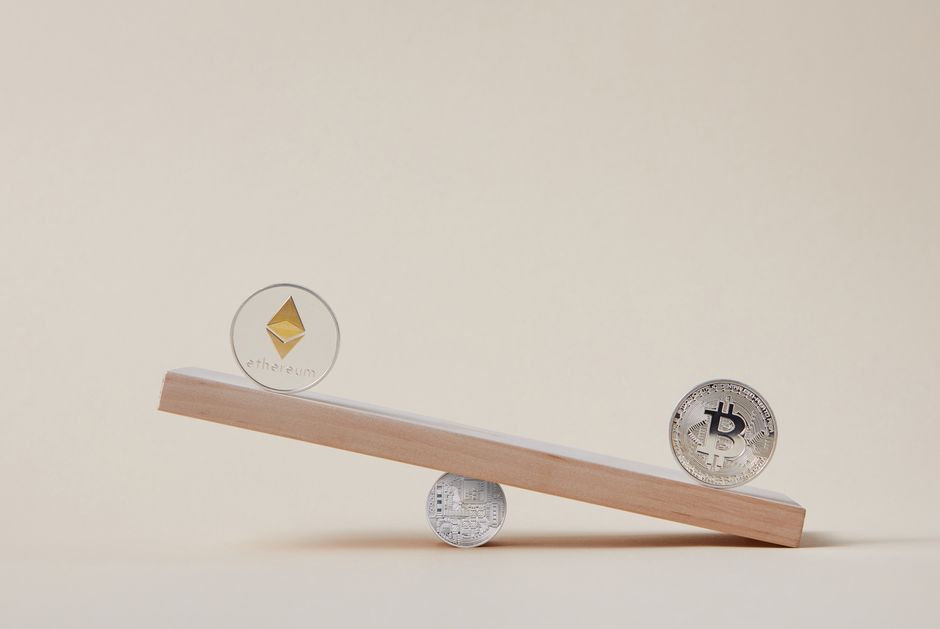
The Bottom Line: Ethereum vs Solana in 2026
If you’re researching the **ethereum vs solana comparison for beginners 2026**, here’s what matters most: both are major Layer-1 blockchains, but they make very different trade-offs. **Ethereum (ETH)** is the older, more established network with the deepest developer ecosystem and the strongest institutional backing. **Solana (SOL)** is faster and cheaper per transaction, but carries higher network risk and a shorter track record.
Neither is universally superior. The right fit depends on what you value — security and ecosystem depth, or speed and low fees. This guide breaks down both networks across technology, use cases, market history, and practical steps for US-based beginners.
> **Risk Disclaimer:** Cryptocurrency investments are highly volatile and speculative. Nothing in this article constitutes financial or investment advice. Always conduct your own research and consult a licensed financial advisor before investing.
—
Network Origins and Founding Philosophy
**Ethereum** launched in July 2015, created by Vitalik Buterin and a team of co-founders. Its core innovation was the **smart contract** — self-executing code stored on a blockchain that enables decentralized applications (dApps) to run without a central intermediary. Ethereum introduced the idea that a blockchain could be a programmable platform, not just a payment ledger.
**Solana** launched its mainnet in March 2020, founded by Anatoly Yakovenko, a former Qualcomm engineer. It was purpose-built to solve the speed and cost problems that plagued Ethereum at the time. Its headline innovation is **Proof of History (PoH)**, a cryptographic timekeeping mechanism that allows the network to process transactions far faster than most competing chains.
Key founding differences:
- **Ethereum** prioritized decentralization and security above raw speed
- **Solana** prioritized throughput and low transaction costs above maximum decentralization
- Ethereum has roughly a decade head start in developer adoption
- Solana gained rapid traction between 2021 and 2024 in gaming and high-frequency DeFi
Both networks have survived significant market cycles, regulatory scrutiny, and technical stress tests — giving analysts meaningful real-world data to compare.
—
Technical Comparison: Consensus, Speed, and Fees

**Ethereum** completed its transition from **Proof of Work (PoW)** to **Proof of Stake (PoS)** in September 2022, an upgrade widely called “The Merge.” Under PoS, validators lock up (stake) ETH as collateral to earn the right to validate transactions. This cut Ethereum’s energy consumption by approximately **99.95%** and laid the groundwork for further scaling upgrades.
**Solana** uses a hybrid model combining **Proof of History (PoH)** and **Proof of Stake (PoS)**. PoH creates a cryptographic timestamp for each transaction before it enters the consensus process, dramatically reducing validator communication overhead. This is the primary reason Solana achieves such high throughput without abandoning a PoS security layer.
| Feature | Ethereum (Mainnet) | Solana |
|---|---|---|
| Consensus | Proof of Stake | PoH + Proof of Stake |
| Base TPS | ~15–30 | ~2,000–5,000 (real-world) |
| Avg. Transaction Fee | $0.50–$5.00+ (variable) | ~$0.00025 (near-zero) |
| Energy Per Transaction | ~0.03 kWh (post-Merge) | ~0.00051 kWh |
| Smart Contract Language | Solidity | Rust / C / C++ |
| Network Downtime History | Minimal | Multiple outages (2021–2023) |
Solana’s fee advantage is significant for high-frequency use cases. However, Ethereum’s **Layer-2 (L2)** ecosystem — scaling solutions like Arbitrum, Optimism, and Base that settle transactions on the Ethereum mainnet — narrows that gap substantially for everyday users willing to bridge assets off the base layer.
—
Use Cases and Ecosystem Depth
For a broader look at how these two chains fit within the wider altcoin market landscape, it helps to understand where each network has built its strongest user base.
**Ethereum** hosts the largest **decentralized finance (DeFi)** ecosystem in crypto. DeFi refers to financial services — lending, borrowing, trading — built on open blockchain protocols rather than traditional banks. Protocols like Uniswap, Aave, and MakerDAO collectively manage billions of dollars in **Total Value Locked (TVL)**, the standard metric for capital deployed in DeFi contracts.
Key Ethereum use cases:
- **DeFi lending and borrowing** via protocols like Aave and Compound
- **Decentralized exchanges (DEXs)** like Uniswap and Curve
- **NFT (non-fungible token) marketplaces** and digital art platforms
- **DAOs (Decentralized Autonomous Organizations)** for on-chain governance
- **Enterprise blockchain pilots** by major financial institutions
**Solana** carved out a strong position where Ethereum’s fees and speed were prohibitive. Its low cost per transaction made it attractive for blockchain gaming, micropayment applications, and high-frequency DEX trading.
Key Solana use cases:
- **Compressed NFTs** — minting millions of NFTs at a fraction of Ethereum’s cost
- **DePIN (Decentralized Physical Infrastructure Networks)** — projects like Helium migrated to Solana
- **Solana Pay** — a payment rail targeting merchants and point-of-sale applications
- **High-throughput DeFi** via platforms like Jupiter and Raydium
- **Blockchain gaming** and consumer-facing Web3 apps
Ethereum’s developer community is substantially larger by most metrics. The **Solidity** programming language has extensive documentation and tooling built up over nearly a decade. Solana developers write primarily in **Rust**, a powerful but steeper learning-curve language that attracts more systems-level engineers than general application developers.
—
Price History and Market Performance
Ethereum reached its all-time high of approximately **$4,878** in November 2021 before declining sharply during the 2022 bear market, falling below $1,000 by late that year. It recovered significantly through 2023 and 2024, re-establishing itself as the second-largest cryptocurrency by **market capitalization** — the total market value of all coins in circulation — consistently behind only Bitcoin.
Solana’s trajectory was more dramatic. SOL surged from under $2 in early 2021 to an all-time high near **$260** in November 2021. It then collapsed more severely than ETH during the 2022 downturn, falling below $10 partly due to its association with the **FTX exchange collapse** — FTX and its affiliated trading firm held large SOL positions. Solana recovered strongly through 2024, returning to competitive market cap rankings.
Volatility context for beginners:
- Both assets have experienced **drawdowns exceeding 80–90%** from their all-time highs
- Solana historically shows higher **beta** — meaning larger percentage moves in both directions relative to the broader market
- Ethereum’s larger market cap generally (though not always) translates to slightly lower relative volatility than SOL
- Neither asset is a “safe” investment; both carry substantial risk of permanent capital loss
—
Strengths and Weaknesses for US Investors
**Ethereum — Advantages:**
- Largest DeFi and dApp ecosystem by TVL and developer count
- Strong institutional adoption and spot ETF (exchange-traded fund) availability in the US
- Proven security record with no major base-layer exploits
- Active upgrade roadmap, including EIP-4844 (blob transactions that reduce L2 fees) already live
**Ethereum — Drawbacks:**
- Base-layer fees remain high during network congestion
- Slower base-layer throughput without relying on Layer-2 solutions
- Navigating multiple L2 chains adds complexity for new users
**Solana — Advantages:**
- Near-zero transaction fees make micro-transactions economically viable
- High throughput enables consumer-grade dApp performance
- Growing developer ecosystem with strong venture capital backing
- Competitive positioning in gaming and DePIN use cases
**Solana — Drawbacks:**
- History of **network outages** raises reliability concerns for mission-critical applications
- More concentrated validator set compared to Ethereum
- Smaller TVL and institutional footprint than Ethereum
- Rust-based development limits the available developer talent pool
Analysts generally categorize Ethereum as a **higher-conviction, lower-upside** altcoin bet relative to Bitcoin, and Solana as a **higher-risk, higher-potential-upside** position with more execution risk. Portfolio allocation between them reflects individual risk tolerance — not objective superiority of one chain over the other.
—
How US Beginners Can Access ETH and SOL
Both ETH and SOL are available on all major US-regulated cryptocurrency exchanges. When comparing platforms, beginners should evaluate:
- **Fees:** Maker/taker fee structures vary significantly between platforms
- **Regulatory status:** Look for exchanges registered with FinCEN and operating under state money transmission licenses
- **Custody options:** Some platforms offer self-custody integrations; others are custodial-only
- **Staking availability:** Several US exchanges allow ETH staking with varying APY (annual percentage yield) rates
Storing assets off-exchange reduces **counterparty risk** — the risk that an exchange becomes insolvent or is hacked. Common wallet categories:
- **Software wallets (hot wallets):** Browser extensions or mobile apps; convenient but internet-connected. MetaMask is widely used for Ethereum-compatible networks; Phantom is the standard for Solana.
- **Hardware wallets (cold wallets):** Physical devices that store private keys offline, considered the most secure option for long-term holders.
Risk management basics for beginners:
- **Never invest more than you can afford to lose entirely** — this is not a figure of speech in crypto
- **Dollar-cost averaging (DCA)** — investing fixed amounts at regular intervals — reduces timing risk
- **Diversify across asset classes**, not just within crypto
- Understand **gas fees** before transacting on Ethereum mainnet; use Layer-2 networks for smaller transactions
- Keep records of all transactions for **US tax purposes** — the IRS treats crypto as property, and every trade is a potentially taxable event
For ongoing coverage of how ETH, SOL, and other networks are evolving, the altcoin news and analysis section is a useful reference point.
—
Investment Risk Disclaimer
Cryptocurrency markets are highly volatile, largely unregulated at the federal level, and subject to rapid changes in technology, regulation, and market sentiment. **Ethereum and Solana can lose the majority of their value in short periods.** Past performance does not indicate future results. This article is for educational and informational purposes only and does not constitute financial, investment, tax, or legal advice. Consult a qualified financial advisor before making any investment decisions.
—
Frequently Asked Questions (FAQ)
Q: What are the core technical differences between Ethereum and Solana?
A: Ethereum uses a pure Proof of Stake consensus mechanism, processing roughly 15–30 TPS on its base layer with fees that spike during congestion. Solana uses a hybrid Proof of History plus Proof of Stake model, achieving thousands of TPS in real-world conditions with near-zero fees. The trade-off is that Solana has experienced network outages and operates with a more concentrated validator set, while Ethereum’s base layer has a longer uninterrupted security track record.
Q: Which is a better starting point for a beginner in 2026 — ETH or SOL?
A: Neither is objectively superior — they carry different risk profiles. Ethereum has deeper institutional adoption, a larger DeFi ecosystem, and historically lower relative volatility. Solana offers higher potential upside with correspondingly higher risk, including a history of network downtime and greater sensitivity to market sentiment. A beginner should research both, understand the distinct risks of each, and consider starting with small positions before concentrating in either.
Q: Where can US beginners buy Ethereum or Solana?
A: Both ETH and SOL are listed on all major US-regulated cryptocurrency exchanges. Look for platforms registered with FinCEN, with clear fee disclosures and support for wallet withdrawals so you can move assets to self-custody. Confirm that the platform holds appropriate state licenses for your state of residence, since crypto regulation varies across the US.
Q: Does Ethereum’s Layer-2 ecosystem close the fee gap with Solana?
A: Partially. Layer-2 networks like Arbitrum, Optimism, and Base significantly reduce transaction costs for Ethereum users, often bringing fees into the cents range. However, bridging assets between mainnet and L2s adds a step that pure Solana transactions avoid. For very high-frequency or micro-transaction use cases, Solana’s base-layer fee advantage remains meaningful even accounting for L2 options.
Q: How does the IRS treat Ethereum and Solana for US tax purposes?
A: The IRS classifies cryptocurrency as property. That means selling, trading, or swapping ETH or SOL — including swapping one for the other — is generally a taxable event subject to capital gains tax. Staking rewards are also typically treated as taxable income in the year received. US investors should keep detailed transaction records and consult a tax professional familiar with digital assets.
Charting & Exchange Resources
| Platform | Use Case | Key Feature | Fee Model | Action |
|---|---|---|---|---|
| TradingView | Charting & technical analysis | Indicators, multi-timeframe charts | Free / Pro tiers | View Platform |
| Coinbase | Exchange (beginner-friendly) | Simple USD on-ramp, educational tools | Varies by region | View Platform |
| Binance | Exchange (advanced pairs) | Wide altcoin coverage, spot markets | Varies by region | View Platform |
Affiliate Disclosure: This post contains affiliate links. We may earn a commission if you buy through our links, at no extra cost to you. Investment Risk Disclaimer: Cryptocurrency and digital asset markets are highly volatile. This content is for informational and educational purposes only and is not financial, investment, or trading advice. You may lose some or all of your capital. Do your own research and consult a licensed financial advisor before making investment decisions.
Leave a Reply