{# Best Altcoins to Research Before Buying: 2026 Risks and Market Guide
**If you’re searching for the best altcoins to research before buying in 2026, the risks involved are just as important as the upside.** This guide covers what altcoins are, how to evaluate them with a disciplined framework, and what market conditions are shaping the landscape heading into 2026 — without price predictions or personalized investment advice.
—
What Are Altcoins and Why Do They Matter?
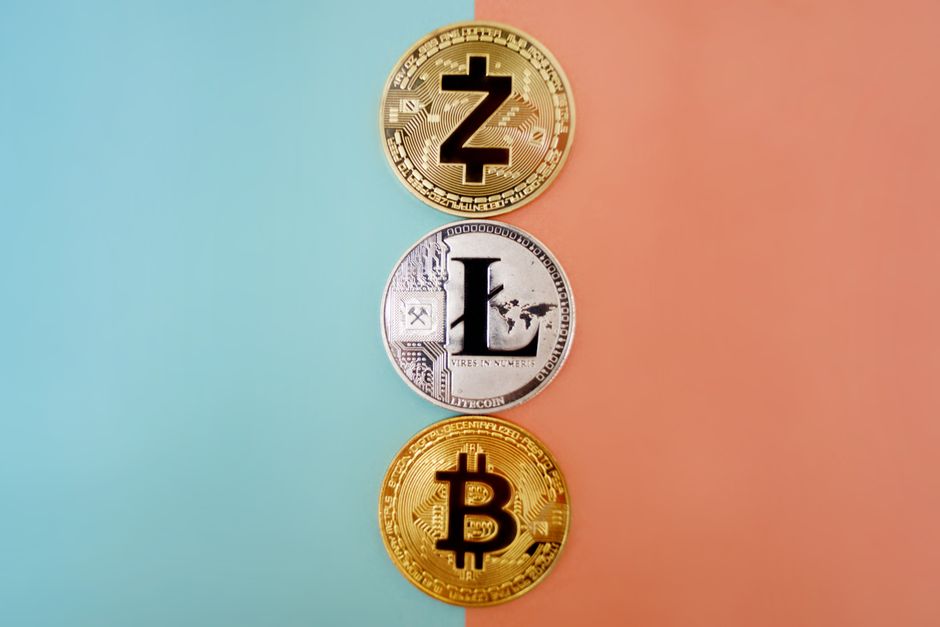
**Altcoins** — short for “alternative coins” — are any cryptocurrency other than Bitcoin (BTC). The category spans thousands of digital assets, from major platforms like Ethereum (ETH) and Solana (SOL) to smaller, speculative tokens with limited track records. Understanding what separates altcoins from Bitcoin is the logical first step before putting any capital at risk.
Bitcoin was designed primarily as a decentralized store of value and peer-to-peer payment network. Altcoins, by contrast, were built to serve a broader range of functions: smart contract execution, decentralized finance (DeFi — financial services built on blockchain without traditional intermediaries), non-fungible token (NFT) infrastructure, and cross-chain interoperability. That functional diversity is both their appeal and their primary source of risk.
Among the altcoins drawing serious research attention heading into 2026:
- **Ethereum (ETH)** — the dominant smart contract platform, continuing to develop scalability upgrades
- **Solana (SOL)** — a high-throughput blockchain favored by DeFi and NFT developers
- **Chainlink (LINK)** — an oracle network that connects blockchains to real-world data
- **Polkadot (DOT)** — a multi-chain interoperability protocol
- **Avalanche (AVAX)** — a fast, low-fee smart contract network with growing institutional interest
For broader context on how these assets are moving right now, the altcoin market news section tracks developments across all major categories.
—
Altcoin Market Overview: What’s Driving 2025–2026 Conditions
The altcoin market is operating in a post-halving environment. Bitcoin’s April 2024 halving historically precedes broader market rallies that eventually rotate into altcoins — a cycle traders refer to as **altseason**. That said, past cycles do not guarantee future performance, and several macro variables are creating meaningful headwinds.
**Key factors currently affecting altcoin prices:**
- **Bitcoin dominance** — when BTC dominance falls below roughly 50–52%, capital has historically rotated into altcoins
- **Regulatory environment** — SEC enforcement actions, spot ETF approvals, and Congressional crypto legislation all directly affect market sentiment
- **Liquidity conditions** — rising interest rates compress speculative appetite; rate cuts tend to expand it
- **On-chain activity** — real user adoption, transaction volumes, and developer activity are leading indicators of sustainable value
Volatility in the altcoin market routinely exceeds Bitcoin’s. A 30–40% drawdown in a single week is not unusual for mid-cap altcoins during periods of market stress. Any investor researching altcoins before buying in 2026 needs to price that volatility into their risk tolerance from the outset — not as an afterthought.
—
How to Research an Altcoin: A Due Diligence Framework
Researching an altcoin before committing capital requires a disciplined framework. The most reliable starting point is the project’s **whitepaper**, which outlines the underlying technology, tokenomics (how tokens are issued, distributed, and burned over time), and the specific problem the project claims to solve.
**Key metrics to evaluate:**
- **Market capitalization** — the total value of all circulating tokens; a useful size benchmark, but not a quality signal on its own
- **Fully diluted valuation (FDV)** — the market cap if all future tokens were already in circulation; a high FDV relative to current market cap signals future sell pressure
- **Total value locked (TVL)** — for DeFi protocols, TVL measures actual capital actively deployed in the ecosystem
- **Developer activity** — tracked via GitHub commit history; consistent development signals an active and accountable team
- **Token unlock schedules** — large insider or venture capital unlock events can trigger significant, sudden price drops
- **Liquidity depth** — thin order books mean larger price swings on relatively small trades
The most common mistake new altcoin investors make is skipping this due diligence phase entirely. A token trending on social media may carry strong community momentum but weak fundamentals — a combination that historically ends badly for buyers who arrive late.
—
Altcoin Investment Strategies: Comparing Your Options
There is no single correct approach to altcoin investing, but the strategies that tend to survive full market cycles share a few consistent traits: **diversification, disciplined position sizing, and defined exit criteria**.
**Common strategies compared:**
| Strategy | Time Horizon | Risk Level | Key Consideration |
|---|---|---|---|
| Buy and hold (HODLing) | 1–4+ years | High | Requires conviction in project fundamentals |
| Swing trading | Days to weeks | Very High | Demands technical analysis skill and consistent discipline |
| Dollar-cost averaging (DCA) | Ongoing, monthly | Moderate-High | Reduces timing risk; works best in established assets |
| Thematic basket | 6–18 months | High | Diversifies across a sector, such as DeFi or Layer 2 networks |
**Diversification** across altcoin sectors — Layer 1 blockchains, DeFi protocols, and infrastructure tokens — reduces concentration risk. However, diversifying within crypto alone does not eliminate systemic risk. Altcoins tend to be highly correlated during broad market selloffs, meaning most positions decline together regardless of their individual fundamentals.
**Risk management practices worth implementing:**
- Set a hard portfolio allocation limit for total crypto exposure — many advisors suggest capping it at 5–10% of investable assets
- Use predefined exit thresholds or stop-loss logic on individual positions
- Avoid leveraged altcoin positions unless you have substantial experience with margin mechanics
- Rebalance periodically to prevent runaway concentration in a single asset
—
Top Altcoins to Research Before Buying in 2026
The three projects below represent meaningfully different risk/reward profiles across the altcoin landscape. These are research starting points only — not buy recommendations.
Ethereum (ETH)
Ethereum remains the most widely used smart contract platform by developer activity, TVL, and institutional recognition. Its ongoing **EIP (Ethereum Improvement Proposal) upgrades** and expanding **Layer 2 scaling ecosystem** — including Arbitrum, Optimism, and Base — are designed to lower transaction fees and increase throughput. Risks include sustained competition from faster chains, continued regulatory classification uncertainty in the US, and the long-term effects of ETH issuance changes following the network’s transition from proof-of-work to proof-of-stake.
Solana (SOL)
Solana’s architecture supports high transaction throughput and low fees, making it a preferred chain for consumer crypto applications, meme coin activity, and NFT marketplaces. Following a significant reputation setback tied to the FTX collapse in 2022, the network has demonstrated a measurable recovery in both developer adoption and on-chain usage. Key risks include a history of network outages, validator centralization concerns, and elevated sensitivity to broader risk-off market conditions.
Chainlink (LINK)
Chainlink operates as a **decentralized oracle network** — infrastructure that feeds real-world data such as price feeds, weather data, and event outcomes into blockchain smart contracts. Its role is more infrastructure-layer than speculative token, which gives it a distinct use-case thesis compared to most altcoins. Key risks include competition from alternative oracle providers and the fact that LINK’s token value depends heavily on adoption of the broader smart contract ecosystem, rather than standalone demand.
—
Practical Steps for US Investors Buying Altcoins Safely
Before buying any altcoin, US investors should establish a secure operational setup. That means choosing a reputable exchange, understanding custody options, and getting ahead of tax reporting requirements before the first trade.
**Buying and storing altcoins securely:**
- Use a **centralized exchange (CEX)** with strong regulatory standing and proof-of-reserves disclosures — Coinbase, Kraken, and Gemini are among the more US-regulated options available
- For long-term holdings, move assets to a **hardware wallet** (cold storage) to remove counterparty risk from exchange failures
- Never store seed phrases digitally; write them down and secure them in a physical, offline location
- Enable two-factor authentication (2FA) on every exchange account
**Exchange comparison for US altcoin traders:**
| Exchange | US Availability | Altcoin Selection | Notable Feature |
|---|---|---|---|
| Coinbase | Yes (all states) | 250+ assets | Regulated, publicly traded company |
| Kraken | Yes (most states) | 200+ assets | Strong security track record |
| Coinbase Advanced | Yes | 350+ assets | Lower fees for active traders |
| Gemini | Yes (all states) | 100+ assets | SOC 2 certified, New York-based |
**Tax considerations** are significant and frequently overlooked. The IRS treats cryptocurrency as property. Every altcoin sale, trade, or swap — including swapping one altcoin for another — is a **taxable event**. Keep detailed transaction records from day one, and consider using dedicated crypto tax software such as Koinly or CoinTracker to generate accurate cost-basis reports before filing.
—
Understanding Altcoin Sectors: Layer 1, DeFi, and Infrastructure
Not all altcoins compete in the same space, and understanding the sector a project operates in helps clarify both its potential use case and its specific risk profile.
**Layer 1 blockchains** (Ethereum, Solana, Avalanche) are foundational networks that process and record transactions. Their value proposition depends on developer adoption, security, and the applications built on top of them.
**DeFi protocols** (Uniswap, Aave, Compound) are applications that replicate financial services — lending, borrowing, trading — without centralized intermediaries. TVL is the primary metric for evaluating their health, but smart contract exploit risk is elevated compared to infrastructure tokens.
**Infrastructure and oracle tokens** (Chainlink, The Graph) provide essential services to the broader blockchain ecosystem. Their value is tied to how widely the networks they serve are adopted, making them less speculative in some respects but also less likely to see explosive standalone price appreciation.
Understanding which sector an altcoin belongs to — and what that sector’s adoption curve looks like — is a foundational part of the research process before buying. The latest altcoin analysis and sector breakdowns can help US investors track how individual categories are performing in real time.
—
Regulatory Landscape for Altcoins in the US
The US regulatory environment for altcoins remains one of the most consequential and unsettled variables heading into 2026. The SEC (Securities and Exchange Commission) has pursued enforcement actions against several major exchanges and token issuers on the basis that certain altcoins may qualify as unregistered securities under the **Howey Test** — the legal standard used to determine whether an asset is a security.
Key regulatory developments to monitor:
- **SEC classification decisions** — whether a token is labeled a security or commodity determines which regulatory framework applies and which exchanges can legally list it
- **CFTC jurisdiction** — the Commodity Futures Trading Commission has asserted authority over certain crypto assets classified as commodities, including Bitcoin and potentially Ethereum
- **Congressional legislation** — multiple crypto market structure bills are working through Congress; passage would significantly clarify the operating environment for exchanges and token issuers
- **Spot ETF policy** — the approval of Bitcoin spot ETFs in early 2024 opened the door to institutional capital; similar approvals for altcoin ETFs remain uncertain
Regulatory risk is not theoretical. Assets that face adverse SEC action can be delisted from US exchanges quickly, sharply limiting exit liquidity for retail investors. This is a concrete risk factor — not a hypothetical — that belongs in any honest altcoin research process.
—
Altcoin Investment Risks: What Every US Buyer Should Understand
Altcoin investing carries risks that go well beyond standard equity investing. Understanding them fully is not optional — it is foundational to any responsible research process.
**Core risks every altcoin investor must account for:**
- **Price volatility** — altcoins can drop 50–90% in bear markets, and many never recover their previous highs
- **Project failure** — a significant percentage of altcoins launched in any given cycle become worthless within three to five years
- **Regulatory risk** — US regulatory actions can freeze trading, trigger delistings, or expose investors to legal liability
- **Smart contract exploits** — DeFi protocols are frequent hack targets; code vulnerabilities can result in total loss of deposited funds
- **Liquidity risk** — smaller altcoins may be difficult to exit at a fair price during periods of market stress
- **Rug pulls and fraud** — anonymous development teams with no accountability have a consistently poor track record in the altcoin space
—
Risk Disclaimer
> This article is for informational and educational purposes only. Nothing in this content constitutes personalized financial, investment, tax, or legal advice. Cryptocurrency markets are highly volatile and speculative. Past performance does not predict future results. Always conduct your own thorough independent research and consult a qualified financial professional before making any investment decisions.
—
Frequently Asked Questions (FAQ)
What are the main factors affecting altcoin prices heading into 2026?
The primary drivers include Bitcoin’s market dominance and post-halving capital rotation patterns, US regulatory developments — particularly SEC classification decisions and spot ETF policy — macroeconomic liquidity conditions tied to Federal Reserve rate policy, and on-chain fundamentals such as TVL, developer activity, and token unlock schedules. No single factor controls price in isolation; these variables interact in ways that make short-term prediction unreliable for even experienced analysts.
How do I find reliable information about an altcoin before investing?
Start with the project’s official whitepaper and tokenomics documentation. Cross-reference on-chain data using tools like Messari, CoinGecko, and DeFiLlama. Follow credible independent analysts on established research platforms rather than relying on social media or influencer content. A single enthusiastic source is a red flag, not a green light — always verify claims across multiple independent, reputable sources.
What are the most common mistakes new altcoin investors make?
The three most consistent errors are: (1) **FOMO-driven buying** — purchasing after a sharp price run-up driven by social media buzz rather than fundamentals; (2) **skipping due diligence** — not reading the whitepaper, ignoring tokenomics, or failing to verify the team’s credibility and track record; and (3) **poor position sizing** — allocating too large a share of investable capital to highly speculative assets without a defined exit plan. Each of these mistakes directly amplifies the impact of the market’s inherent volatility.
Is dollar-cost averaging a safer way to invest in altcoins?
Dollar-cost averaging (DCA) — investing a fixed dollar amount at regular intervals rather than in a lump sum — reduces timing risk and prevents investors from putting all their capital in at a market peak. However, it does not eliminate risk. DCA into a fundamentally weak project still results in losses if the project fails. The strategy works best when applied to assets with credible long-term fundamentals and within a total crypto allocation that reflects your overall risk tolerance.
What is the difference between market cap and fully diluted valuation (FDV)?
Market cap reflects the current total value of all tokens already in circulation — calculated by multiplying the current price by circulating supply. FDV (fully diluted valuation) calculates what that total value would be if every token that will ever exist were already in circulation, including locked, vested, or not-yet-issued tokens. A large gap between market cap and FDV signals that significant future token issuance could dilute existing holders and create sustained sell pressure. It is one of the most commonly overlooked metrics in altcoin research.
How does US regulation affect which altcoins I can legally buy?
US residents are limited to purchasing altcoins that are legally listed on compliant domestic exchanges. Assets that the SEC has formally designated as unregistered securities — or that are the subject of active enforcement actions — may be delisted from US platforms, reducing or eliminating exit options for existing holders. This regulatory dimension is a concrete financial risk, not a theoretical one, and it should be part of your research process before buying any altcoin.
Charting & Exchange Resources
| Platform | Use Case | Key Feature | Fee Model | Action |
|---|---|---|---|---|
| TradingView | Charting & technical analysis | Indicators, multi-timeframe charts | Free / Pro tiers | View Platform |
| Coinbase | Exchange (beginner-friendly) | Simple USD on-ramp, educational tools | Varies by region | View Platform |
| Binance | Exchange (advanced pairs) | Wide altcoin coverage, spot markets | Varies by region | View Platform |
Affiliate Disclosure: This post contains affiliate links. We may earn a commission if you buy through our links, at no extra cost to you. Investment Risk Disclaimer: Cryptocurrency and digital asset markets are highly volatile. This content is for informational and educational purposes only and is not financial, investment, or trading advice. You may lose some or all of your capital. Do your own research and consult a licensed financial advisor before making investment decisions.
Leave a Reply