
{## Trending Cryptocurrencies This Week: What to Know
If you’re tracking **trending cryptocurrencies this week**, what to know goes well beyond which coins are moving — it’s about understanding *why* they’re moving and what risks come with that momentum. This week’s crypto market is being shaped by easing inflation signals, renewed institutional flows, and accelerating developer activity on **Layer 2 (L2)** networks — secondary frameworks built on top of existing blockchains to improve transaction speed and reduce fees.
**Bitcoin (BTC)** and **Ethereum (ETH)** remain the two largest assets by **market capitalization (market cap)** — the total dollar value of all coins in circulation — but a wave of **altcoins** (all cryptocurrencies other than Bitcoin) is drawing serious trader attention as macroeconomic conditions shift.
Three headline data points frame this week’s landscape:
- **Bitcoin dominance** — BTC’s share of total crypto market cap — sits near 52–54%, indicating moderate altcoin season conditions
- Ethereum network fees have declined, accelerating usage across its L2 ecosystem
- Week-over-week trading volume has increased across major US-regulated exchanges
—
What’s Driving This Week’s Market Movement
Several converging forces are behind the current activity spike. **On-chain data** — publicly recorded blockchain transaction metrics — shows rising wallet activity across multiple networks. US regulatory headlines continue to move sentiment, and a new wave of **exchange-traded fund (ETF)** speculation is contributing to volume surges on major platforms.
Understanding these structural drivers, rather than reacting to price movement alone, is the baseline for responsible market participation. Trending assets attract both informed analysts and momentum chasers — knowing which camp you’re in matters.
—
Understanding Cryptocurrency Volatility
**Volatility** measures how sharply and quickly an asset’s price moves over a given period. In traditional equity markets, a 5% monthly swing in a stock is considered elevated. In crypto, a 5% move can occur within a single hour.
Several structural factors amplify this volatility:
- Crypto markets operate **24 hours a day, 7 days a week** with no circuit breakers, unlike the New York Stock Exchange (NYSE)
- **Liquidity** — the ease of buying or selling without moving the price — is unevenly distributed; smaller coins can be dramatically shifted by a single large trade
- Sentiment-driven trading, social media influence, and an immature regulatory framework all compound price swings
For market participants, volatility cuts both ways. **Traders** may exploit short-term swings through **scalping** (many small, rapid trades) or **swing trading** (holding positions for days to weeks). **Long-term holders** — colloquially called **HODLers** — must be prepared for drawdowns of 40–80% even in fundamentally sound assets. **Stop-loss orders** — automatic sell orders triggered at a predetermined price — are a core risk management tool in this environment.
—
Top 5 Trending Cryptocurrencies to Watch
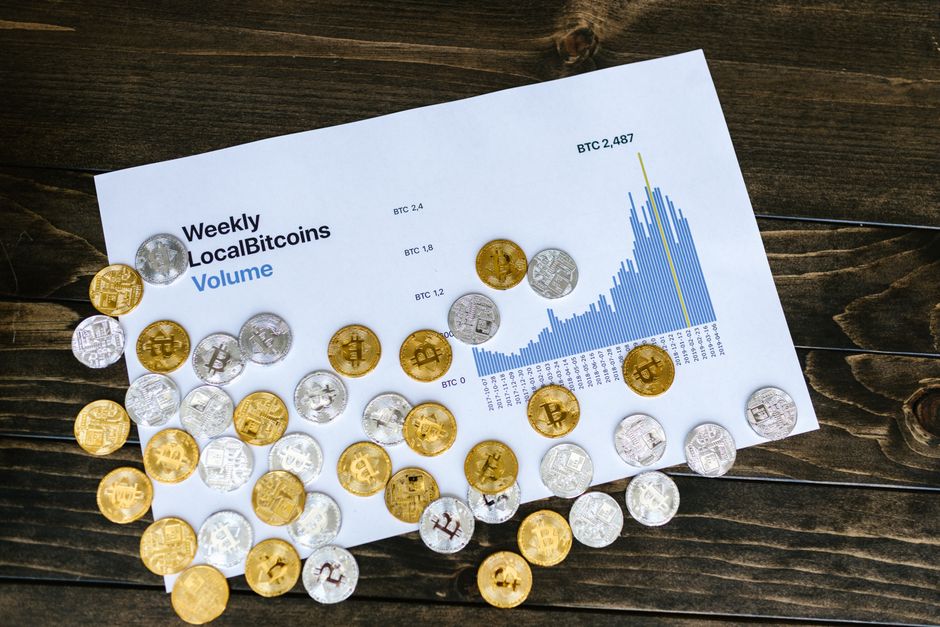
The five assets below are generating outsized attention this week based on trading volume, social mentions, and on-chain activity. Trending status reflects elevated market interest — not safety, quality, or a recommendation to buy.
1. **Bitcoin (BTC)** — The original **proof-of-work (PoW)** cryptocurrency, where miners compete computationally to validate transactions. Renewed ETF inflows and favorable macro data are driving fresh institutional interest.
2. **Ethereum (ETH)** — The leading **smart contract** platform, enabling self-executing code on a decentralized network. L2 ecosystem growth and reduced gas fees are sustaining developer momentum.
3. **Solana (SOL)** — A high-throughput blockchain using **proof-of-history (PoH)** consensus, capable of processing thousands of transactions per second. NFT and **decentralized finance (DeFi)** activity are spiking this week.
4. **Chainlink (LINK)** — A **decentralized oracle network** that feeds verified real-world data into smart contracts. New partnership announcements are the primary momentum catalyst.
5. **Layer 2 tokens (ARB / OP)** — **Arbitrum (ARB)** and **Optimism (OP)** are Ethereum scaling solutions seeing increased **total value locked (TVL)** — a key metric measuring assets deposited in a protocol.
| Asset | Primary Use Case | Key Risk |
|---|---|---|
| BTC | Store of value / digital gold | Regulatory action, energy policy |
| ETH | Smart contracts, DeFi infrastructure | L1 competition |
| SOL | High-speed DeFi and NFTs | Network outage history |
| LINK | Oracle data infrastructure | Dependency on smart contract adoption |
| ARB / OP | Ethereum scaling | Protocol immaturity, token unlock schedules |
For a broader view of which assets are consistently appearing in this space, the trending cryptos category tracks ongoing market shifts with the same analytical lens applied here.
—
Technical Analysis: What Traders Are Watching
**Technical analysis (TA)** evaluates assets using historical price charts and statistical indicators — not company fundamentals or project quality. TA is widely used in crypto trading but carries significant error rates, particularly in volatile, sentiment-driven markets.
Key indicators in focus this week:
- **Relative Strength Index (RSI)** — A momentum oscillator on a 0–100 scale; readings above 70 signal overbought conditions, below 30 signal oversold
- **Moving Average Convergence Divergence (MACD)** — Tracks trend momentum by comparing short- and long-term moving averages
- **Support and resistance levels** — Price zones where historical buying or selling pressure has concentrated
- **Volume analysis** — Confirms whether a price move has genuine conviction behind it
Most trending assets this week are displaying elevated RSI readings, suggesting short-term overbought conditions. This does not predict a reversal, but it does indicate elevated risk for new entries at current levels. Before any trade, define your **risk-reward ratio** — the potential gain relative to the maximum loss you’re willing to accept.
—
Due Diligence Checklist Before Investing
Chasing trending assets without independent research is one of the most costly mistakes retail investors make. The fact that a coin is trending on social media or topping exchange volume charts says nothing about its long-term viability. **Due diligence** — independently verifying a project’s claims before committing capital — is non-negotiable.
Work through this checklist before acting on any trending cryptocurrency:
- **Read the whitepaper** — the founding technical document outlining the project’s purpose, technology, and **tokenomics** (token supply, distribution, and incentive design)
- **Verify the team** — Are developers publicly identified? Do they have verifiable professional histories?
- **Examine token supply** — What percentage do insiders hold? Are large **token unlock events** (scheduled releases of previously locked supply) approaching?
- **Check audit status** — Has the smart contract code been reviewed by a reputable third-party security firm?
- **Assess liquidity** — Low-liquidity tokens are far easier to manipulate through **pump-and-dump schemes**
- **Size your position appropriately** — Never allocate more than you can afford to lose entirely to any single asset, particularly a trending one
**Diversification** — spreading exposure across asset types including large-cap coins, mid-cap projects, and **stablecoins** (tokens pegged to a fiat currency like the US dollar) as a buffer — reduces concentration risk. How much of a total portfolio should be allocated to crypto is a personal decision based on individual risk tolerance, not a figure this article can prescribe.
—
Choosing a US-Regulated Cryptocurrency Exchange
To trade any of the assets covered here, you’ll need a **cryptocurrency exchange** — a platform facilitating the buying, selling, and trading of digital assets. US-based investors should prioritize platforms with clear regulatory standing.
Evaluate any exchange on these criteria:
- **Regulatory compliance** — Is the platform registered with **FinCEN (Financial Crimes Enforcement Network)** and compliant with **KYC/AML (Know Your Customer / Anti-Money Laundering)** requirements?
- **Custodial vs. non-custodial** — Custodial exchanges control your private keys; non-custodial wallets give you direct ownership of your assets
- **Fee structure** — Compare **maker fees** (orders that add liquidity to the order book) and **taker fees** (orders that remove liquidity); flat-rate platforms may be simpler for less active traders
- **Security practices** — Does the exchange hold the majority of assets in **cold storage** (offline wallets disconnected from the internet) and carry insurance against breaches?
| Exchange Type | Strengths | Weaknesses |
|---|---|---|
| Centralized (CEX) | Intuitive UI, fiat on-ramp, customer support | Custodial risk, regulatory exposure |
| Decentralized (DEX) | Non-custodial, permissionless | No support, smart contract vulnerability |
| Hybrid | Increasing flexibility | Technology still maturing |
—
The US Regulatory Landscape and Why It Moves Markets
Regulatory clarity — or its absence — remains one of the most consequential price drivers in the US crypto market. The **Securities and Exchange Commission (SEC)** and the **Commodity Futures Trading Commission (CFTC)** hold overlapping and sometimes conflicting jurisdiction over digital assets. Whether a token is classified as a **security** (SEC-regulated) or a **commodity** (CFTC-regulated) has direct implications for exchange listings, institutional participation, and legal exposure for US holders.
Active legislative work in Congress on a **market structure bill** and **stablecoin regulation** is being closely watched by institutional players. Clear rules could unlock broader product development and participation. Aggressive enforcement actions, by contrast, have historically triggered sharp market selloffs.
For US investors and traders, the regulatory checklist includes:
- **Tax reporting** — The **IRS (Internal Revenue Service)** classifies cryptocurrency as property; every taxable event — trade, sale, or spend — may trigger capital gains reporting obligations
- **Exchange jurisdiction** — Using non-compliant or offshore exchanges carries legal and financial risk for US residents
- **Stablecoin developments** — Pending legislation could significantly reshape how stablecoins function within the broader crypto market trends and DeFi ecosystem
—
> **Risk Disclaimer:** Cryptocurrency markets are highly volatile and speculative. The value of any digital asset can decline to zero. Nothing in this article constitutes financial, investment, legal, or tax advice. Consult a qualified financial professional before making any investment decisions. Past performance of any asset is not indicative of future results.
—
Frequently Asked Questions (FAQ)
**What are the main risks of investing in cryptocurrencies?**
The primary risks include extreme price volatility, regulatory uncertainty, cybersecurity threats (exchange hacks, wallet phishing), liquidity risk on smaller tokens, and the possibility of total loss. Unlike FDIC-insured bank deposits, cryptocurrency holdings carry no government-backed protections.
**How can I find reliable information about a cryptocurrency before investing?**
Start with the project’s official whitepaper and any publicly available smart contract audit reports. Cross-reference on-chain data through tools like Etherscan or Solscan, review developer activity on public repositories such as GitHub, and consult multiple independent analysis sources. Avoid making decisions based primarily on social media or influencer content.
**What are the warning signs that a cryptocurrency might be a scam?**
Key red flags include anonymous or unverifiable development teams, no published whitepaper or security audit, any promise of guaranteed returns, aggressive referral programs resembling **Ponzi schemes**, very low liquidity paired with heavy promotional activity, and artificial urgency pressuring quick investment decisions.
**What does “trending” actually mean in the crypto context?**
A trending cryptocurrency is one experiencing a measurable spike in trading volume, social media mentions, or on-chain activity relative to its recent baseline. Trending status is a market signal — not an endorsement, quality rating, or indicator of investment suitability.
**How does US crypto regulation affect everyday investors?**
US regulatory decisions affect which tokens can be listed on domestic exchanges, what financial products (like ETFs) can be offered, and how gains are taxed. IRS guidance requires reporting most crypto transactions as property disposals, meaning capital gains rules apply. Staying informed on SEC and CFTC developments is part of responsible market participation for any US-based investor.
Charting & Exchange Resources
| Platform | Use Case | Key Feature | Fee Model | Action |
|---|---|---|---|---|
| TradingView | Charting & technical analysis | Indicators, multi-timeframe charts | Free / Pro tiers | View Platform |
| Coinbase | Exchange (beginner-friendly) | Simple USD on-ramp, educational tools | Varies by region | View Platform |
| Binance | Exchange (advanced pairs) | Wide altcoin coverage, spot markets | Varies by region | View Platform |
Affiliate Disclosure: This post contains affiliate links. We may earn a commission if you buy through our links, at no extra cost to you. Investment Risk Disclaimer: Cryptocurrency and digital asset markets are highly volatile. This content is for informational and educational purposes only and is not financial, investment, or trading advice. You may lose some or all of your capital. Do your own research and consult a licensed financial advisor before making investment decisions.
Leave a Reply