crypto market analysis: trending-cryptos: What Are Altcoins

What Are Altcoins and How Do They Differ from Bitcoin?
The term **altcoins** refers to any cryptocurrency other than Bitcoin (BTC). Altcoins were created to build on Bitcoin’s original blockchain concept while addressing perceived limitations or introducing new functionality. The name itself is a portmanteau of “alternative” and “coin.” Today, the altcoin market encompasses thousands of digital assets, each with its own purpose, technology, and community.
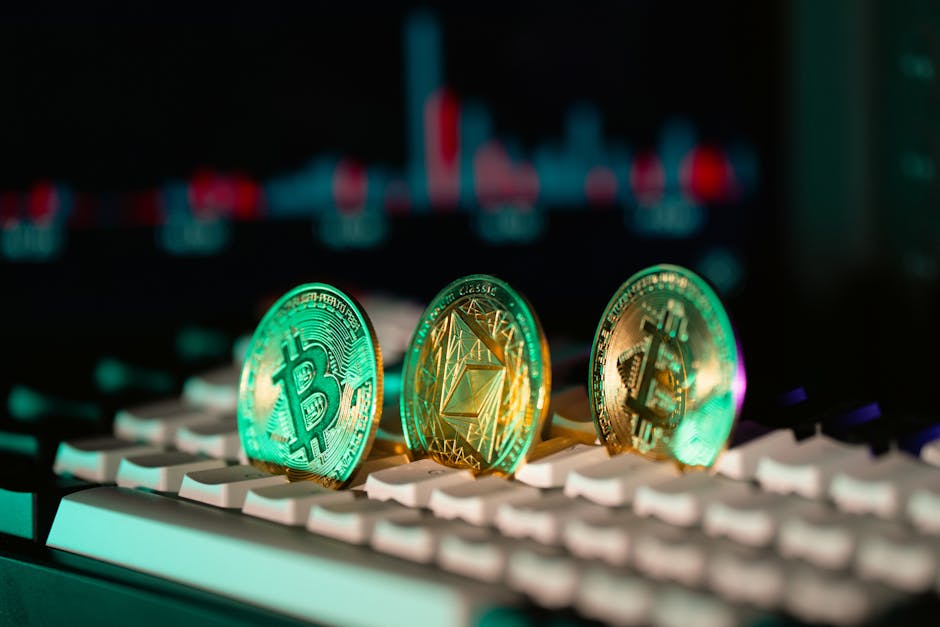
Bitcoin remains the dominant cryptocurrency by market capitalization, but altcoins often differentiate themselves through faster transaction speeds, lower fees, or specialized use cases. **Ethereum (ETH)**, for example, introduced smart contracts that allow developers to build decentralized applications (dApps) directly on its blockchain. **Litecoin (LTC)** was designed as a “silver to Bitcoin’s gold,” offering quicker block confirmation times for everyday transactions. **Ripple (XRP)** focuses on facilitating cross-border payments between financial institutions. These examples illustrate how altcoins serve very different niches within the broader cryptocurrency ecosystem.

Understanding the distinction between Bitcoin and altcoins is foundational for anyone researching trending cryptos today. Bitcoin is primarily a store-of-value asset, while many altcoins function as utility tokens, governance assets, or protocol-level infrastructure. This distinction shapes how investors evaluate price movement, adoption metrics, and long-term viability.
Understanding the Altcoin Market Trends
The altcoin market is heavily influenced by broader **crypto market cycles**, macroeconomics, and evolving regulatory landscapes. When Bitcoin experiences significant price action, altcoins often follow with amplified movement — both upward and downward. This correlation is important to understand before allocating capital to smaller-cap digital assets.
Several factors currently shape altcoin market trends in 2025. Regulatory developments in the United States and Europe continue to affect how exchanges list and handle altcoin assets. Technological advancements, particularly in layer-2 scaling solutions and zero-knowledge (ZK) proof systems, have renewed interest in altcoins that build on these innovations. Institutional adoption of blockchain infrastructure has also driven attention toward utility-focused altcoins with real-world applications.
Comparing recent performance data reveals that certain altcoin categories have outperformed Bitcoin during specific market windows, though with substantially higher volatility. The table below summarizes key performance characteristics across major altcoin segments.
| Altcoin Category | Example Coins | Typical Volatility | Primary Use Case |
|---|---|---|---|
| Smart Contract Platforms | Ethereum, Solana, Avalanche | High | dApps, DeFi protocols |
| Layer-2 Scaling | Arbitrum, Optimism, Base | Very High | Scalability, low fees |
| DeFi Utilities | Aave, Uniswap, Compound | High | Lending, trading, staking |
| Cross-Border Payments | Ripple (XRP), Stellar (XLM) | Moderate | Financial institution settlement |
Investors monitoring trending cryptos should recognize that sector rotation — capital flowing from Bitcoin to altcoins and back — is a recurring pattern. During bullish phases, smaller-cap altcoins often see percentage gains that dwarf Bitcoin’s performance. Conversely, during risk-off market conditions, altcoins typically experience sharper drawdowns.
Risks and Volatility in Altcoin Investment
**Volatility** is the defining characteristic of the altcoin market, and it cuts both ways. While Bitcoin has seen intraday moves of 5–10% during volatile periods, mid-cap and small-cap altcoins can swing 20%, 30%, or more in a single trading day. This extreme price action attracts speculative capital but also creates substantial risk of loss.
Beyond price volatility, altcoin investors face additional risks. **Liquidity risk** is significant in altcoin markets — many altcoins have thin order books, meaning large sell orders can crater prices instantly. **Project risk** is equally concerning: thousands of altcoin projects have been abandoned, rugged (developer exit scam), or rendered obsolete by faster, cheaper competitors. Regulatory risk also looms large, as certain altcoins have faced SEC (Securities and Exchange Commission) scrutiny over whether they qualify as unregistered securities.
**Market manipulation** is rampant in altcoin trading. Wash trading, pump-and-dump schemes, and coordinated social media campaigns are unfortunately common. Investors should be wary of unsolicited investment advice shared on social media platforms or Discord servers. Legitimate analysis is grounded in on-chain data, transparent project fundamentals, and verifiable trading volume.
Risk mitigation in the altcoin market starts with position sizing. Allocating no more than a small percentage of total investable assets to any single altcoin reduces catastrophic loss risk. Setting clear stop-loss levels and avoiding leverage (borrowed capital) are additional safeguards. Dollar-cost averaging — spreading purchases over time rather than investing a lump sum — helps reduce the impact of volatility on entry points.
Technical Analysis: How to Evaluate Altcoin Performance
**Technical analysis (TA)** involves studying historical price charts and trading volume to identify patterns and predict future price direction. In the cryptocurrency market, TA is applied to altcoins using many of the same tools used in traditional equities and forex trading — but with important caveats due to the 24/7 nature of crypto markets and lower liquidity in altcoin pairs.
Key technical indicators relevant to altcoin analysis include **Moving Averages (MA)**, particularly the 50-day and 200-day MA, which smooth price data to identify trend direction. **Relative Strength Index (RSI)** measures whether an asset is overbought (above 70) or oversold (below 30), helping traders identify potential reversal points. **Volume** analysis confirms whether price moves are supported by genuine market participation or merely thin order book activity.
On-chain metrics add another layer of evaluation. **Total Value Locked (TVL)** measures the amount of cryptocurrency staked or deposited in a DeFi protocol and signals genuine user adoption. **Active addresses** and **transaction counts** reveal network activity levels. **Token distribution** — how many tokens are held by insiders versus the broader public — is a critical risk indicator, as heavily centralized token supplies can create sell pressure that harms retail investors.
Investors evaluating trending cryptos should combine technical analysis with fundamental research. Chart patterns alone do not capture a project’s long-term viability, developer activity, or competitive positioning within its niche.
Diversifying Your Cryptocurrency Portfolio with Altcoins
**Diversification** is a foundational principle of sound investment management, and the cryptocurrency market is no exception. Including altcoins in a portfolio can provide exposure to emerging technologies, sector-specific growth, and potential outsized returns — but diversification only works when the underlying assets are not perfectly correlated.
A well-diversified crypto portfolio might include a core holding in Bitcoin, a meaningful allocation to a smart contract platform like Ethereum, and smaller positions across complementary categories. For example, pairing Ethereum with a layer-2 altcoin provides exposure to both the base layer and the scaling solutions built on top of it. Adding a DeFi utility token gives portfolio exposure to the growing decentralized finance sector. This layering approach means that if one sector underperforms, others may compensate.
The table below illustrates a sample diversified altcoin allocation strategy for educational purposes.
| Asset Class | Example Allocation | Rationale |
|---|---|---|
| Bitcoin (BTC) | 40–50% | Market leader, lower volatility |
| Smart Contract Platform (ETH) | 20–25% | Core infrastructure exposure |
| Layer-2 / Scaling Solutions | 5–10% | High-growth tech sector |
| DeFi / Utility Tokens | 5–10% | Sector-specific upside potential |
| Reserve Assets (Stablecoins) | 10–15% | Liquidity buffer for corrections |

It is important to note that no allocation strategy guarantees positive returns. The cryptocurrency market is speculative, and past performance does not predict future results. Diversification reduces risk but does not eliminate it entirely.
Practical Tips for Investing in Altcoins
Before investing in any altcoin, conduct thorough due diligence. Start by examining the project’s whitepaper — the foundational document outlining its purpose, technology, and tokenomics. Evaluate whether the project solves a genuine problem and whether its token model is sustainable. Reputable projects publish regular development updates, have active GitHub repositories, and maintain transparent communication with their communities.
Choosing the right altcoins requires narrowing focus. Rather than tracking hundreds of tokens, identify two or three categories that align with your risk tolerance and investment thesis. Within those categories, prioritize assets with high trading volume on established exchanges, clear use cases, and strong developer teams. **Avoid investing based solely on social media hype** — coordinated campaigns frequently inflate prices artificially before a coordinated sell-off.
Managing and monitoring altcoin investments requires discipline. Set specific entry and exit points before making a purchase. Use hardware wallets or reputable software wallets to store assets securely — never leave large altcoin holdings on exchange accounts long-term. Review portfolio allocations quarterly and rebalance when any position grows beyond your intended target weight. Market conditions evolve rapidly, and a diversified portfolio from six months ago may no longer reflect your intended risk profile.
Staying Informed: Altcoin News and Market Updates
Staying informed is one of the most powerful tools an altcoin investor possesses. The cryptocurrency market moves on information faster than almost any traditional market, and delayed reactions can cost significant capital. Subscribing to reputable news outlets, following verified on-chain analytics platforms, and monitoring regulatory developments are essential habits.
Reliable sources for cryptocurrency market data include **CoinGecko** and **CoinMarketCap** for price tracking and market capitalization, **Glassnode** for on-chain analytics, and **The Block** or **CoinDesk** for regulatory and industry news coverage. US-based readers should monitor announcements from the SEC, CFTC (Commodity Futures Trading Commission), and Congress regarding cryptocurrency legislation, as regulatory changes can move entire altcoin sectors overnight.
Interpreting market data requires critical thinking. Distinguish between **on-chain data** — which reflects actual blockchain activity like transaction volumes and wallet holdings — and **social sentiment data**, which tracks online discussion but can be manipulated or skewed by bot activity. Combining multiple data sources provides a more accurate picture than relying on any single indicator.
Frequently Asked Questions (FAQ)
What are the most promising altcoin categories to research right now?
Promising altcoin categories currently include layer-2 scaling solutions built on Ethereum, which address the network’s high gas fees, and real-world asset (RWA) tokenization platforms, which enable fractional ownership of physical assets on-chain. DeFi infrastructure tokens and interoperability protocols that connect different blockchain networks are also areas attracting significant developer and institutional interest. However, “promising” does not mean “guaranteed profitable” — all categories carry substantial risk, and the most actively discussed sectors are often the most crowded and volatile.
How can I protect myself from scams and fraudulent altcoins?
Red flags for fraudulent altcoins include anonymous or pseudonymous development teams, promises of guaranteed returns, unsolicited investment outreach via social media or messaging apps, and tokenomics that disproportionately reward insiders. Before investing, verify the project’s smart contract code through a third-party audit, check whether the team has a verifiable track record in the industry, and confirm that the token is listed on reputable exchanges with genuine trading volume. Using hardware wallets, enabling two-factor authentication on exchange accounts, and never sharing private keys are non-negotiable security practices.
What is the future outlook for altcoins in the cryptocurrency market?
The long-term outlook for altcoins is tied to broader blockchain adoption, regulatory clarity, and technological innovation. As layer-2 solutions mature, DeFi protocols scale, and institutional interest grows, demand for utility-focused altcoins could increase substantially. However, the market is also likely to see continued consolidation, where lower-quality projects fade while strong ones attract more capital. Regulatory frameworks being developed in the United States and European Union will significantly influence which altcoins can operate legally and how they are classified. Investors should monitor policy developments closely and maintain realistic expectations about the volatility inherent in this asset class.
—
**Risk Disclaimer:** The cryptocurrency market is highly volatile, and investing in altcoins carries significant risk, including the potential total loss of invested capital. Information in this article is provided for educational purposes only and does not constitute financial, legal, or investment advice. Always conduct your own independent research, understand the specific risks of any digital asset before investing, and consult with a qualified financial advisor before making investment decisions.
Charting & Exchange Resources
| Platform | Use Case | Key Feature | Fee Model | Action |
|---|---|---|---|---|
| TradingView | Charting & technical analysis | Indicators, multi-timeframe charts | Free / Pro tiers | View Platform |
| Coinbase | Exchange (beginner-friendly) | Simple USD on-ramp, educational tools | Varies by region | View Platform |
| Binance | Exchange (advanced pairs) | Wide altcoin coverage, spot markets | Varies by region | View Platform |
Affiliate Disclosure: This post contains affiliate links. We may earn a commission if you buy through our links, at no extra cost to you. Investment Risk Disclaimer: Cryptocurrency and digital asset markets are highly volatile. This content is for informational and educational purposes only and is not financial, investment, or trading advice. You may lose some or all of your capital. Do your own research and consult a licensed financial advisor before making investment decisions.


