altcoin analysis US: altcoin: What Is an Altcoin?
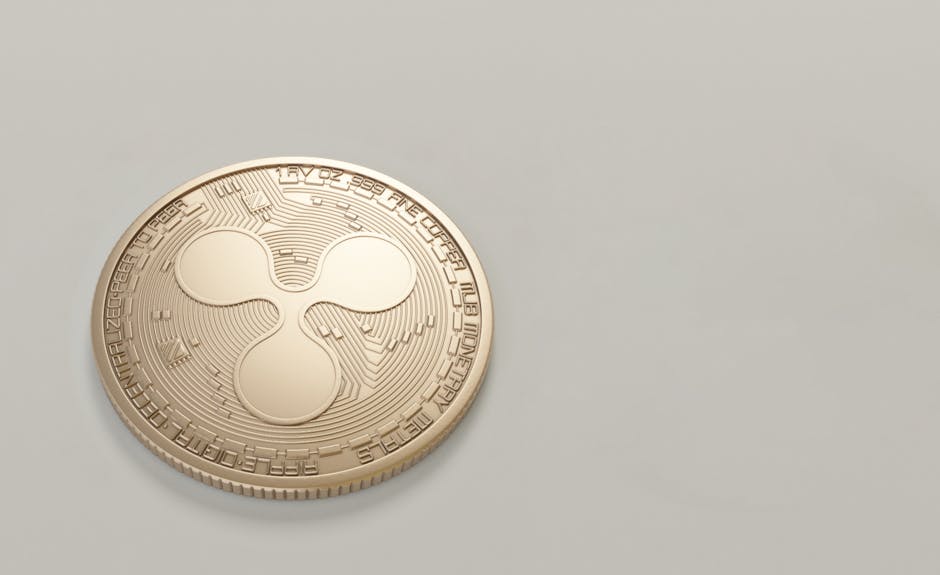

What Is an Altcoin?
An altcoin is any cryptocurrency other than Bitcoin. The word itself is a blend of “alternative” and “coin,” and it covers a vast universe of digital assets built on blockchain technology. While Bitcoin remains the original and most widely held cryptocurrency, thousands of altcoins have emerged since Bitcoin’s 2009 launch, each attempting to improve on or differentiate itself from Bitcoin’s core design. Some altcoins aim to enable smart contracts and decentralized applications, others focus on privacy, and still others target specific industries like finance, gaming, or supply chain management.
Understanding altcoins means recognizing that they are not a monolithic category. **Altcoins range from mature, established networks with billions of dollars in market value to highly speculative projects with minimal real-world utility.** The term encompasses everything from Ethereum—the platform that powers decentralized finance (DeFi)—to newer experimental tokens that may not survive the next market cycle. This diversity is both the appeal and the danger of the altcoin market. Investors need to evaluate each project on its own merits, technology, team, and use case rather than assuming all altcoins share the same risk profile.

How Altcoins Differ From Bitcoin
Bitcoin was designed primarily as a peer-to-peer digital cash system—a way to transfer value without banks or intermediaries. Altcoins, by contrast, often serve narrower or more complex purposes. Ethereum introduced the concept of a blockchain that could run self-executing contracts, enabling an entire ecosystem of decentralized applications. Some altcoins focus on privacy features that Bitcoin intentionally left out. Others prioritize transaction speed, lower fees, or proof-of-stake energy efficiency.
| Feature | Bitcoin | Altcoins |
|---|---|---|
| Primary purpose | Store of value, digital cash | Varies by project |
| Consensus mechanism | Proof of Work (mostly) | Proof of Stake, PoW, hybrid |
| Smart contract capability | No | Yes (Ethereum, Solana, etc.) |
| Market dominance | ~50–60% of total crypto market | Combined ~40–50% |
| Volatility | High | Generally higher than Bitcoin |
**The key takeaway is that Bitcoin and altcoins serve different roles in a portfolio.** Bitcoin is often treated as a comparatively stable anchor, while altcoins tend to be more volatile growth-oriented holdings.
Understanding Altcoin Market Capitalization
Market capitalization—commonly called “market cap”—is the total value of all coins or tokens in circulation. It is calculated by multiplying the current price per coin by the total supply of coins. Market cap matters because it gives a rough sense of a cryptocurrency’s relative size, adoption, and stability compared to other assets. A coin with a high market cap typically has more liquidity and wider exchange support, while low-cap altcoins can see extreme price swings on relatively small trade volumes.
When evaluating altcoins by market cap, investors should understand that not all market caps are created equal. A project with a large supply of low-value tokens may have a high market cap despite having minimal real-world adoption. Conversely, a token with tight supply and high utility might be undervalued relative to its market cap. **Always cross-reference market cap with trading volume, token utility, and project fundamentals before making assumptions about a project’s size or stability.**
The Current Altcoin Market Landscape
The altcoin market has undergone dramatic shifts over the past several years. After the 2021 bull run, during which many altcoins saw gains measured in thousands of percentage points, the market entered a prolonged correction phase. Regulatory scrutiny in the United States and abroad has reshaped which projects can operate freely, and macroeconomic conditions have influenced how retail and institutional investors allocate capital across the crypto ecosystem.
Today, the market shows increasing sophistication. Institutional interest has grown in select altcoins, particularly those tied to real-world asset tokenization and decentralized finance infrastructure. Layer-2 scaling solutions—blockchains built on top of networks like Ethereum to improve speed and reduce costs—have gained significant traction. **The altcoin space is maturing, but it remains one of the most volatile segments of the broader financial markets.** Investors entering this space should do so with a clear understanding that price swings of 30%, 50%, or even 90% in a single year are entirely possible and should not be mistaken for anomalies.
Why Altcoin Volatility Matters for US Investors
Volatility is the defining characteristic of the altcoin market, and it deserves careful attention. While volatility creates opportunities for significant gains, it also exposes investors to devastating losses. The same market dynamics that drove altcoin prices sharply higher in 2021 contributed to equally dramatic declines in 2022. **For US investors, this volatility has tax implications as well: every trade, swap, or disposition of a cryptocurrency may trigger a capital gains or losses event requiring reporting to the Internal Revenue Service (IRS).**
Understanding volatility means studying historical price charts, evaluating trading volume trends, and recognizing that social media sentiment can amplify price swings in ways that have little to do with underlying project value. News about regulatory actions, exchange listings or delistings, or major protocol upgrades can move prices by double-digit percentages in hours. **Risk-aware investors treat altcoin volatility as a signal to exercise discipline rather than enthusiasm.** Position sizing, stop-loss strategies, and clear exit plans are not optional luxuries—they are essential tools for anyone holding altcoin positions.
Scams, Fraud, and Market Manipulation in the Altcoin Space
The altcoin market’s relative lack of regulation makes it a fertile environment for scams, fraud, and manipulation. Rug pulls—where developers abandon a project and带走 (take away) investor funds—are unfortunately common, particularly in the decentralized finance space. Pump-and-dump schemes, where coordinated groups artificially inflate a coin’s price before selling, target smaller altcoins with low trading volume.
**Red flags investors should watch for include anonymous or undisclosed development teams, whitepapers that lack technical substance, promises of guaranteed returns, and social media accounts with inflated follower counts and low engagement quality.** Before investing in any altcoin, research the project’s GitHub activity, community channels, audit reports, and track record. Legitimate projects welcome scrutiny. Suspicious ones deflect questions or pressure you to act quickly.
The US Securities and Exchange Commission (SEC) has taken increasing action against unregistered token sales and fraudulent crypto projects. However, enforcement does not prevent losses. **Investor self-protection through rigorous due diligence remains the first line of defense.**
Regulatory Considerations for US Altcoin Investors
The United States regulatory landscape for altcoins continues to evolve. The SEC, Commodity Futures Trading Commission (CFTC), and Financial Crimes Enforcement Network (FinCEN) all play roles in overseeing different aspects of cryptocurrency markets. Which digital assets qualify as securities versus commodities is an active legal question, and recent court rulings have shifted how regulators classify certain tokens.
**For US investors, regulatory uncertainty is a risk factor in itself.** Projects that face regulatory action may see their tokens delisted from major exchanges, and legal proceedings can drag on for years. Staying informed about regulatory developments through credible news sources and official statements—not social media speculation—is a practical necessity. Tax reporting requirements for cryptocurrency are well established, and the IRS treats digital assets as property for federal tax purposes. **Every trade and disposition should be tracked meticulously, as failure to report cryptocurrency gains can result in penalties.**
Analyzing Top Altcoins by Market Capitalization
The largest altcoins by market cap include Ethereum, BNB, Solana, XRP, Cardano, Avalanche, Polkadot, and Chainlink, among others. Each represents a distinct approach to blockchain technology and cryptocurrency economics.
| Altcoin | Primary Use Case | Consensus Mechanism | Notable Feature |
|---|---|---|---|
| Ethereum (ETH) | Smart contracts, DeFi, NFTs | Proof of Stake | Largest developer ecosystem |
| BNB (BNB) | Exchange utility token | Proof of Staked Authority | Used for exchange fee discounts |
| Solana (SOL) | High-speed transactions | Proof of Stake | Fast, low-cost transactions |
| XRP (XRP) | Cross-border payments | RPCA | Bank partnerships, fast settlement |
| Cardano (ADA) | Smart contracts, academic peer review | Proof of Stake | Research-driven development |
**Ethereum dominates the altcoin market by a wide margin**, accounting for the majority of total value locked in decentralized finance protocols. Its transition from Proof of Work to Proof of Stake (called The Merge) was one of the most significant events in crypto history. Solana has positioned itself as a high-performance competitor to Ethereum, though it has experienced occasional network outages that raise reliability questions. XRP’s legal battles with the SEC drew widespread attention and demonstrated how regulatory decisions can directly affect token prices.
Diversifying a Crypto Portfolio With Altcoins
Portfolio diversification is a foundational principle of investment management, and it applies to cryptocurrency portfolios as well. Including altcoins alongside Bitcoin and Ethereum can provide exposure to a broader range of technological innovations and market sectors. However, diversification does not mean indiscriminately holding dozens of tokens. **A well-constructed crypto portfolio balances high-cap established assets with selective mid-cap and small-cap positions, weighted according to individual risk tolerance.**
Practically, this might mean allocating 50–70% of a crypto portfolio to Bitcoin and Ethereum as anchor holdings, with the remaining allocation spread across carefully selected altcoins. Within the altcoin portion, investors may further diversify across categories such as DeFi protocols, layer-2 scaling solutions, privacy coins, and real-world asset tokenization projects. **Each additional position adds complexity in tracking, tax reporting, and risk management, so adding positions should be done deliberately rather than impulsively.**
Dollar-Cost Averaging vs. Lump-Sum Altcoin Investing
Two primary strategies govern how investors enter altcoin positions. Dollar-cost averaging (DCA) involves spreading a fixed amount of capital across regular intervals—weekly or monthly, for example—regardless of price. This approach reduces the impact of volatility by ensuring you buy fewer tokens when prices are high and more when prices are low. Lump-sum investing involves deploying capital all at once, betting on correct market timing.
**For altcoins, DCA is generally the more conservative and psychologically manageable approach.** Research on traditional assets suggests that lump-sum investing often outperforms DCA on average, but the extreme volatility of altcoins makes timing-based bets especially risky. DCA helps smooth entry points over time and reduces the emotional stress of watching a single large position immediately decline. **Regardless of strategy, never invest more than you can afford to lose, and ensure you have sufficient liquidity to maintain your positions through market downturns.**
Understanding Altcoin Trading Strategies
Altcoin trading requires a distinct skill set compared to buy-and-hold investing. Active traders in the altcoin market use a variety of strategies, including trend following, mean reversion, breakouts, and range trading. Technical analysis—studying price charts, moving averages, and volume indicators—plays a larger role for short-term traders than fundamental analysis of underlying project value.
**Risk management is non-negotiable in altcoin trading.** This includes setting stop-loss orders to automatically exit losing positions at predetermined price levels, sizing positions appropriately so that no single trade can wipe out a portfolio, and avoiding the use of leverage for most retail investors. Many experienced altcoin traders recommend paper trading—practicing strategies with simulated capital—before risking real money. **The goal of any trading strategy should be long-term capital preservation, not short-term gains that are quickly surrendered to the next market move.**
Technical Analysis Tools for Altcoin Trading
Technical analysis provides a framework for evaluating altcoin price trends using historical data and market statistics. Common tools include moving averages (such as the 50-day and 200-day moving averages), Relative Strength Index (RSI) indicators that signal overbought or oversold conditions, and volume analysis that confirms the strength of price movements. Support and resistance levels, chart patterns like head-and-shoulders or triangles, and Fibonacci retracement tools are also widely used.
**No technical indicator is reliable in isolation.** Markets can remain overbought or oversold for extended periods, especially in the altcoin market where momentum and sentiment often dominate fundamentals. Combining multiple tools and timeframes—examining both daily and weekly charts—provides a more complete picture. Beginners should start with basic tools and build complexity gradually as they gain experience. **Technical analysis is most effective when used to inform position sizing and risk management, not as a crystal ball for price prediction.**
Fundamental Analysis of Altcoin Projects
While technical analysis examines price and volume data, fundamental analysis evaluates the underlying health and potential of an altcoin project. Key metrics include the size and activity of the developer community, the number and quality of applications built on the network, token utility (how the token is used within its ecosystem), and the strength of the project’s governance model.
**For Ethereum and comparable major altcoins, on-chain metrics such as total value locked (TVL), daily active addresses, and transaction fees provide insight into real network usage.** For newer or smaller projects, evaluating fundamentals requires more care because data may be less reliable or complete. Review the project’s whitepaper, assess the team’s transparency and credentials, check whether the code has been audited by reputable firms, and monitor community health indicators such as active developer count on platforms like GitHub. **A strong fundamental profile does not guarantee price appreciation, but it increases the probability that a project will survive and grow over time.**
Altcoin Wallets and Self-Custody Best Practices
Securing altcoin holdings requires understanding wallet options and the concept of self-custody. A hot wallet is a software wallet connected to the internet, offering convenience for active trading but exposing assets to online threats. A cold wallet is a hardware device that stores private keys offline, providing significantly stronger protection against hacking. Paper wallets—printed private keys—are a cold storage option but require careful handling to avoid physical loss or damage.

**The golden rule of cryptocurrency security is this: if you do not control your private keys, you do not fully own your assets.** Exchange failures, freezes, or insolvency events have demonstrated the risks of leaving funds on third-party platforms. For larger altcoin holdings, a reputable hardware wallet is a worthwhile investment. Always verify wallet authenticity by purchasing directly from the manufacturer, enable two-factor authentication on all exchange and wallet accounts, and maintain encrypted backups of recovery phrases in physically secure locations. **Loss of a recovery phrase means permanent loss of access to funds, with no recovery mechanism available.**
Choosing a Cryptocurrency Exchange for Altcoin Trading
US-based investors have access to a range of cryptocurrency exchanges, each with different advantages and limitations. Leading US-regulated platforms include those that offer FDIC-insured USD accounts, comply with SEC or CFTC oversight, and provide verified proof-of-reserves documentation. International exchanges may offer more altcoin listings but carry regulatory and operational risks for US users, including potential service restrictions or tax reporting complications.
**Key selection criteria include trading fees and fee structures, withdrawal and deposit options, the breadth of altcoin listings available, security track record, and customer support quality.** Before using any exchange, confirm that it serves US customers and complies with applicable state money transmission laws. Read the exchange’s terms of service carefully, particularly regarding asset custody and what happens to your funds if the platform ceases operations. **Not all exchanges are equal, and platform choice materially affects both the trading experience and the security of your assets.**
Staking and Passive Income Opportunities in Altcoins
Many Proof of Stake altcoins offer staking rewards—returns earned by locking tokens in a network to support blockchain operations. Staking can generate passive income ranging from approximately 3% to 10% or more annually, depending on the network and current token economics. Liquid staking platforms have made it easier for smaller holders to participate, lowering minimum deposit requirements that previously made staking impractical.
**Staking rewards are not guaranteed and carry their own set of risks.** Token inflation—creating new tokens to pay staking rewards—can dilute existing holdings over time if the token price does not appreciate sufficiently to offset it. Unstaking periods may lock funds for days or weeks, preventing you from responding to adverse market movements. Additionally, rewards paid in the same token are subject to price volatility. **Always evaluate staking rewards on a risk-adjusted basis, accounting for potential token depreciation alongside nominal yield percentages.**
Common Mistakes Altcoin Investors Make
The altcoin market is littered with the consequences of avoidable errors. One of the most common is investing based on social media hype rather than independent research. Coordinated campaigns on platforms like Twitter (X), Reddit, and Discord routinely promote coins with misleading or outright false claims. FOMO-driven buying—purchasing an asset at or near its peak price because of fear of missing out—consistently leads to poor outcomes.
**Another critical mistake is neglecting tax obligations.** Every trade between two different cryptocurrencies, and in some cases between a token and a stablecoin, may constitute a taxable event under IRS rules. Failing to track these events results in inaccurate tax returns and potential penalties. Overtrading is a related problem: frequent trading in volatile altcoins maximizes both tax liability and transaction fees, eroding returns over time. **Finally, concentration risk—holding too large a percentage of net worth in any single altcoin—is especially dangerous in this market.** Even projects that seem solid can experience catastrophic failures due to technical bugs, regulatory action, or competitive displacement.
The Role of Stablecoins in the Altcoin Ecosystem
Stablecoins are cryptocurrencies designed to maintain a fixed value, typically pegged to the US dollar. They play a critical role in the altcoin ecosystem by providing a stable medium of exchange between trading pairs, a parking spot for capital during market volatility, and a way to earn yield through lending and liquidity provision. Popular stablecoins include tokens pegged 1:1 to the dollar, backed by reserves of US currency and short-term government securities.
**Stablecoins are not risk-free.** The most high-profile stablecoin collapse to date demonstrated that even tokens with apparent stability mechanisms can fail under stress. The algorithmic stablecoin category—tokens that attempt to maintain their peg through mathematical mechanisms rather than asset reserves—has been largely discredited after major failures. For US investors, using regulated stablecoins with transparent reserve attestations and operating through compliant platforms is the more conservative approach. **Stablecoins are useful tools, but they are not substitutes for careful portfolio management or the avoidance of excessive speculation.**
DeFi and Its Connection to the Altcoin Market
Decentralized Finance (DeFi) represents a broad ecosystem of financial applications built on blockchain networks, primarily Ethereum and comparable smart contract platforms. DeFi protocols enable lending, borrowing, trading, and yield generation without traditional financial intermediaries. Many DeFi applications use their own tokens—altcoins—that grant governance rights, fee discounts, or staking rewards within their respective ecosystems.
**DeFi has generated enormous wealth and equally enormous losses.** The Total Value Locked (TVL) in DeFi protocols has fluctuated from hundreds of billions during peak periods to tens of billions during market downturns. Smart contract exploits, rug pulls, and impermanent loss (a phenomenon where liquidity provision results in net losses relative to simply holding tokens) are well-documented risks. US regulators have intensified scrutiny of DeFi protocols, and projects that operate without clear compliance frameworks face existential risk. **Investors interested in DeFi should study smart contract audits, understand the specific risks of each protocol, and never commit more capital than they can afford to lose entirely.**
NFTs and the Altcoin Connection
Non-fungible tokens (NFTs) are unique digital assets representing ownership of specific items—artwork, music, virtual real estate, or in-game items—stored on a blockchain. Most NFT ecosystems are built on altcoin platforms, particularly Ethereum, where the majority of NFT trading volume occurs. Token standards like ERC-721 and ERC-1155 define how NFTs are created and transferred on Ethereum-compatible networks.
**The NFT market has experienced dramatic booms and busts**, with trading volumes and prices collapsing from 2022 highs. This volatility illustrates how closely linked NFT markets are to broader altcoin sentiment and cryptocurrency market cycles. For investors considering NFTs as an asset class, understanding that NFT values are highly subjective and dependent on continued community interest is essential. **NFTs should not be considered a financial investment in the traditional sense. They are speculative collectibles whose value depends on aesthetic, cultural, and community factors that are difficult to quantify.**
Building an Altcoin Research Routine
Developing a disciplined research process is one of the most impactful habits an altcoin investor can cultivate. A structured research routine should include reviewing a project’s whitepaper and technical documentation, analyzing on-chain metrics through block explorers and analytics platforms, monitoring social media sentiment with an understanding of its limitations, tracking regulatory developments that could affect the project, and evaluating competitive positioning relative to other altcoins in the same category.
**Set a minimum standard for research before committing capital to any altcoin.** This might include reading the full whitepaper, verifying the team’s credentials or establishing that the project is legitimately decentralized, checking whether the code has been audited, and assessing the size and activity of the developer community. Create a tracking spreadsheet or use a portfolio management tool to monitor positions, cost basis, and performance over time. **Consistent, structured research is the most reliable defense against the hype and misinformation that saturate the altcoin market.**
Long-Term vs. Short-Term Altcoin Holding Strategies
Two broad holding philosophies govern altcoin investing. Long-term holding—often called “HODLing” in crypto culture—involves buying positions with the expectation that they will appreciate significantly over months or years, regardless of short-term volatility. This approach requires conviction in the project’s long-term fundamentals and tolerance for dramatic paper losses during market downturns. Short-term trading involves exploiting price fluctuations over days, weeks, or months, requiring active monitoring and strong emotional discipline.
**Both strategies have merit, and many investors use a hybrid approach.** Core holdings in established altcoins like Ethereum can be held long-term as portfolio anchors, while smaller speculative positions are actively managed based on technical signals and market conditions. The key is matching each position to a clear investment thesis and pre-defined exit criteria. Without defined holding periods and exit points, investors tend to hold winning positions too long hoping for more gains and cut losing positions too quickly before they recover. **Discipline and predetermined rules protect capital more effectively than market intuition.**
Rebalancing and Portfolio Maintenance for Altcoin Holders
Portfolio rebalancing is the process of periodically adjusting the allocation of assets to maintain a target distribution. In a crypto portfolio, rebalancing is complicated by the extreme volatility of altcoins—a position that represents 10% of a portfolio at the start of the year might represent 30% after a price surge, dramatically altering the portfolio’s risk profile.
**There are two main rebalancing approaches: calendar-based (rebalancing on a fixed schedule, such as quarterly) and threshold-based (rebalancing when an asset’s weight deviates beyond a set percentage, such as 5%).** Threshold-based rebalancing tends to be more responsive to market conditions but requires more active monitoring. When rebalancing a crypto portfolio, consider the tax implications of selling appreciated positions, transaction fees, and the opportunity cost of moving capital between assets. **Rebalancing is most effective when it enforces discipline—preventing portfolio drift toward overconcentration in any single asset class.**
The Psychological Side of Altcoin Investing
Emotional discipline is arguably the most difficult aspect of altcoin investing. The market’s 24/7 nature, the ease of access through mobile apps, and the constant flow of social media updates create an environment that actively rewards reactive decision-making. Fear of missing out drives buying at market tops. Panic selling locks in losses during downturns. Overconfidence follows early wins and often precedes significant losses.
**Developing emotional resilience requires establishing clear rules before market conditions test them.** Predefine position sizes, exit points, and maximum portfolio allocation percentages. Remove price alert notifications that trigger impulse reactions. Maintain a trading journal documenting the rationale for each decision, creating a record that can be reviewed objectively during market stress. **The most successful altcoin investors are not those with the most sophisticated technical tools or the deepest market knowledge—it is those who can maintain discipline when markets are moving against them.**
Frequently Asked Questions (FAQ)
What are the most promising altcoins to consider for long-term investment?
Promising altcoins are generally those with strong developer ecosystems, real-world utility, transparent governance, and institutional adoption. Ethereum remains the most established smart contract platform and continues to dominate DeFi and NFT activity. Solana offers competitive transaction speeds at lower costs, though its reliability record has been mixed. Chainlink provides critical infrastructure connecting blockchain networks to real-world data. **No altcoin is guaranteed to be profitable, and any investment decision should be based on personal research and individual risk tolerance.** Past performance does not predict future results in this market.
How do I identify whether an altcoin is a legitimate project or a scam?
Legitimate altcoin projects typically feature publicly identified development teams, peer-reviewed or independently audited smart contract code, clear and technically detailed whitepapers, active and transparent community governance, and a history of meeting development milestones. Red flags include anonymous teams, plagiarized whitepapers, guaranteed return promises, sudden social media hype campaigns, and inability or unwillingness to answer technical questions. **Use block explorers to verify token distributions and on-chain activity. Cross-reference claims with independent news sources and developer communities.** When in doubt, do not invest.
What are the US tax implications of investing in and trading altcoins?
The IRS treats cryptocurrency as property for federal tax purposes. Every trade, swap, or disposition of an altcoin may trigger a capital gains or losses event. Short-term capital gains on assets held less than one year are taxed as ordinary income. Long-term gains benefit from reduced rates. **Failure to report cryptocurrency transactions accurately can result in penalties, interest, and in serious cases, criminal referral.** US investors should use dedicated cryptocurrency tax software or consult with a tax professional experienced in digital assets. Keeping detailed records of every transaction—including dates, amounts, cost basis, and counterparty—is essential for accurate reporting.
Charting & Exchange Resources
| Platform | Use Case | Key Feature | Fee Model | Action |
|---|---|---|---|---|
| TradingView | Charting & technical analysis | Indicators, multi-timeframe charts | Free / Pro tiers | View Platform |
| Coinbase | Exchange (beginner-friendly) | Simple USD on-ramp, educational tools | Varies by region | View Platform |
| Binance | Exchange (advanced pairs) | Wide altcoin coverage, spot markets | Varies by region | View Platform |
Affiliate Disclosure: This post contains affiliate links. We may earn a commission if you buy through our links, at no extra cost to you. Investment Risk Disclaimer: Cryptocurrency and digital asset markets are highly volatile. This content is for informational and educational purposes only and is not financial, investment, or trading advice. You may lose some or all of your capital. Do your own research and consult a licensed financial advisor before making investment decisions.



