
crypto market analysis: trending-cryptos: Understanding
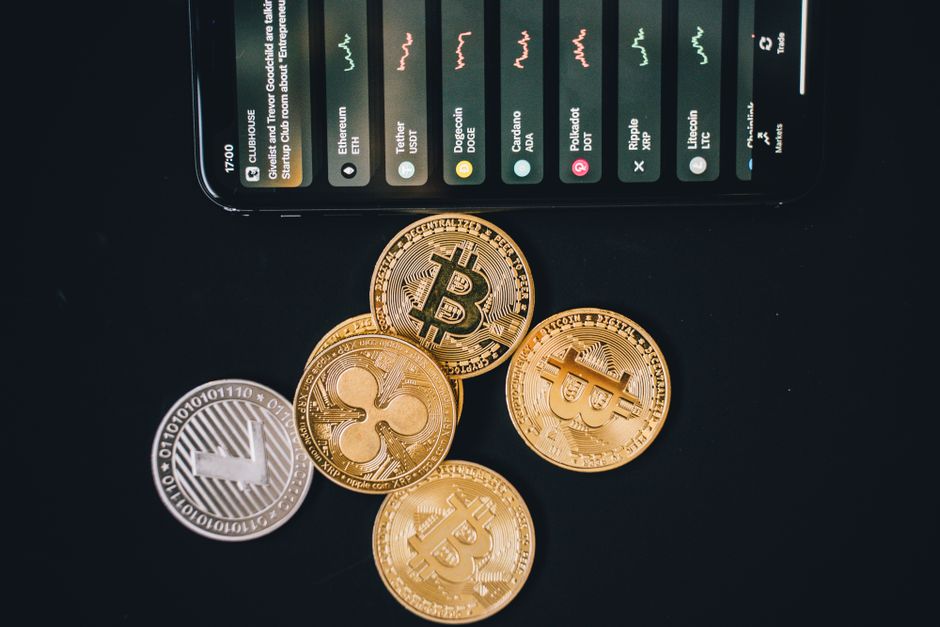

Understanding Trending Cryptocurrencies
The cryptocurrency market moves fast. What feels like a quiet week can flip into a full-blown rally or sell-off driven by regulatory news, technology upgrades, or social media sentiment. Trending cryptos are the assets commanding the most attention from traders, analysts, and casual investors right now. Understanding why something trends is just as important as knowing what is trending. This guide breaks down the market forces at play, the major players to watch, and the risks every US-based reader needs to understand before getting involved.
Current Market Dynamics

The broader crypto market is shaped by a handful of recurring forces. **Market capitalization** — the total value of all coins in circulation — remains the most common benchmark for ranking cryptocurrencies. Bitcoin (BTC) and Ethereum (ETH) consistently hold the top two spots by a wide margin. Together they represent a significant portion of the total market value across all digital assets.
Several factors drive short-term price movement and trending status:
- **Regulatory announcements** from the Securities and Exchange Commission (SEC) or the Commodity Futures Trading Commission (CFTC) can swing sentiment within hours.
- **Technology upgrades** such as Ethereum’s shift to proof-of-stake signal long-term viability and attract institutional interest.
- **On-chain metrics** — transaction volume, active wallet addresses, and network hash rate — give analytical traders data points beyond simple price charts.
- **Macro economic conditions** including inflation data, interest rate decisions, and US dollar strength influence risk appetite across all markets, crypto included.
Staying informed about these drivers helps you separate genuine market signals from speculative noise.
Bitcoin: The Benchmark Asset
Bitcoin remains the original cryptocurrency and the market’s closest thing to a benchmark. When Bitcoin moves, the broader altcoin market typically follows. Bitcoin uses a **proof-of-work (PoW)** system, meaning miners validate transactions using computational power. This process is energy-intensive, which has drawn regulatory scrutiny and pushed competitors toward more energy-efficient models.
Key characteristics making Bitcoin a persistent trending asset:
- **Limited supply cap** of 21 million coins built into its protocol, creating a deflationary narrative.
- **Store of value narrative** promoted by advocates who compare it to digital gold.
- **Institutional adoption** through Bitcoin exchange-traded funds (ETFs) approved in 2024 gave traditional finance direct exposure.
- **Network security** — the Bitcoin blockchain has never been successfully hacked in its 15-plus-year history.
That said, Bitcoin’s volatility is extreme. Daily price swings of 5–10% are not unusual during high-sentiment periods. Past performance does not indicate future results, and any capital you allocate to Bitcoin should reflect your personal risk tolerance.
Ethereum and the Smart Contract Ecosystem
Ethereum (ETH) ranks second in market capitalization and serves as the foundation for thousands of decentralized applications (dApps), decentralized finance (DeFi) protocols, and non-fungible token (NFT) marketplaces. Its native programming language, Solidity, allows developers to build automated agreements called smart contracts.
Ethereum completed its transition to a **proof-of-stake (PoS)** consensus mechanism, reducing energy consumption by an estimated 99.9%. This upgrade, known as The Merge, also laid groundwork for future scalability improvements.
Why Ethereum stays relevant among trending cryptos:
- Largest developer community in the blockchain space.
- Dominant platform for DeFi total value locked (TVL).
- Ongoing Layer-2 rollout strategy to reduce transaction costs.
- Institutional staking products giving holders yield opportunities.
Evaluating Investment Potential and Risk
Cryptocurrency investment carries distinct risks that differ from traditional assets like stocks or bonds. Before allocating capital, US readers should understand these core considerations.
Volatility as a Core Feature
The cryptocurrency market lacks the regulatory safeguards of the US stock market. Price discovery happens around the clock across global exchanges. Bitcoin has experienced drawdowns exceeding 80% multiple times in its history. Ethereum and smaller altcoins have seen even steeper declines. Volatility is not a bug — it is a structural feature of a market that trades 24 hours a day, 7 days a week.
Diversification Implications
Adding crypto to a traditional portfolio changes its risk profile substantially. Financial advisors generally recommend limiting crypto exposure to a small percentage — often 1–5% — of total investable assets. This approach allows participation in potential upside while capping downside exposure. Spreading allocation across Bitcoin, Ethereum, and select Layer-1 blockchain tokens reduces single-asset concentration risk.
Due Diligence Steps
Before investing in any trending cryptocurrency, conduct your own research. Verify the project\’s whitepaper, examine the development team, and check whether the tokenomics — total supply, inflation rate, and distribution schedule — are publicly disclosed. Social media hype does not constitute financial analysis.
Comparing Major Cryptocurrency Exchanges
US residents have access to a range of cryptocurrency exchanges, each with distinct fee structures, asset listings, and security features. Choosing the right platform depends on your trading experience and priorities.
| Exchange | Available in US | Fiat Support | Notable Feature |
|---|---|---|---|
| Coinbase | Yes | USD, EUR | Regulated; high compliance standards |
| Kraken | Yes | USD, EUR | Wide altcoin selection; strong security |
| Gemini | Yes | USD | SOC 2 Type 2 certified; regulated by NYDFS |
| Binance.US | Yes (limited) | USD | Lower fees; limited asset list |
Beginner investors typically benefit from platforms with strong regulatory compliance, insurance on digital assets, and straightforward user interfaces. Active traders may prioritize lower fee tiers and advanced charting tools available on professional-grade platforms.
The US Regulatory Landscape

Cryptocurrency regulation in the United States remains a work in progress. The SEC has pursued enforcement actions against several exchanges and token issuers, arguing that many digital assets qualify as securities under the Howey Test. The CFTC oversees Bitcoin and Ethereum as commodities, giving it jurisdiction over derivatives markets.
State-level rules add another layer of complexity. New York requires BitLicense compliance for crypto businesses operating in the state. Texas and Wyoming have taken more permissive stances, creating a patchwork that investors must navigate carefully.
Upcoming regulatory developments to monitor:
- **SEC rulemaking** on digital asset custody and exchange listing standards.
- **FIT21 Act** discussions in Congress aimed at creating a comprehensive federal crypto framework.
- **Stablecoin legislation** proposals targeting dollar-pegged tokens like USDT and USDC.
- **Tax reporting requirements** — the IRS treats cryptocurrency as property, meaning every sale triggers capital gains calculation.
Regulatory uncertainty is itself a risk factor. Changes in enforcement priorities can move markets quickly.
Security Best Practices
Protecting cryptocurrency holdings requires active effort. Cryptocurrency exchanges are frequent targets for hackers, and once funds leave an exchange wallet, recovery options are extremely limited.
Essential security measures include:
- **Hardware wallets** — physical devices that store private keys offline. Devices like the Ledger series and Trezor keep your keys isolated from internet-connected computers.
- **Two-factor authentication (2FA)** — use an authenticator app rather than SMS-based codes, which are vulnerable to SIM-swapping attacks.
- **Cold storage** — for large holdings, keep the majority of assets in wallets with no internet connectivity.
- **Phishing awareness** — verify website URLs carefully. Scammers frequently impersonate exchanges and wallet providers.
- **Seed phrase security** — write down recovery phrases on paper and store them in a secure location. Never share them digitally.
Cybersecurity threats are not theoretical. Exchange breaches have resulted in billions of dollars in losses across the industry. Proactive security habits are non-negotiable for serious cryptocurrency holders.
Future Outlook for Trending Cryptos
The long-term trajectory of the cryptocurrency market depends on technology development, institutional adoption, and regulatory clarity. Several trends are worth watching closely.
**Layer-2 scaling solutions** built on Ethereum and competing blockchains aim to increase transaction throughput while reducing fees. Arbitrum, Optimism, and Base have gained significant traction among users and developers.
**Real-world asset tokenization** — representing traditional assets like bonds, real estate, and commodities on-chain — represents a bridge between crypto markets and traditional finance. BlackRock and other major institutions have explored blockchain-based asset platforms.
**Decentralized identity** and blockchain-based credentials may unlock new use cases beyond financial speculation. These applications are earlier in development but represent meaningful long-term potential.
No one can predict price movements with certainty. Treating cryptocurrency as a high-risk, experimental allocation — rather than a guaranteed wealth builder — keeps expectations grounded in reality.
Frequently Asked Questions (FAQ)
Q: What are the main factors driving cryptocurrency market trends?
A: Cryptocurrency trends are driven by regulatory announcements, technology upgrades, on-chain activity metrics, institutional adoption news, and broader macroeconomic conditions. Social media sentiment can amplify short-term moves, but fundamental drivers like network usage and regulatory clarity tend to influence longer-term trends.
Q: How can investors mitigate risks associated with cryptocurrency investment?
A: Risk mitigation starts with position sizing — limit crypto to a small percentage of your total portfolio. Use hardware wallets for long-term storage, enable two-factor authentication on all exchange accounts, and conduct thorough due diligence before buying any asset. Staying informed about regulatory changes in the United States also helps you anticipate market-moving developments.
Q: What are the most promising cryptocurrencies to research right now?
A: Bitcoin and Ethereum remain the most established assets by market capitalization and institutional adoption. Layer-2 tokens and blockchain interoperability projects are areas attracting significant developer and investor interest. Regardless of the asset, always verify project fundamentals independently and never invest more than you can afford to lose entirely.
Charting & Exchange Resources
| Platform | Use Case | Key Feature | Fee Model | Action |
|---|---|---|---|---|
| TradingView | Charting & technical analysis | Indicators, multi-timeframe charts | Free / Pro tiers | View Platform |
| Coinbase | Exchange (beginner-friendly) | Simple USD on-ramp, educational tools | Varies by region | View Platform |
| Binance | Exchange (advanced pairs) | Wide altcoin coverage, spot markets | Varies by region | View Platform |
Affiliate Disclosure: This post contains affiliate links. We may earn a commission if you buy through our links, at no extra cost to you. Investment Risk Disclaimer: Cryptocurrency and digital asset markets are highly volatile. This content is for informational and educational purposes only and is not financial, investment, or trading advice. You may lose some or all of your capital. Do your own research and consult a licensed financial advisor before making investment decisions.


