altcoin analysis US: Altcoin Basics: Understanding

Altcoin Basics: Understanding Cryptocurrency Alternatives to Bitcoin
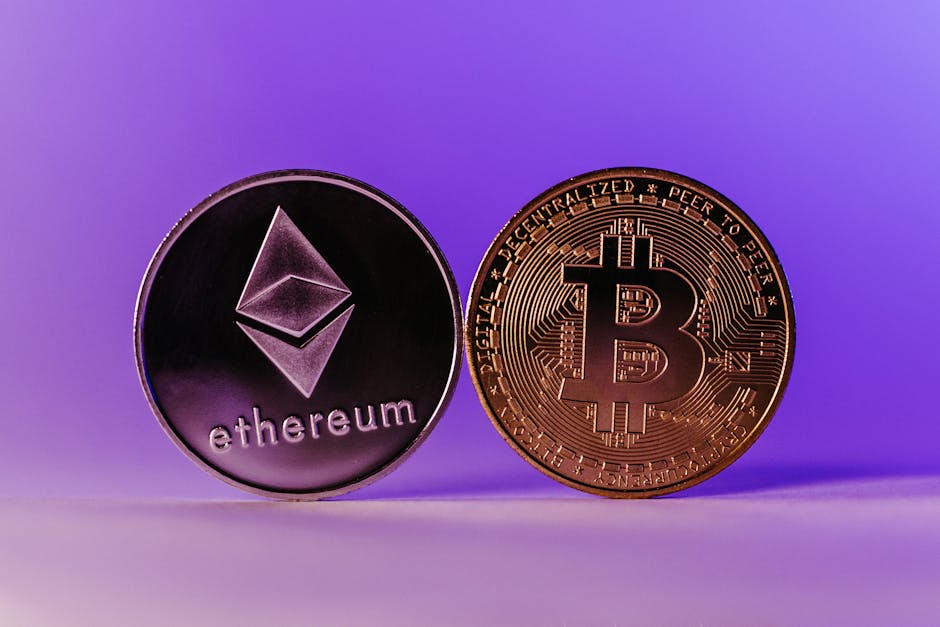
An altcoin is any cryptocurrency that exists as an alternative to Bitcoin. The word itself is a portmanteau — **”alternative”** combined with **”coin”** — and it refers to the entire universe of digital tokens and coins launched after Bitcoin first debuted in 2009. This includes well-known names like Ethereum (ETH), Solana (SOL), and Cardano (ADA), along with thousands of smaller projects each built with different technical goals and economic models.
Not every altcoin serves the same purpose. Some are designed to power smart contracts and decentralized applications (apps that run on blockchain networks without a central server). Others focus on private transactions, fast settlement times, or specialized use cases like supply chain tracking. The diversity of altcoins reflects the broader ambition of the crypto ecosystem: Bitcoin proved that decentralized digital money was possible, and altcoins have since pushed that concept into dozens of new directions.

The role altcoins play in the overall cryptocurrency market has grown dramatically. According to Chainalysis data covering mid-2024 to mid-2025, Ethereum attracted approximately $724 billion in fiat currency during that period, ranking second only to Bitcoin’s $1.2 trillion in the same window. Layer 1 blockchain tokens collectively drew $564 billion, while stablecoins — a specific subcategory of altcoins pegged to the US dollar — pulled in $497 billion. Those numbers illustrate that investors and traders are actively looking beyond Bitcoin, spreading capital across a wide range of digital assets.
The Rise of Altcoins in the Crypto Market
The history of altcoins traces back to 2011, when Namecoin became the first notable alternative to Bitcoin. In the years that followed, developers launched hundreds of new projects, each attempting to improve on Bitcoin’s limitations or create entirely new categories of utility. The 2017 initial coin offering (ICO) boom was a turning point — it brought a wave of new tokens to market, and it also attracted retail investors who previously had no way to access early-stage crypto projects.
Google Trends data from mid-2025 showed that searches for the term “altcoin” reached their highest level in five years, signaling renewed mainstream interest as “altcoin season” — a period when alternative cryptocurrencies outperform Bitcoin — picked up momentum among individual traders. That surge mirrored patterns seen during previous cycles, when Bitcoin price peaks were followed by capital rotating into altcoins as traders searched for higher percentage gains.
Several structural factors explain why altcoins have grown in market importance. Blockchain infrastructure has matured significantly since the early days. Developers now have access to well-documented frameworks for launching tokens, and Layer 2 scaling solutions and cross-chain bridges make it easier for projects to gain users. Regulatory conversations in the United States and Europe have also forced more projects to publish transparent whitepapers and build real utility rather than relying purely on speculation. The market is larger and more liquid than ever, though that growth has come with increased scrutiny and, at times, sharp price corrections.
Top Altcoins to Watch in the Cryptocurrency Space
No two altcoins are alike, and that is exactly the point. Each major project differentiates itself through technology, governance model, or target use case. Below is a high-level comparison of some of the most-watched altcoins by traders and analysts in recent market cycles.
| Altcoin | Primary Use Case | Network Type | Notable Feature |
|---|---|---|---|
| **Ethereum (ETH)** | Smart contracts & decentralized apps | Layer 1 blockchain | Largest DeFi ecosystem |
| **Solana (SOL)** | High-speed transactions | Layer 1 blockchain | Fast throughput, low fees |
| **Cardano (ADA)** | Peer-reviewed smart contracts | Layer 1 blockchain | Academic peer-review process |
| **Polkadot (DOT)** | Cross-chain interoperability | Layer 1 blockchain | Parachain relay architecture |
| **Avalanche (AVAX)** | Custom subnetworks | Layer 1 blockchain | Sub-second finality |
Ethereum remains the dominant platform by total value locked in decentralized finance (DeFi) applications and by developer activity. Its transition to a proof-of-stake consensus mechanism reduced energy consumption significantly and altered the economics of holding ETH. Solana has attracted institutional attention — Bitwise Chief Investment Officer Matt Hougan has publicly noted Solana’s speed and throughput as particularly attractive for Wall Street applications involving stablecoins and real-world asset tokenization.
Cardano takes a research-first approach, requiring peer-reviewed academic work before implementing protocol upgrades. That methodical pace has drawn both praise and criticism from the community: supporters value the rigorous development process, while critics point to slower feature rollouts compared to faster-moving competitors.
The Technology Behind Altcoins: Blockchain and Beyond
At the foundation of every altcoin is a **blockchain** — a distributed ledger that records transactions across a network of computers without needing a central authority. Bitcoin introduced this concept with a straightforward design: a chain of blocks containing transaction data secured by cryptographic hashing. Altcoins have taken that foundation and extended it in multiple directions.
**Smart contracts** are one of the most significant innovations separating Bitcoin from many altcoins. A smart contract is a self-executing program stored on the blockchain that automatically carries out predefined terms when conditions are met. Ethereum pioneered this capability, and it became the launchpad for decentralized finance applications including lending protocols, decentralized exchanges, and yield farming platforms.
**Tokenomics** refers to the economic model embedded in an altcoin’s design. This covers the total supply (fixed versus inflationary), how new tokens are distributed, whether staking rewards are offered, and how governance rights are allocated to holders. A token with a clearly defined and limited supply tends to behave differently in market cycles than one with an unlimited or dynamically adjusting supply. Before investing in any altcoin, understanding its tokenomics is essential because it directly affects long-term value and inflation risk.
Layer 2 solutions are another area where altcoin technology has evolved rapidly. These are protocols built on top of existing blockchains that process transactions off the main chain, then bundle results back onto the primary network. The result is faster confirmation times and lower fees — a critical improvement as Ethereum mainnet congestion once drove transaction costs prohibitively high for smaller users.
Investing in Altcoins: Understanding the Risks and Rewards
The investment case for altcoins rests on three broad pillars: higher growth potential during bull cycles, exposure to innovative technologies not available in Bitcoin’s ecosystem, and portfolio diversification. Ethereum, for example, returned percentages that far outpaced Bitcoin in certain market cycles, driven partly by the expansion of DeFi and NFT ecosystems that depend on ETH as their base currency.
However, those rewards come with serious risks. **Volatility is the defining characteristic of altcoin markets.** A single altcoin can swing 20%, 30%, or even 50% in a single day — moves that would be considered extreme in traditional financial markets but are relatively common in crypto. During bear markets, many altcoins lose 80% to 95% of their value and may never recover. The same Chainalysis data showing billions in inflows also reminds us that capital can leave just as quickly.
The risk-reward ratio varies significantly by project. Established Layer 1 altcoins with strong developer communities and real-world usage tend to be less volatile than freshly launched tokens with minimal track records. Smaller-cap altcoins — those ranked outside the top 100 by market capitalization — carry the highest risk because thin trading volume means large orders can move prices dramatically. Liquidity risk is real: it may be difficult to exit a position at a fair price during market stress.
Diversification is commonly cited as a risk management strategy, but it is not a guarantee. Holding five or ten altcoins across different sectors can reduce the impact of one project failing, but if the entire market sells off simultaneously — as happened in 2022 — diversification provides limited protection. The more valuable practice is to understand each position individually and avoid over-concentrating in any single sector of the altcoin market.
Practical Considerations for Altcoin Investors

Before committing capital to any altcoin, a structured research process is non-negotiable. **Due diligence** — the term for investigating an investment thoroughly before buying — should cover several key areas for every altcoin you consider.
Start with the whitepaper. This foundational document explains what the project intends to build, why it is necessary, and how the team plans to achieve its goals. A whitepaper should describe the problem being solved, the technical architecture, token distribution schedule, and roadmap milestones. Be wary of projects where the whitepaper is vague, plagiarized from other projects, or missing entirely. Legitimate teams publish detailed plans and actively communicate progress through regular updates.
**The development team and community** are equally important. Check whether the core developers are publicly identified and have verifiable track records in software engineering, cryptography, or finance. An anonymous team is not automatically a red flag — privacy is common in crypto — but it does shift the burden of proof higher. The size and activity level of the community on platforms like GitHub, Discord, and X (formerly Twitter) provide useful signals about real-world engagement beyond price speculation.
For managing a portfolio of altcoins, several practices help reduce avoidable losses. First, use hardware wallets or reputable software wallets to store tokens rather than leaving them on exchanges — exchange hacks have resulted in billions in losses over the years. Second, track each position’s thesis. If you bought a token because of a specific feature or roadmap expectation, periodically check whether that thesis still holds. Third, avoid emotional decision-making. Crypto markets are notoriously reactive to social media sentiment, and FOMO (fear of missing out) chasing during price spikes is a common and costly pattern. Set clear entry and exit criteria before buying and stick to them.
Altcoin Trading: Strategies and Platforms
Trading altcoins successfully requires a framework, not just good instincts. Several strategies are commonly used by active traders in the US market, each with distinct risk profiles and time commitments.
**Swing trading** involves holding positions for days to weeks, capitalizing on medium-term price movements. Traders watch technical indicators — moving averages, relative strength index (RSI), and volume trends — to identify entry and exit points. This strategy works better than day trading for most individual investors because it reduces the impact of short-term noise and does not require constant monitoring throughout the trading day.
**Dollar-cost averaging (DCA)** is a long-term strategy that involves buying a fixed dollar amount of an altcoin on a regular schedule regardless of price. This approach smooths out entry point volatility and removes the emotional component from investing. It works particularly well for established altcoins with clear utility, where the investment thesis is based on long-term adoption rather than short-term price swings.
Selecting the right platform matters as much as strategy. Major US-based cryptocurrency exchanges — Coinbase, Kraken, and Gemini — are regulated, insured in some cases for custodial holdings, and subject to anti-money laundering requirements. These platforms offer straightforward interfaces, solid security track records, and access to a wide range of altcoins including Ethereum, Solana, and Cardano. Decentralized exchanges (DEXs) like Uniswap and dYdX operate without a central intermediary, enabling peer-to-peer trading directly from wallets. DEXs offer access to a broader range of tokens and do not require account approval, but they carry additional smart contract risk and typically fall outside traditional regulatory protections.
Frequently Asked Questions (FAQ)
What are the advantages of investing in altcoins compared to Bitcoin?
Altcoins offer exposure to a wider range of blockchain technologies and use cases that Bitcoin does not directly address. Ethereum’s smart contract platform powers decentralized finance applications, and Solana’s high-speed network serves purposes where Bitcoin’s settlement speed would be impractical. Altcoins can also deliver higher percentage returns during strong market cycles because they often start from a lower market capitalization base. However, those advantages come with higher volatility and generally greater risk than holding Bitcoin.
How can I identify a promising altcoin for investment?
Look for projects with a clear and necessary use case, a transparent and achievable roadmap, an active and skilled development team, and a sustainable tokenomics model. Review the whitepaper thoroughly and cross-reference the team’s claims against independent sources. Check the project’s on-chain activity metrics — transaction volume, active wallet addresses, and total value locked — to confirm real-world usage rather than just speculative interest. Avoid projects that promise guaranteed returns, lack a clear product, or rely primarily on influencer promotion.
What are the most common mistakes made by altcoin investors?
The most frequent mistakes are investing based on social media hype without independent research, failing to diversify across sectors or market capitalizations, and letting emotions drive buy and sell decisions during price swings. Many investors also underestimate the importance of securing their holdings in reputable wallets, treating exchange balances as long-term storage. Finally, chasing “meme coins” — tokens launched without a genuine utility — has destroyed more capital than almost any other category of altcoin investment.
What is the future outlook for the altcoin market in the next 5 years?
The structural trends supporting altcoin adoption — institutional interest in blockchain infrastructure, growth of decentralized finance, real-world asset tokenization, and cross-chain interoperability — remain intact. Bitwise’s Matt Hougan has highlighted Solana’s positioning for stablecoin infrastructure as one example of how institutional capital may reshape which altcoins gain prominence. Ethereum continues to attract the largest share of developer activity and fiat inflows. Regulatory clarity in the United States, once established, will likely separate well-structured projects from those operating in legal gray areas. The next five years will reward investors who do their homework and stay disciplined, but the path will almost certainly include significant volatility along the way.
Charting & Exchange Resources
| Platform | Use Case | Key Feature | Fee Model | Action |
|---|---|---|---|---|
| TradingView | Charting & technical analysis | Indicators, multi-timeframe charts | Free / Pro tiers | View Platform |
| Coinbase | Exchange (beginner-friendly) | Simple USD on-ramp, educational tools | Varies by region | View Platform |
| Binance | Exchange (advanced pairs) | Wide altcoin coverage, spot markets | Varies by region | View Platform |
Affiliate Disclosure: This post contains affiliate links. We may earn a commission if you buy through our links, at no extra cost to you. Investment Risk Disclaimer: Cryptocurrency and digital asset markets are highly volatile. This content is for informational and educational purposes only and is not financial, investment, or trading advice. You may lose some or all of your capital. Do your own research and consult a licensed financial advisor before making investment decisions.


