altcoin analysis US: Altcoin Market Overview

Altcoin Market Overview
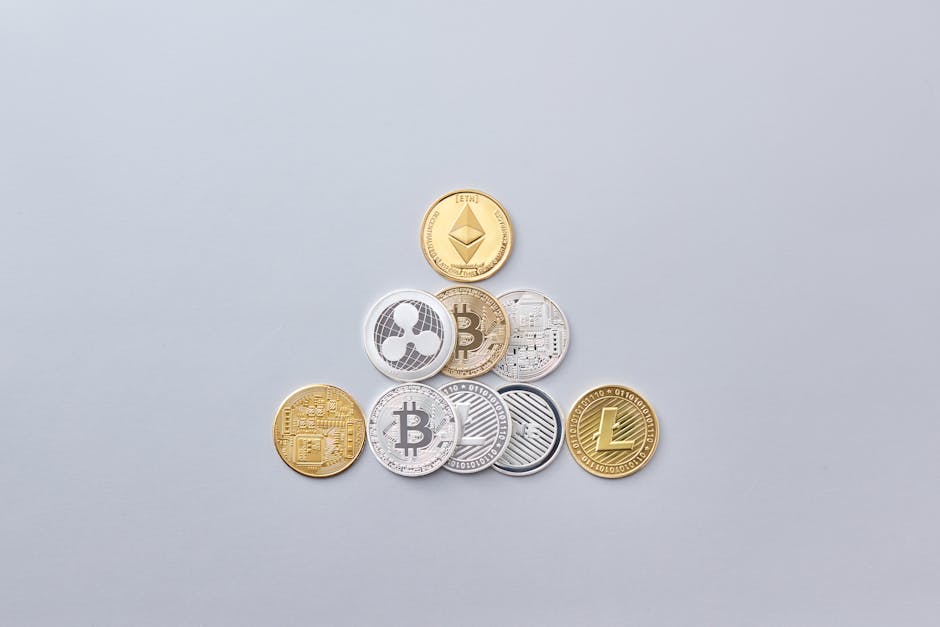
The term **altcoin** refers to any cryptocurrency other than Bitcoin — a broad category that now includes thousands of digital assets operating on diverse blockchain networks. While Bitcoin remains the dominant player by market capitalization, altcoins collectively represent a significant portion of total crypto market activity. Investors exploring the cryptocurrency space often encounter altcoins as alternatives to Bitcoin, seeking exposure to different technologies, use cases, or investment theses. The altcoin market is characterized by its diversity, ranging from smart contract platforms like Ethereum to privacy-focused tokens, decentralized finance (DeFi) protocols, and layer-2 scaling solutions. Understanding this landscape requires distinguishing between Bitcoin’s role as a store-of-value asset and altcoins that often serve more specialized functions within the broader digital economy.
When comparing major cryptocurrencies, Bitcoin leads as the original and most widely held digital asset, prized for its scarcity model and network security. Ethereum revolutionized the space by introducing programmable blockchain technology, enabling developers to build decentralized applications and financial instruments. Altcoins in this context fill niches that Bitcoin and Ethereum do not directly address — whether through faster transaction speeds, lower fees, unique consensus mechanisms, or specific industry applications. The current altcoin market trends show increasing institutional interest alongside retail activity, though the sector remains highly volatile compared to traditional financial markets. Investors entering this space should understand that altcoin valuations can swing dramatically based on market sentiment, technological developments, regulatory announcements, and broader macroeconomic conditions.

Altcoin Seasonality
Seasonality in the altcoin market refers to recurring patterns of price movement and trading activity that tend to follow certain calendar periods or market cycles. Historically, cryptocurrency markets have shown tendencies toward higher volatility during specific quarters, with many analysts noting that altcoin performance often accelerates when Bitcoin enters a bullish phase and capital rotates from the dominant asset into smaller-cap tokens. This phenomenon, sometimes called “altcoin season,” occurs when traders seek higher returns by moving capital beyond Bitcoin into assets with lower market caps and greater growth potential. However, seasonality patterns are not guarantees — they represent statistical tendencies rather than predictive certainties.
Several factors influence altcoin market cycles, including Bitcoin halving events, broader macroeconomic conditions, and the release schedules of new token supplies. The 2016, 2020, and 2024 Bitcoin halvings each preceded periods of elevated altcoin activity, though the magnitude and duration of these cycles varied. Additionally, the cryptocurrency market demonstrates correlation with equity markets during periods of economic stress, meaning that altcoin seasonality can be disrupted by external events such as interest rate changes or geopolitical instability. Identifying these trends requires monitoring on-chain metrics, exchange flow data, and funding rates across major trading platforms.
Investors who recognize seasonality patterns may position themselves accordingly, though timing the market remains extremely difficult even for experienced traders. Patterns that held in previous cycles may not repeat identically due to market maturation, regulatory changes, and shifts in investor behavior. Rather than relying solely on seasonal timing, analysts recommend combining seasonal observations with fundamental research and risk management frameworks.
Investing in Altcoins
Investing in altcoins carries distinct risks compared to holding Bitcoin or traditional assets, primarily because most altcoin projects remain in early development stages with unproven business models. The cryptocurrency market includes numerous projects that have subsequently failed, with token values dropping to near zero after fraud, technical abandonment, or regulatory shutdowns. Before committing capital, investors should evaluate a project’s technology, team, community engagement, and long-term viability within its target market. Due diligence is especially important given that many altcoins lack the regulatory protections present in traditional securities markets.
Diversification strategies for altcoin investing typically involve spreading exposure across multiple assets rather than concentrating holdings in a single token. A common approach is allocating a small percentage of a crypto portfolio to higher-risk altcoin positions while maintaining larger holdings in Bitcoin and Ethereum. Another strategy involves diversifying across sectors — holding tokens from DeFi, infrastructure, gaming, and privacy categories to reduce exposure to any single industry’s performance. Rebalancing portfolios periodically helps maintain target allocations as asset values fluctuate.
Identifying promising altcoins requires evaluating factors such as real-world utility, active development activity, governance token economics, and competitive positioning. Investors should examine whether a project solves a genuine problem, has a working product, and demonstrates consistent growth in adoption metrics like transaction volume, unique addresses, and developer contributions. Communities that actively build and promote projects often signal stronger long-term potential than those primarily focused on speculative trading activity.
Altcoin Investment Strategies
Fundamental analysis for altcoins involves assessing the underlying value proposition of each project by examining technology, market size, competitive advantages, and team credibility. Key metrics include the project’s roadmap progress, partnership announcements, token utility within the ecosystem, and revenue models if applicable. Investors should compare total addressable market estimates against current valuations to determine whether a token may be overvalued or undervalued relative to its growth prospects. Whitepapers and technical documentation provide insight into a project’s intended functionality and realistic timeline for execution.
Technical analysis for altcoin investing applies charting tools and indicators to identify price patterns and momentum signals. Common tools include moving averages, relative strength index (RSI), volume analysis, and support-resistance levels. However, altcoin markets often exhibit lower liquidity than Bitcoin, meaning that technical patterns may be less reliable and slippage during trading can be more pronounced. Combining technical analysis with fundamental research provides a more complete picture than relying on either approach alone.
Risk management strategies for altcoin investors should account for the sector’s elevated volatility by establishing clear position limits, stop-loss rules, and maximum portfolio allocation thresholds. Many experienced investors limit altcoin positions to no more than 5–10% of their total cryptocurrency holdings. Dollar-cost averaging — spreading purchases over time rather than investing a lump sum — reduces exposure to short-term price fluctuations. Maintaining liquidity reserves ensures that traders can meet margin calls or capitalize on opportunities without forced selling during market downturns.
Top Altcoins to Watch
The altcoin landscape includes several categories of projects that attract significant investor attention. Smart contract platforms like Solana, Avalanche, and Polygon offer faster transaction processing and lower costs than Ethereum, making them attractive for decentralized application development. Layer-2 solutions such as Arbitrum and Optimism build on Ethereum’s security while offering improved scalability for specific use cases. Privacy coins including Monero and Zcash provide enhanced transaction confidentiality for users who prioritize financial privacy. Each category serves different investor preferences based on risk tolerance and investment thesis.
Analysis of growth potential varies significantly across altcoin categories. Infrastructure projects with strong developer ecosystems often demonstrate resilience during market downturns, while speculative tokens tied to specific applications may experience sharper declines when sentiment shifts. Investors should differentiate between tokens that generate revenue through protocol activity versus those that rely primarily on token accumulation dynamics. Projects with real utility demand demonstrate more sustainable price support during extended bear markets.
Historical case studies of successful altcoin investments reveal patterns worth considering. Ethereum holders who invested during the 2017 cycle and held through the subsequent bear market saw substantial returns when the DeFi boom drove demand for smart contract functionality. Similarly, early investors in certain layer-1 platforms saw multi-hundred-fold returns as ecosystem adoption expanded. However, these examples represent survivorship bias — many contemporaneous projects failed entirely, leaving investors with total losses. Past performance does not indicate future results, and investors should approach altcoin allocation with realistic expectations about risk and return profiles.
Altcoin Trading Platforms and Exchanges
Selecting an appropriate trading platform significantly impacts the altcoin investment experience. Major cryptocurrency exchanges such as Coinbase, Kraken, and Gemini offer access to a broad selection of altcoins with varying levels of liquidity and security features. Coinbase Pro and Kraken provide advanced trading interfaces with order book depth suitable for larger trades, while platforms like Binance and Bybit offer extensive altcoin pairings and derivatives products. Decentralized exchanges (DEX) such as Uniswap enable peer-to-peer trading without intermediary custody, though they require greater technical expertise and carry different risk profiles.

Fee structures across exchanges vary considerably and can substantially impact returns for active traders. Maker fees typically range from 0.1% to 0.2% on major platforms, while taker fees may reach 0.4% or higher for users with lower trading volumes. Deposit and withdrawal fees, network transaction costs, and premium pricing for certain altcoin pairs all contribute to total trading expenses. Investors planning frequent trades should prioritize platforms with competitive fee schedules and sufficient liquidity to execute orders without significant slippage.
Security best practices for altcoin trading include enabling two-factor authentication, using hardware wallets for long-term storage, and avoiding keeping large balances on exchange platforms vulnerable to hacking. Cold storage solutions provide the highest security for holdings not actively traded, while hardware security keys offer enhanced protection against phishing attacks. Platform reputation, insurance coverage for custodial assets, and regulatory compliance in the user’s jurisdiction should factor into exchange selection decisions.
Altcoin Investment Risks
The volatility and unpredictability of altcoin markets exceed even the dramatic price swings observed in Bitcoin. Altcoin prices can double or halve within days based on social media trends, celebrity endorsements, or coordinated trading activity. Thin order books mean that large orders can move prices dramatically, creating both opportunities and risks for investors. Liquidity risk — the potential inability to exit a position at a fair price — is particularly acute for smaller altcoins with limited trading volume.
Regulatory and legal concerns for altcoin investors continue to evolve as governments worldwide develop frameworks for cryptocurrency oversight. The Securities and Exchange Commission (SEC) has pursued enforcement actions against several altcoin issuers, creating uncertainty about which tokens may be classified as securities requiring registration. Tax reporting obligations for altcoin transactions remain complex, with the IRS treating cryptocurrency as property for capital gains purposes. Investors should maintain detailed records of all transactions and consult tax professionals familiar with cryptocurrency taxation.
Scams and fraudulent schemes in the altcoin market include pump-and-dump operations, fake initial coin offerings (ICOs), honeypot tokens designed to trap buyers, and phishing attacks targeting wallet credentials. Rug pull schemes — where developers abandon projects after collecting investor funds — have resulted in billions of dollars in losses. Before investing in any altcoin, investors should verify team identities, review smart contract code when possible, and be skeptical of promises guaranteeing returns or exclusive access to high-growth opportunities. The cryptocurrency space’s pseudonymity creates opportunities for bad actors that do not exist in regulated financial markets.
**Disclaimer:** Cryptocurrency investments, including altcoins, carry substantial risk including volatility, regulatory uncertainty, and potential total loss. This article is for informational and educational purposes only and does not constitute financial advice. Always consult qualified financial advisors and only invest capital you can afford to lose. Past performance does not guarantee future results.
Frequently Asked Questions (FAQ)
What are the key differences between Bitcoin, Ethereum, and altcoins?
Bitcoin functions primarily as a digital store-of-value and settlement network, designed to serve as “digital gold” with a fixed supply of 21 million coins. Ethereum introduced programmable smart contract functionality, enabling decentralized applications and financial instruments beyond simple value transfer. Altcoins encompass all other cryptocurrencies, ranging from Bitcoin forks to entirely new blockchain architectures with different consensus mechanisms, use cases, and tokenomics. While Bitcoin and Ethereum dominate by market capitalization, altcoins fill specialized niches including faster transactions, privacy features, and ecosystem-specific applications.
How can I identify promising altcoins for investment?
Promising altcoins typically demonstrate active development, real-world utility, strong community engagement, and transparent token economics. Research the project’s technology, read the technical whitepaper, evaluate the team behind the project, and assess competitive positioning against similar tokens. On-chain metrics such as active addresses, transaction volume, and developer activity provide insight into actual adoption. Be wary of projects promising guaranteed returns, lacking transparent leadership, or offering tokenomics that disproportionately benefit insiders.
What are the risks associated with investing in altcoins?
Altcoin investing carries risks including extreme price volatility, liquidity challenges, regulatory uncertainty, and potential project failure. Many altcoin projects fail to deliver on their promises, and some are outright fraudulent schemes designed to steal investor funds. Smart contract vulnerabilities can result in permanent loss of assets, and exchange hacks may compromise holdings stored on platforms. Investors should only allocate capital they can afford to lose entirely, maintain secure storage practices, and conduct thorough due diligence before committing funds to any altcoin project.
Charting & Exchange Resources
| Platform | Use Case | Key Feature | Fee Model | Action |
|---|---|---|---|---|
| TradingView | Charting & technical analysis | Indicators, multi-timeframe charts | Free / Pro tiers | View Platform |
| Coinbase | Exchange (beginner-friendly) | Simple USD on-ramp, educational tools | Varies by region | View Platform |
| Binance | Exchange (advanced pairs) | Wide altcoin coverage, spot markets | Varies by region | View Platform |
Affiliate Disclosure: This post contains affiliate links. We may earn a commission if you buy through our links, at no extra cost to you. Investment Risk Disclaimer: Cryptocurrency and digital asset markets are highly volatile. This content is for informational and educational purposes only and is not financial, investment, or trading advice. You may lose some or all of your capital. Do your own research and consult a licensed financial advisor before making investment decisions.



