Category: AI News
-
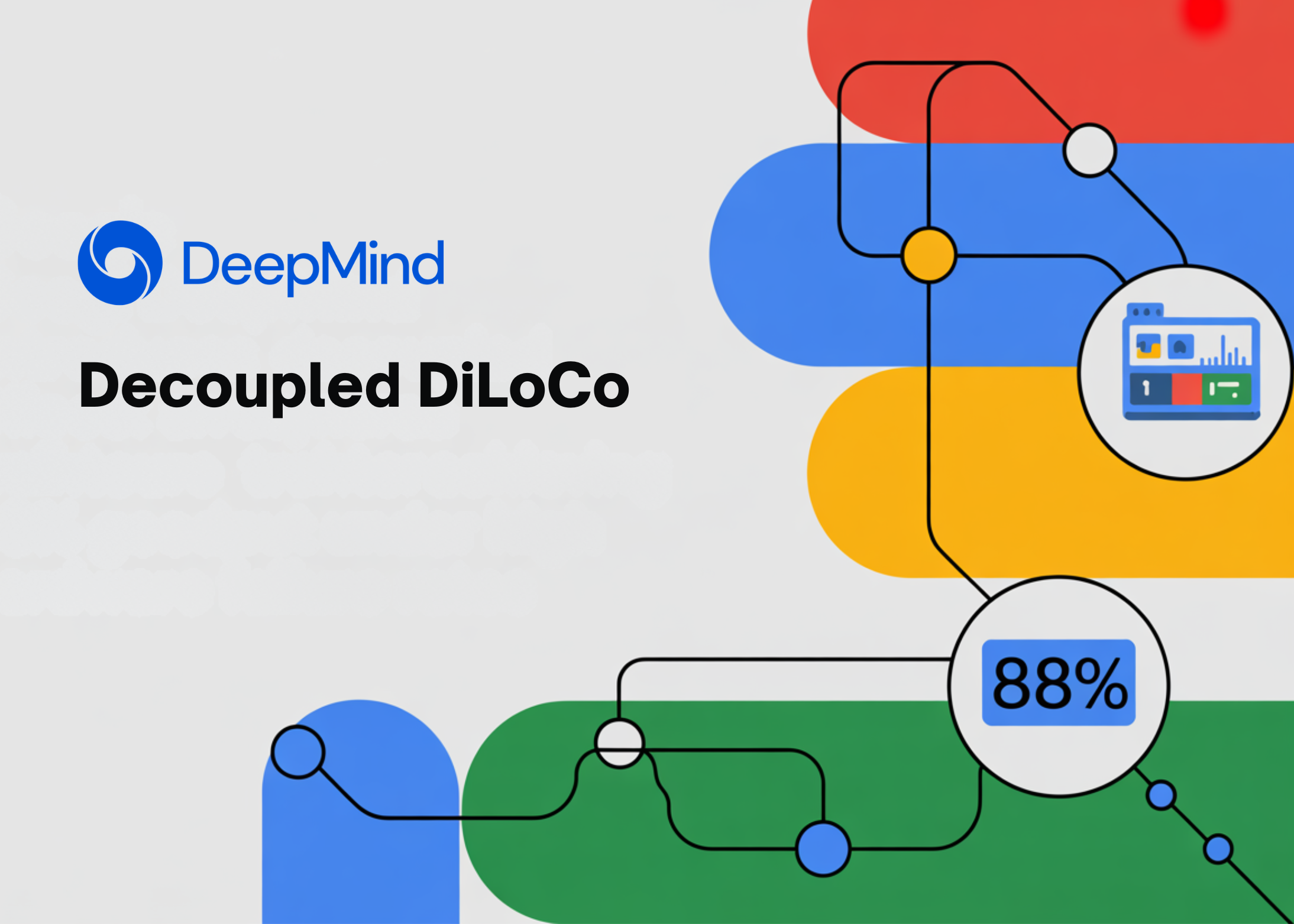
Google DeepMind Introduces Decoupled DiLoCo: An Asynchronous Training Architecture Achieving 88% Goodput Under High Hardware Failure Rates
[ad_1] Training frontier AI models is, at its core, a coordination problem. Thousands of chips must communicate with each other continuously, synchronizing every gradient update across the network. When one chip fails or even slows down, the entire training run can stall. As models scale toward hundreds of billions of parameters, that fragility becomes increasingly…
-

Talking to AI agents is one thing — what about when they talk to each other? New startup BAND debuts 'universal orchestrator'
[ad_1] For the past eighteen months, the corporate world has been obsessed with the "builder" phase of the generative AI revolution. Enterprises have raced to deploy autonomous agents to handle everything from customer support to complex codebase refactoring. However, as these digital workers proliferate, a new, more structural problem has emerged: fragmentation. Agents built on…
-

Reversing enterprise security costs with AI vulnerability discovery
[ad_1] Automated AI vulnerability discovery is reversing the enterprise security costs that traditionally favour attackers. Bringing exploits to zero was once viewed as an unrealistic goal. The prevailing operational doctrine aimed to make attacks so expensive that only adversaries with functionally unlimited budgets could afford them, thereby disincentivising casual use. However, the recent evaluation by…
-
Next Leap to Harness Engineering: JiuwenClaw Pioneers ‘Coordination Engineering’
[ad_1] How to make multiple agents work together like an elite team — autonomously dividing tasks, communicating efficiently, and collaborating seamlessly? The openJiuwen community released the latest version of JiuwenClaw, which adds support for AgentTeam — a multi-agent collaborative capability. It proposes that the next leap beyond Harness Engineering is Coordination Engineering. In in-depth tests, this…
-
Google’s new Deep Research and Deep Research Max agents can search the web and your private data
[ad_1] Google on Monday unveiled the most significant upgrade to its autonomous research agent capabilities since the product's debut, launching two new agents — Deep Research and Deep Research Max — that for the first time allow developers to fuse open web data with proprietary enterprise information through a single API call, produce native charts…
-

Snowflake expands its technical and mainstream AI platforms
[ad_1] Cortex Code is designed for software development teams in the enterprise, an area in which AI algorithms can prove successful at lower level tasks. Cortex Code is described in company press release as a coding and orchestration “layer” with new options for integration with external data sources, now supporting AWS Glue, Databricks, and Postgres.…
-

Moonshot AI Releases Kimi K2.6 with Long-Horizon Coding, Agent Swarm Scaling to 300 Sub-Agents and 4,000 Coordinated Steps
[ad_1] Moonshot AI, the Chinese AI lab behind the Kimi assistant, today open-sourced Kimi K2.6 — a native multimodal agentic model that pushes the boundaries of what an AI system can do when left to run autonomously on hard software engineering problems. The release targets practical deployment scenarios: long-running coding agents, front-end generation from natural…
-

Most enterprises can't stop stage-three AI agent threats, VentureBeat survey finds
[ad_1] A rogue AI agent at Meta passed every identity check and still exposed sensitive data to unauthorized employees in March. Two weeks later, Mercor, a $10 billion AI startup, confirmed a supply-chain breach through LiteLLM. Both are traced to the same structural gap. Monitoring without enforcement, enforcement without isolation. A VentureBeat three-wave survey of…
-
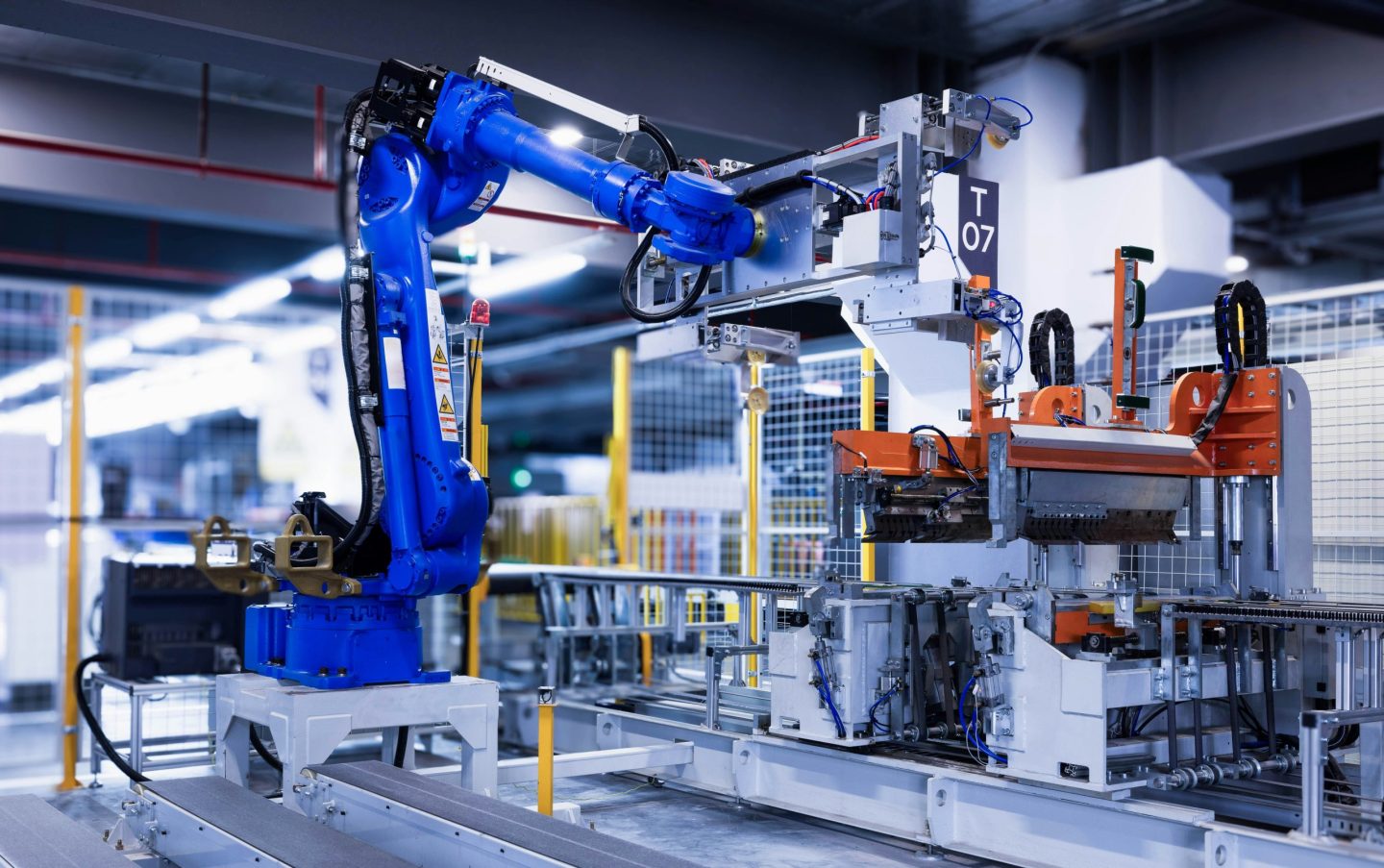
Cadence expands AI and robotic partnerships with Nvidia, Google Cloud
[ad_1] Cadence Design Systems announced two AI-related collaborations at its CadenceLIVE event this week, expanding its work with Nvidia and introducing new integrations with Google Cloud. The Nvidia partnership focuses on combining AI with physics-based simulation and accelerated computing for robotic systems and system-level design. The companies said the approach targets modelling and deployment in…
-
NVIDIA Releases Ising: the First Open Quantum AI Model Family for Hybrid Quantum-Classical Systems
[ad_1] Quantum computing has spent years living in the future tense. Hardware has improved, research has compounded, and venture dollars have followed — but the gap between a quantum processor running in a lab and one running a real-world application remains stubbornly wide. NVIDIA moved to close that gap with the launch of NVIDIA Ising,…