Category: AI News
-

Google's new open source Gemma 4 12B analyzes audio, video — and runs entirely locally on a typical 16GB enterprise laptop
[ad_1] While many AI open source model providers are pursuing larger and more powerful models, Google is still giving attention to the smaller, more local side of the market. Today, the tech giant released Gemma 4 12B, an 11.95-billion-parameter open-weights model with permissive Apache 2.0 license optimized to execute locally on a standard enterprise laptop…
-

Perplexity AI unveils hybrid local-cloud inference system at Computex 2026
[ad_1] Perplexity AI, the fast-growing search startup now valued at $20 billion, unveiled what it calls the first hybrid local-server inference orchestrator at Computex 2026 on Monday night, demonstrating software that autonomously decides — in real time and mid-task — which AI workloads stay on a user's device and which get routed to frontier models…
-
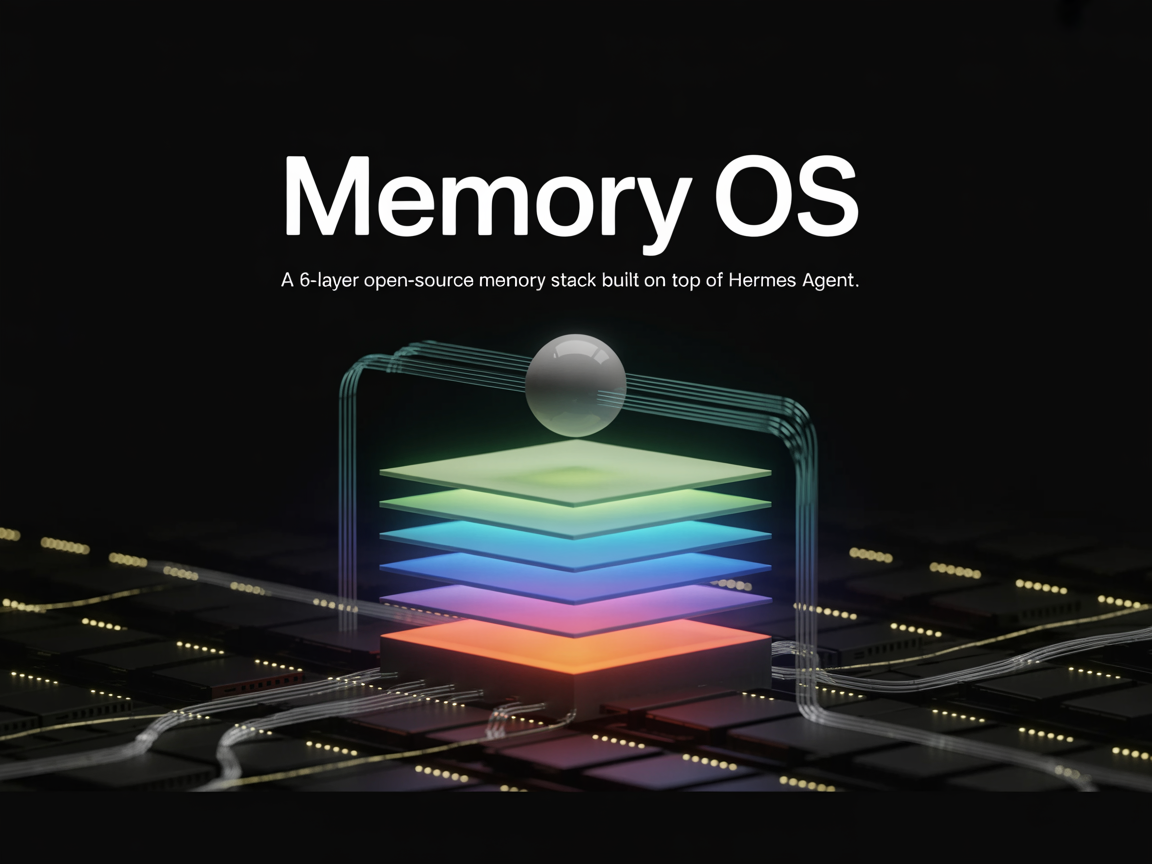
Meet Memory OS: A 6-Layer Open-Source Memory Stack Built on Top of Hermes Agent
[ad_1] Hermes Agent already remembers across sessions. The open-source agent from Nous Research ships with curated memory files and full-text session search. But a new community project argues that built-in memory is too shallow for serious work. A new library named ‘Memory OS‘ has been released under an MIT license by a developer (ClaudioDrews). It…
-

Claude Mythos exposed a hard truth: Your enterprise patching process is way too slow
[ad_1] In 2024, researchers from the University of Illinois found that GPT-4, when provided with a common vulnerabilities and exposures (CVE) description, could autonomously exploit 87% of a curated 15-vulnerability one-day dataset. Without the description, it could only exploit 7%. This provided a “margin of safety” for the industry because while AI could exploit known…
-

Trajectory Releases a Concurrent Multi-LoRA Training Stack for Continual Learning, Reporting a 2.81× Experiment-Throughput Gain
[ad_1] Trajectory’s concurrent multi-LoRA stack reports a 2.81× experiment-throughput gain over single-tenant RL, with all code in the NovaSky-AI/SkyRL GitHub repository. Most language models improve in discontinuous jumps. A team collects data, trains, and ships a new version. This takes months and produces remarkable or catastrophic behavior for users. Trajectory wants to replace that cycle…
-

The AI agent bottleneck isn't model performance — it's permissions
[ad_1] Enterprise AI agents are stalling — not because of model performance, but because of permissioning. Every agentic workflow eventually hits the same wall: what is this agent allowed to touch, on whose behalf, and how does the system know? Workday's answer is to make its existing system of record the governance layer for agents.…
-

Researchers automated LLM reasoning strategy design and cut token usage by 69.5%
[ad_1] Test-time scaling (TTS) has emerged as a proven method to improve the performance of large language models in real-world applications by giving them extra compute cycles at inference time. However, TTS strategies have historically been handcrafted, relying heavily on human intuition to dictate the rules of the model’s reasoning. To address this bottleneck, researchers…
-

Merck and Mastercard are seeing real agentic AI results. Both say the plumbing came first.
[ad_1] Merck is using AI agents to cut drug discovery cycles by a third and ship compliant marketing materials up to 80% faster — but VP of Digital Platforms Sean Finnerty says the only reason it's working is because they built the infrastructure first. And the pharmaceutical manufacturer is seeing promising early results: AI is…
-

Why prompt debt, retrieval debt, and evaluation debt are quietly reshaping enterprise AI risk
[ad_1] Over the past two decades, technical debt meant outdated architecture, messy code, and poorly maintained documentation. That definition is no longer sufficient in the AI era, where failure modes are more subtle and often non-linear. AI systems are introducing new layers of technical debt that live across prompts, models, and data dependencies — making…
-

AI agents are quietly generating chaos engineering failures enterprises don’t track yet
[ad_1] There is a category of production incident that engineering teams are not tracking yet — because it doesn't fit any existing postmortem template. The agent initiated an action. The action was technically correct given the agent's context. The context was incomplete. The infrastructure cascaded. And, by the time the incident review happened, three teams…