
Introduction
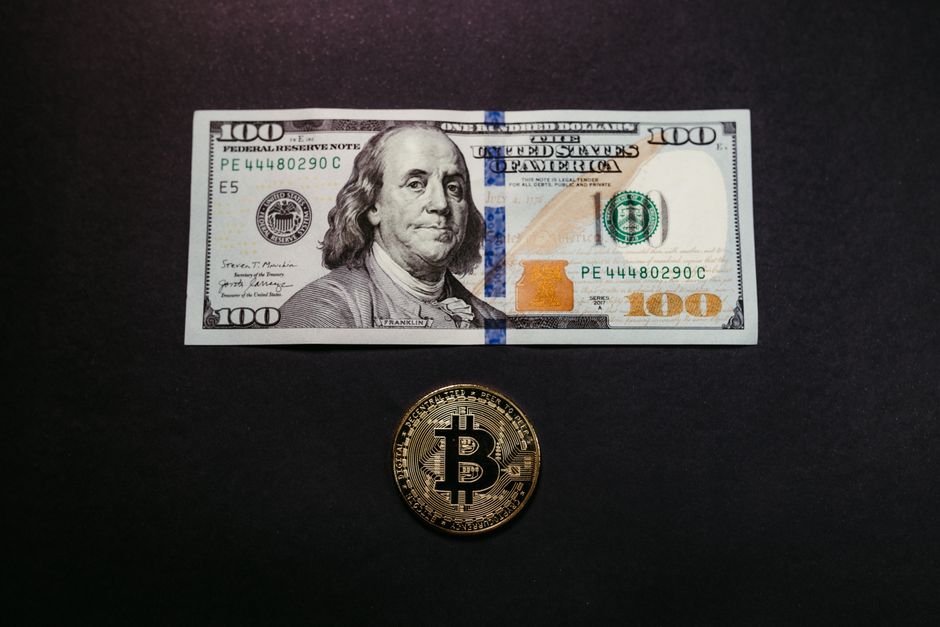
Coinbase and Binance represent two of the largest cryptocurrency exchanges serving US traders in 2026. Coinbase operates as a regulated US-based platform known for beginner-friendly interfaces and compliance with American financial regulations. Binance functions as a global exchange offering extensive coin selection and advanced trading tools, though its US operations run through a separate Binance.US entity with different fee structures.
Understanding exchange fees directly impacts your trading profitability and portfolio returns. A seemingly small percentage difference compounds significantly over multiple trades, especially for active traders executing dozens of transactions monthly. This market analysis guide examines the complete fee structures of both platforms, helping US readers make informed decisions about where to trade based on their specific usage patterns and investment strategies.
**This article provides educational market analysis only and does not constitute financial advice. Cryptocurrency trading carries substantial risk including total loss of principal.**
Coinbase Fees Explained
Coinbase employs a tiered fee structure that varies based on transaction type and trading volume. For retail users on the standard Coinbase platform, the exchange charges a **spread markup** of approximately 0.5% on trades, plus an additional flat or percentage-based transaction fee. Transactions under $10 incur a flat fee ranging from $0.99 to $2.99, while larger trades face percentage-based fees that decrease with transaction size.
Coinbase Advanced (formerly Coinbase Pro) offers significantly lower fees using a maker-taker model. Maker fees start at 0.40% for traders with under $10,000 in 30-day volume, while taker fees begin at 0.60%. These rates decrease progressively: traders executing $10 million+ monthly volume pay just 0.04% maker fees and 0.15% taker fees. The maker-taker distinction matters because limit orders that add liquidity to the order book (maker orders) cost less than market orders that remove liquidity (taker orders).
Deposit fees depend on payment method. **ACH (Automated Clearing House) bank transfers remain free** but take 4-6 business days to clear. Wire transfers cost $10 for deposits and $25 for withdrawals. Debit card purchases carry a 3.99% fee, making them convenient but expensive. Cryptocurrency deposits are free, while blockchain withdrawal fees vary by asset—Bitcoin withdrawals typically cost 0.0001-0.0005 BTC depending on network congestion, while Ethereum withdrawals range from 0.0035-0.01 ETH.
Binance Fees Explained

Binance.US (the platform available to American traders) implements a straightforward maker-taker fee schedule starting at 0.10% for makers and 0.10% for takers. This base rate applies to all traders regardless of volume, though the platform offers a **VIP program** that reduces fees for high-volume participants. Traders executing $10 million+ in 30-day volume qualify for VIP 1 status with 0.075% maker and 0.075% taker fees.
The global Binance platform (not available to US residents) historically offered even lower fees starting at 0.10% for both maker and taker orders, with discounts up to 25% when paying fees using BNB (Binance Coin), the platform’s native token. However, US traders must use Binance.US, which does not offer BNB fee discounts in 2026 due to regulatory considerations.
Binance.US provides **commission-free cryptocurrency deposits** across all supported assets. ACH bank deposits and withdrawals remain free, though they require 5-10 business days for processing. Wire transfers cost $15 for deposits and $15 for withdrawals. Cryptocurrency withdrawal fees follow blockchain network costs: Bitcoin withdrawals cost approximately 0.0005 BTC, Ethereum withdrawals cost around 0.008 ETH, and stablecoin withdrawals vary by blockchain—USDT withdrawals on Tron cost roughly $1, while Ethereum-based USDT withdrawals may exceed $10 during high network congestion.
Factors Influencing Trading Fees
Trading volume represents the primary factor determining your effective fee rate on both platforms. Coinbase Advanced reduces fees across six tiers from $0-$10,000 monthly volume down to $300 million+ volume. Binance.US employs a simpler nine-tier VIP structure starting at $0 volume and extending to $300 million+. **Traders should calculate their average monthly trading volume** to identify which platform offers better rates for their activity level.
Membership tiers and loyalty programs provide additional savings. Coinbase One, a $29.99/month subscription service, eliminates trading fees on Coinbase retail (though not Advanced) and offers other benefits like 24/7 phone support. The value proposition works best for users making frequent small purchases on the retail platform rather than advanced traders already using low-fee order book trading. Binance.US VIP tiers automatically apply based on volume without requiring subscription payments.
Payment method selection dramatically affects total costs. A $1,000 Bitcoin purchase using a debit card on Coinbase costs $39.90 in fees (3.99%), while the same purchase via ACH bank transfer costs approximately $14.90 in combined spread and transaction fees. **Cryptocurrency deposits eliminate fiat conversion fees entirely**, making them optimal for traders moving funds between exchanges or from personal wallets. US traders should prioritize ACH transfers over debit cards and avoid wire transfers unless speed justifies the $10-$25 premium.
Comparing Coinbase and Binance Fees
The fee comparison depends heavily on trader profile and transaction patterns. For **casual investors** making occasional purchases under $10,000 monthly, Binance.US offers clear advantages with 0.10% flat fees versus Coinbase retail’s 0.5% spread plus transaction fees. A $500 Bitcoin purchase costs approximately $7.40 on Coinbase retail but only $0.50 on Binance.US—nearly 15 times less.
For **advanced traders** using order book platforms, the comparison narrows significantly. Coinbase Advanced charges 0.40% maker / 0.60% taker fees for entry-level volume, while Binance.US charges 0.10% maker / 0.10% taker. However, at higher volumes ($1 million+ monthly), Coinbase Advanced fees drop to 0.15% maker / 0.25% taker, while Binance.US reduces to 0.04% maker / 0.06% taker at similar volumes. The platforms reach near parity for institutional-scale traders executing $100 million+ monthly.
| Fee Category | Coinbase Retail | Coinbase Advanced | Binance.US |
|---|---|---|---|
| Base Trading Fee | 0.50% spread + $0.99-$2.99 | 0.40% maker / 0.60% taker | 0.10% maker / 0.10% taker |
| High Volume (>$1M/month) | Same spread model | 0.15% maker / 0.25% taker | 0.04% maker / 0.06% taker |
| ACH Deposit | Free (4-6 days) | Free (4-6 days) | Free (5-10 days) |
| Debit Card | 3.99% | Not available | Not available |
| Bitcoin Withdrawal | ~0.0001-0.0005 BTC | ~0.0001-0.0005 BTC | ~0.0005 BTC |
Withdrawal fees show minimal differences for cryptocurrency, as both platforms charge near-cost blockchain network fees. Fiat withdrawal costs favor Binance.US for wire transfers ($15 vs $25 on Coinbase) while both platforms offer free ACH withdrawals with multi-day processing times.
Market Analysis: Fee Trends in Cryptocurrency Exchanges
Cryptocurrency exchange fee structures have compressed significantly since 2020 as competition intensified and regulatory clarity improved in the US market. Coinbase reduced Coinbase Advanced (Pro) fees by approximately 30% in 2023, while Binance.US maintained competitive 0.10% base rates to attract market share from established competitors. This **fee compression trend** mirrors traditional finance, where discount brokerages drove equity trading commissions to zero.
Regulatory developments continue shaping fee structures in 2026. The Securities and Exchange Commission (SEC) increased scrutiny of cryptocurrency exchanges, leading platforms to implement more transparent fee disclosures and stricter verification requirements that indirectly increase operational costs. Exchanges offset these costs through selective fee increases on fiat transactions while maintaining competitive cryptocurrency trading rates to preserve market share.
Decentralized exchange (DEX) growth applies downward pressure on centralized exchange fees. Platforms like Uniswap and decentralized protocols charge 0.05-0.30% swap fees without requiring identity verification or centralized custody. While DEX platforms present technical barriers for mainstream users, their existence caps how much centralized exchanges can charge before losing price-sensitive traders. **Future fee trends likely include further compression toward 0.05% for high-volume traders** while maintaining 0.10-0.20% rates for retail segments where convenience justifies premium pricing.
Practical Considerations for Traders
Fee analysis must integrate with your complete trading strategy rather than driving decisions in isolation. A platform charging 0.05% higher fees but offering superior liquidity, faster order execution, or better security infrastructure may deliver better net outcomes. **Calculate total cost of ownership** including fees, spread costs (the difference between buy and sell prices), and opportunity costs from delayed fund transfers or limited coin availability.
Minimizing trading fees requires strategic behavior adjustments. Use limit orders instead of market orders whenever timing permits, as maker fees consistently undercut taker fees by 0.10-0.20% on both platforms. Consolidate trades to reduce total transaction count—executing five $1,000 trades costs more in percentage terms than one $5,000 trade. Transfer funds using cryptocurrency rather than fiat when moving between exchanges or from cold storage, as blockchain fees typically cost less than wire transfers and process faster.
Other critical exchange selection factors include:
- **Security track record**: Coinbase maintains a clean security history with no major hacks, while Binance global experienced a $40 million theft in 2019 (Binance.US operates separately with independent security)
- **Regulatory compliance**: Coinbase holds BitLicense in New York and maintains Money Transmitter Licenses across all 50 states; Binance.US operates in fewer states due to ongoing regulatory challenges
- **Coin selection**: Binance.US supports 150+ trading pairs versus Coinbase’s 250+, though Coinbase offers more tokens meeting US regulatory standards
- **Customer support quality**: Coinbase provides phone support for Coinbase One subscribers; Binance.US relies primarily on ticket-based email support
- **Tax reporting**: Both platforms generate IRS Form 1099-MISC for earnings over $600 and provide CSV transaction exports for tax software
**Risk Disclaimer**: Cryptocurrency markets experience extreme volatility with potential for total loss. Exchange fees represent only one risk factor among many including regulatory changes, smart contract vulnerabilities, and market manipulation. Never invest more than you can afford to lose completely. This analysis provides educational information only and does not constitute personalized investment advice. Consult qualified financial advisors before making investment decisions.
Frequently Asked Questions
What are the current trading fees on Coinbase and Binance in 2026?
Coinbase charges 0.40% maker and 0.60% taker fees on Coinbase Advanced for entry-level traders, with rates decreasing to 0.04% maker and 0.15% taker for traders executing over $10 million monthly. Coinbase retail platform charges approximately 0.50% spread plus transaction fees ranging from $0.99 to 3.99% depending on payment method. Binance.US charges 0.10% maker and 0.10% taker fees for all traders regardless of volume, with VIP discounts reducing fees to 0.04% maker and 0.06% taker for traders executing $10 million+ monthly volume.
How do deposit and withdrawal fees differ between Coinbase and Binance?
Both platforms offer free ACH bank deposits, though Coinbase processes in 4-6 business days while Binance.US requires 5-10 business days. Wire transfers cost $10 deposit and $25 withdrawal on Coinbase versus $15 for both deposit and withdrawal on Binance.US. Cryptocurrency deposits are free on both platforms. Withdrawal fees follow blockchain network costs—Bitcoin withdrawals cost approximately 0.0001-0.0005 BTC on Coinbase and 0.0005 BTC on Binance.US. Debit card purchases carry 3.99% fees on Coinbase retail; Binance.US does not support debit card purchases.
What factors should traders consider when comparing fees between exchanges?
Traders should calculate total monthly trading volume to determine which tier structure offers better rates for their activity level. Payment method selection significantly impacts costs—ACH transfers cost substantially less than debit cards or wire transfers. Consider maker versus taker order types, as limit orders that add liquidity consistently cost 0.10-0.20% less than market orders. Evaluate withdrawal frequency and cryptocurrency versus fiat withdrawal preferences, as blockchain fees vary by network congestion. Finally, factor in non-fee considerations like security track record, regulatory compliance, coin selection, customer support quality, and tax reporting tools when selecting an exchange for long-term trading activity.
Charting & Exchange Resources
| Platform | Use Case | Key Feature | Fee Model | Action |
|---|---|---|---|---|
| TradingView | Charting & technical analysis | Indicators, multi-timeframe charts | Free / Pro tiers | View Platform |
| Coinbase | Exchange (beginner-friendly) | Simple USD on-ramp, educational tools | Varies by region | View Platform |
| Binance | Exchange (advanced pairs) | Wide altcoin coverage, spot markets | Varies by region | View Platform |
Affiliate Disclosure: This post contains affiliate links. We may earn a commission if you buy through our links, at no extra cost to you. Investment Risk Disclaimer: Cryptocurrency and digital asset markets are highly volatile. This content is for informational and educational purposes only and is not financial, investment, or trading advice. You may lose some or all of your capital. Do your own research and consult a licensed financial advisor before making investment decisions.
Leave a Reply