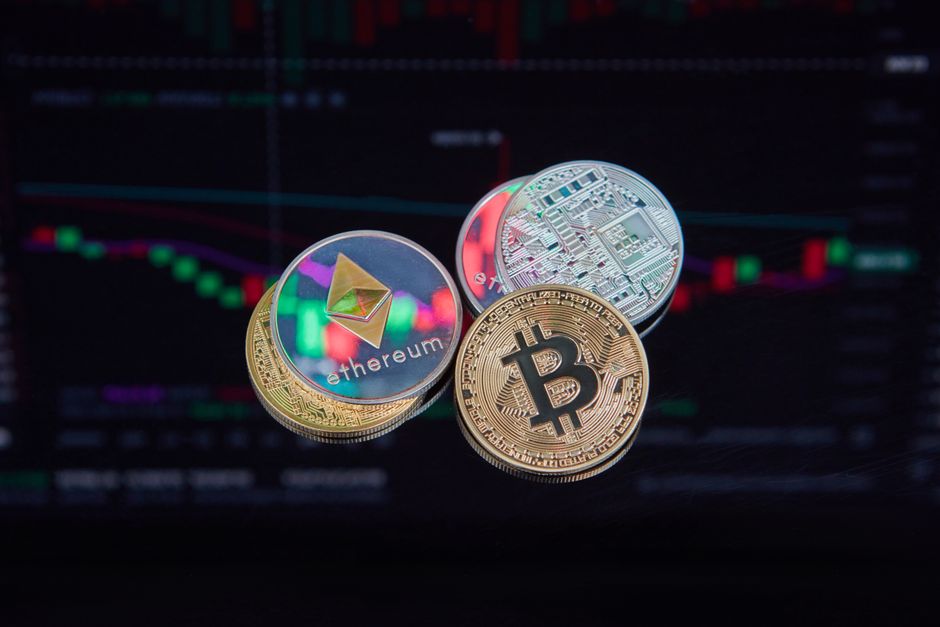
Market Overview and Risks
The broader cryptocurrency market is showing mixed signals this week as digital asset prices consolidate following a volatile spring. Total market capitalization sits around $2.35 trillion, with Bitcoin (BTC) and Ethereum (ETH) continuing to anchor the space. Several smaller-cap assets are posting notable percentage moves, drawing attention from retail and institutional traders alike.
The current environment demands careful attention from US investors. Crypto markets operate around the clock, and price swings of 5–15% in a single week are common even for established assets. This level of volatility means any positions should be sized conservatively. **Never invest more than you can afford to lose entirely.** The cryptocurrency market carries unique risks including regulatory uncertainty, network vulnerabilities, and liquidity gaps that traditional markets do not face.
- Crypto markets are open 24/7 and react to news faster than equities
- Price swings of 5–15% weekly are normal, not exceptional
- Regulatory developments can shift sentiment abruptly
- Due diligence is essential before allocating capital
Bitcoin (BTC) Analysis
Bitcoin remains the dominant force in crypto markets by market capitalization. This week, BTC is trading in the $60,000–$65,000 range, reflecting a period of consolidation after its post-halving rally in April. Trading volume has moderated to roughly $28 billion daily across major exchanges, indicating slightly calmer conditions compared to the frenetic activity seen earlier this year.
Several factors are influencing Bitcoin’s price trajectory. Institutional demand continues to play a significant role, with spot Bitcoin exchange-traded funds (ETFs) in the United States seeing steady net inflows. Additionally, Bitcoin’s **hash rate** — the total computational power securing the network — has reached new all-time highs, signaling strong miner confidence in the asset’s long-term value.
From a technical perspective, key support levels sit near $57,000, while resistance is clustered around $68,000. Bitcoin’s dominance index — its share of total crypto market capitalization — has ticked up slightly, suggesting investors are rotating into Bitcoin rather than smaller altcoins as a defensive move. Watch these levels closely if you track price charts.
Ethereum (ETH) Price Trends
Ethereum (ETH) — the blockchain powering decentralized applications and smart contracts — is trading with modest gains this week. Developers and traders are closely monitoring upcoming network upgrades and Layer 2 scaling solutions that could improve transaction throughput and reduce fees. ETH remains the second-largest cryptocurrency by market cap and is the primary fuel for decentralized finance (DeFi) applications.
The transition to a proof-of-stake (PoS) consensus mechanism, completed in 2022, reduced ETH’s energy consumption by approximately 99.95%. This matters to institutional investors concerned about environmental, social, and governance (ESG) metrics. Staking ETH has become a popular strategy, offering annualized yields of approximately 3–5% for holders who lock their tokens to support network validation.
The Ethereum ecosystem continues to expand through Layer 2 networks like Arbitrum, Optimism, and Base. These secondary networks process transactions off the main Ethereum blockchain, offering faster and cheaper user experiences while still inheriting Ethereum’s security. Understanding Layer 2 technology is critical for anyone evaluating Ethereum’s long-term utility and adoption trajectory.
Top Altcoins to Watch
Altcoins — any cryptocurrency other than Bitcoin — are showing varied performance this week. Some of the most-watched names include **Solana (SOL)**, **Cardano (ADA)**, and **Avalanche (AVAX)**, all of which operate as independent Layer 1 blockchains competing for developer mindshare and user adoption.
Solana has gained attention for its high-speed, low-cost transaction infrastructure. Its proof-of-history (PoH) mechanism enables throughput exceeding 65,000 transactions per second in ideal conditions, making it attractive for decentralized applications and consumer-facing crypto products. However, Solana has experienced network outages in the past, which raises questions about real-world reliability.
Cardano takes a research-first approach to blockchain development, emphasizing peer-reviewed academic methodology. Its layered architecture separates computation from settlement, a design choice aimed at future-proofing the network. Meanwhile, Avalanche differentiates itself through its unique consensus protocol, which claims finality in under one second — a significant speed advantage over many competitors.
| Asset | Category | Consensus Mechanism | Notable Feature |
|---|---|---|---|
| Bitcoin (BTC) | Store of value | Proof of Work | Largest market cap |
| Ethereum (ETH) | Smart contract platform | Proof of Stake | Largest DeFi ecosystem |
| Solana (SOL) | Layer 1 blockchain | Proof of History | High throughput |
| Cardano (ADA) | Layer 1 blockchain | Ouroboros PoS | Academic research-driven |
| Avalanche (AVAX) | Layer 1 blockchain | Avalanche Consensus | Sub-second finality |
Altcoins carry substantially higher risk than Bitcoin or Ethereum. Their smaller market capitalizations mean prices can move dramatically on relatively low trading volume. Research each project’s use case, development activity, and competitive landscape before considering any allocation.
DeFi and Stablecoins Update
Decentralized finance (DeFi) continues to evolve as a significant sector within the cryptocurrency ecosystem. DeFi protocols enable financial activities — lending, borrowing, trading, and earning interest — without relying on traditional intermediaries like banks or brokers. Total value locked (TVL) across major DeFi platforms currently exceeds $90 billion, though this figure fluctuates with token prices and user activity.
**Stablecoins** are a cornerstone of the DeFi ecosystem. These digital assets are pegged 1:1 to a reserve currency like the US dollar, providing a stable medium of exchange within crypto markets. The three largest by market cap are **Tether (USDT)**, **USD Coin (USDC)**, and **Dai (DAI)**. USDC, issued by Circle, has gained particular traction in the United States due to its regulatory transparency and regular reserve attestations.
For US investors, DeFi presents both opportunities and pitfalls. Yield farming — earning returns by supplying liquidity to DeFi protocols — can generate annualized yields of 5–15% or more, significantly above traditional savings rates. However, these protocols carry risks including smart contract vulnerabilities, impermanent loss, and regulatory ambiguity. Always understand what you are signing and how funds are secured.
NFT and Crypto Asset Trends
The NFT (non-fungible token) market has experienced renewed activity this week. Trading volume across major marketplaces like **OpenSea** and **Blur** has picked up, with digital art, gaming assets, and collectibles seeing increased transaction counts. Total weekly NFT trading volume is approaching $150 million, a notable recovery from the depressed levels seen in late 2023.
NFTs represent unique digital ownership records recorded on a blockchain. Unlike cryptocurrencies, where each unit is identical and interchangeable, NFTs certify authenticity and ownership of specific digital items. The technology has legitimate applications in gaming, digital identity, event ticketing, and int ctual property management — areas that extend well beyond speculative trading.
New or emerging crypto assets continue to attract attention. **Memecoins**, which derive value primarily from internet culture and social media momentum rather than underlying utility, have posted extreme volatility this week. While some traders have profited significantly from memecoin positions, these assets lack fundamental value propositions and should be treated as highly speculative lottery tickets rather than investment vehicles.
Cryptocurrency Adoption and Regulation News
Institutional adoption of cryptocurrency continues to build momentum. Major asset managers including **BlackRock** and **Fidelity** have launched spot Bitcoin ETFs that are now attracting billions in assets under management. These products have opened the door for US retail and institutional investors to gain exposure to Bitcoin through traditional brokerage accounts, removing significant friction from the investment process.
On the regulatory front, several key developments are shaping the landscape. The Securities and Exchange Commission (SEC) has signaled a more collaborative stance toward the crypto industry, and the **Financial Innovation and Technology for the 21st Century Act (FIT21)** passed the House, representing the most comprehensive crypto legislation attempted in the United States to date. The bill seeks to define which digital assets qualify as commodities versus securities, a distinction with major implications for how projects operate domestically.
State-level actions are also worth monitoring. Wyoming, Colorado, and California have each enacted crypto-friendly policies, while other states have introduced more restrictive legislation. For US investors, understanding your state’s stance on cryptocurrency taxation, licensing, and custody is an important part of building a compliant strategy.
Crypto Trading Platforms and Exchanges
Choosing the right cryptocurrency exchange is one of the most consequential decisions for US investors. The platform you use affects everything from security and fees to which assets you can access. **Coinbase**, **Kraken**, and **Gemini** are among the most regulated US-based exchanges, each with distinct strengths and weaknesses.
Coinbase, publicly traded on the Nasdaq under the ticker **COIN**, is the most heavily regulated major US exchange and holds licenses in most states. It offers FDIC insurance on USD balances up to $250,000 and provides a straightforward interface suitable for new investors. However, its trading fees tend to be higher than offshore competitors. Kraken provides a broader range of staking options and generally lower fees, while **Gemini** differentiates through its proof-of-reserves program, which independently verifies customer asset holdings.
Offshore exchanges like **Binance** and **Bybit** offer lower fees and wider asset selection but present US investors with compliance risks. These platforms may not operate under the same consumer protections, and US residents who use non-licensed offshore services may face legal consequences. Prioritize exchanges registered with the Financial Crimes Enforcement Network (FinCEN) and subject to US jurisdiction.
Key Market Drivers to Watch
Understanding what moves crypto markets week-to-week is essential for staying ahead of trends. Several categories of catalysts drive price action: macroeconomic data releases — particularly US Consumer Price Index (CPI) reports and Federal Reserve interest rate decisions — can shift risk appetite across all markets including digital assets. ETF inflow and outflow data, released daily, provide a real-time window into institutional demand.
On-chain metrics offer additional insight. **Exchange outflows** — the amount of cryptocurrency moving off trading platforms into private wallets — is generally considered bullish, as it suggests holders are taking a long-term position. Conversely, rising exchange balances can signal increased selling pressure. Network activity metrics like active addresses, transaction count, and fee revenue also reveal genuine usage versus speculative trading.
Focus on developments that affect long-term fundamentals rather than short-term price noise. Ask yourself whether a project is shipping real technology, attracting real users, and building genuine partnerships. These questions are harder to answer than simply checking a price chart, but they are what separates informed investors from gamblers.
Frequently Asked Questions (FAQ)
What are the key factors driving cryptocurrency price trends this week?
Crypto prices this week are influenced by ETF flow data, macroeconomic conditions including inflation reports, and broader market risk sentiment. Institutional activity through regulated US Bitcoin and Ethereum ETFs is a significant factor, as is ongoing regulatory development in Washington. Layer 2 ecosystem growth and DeFi protocol activity also contribute to market dynamics.
How can US investors protect themselves from market volatility and risks?
Dollar-cost averaging — investing a fixed amount at regular intervals regardless of price — is the most reliable strategy for managing volatility. Avoid investing more than you can afford to lose, diversify across multiple assets rather than concentrating in a single coin, and store long-term holdings in hardware wallets rather than leaving funds on exchanges. Stay informed about regulatory changes that may affect your holdings.
Which cryptocurrencies or assets have the most promising growth potential based on recent trends?
No specific cryptocurrency can be recommended as a guaranteed growth vehicle. Bitcoin and Ethereum have the longest track records and largest institutional adoption. Layer 2 networks and DeFi platforms show meaningful utility growth. However, all crypto assets carry substantial risk of loss, and past performance does not indicate future results. Conduct independent research and consult a qualified financial advisor before making investment decisions.
**Disclaimer:** Cryptocurrency investments involve substantial risk including volatility, regulatory uncertainty, and potential total loss of capital. This article is for informational purposes only and does not constitute financial or investment advice. Always consult a qualified financial advisor before making investment decisions.
Explore more trending cryptos guides on our site.
Charting & Exchange Resources
| Platform | Use Case | Key Feature | Fee Model | Action |
|---|---|---|---|---|
| TradingView | Charting & technical analysis | Indicators, multi-timeframe charts | Free / Pro tiers | View Platform |
| Coinbase | Exchange (beginner-friendly) | Simple USD on-ramp, educational tools | Varies by region | View Platform |
| Binance | Exchange (advanced pairs) | Wide altcoin coverage, spot markets | Varies by region | View Platform |
Affiliate Disclosure: This post contains affiliate links. We may earn a commission if you buy through our links, at no extra cost to you. Investment Risk Disclaimer: Cryptocurrency and digital asset markets are highly volatile. This content is for informational and educational purposes only and is not financial, investment, or trading advice. You may lose some or all of your capital. Do your own research and consult a licensed financial advisor before making investment decisions.
Leave a Reply