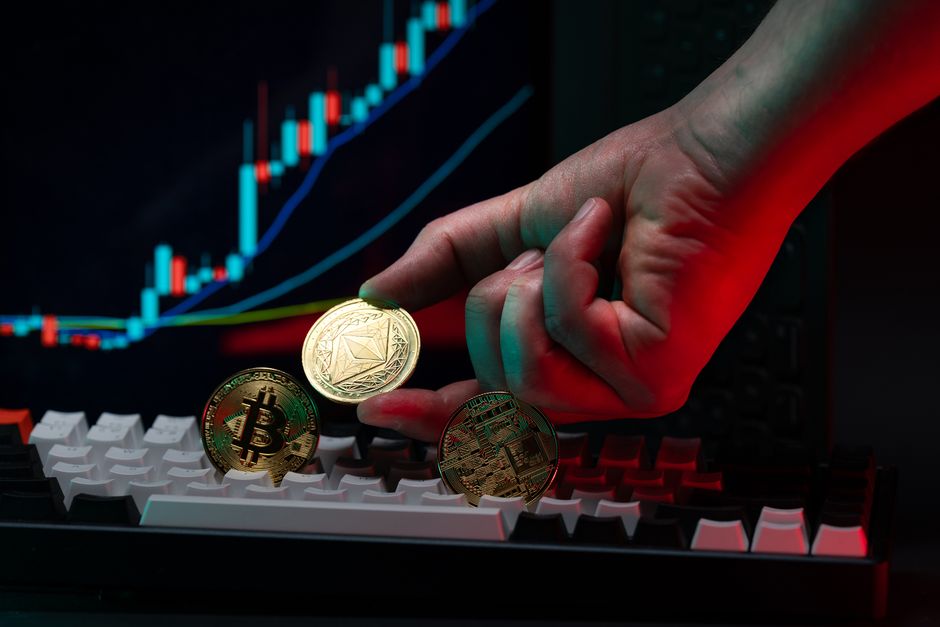
What Are Altcoins?
The term **altcoin** is shorthand for “alternative coin,” and it refers to any cryptocurrency other than Bitcoin. Since Bitcoin launched in 2009 as the first decentralized digital currency, hundreds of competing projects have entered the market, each offering different technical features, use cases, and investment characteristics. Understanding what altcoins are is the first step for any investor looking to move beyond Bitcoin into the broader crypto ecosystem.
Altcoins generally fall into several categories based on their purpose. **Stablecoins** aim to maintain a fixed value, typically pegged to the US dollar, making them useful for preserving capital within the crypto market without exiting to traditional finance. **Utility tokens** power specific blockchain applications, granting holders access to services or governance rights within a platform. **Security tokens** represent ownership in an underlying asset, similar to traditional securities. **Proof-of-stake coins** differ from Bitcoin’s energy-intensive proof-of-work model by allowing holders to validate transactions and earn rewards by locking their coins on the network. Each category carries its own set of risks and potential rewards that investors should carefully evaluate.
The fundamental difference between Bitcoin and altcoins comes down to market position, network maturity, and purpose. Bitcoin remains the largest cryptocurrency by market capitalization and is widely regarded as a store-of-value asset, often called “digital gold.” Most altcoins, by contrast, target specific applications such as smart contracts, fast peer-to-peer payments, or decentralized finance (DeFi) protocols. This specialization can offer higher growth potential, but it also introduces greater technical complexity and project-specific risk. Diversification across the crypto market requires understanding these distinctions before committing capital.
Understanding Altcoin Market Trends in 2026
The current state of the altcoin market reflects a maturing ecosystem that has grown significantly more sophisticated since earlier speculative cycles. Institutional interest in blockchain technology has expanded, bringing more regulatory clarity and infrastructure to the space. However, altcoin prices remain highly sensitive to macroeconomic conditions, Bitcoin’s price movements, and shifts in investor sentiment. For US investors, monitoring the Federal Reserve’s monetary policy, cryptocurrency exchange trading volumes, and on-chain analytics data provides essential context for understanding where the altcoin market stands at any given time.
Several factors consistently influence altcoin prices and adoption rates. **Network activity** — measured by daily transactions, active wallet addresses, and decentralized application usage — signals whether a project has genuine demand beyond speculative trading. **Developer activity** on public repositories like GitHub indicates ongoing technical progress and community engagement. **Partnership announcements** with established companies or government agencies can drive sudden price appreciation, though these gains often prove short-lived without underlying adoption metrics to support them. **Token unlock schedules**, which release previously locked coins to team members and investors, can create sustained selling pressure that impacts prices for months or years.
Looking ahead, the future outlook for altcoins in 2026 hinges on regulatory developments in the United States, continued evolution of blockchain scalability solutions, and the broader adoption of Web3 applications. Layer-2 scaling networks built on Ethereum and competing smart contract platforms are reducing transaction costs and improving speed, which could unlock new use cases in gaming, finance, and supply chain management. Investors should watch how the Securities and Exchange Commission (SEC) classifies specific tokens, as regulatory clarity or enforcement actions can dramatically shift market dynamics overnight.
Analyzing Altcoin Investment Risks
Investing in altcoins carries a specific and well-documented set of risks that every US-based investor must understand before allocating capital. The most obvious is **volatility**. While Bitcoin experiences significant price swings, many altcoins amplify these movements, with daily swings of 10 to 30 percent being common during periods of market stress. What might represent a 5 percent daily move in the S&P 500 index could easily translate into a 20 percent decline in a smaller altcoin portfolio during a broad crypto sell-off. This asymmetric risk profile demands a position sizing strategy that limits exposure to any single project.
Regulatory concerns represent the second major category of risk. The SEC has increasingly scrutinized whether certain tokens qualify as securities under US law, which would subject issuers and exchanges to registration requirements. Projects that fail to comply or that face enforcement actions can see their tokens become illiquid or delisted from US-accessible exchanges overnight. State-level regulations add additional complexity, as some US states have introduced their own licensing frameworks for cryptocurrency businesses. Staying informed about proposed rulemaking through resources like the Commodity Futures Trading Commission (CFTC) and SEC websites helps investors anticipate regulatory shifts before they move markets.
The potential for scams and fraudulent activities deserves particular attention in the altcoin space. Rug pulls — where developers abandon a project and steal investor funds — have cost the crypto market billions of dollars. Wash trading on smaller exchanges artificially inflates token prices and trading volumes, misleading investors about genuine market interest. Before investing, verify that a project has been audited by reputable cybersecurity firms, review the team members’ publicly verifiable credentials, and confirm that the smart contract code has been open-sourced and reviewed by independent developers.
Ethereum (ETH): The Leading Smart Contract Platform
**Ethereum** remains the dominant smart contract blockchain and serves as the foundation for the vast majority of decentralized applications, DeFi protocols, and non-fungible token (NFT) marketplaces. Its first-mover advantage in programmable blockchain technology has created a deep network effect: developers, validators, and enterprises have built on Ethereum because other developers and users are already there. This ecosystem density is difficult for competing platforms to replicate quickly, making Ethereum a structurally significant asset in the crypto market.
The network transitioned to a proof-of-stake consensus mechanism through an event called “The Merge,” dramatically reducing its energy consumption. Ongoing upgrades under the Ethereum roadmap aim to improve scalability through **sharding**, which distributes transaction processing across multiple chains. For investors, Ethereum’s upgrade trajectory and the steady growth in **gas fees** — transaction costs paid in ETH — burned from the supply through the EIP-1559 mechanism create a deflationary pressure that has historically supported long-term value retention.
However, Ethereum is not without risks. Competition from alternative Layer-1 and Layer-2 networks has intensified, with projects offering lower transaction fees and faster confirmation times for specific use cases. The network’s complexity has also led to execution errors and smart contract vulnerabilities that have cost DeFi users hundreds of millions of dollars. Investors should weigh Ethereum’s dominant market position against the real possibility that future technical challenges or competitive disruption could erode its relative market share among smart contract platforms.
Ripple (XRP): Cross-Border Payments and Banking Partnerships
**Ripple** operates a payment settlement network designed specifically for financial institutions, targeting the inefficiencies in cross-border money transfers. Unlike most cryptocurrencies that prioritize decentralization, Ripple’s network allows for certain centralized controls that banks require for regulatory compliance. Its digital token, XRP, facilitates transfers between different currencies and serves as a bridge currency for international settlements, completing transactions in seconds compared to the days required by traditional correspondent banking networks.
Ripple’s legal battle with the SEC has been one of the most consequential regulatory battles in crypto history. The SEC filed a lawsuit in 2020 alleging that XRP sales constituted unregistered securities offerings. In 2023, a federal judge ruled that XRP token sales on public exchanges did not necessarily constitute securities transactions, providing partial relief to the project. The ongoing case has created significant legal uncertainty, and the outcome will set precedent for how the SEC regulates digital assets in the future.
For US investors, Ripple illustrates both the opportunity and the regulatory risk inherent in crypto investing. The project’s focus on banking partnerships with institutions worldwide represents a genuine real-world use case, but legal exposure means that XRP holders face outcomes that traditional equity investors rarely encounter. The case underscores the importance of understanding which regulatory frameworks apply to a specific token before allocating capital.
Litecoin (LTC): The Longest-Running Bitcoin Fork
**Litecoin** was created in 2011 as a “silver to Bitcoin’s gold,” applying technical modifications to Bitcoin’s open-source code to enable faster block generation and lower transaction fees. It operates on a proof-of-work consensus mechanism similar to Bitcoin, which provides proven security guarantees but requires significant energy expenditure. Litecoin has historically served as a testing ground for Bitcoin upgrades before they are adopted on the main Bitcoin network, lending it a practical role in the broader cryptocurrency ecosystem.
Litecoin’s longevity is both a strength and a challenge. More than a decade of uninterrupted operation demonstrates resilience and an established user base, but Litecoin has struggled to differentiate itself meaningfully as newer blockchain networks offer broader functionality. Its market capitalization ranks it among the top cryptocurrencies, yet trading volumes and developer activity have declined relative to more actively developed platforms. For investors, Litecoin represents a lower-risk, lower-reward position compared to newer altcoins with more aggressive growth trajectories but also more uncertainty.
Cardano (ADA): Academic Approach to Blockchain Development
**Cardano** distinguishes itself through a research-first development philosophy, with academic peer review embedded in its software development process. Founded by Charles Hoskinson, a co-founder of Ethereum, Cardano aims to build a rigorously tested blockchain platform that can support smart contracts, decentralized applications, and multi-asset ledgers with a focus on regulatory compliance and environmental sustainability. Its proof-of-stake consensus mechanism, called **Ouroboros**, has been formally verified through academic publications, a level of rigor uncommon in the crypto industry.
Cardano’s **Haskell** programming language foundation and slow, methodical development cadence appeal to investors who prioritize technical soundness over speed-to-market. The network has gradually expanded its feature set through organized upgrade phases, with each stage requiring peer-reviewed academic backing before implementation. This approach reduces the risk of catastrophic smart contract failures, but it also means Cardano’s ecosystem grows more slowly than competitors that ship code on shorter development cycles.
The primary risk for Cardano investors is market relevance. Competing smart contract platforms have captured the majority of DeFi and NFT activity, and Cardano’s relatively modest total value locked (TVL) in DeFi protocols reflects its limited traction compared to Ethereum-based networks. Investors should monitor whether Cardano’s technical differentiation translates into genuine adoption or whether the market ultimately rewards speed and ecosystem breadth over academic rigor.
Polkadot (DOT): Interoperability Between Blockchains
**Polkadot** addresses one of the crypto ecosystem’s most persistent technical challenges: how different blockchains communicate and share data with each other. Founded by Ethereum co-founder Gavin Wood, Polkadot uses a **relay chain** at its center that connects specialized **parachains** — independent blockchains with custom governance, token economics, and use cases optimized for specific applications. This architecture enables cross-chain transfers of data and value without requiring each chain to trust every other chain individually.
Polkadot’s shared security model allows parachains to benefit from the relay chain’s validator set without building their own network from scratch, lowering the barrier to entry for new blockchain projects. The **Substrate** framework, which powers Polkadot’s ecosystem, lets developers deploy custom blockchains in hours rather than months, accelerating innovation across the network. For investors, Polkadot represents a bet on the fragmentation of the blockchain landscape and the growing need for interoperability infrastructure.
The network’s **parachain auction** mechanism, which allocates available slots through bond-based crowdloans, introduces a unique investment dynamic. Contributors lock their DOT tokens to support parachain projects in exchange for project tokens, creating demand for DOT while exposing contributors to multi-year lockup periods. Investors should understand these mechanics and their tax implications before participating in parachain auctions.
Conducting Due Diligence Before Investing in Any Altcoin
Thorough research is not optional in altcoin investing — it is the primary risk management tool available to retail investors competing against institutional players with deeper resources. Evaluating an altcoin’s potential requires examining multiple dimensions simultaneously: the technical merit of the underlying blockchain, the experience and track record of the development team, the size and engagement of the community, and the real-world demand for the project’s stated use case.
Start every research process by reading the project’s **whitepaper**, the foundational document that explains the cryptocurrency’s purpose, technical architecture, token economics, and roadmap. A quality whitepaper answers basic questions about what problem the project solves, how the blockchain functions, how tokens are distributed, and what incentives drive network participants. Be skeptical of whitepapers that lack technical detail, overuse marketing language, or fail to acknowledge competitive weaknesses. Reputable projects like Ethereum and Polkadot publish detailed technical documentation alongside their whitepapers that withstand scrutiny from independent developers and researchers.
Community and developer engagement provide crucial secondary signals. Active Discord and Telegram communities, regular development updates on platforms like GitHub, and transparent governance processes suggest a project is actively maintained. Conversely, projects with minimal online activity, abandoned social media accounts, or anonymous development teams warrant additional caution. The altcoin market has produced many technically sound projects that failed because the team lost momentum or the community dispersed, and early warning signs are often visible in public channels before a project’s decline accelerates.
Practical Considerations for US Investors in Altcoins
US investors face a distinct regulatory environment that shapes how they can legally access and hold altcoins. The IRS classifies cryptocurrency as property for federal tax purposes, meaning that every altcoin trade — not just trades to and from US dollars — potentially triggers a taxable event. Capital gains tax rates apply based on whether positions are held short-term (under one year) or long-term, and losses can offset gains in a process known as **tax-loss harvesting**. Using dedicated crypto tax software that integrates with exchange APIs helps maintain accurate transaction records throughout the year, reducing the risk of underreporting or penalties during an audit.
Selecting a legitimate cryptocurrency exchange is a foundational security decision. US-regulated exchanges like Coinbase and Kraken comply with state money-transmission laws, register with the Financial Crimes Enforcement Network (FinCEN), and maintain insurance policies covering certain types of platform breaches. These exchanges typically offer a curated selection of tokens that have cleared legal review, which limits exposure to tokens that may later face regulatory action. Investors should verify that their chosen exchange operates in their specific state, as licensing requirements vary.
**Cold wallets** — hardware devices that store private keys offline — provide the most secure method for long-term altcoin storage. Unlike exchange-held wallets, which are vulnerable to platform hacks and counterparty risk, cold wallets keep private keys physically disconnected from the internet. Popular options include devices manufactured by Ledger and Trezor. For investors holding multiple altcoins, ensuring wallet compatibility with specific token standards like **ERC-20** (used for Ethereum-based tokens) or **SOL** (used on the Solana blockchain) is essential before transferring assets off an exchange.
Making Informed Investment Decisions in the Altcoin Market
Diversification within a crypto portfolio serves the same fundamental purpose as diversification in traditional investing: it reduces the impact of any single asset’s poor performance on the overall portfolio. However, crypto diversification requires nuance. Simply holding many altcoins does not reduce risk if those coins are highly correlated — meaning they tend to rise and fall together during market cycles. True diversification in crypto involves holding assets with different use cases, consensus mechanisms, and regulatory exposures. Combining a large-cap smart contract platform like Ethereum with a cross-border payment network like Ripple and a Layer-2 interoperability project creates a portfolio with exposure to distinct market segments.
Market timing is notoriously difficult even for professional traders, and the 24/7 nature of cryptocurrency markets amplifies emotional decision-making. Dollar-cost averaging (DCA) — investing a fixed amount at regular intervals regardless of price — removes the temptation to time entries based on short-term sentiment and has historically smoothed volatility across crypto market cycles. Setting predetermined exit conditions based on percentage gains or losses, rather than reacting to price movements in real time, helps maintain discipline during periods of extreme volatility.
Technical analysis tools provide additional context for entry and exit decisions, though they should supplement rather than replace fundamental research. **Moving averages**, **Relative Strength Index (RSI)**, and **volume profiles** offer quantitative frameworks for identifying trend strength and potential reversal points. Reading candlestick charts on platforms that aggregate order book data from major exchanges helps investors understand where supply and demand are concentrated. Combining technical signals with an understanding of broader market cycles — Bitcoin’s four-year halving cycle, macro economic conditions, and regulatory calendars — creates a more robust decision-making framework than relying on any single indicator.
**Disclaimer:** Cryptocurrency investments are highly volatile and speculative. Nothing in this article constitutes financial, investment, or legal advice. All investments in digital assets carry the risk of total loss. Consult a licensed financial advisor before making investment decisions.
Frequently Asked Questions (FAQ)
What are the primary risks of investing in altcoins?
Altcoin investing carries three broad categories of risk. **Volatility risk** is the most visible: many altcoins experience daily price swings far exceeding those of traditional assets, and positions can lose significant value during market downturns. **Regulatory risk** arises from evolving US federal and state rules governing digital assets; the SEC, CFTC, and state regulators may classify specific tokens as securities or commodities, triggering compliance requirements or enforcement actions that impact liquidity and price. **Operational risk** includes smart contract failures, exchange hacks, wallet compromises, and project abandonment. No single risk management strategy eliminates these dangers, but portfolio sizing, secure storage practices, and diversified research reduce overall exposure.
How do I evaluate whether an altcoin has genuine investment potential?
Start with the whitepaper and assess whether the project solves a real problem with a technically sound solution. Research the founding team’s verifiable credentials and track record in software development or blockchain technology. Evaluate on-chain metrics — active addresses, transaction volume, and total value locked — as indicators of genuine adoption rather than speculation. Review the token economics: understand the total supply, inflation rate, and whether team or investor tokens are subject to unlock schedules that could flood the market. Finally, assess the competitive landscape to determine whether the project holds a defensible market position against established platforms or faces structural disadvantages from network effects already built by competitors.
Which altcoins are worth researching in 2026, and why?
Five projects merit structured research as of 2026. **Ethereum** leads in smart contract infrastructure and DeFi ecosystem depth. **Ripple** maintains a unique focus on institutional cross-border payments and has navigated significant regulatory challenges. **Litecoin** offers long-term operational stability as a proof-of-work payment network. **Cardano** differentiates through academic peer-review methodology and proof-of-stake architecture. **Polkadot** addresses blockchain interoperability, a structural need as the ecosystem fragments across specialized networks. Each represents a distinct risk-reward profile, and none should be considered a guaranteed investment. Research token unlock schedules, on-chain adoption metrics, and developer activity trends before making any allocation decision.
| Altcoin | Primary Use Case | Consensus Mechanism | Notable Risk |
|---|---|---|---|
| Ethereum (ETH) | Smart contracts, DeFi, NFTs | Proof-of-Stake | Regulatory classification of tokens |
| Ripple (XRP) | Cross-border payments | Proprietary RPCA | SEC litigation outcome |
| Litecoin (LTC) | Peer-to-peer payments | Proof-of-Work | Limited ecosystem growth |
| Cardano (ADA) | Smart contracts, governance | Proof-of-Stake (Ouroboros) | Slower development cadence |
| Polkadot (DOT) | Blockchain interoperability | Nominated Proof-of-Stake | Parachain auction lockups |
Charting & Exchange Resources
| Platform | Use Case | Key Feature | Fee Model | Action |
|---|---|---|---|---|
| TradingView | Charting & technical analysis | Indicators, multi-timeframe charts | Free / Pro tiers | View Platform |
| Coinbase | Exchange (beginner-friendly) | Simple USD on-ramp, educational tools | Varies by region | View Platform |
| Binance | Exchange (advanced pairs) | Wide altcoin coverage, spot markets | Varies by region | View Platform |
Affiliate Disclosure: This post contains affiliate links. We may earn a commission if you buy through our links, at no extra cost to you. Investment Risk Disclaimer: Cryptocurrency and digital asset markets are highly volatile. This content is for informational and educational purposes only and is not financial, investment, or trading advice. You may lose some or all of your capital. Do your own research and consult a licensed financial advisor before making investment decisions.
Leave a Reply