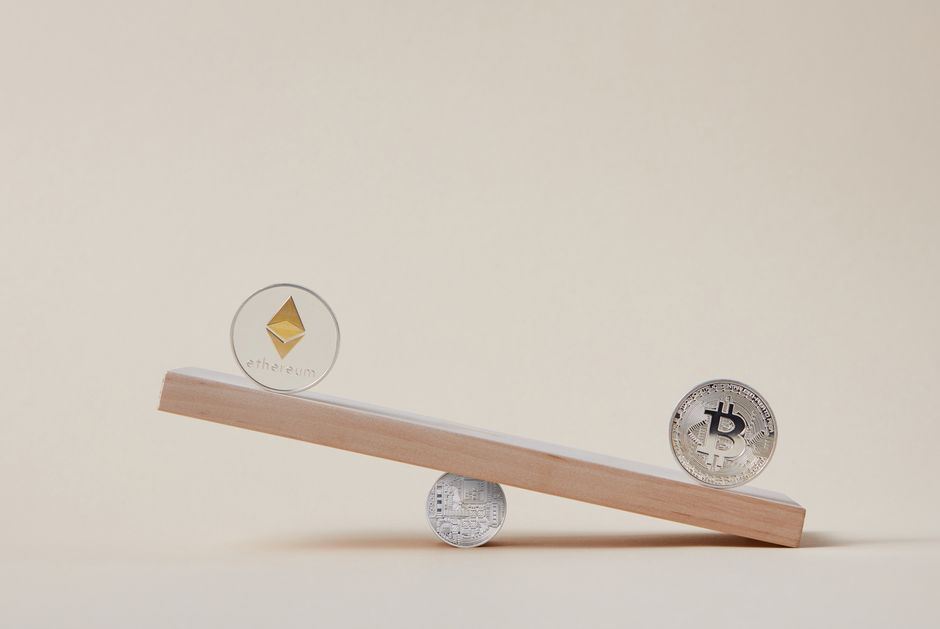
What Are Ethereum and Solana?
If you’re new to cryptocurrency, two names appear in virtually every conversation: **Ethereum (ETH)** and **Solana (SOL)**. Both are programmable blockchains — networks that do far more than move money between wallets. Understanding the *ethereum vs solana comparison for beginners 2026* requires stepping back from price charts and looking at the underlying technology, real-world use cases, and the trade-offs each platform has made. Neither chain is objectively “better” — they solve different problems in different ways, and the right choice depends entirely on what you want to do on-chain.
Ethereum launched in 2015 and has operated continuously for over a decade, accumulating the largest developer community in the space. Solana launched in 2020 with a narrower focus: speed and low transaction costs above almost everything else. Both are worth understanding before committing any capital. Explore more altcoin analysis on this site.
—
Ethereum: The Established Layer-1
Ethereum is the second-largest cryptocurrency by market capitalization, sitting just behind Bitcoin. Its core value proposition is **smart contracts** — self-executing code stored permanently on the blockchain that powers lending protocols, decentralized exchanges, NFT marketplaces, and far more.
**Key Ethereum characteristics:**
- **Consensus mechanism:** Ethereum completed its transition from Proof of Work to **Proof of Stake (PoS)** in September 2022, an event known as “The Merge,” slashing energy consumption by roughly 99.95%.
- **Developer ecosystem:** The largest in all of crypto — tens of thousands of active developers and thousands of live decentralized applications (dApps).
- **Security record:** More than ten years of uninterrupted operation with no successful network-level attack.
Ethereum’s main weakness is **gas fees** — transaction costs on the mainnet that spike during network congestion, sometimes reaching tens of dollars per interaction. Layer-2 scaling networks such as Arbitrum and Optimism now handle the majority of user activity, dramatically reducing costs, but the added complexity can feel overwhelming for beginners navigating the ecosystem for the first time.
—
Solana: The High-Throughput Challenger
Solana was engineered specifically to solve the throughput bottleneck that Ethereum’s base layer struggles with. Its flagship technical innovation is **Proof of History (PoH)** — a cryptographic timestamping system that lets validators agree on the order of events without constant back-and-forth communication, dramatically accelerating block confirmation times.
**Key Solana characteristics:**
- **Throughput:** Solana advertises roughly 65,000 transactions per second (TPS) in ideal conditions; sustained real-world throughput lands between 2,000 and 5,000 TPS — well above Ethereum’s base layer.
- **Fees:** Most transactions cost less than one cent, making micro-transactions economically practical in ways Ethereum’s mainnet cannot support.
- **Ecosystem growth:** Solana’s NFT market and decentralized finance (DeFi) ecosystem expanded significantly from 2022 through 2025, attracting high-frequency trading platforms and consumer-focused applications.
Solana’s documented vulnerability is **network stability**. The chain experienced multiple major outages between 2021 and 2023. Engineering improvements since then have reduced downtime, but its reliability record still trails Ethereum’s.
—
Head-to-Head Comparison
| Feature | Ethereum | Solana |
|---|---|---|
| Launch year | 2015 | 2020 |
| Consensus mechanism | Proof of Stake (PoS) | Proof of History (PoH) + PoS |
| Base layer TPS | ~15–30 | ~2,000–5,000 (sustained) |
| Avg. transaction fee | $0.01–$2 (L2); $5–$50 (congested mainnet) | <$0.01 |
| Network uptime | Near 100% since 2016 | Several outages 2021–2023; improved since |
| Developer language | Solidity (primary) | Rust / C / C++ |
| DeFi TVL | Dominant (~60%+ of all DeFi) | Significant but smaller share |
| Market cap rank (mid-2026) | #2 | #4–#6 (variable) |
*TVL = Total Value Locked — the aggregate value of assets deposited in DeFi protocols on each chain.*
—
Use Cases: Where Each Chain Excels
Ethereum’s Strengths
Ethereum dominates **decentralized finance (DeFi)** — lending, borrowing, decentralized exchanges (DEXs), and yield-generating protocols. Its composability means smart contracts can build on top of one another without permission, enabling increasingly complex on-chain financial products. Enterprise adoption, institutional custody solutions, and stablecoin infrastructure (USDC, DAI, USDT) are overwhelmingly Ethereum-native.
Solana’s Strengths
Solana’s low fees make it ideal for **high-frequency applications** — gaming economies, micro-payment systems, and consumer apps where users execute dozens of transactions per session. Fast finality (the time until a transaction is irreversible) suits trading platforms and real-time games. The compressed NFT standard on Solana enables minting millions of tokens at minimal cost, opening genuinely new use cases in ticketing, digital collectibles, and loyalty programs that would be prohibitively expensive on Ethereum.
—
Investment Considerations and Risks
Both ETH and SOL are **highly volatile assets**. Each has experienced drawdowns exceeding 80% from prior all-time highs in previous market cycles. Past performance tells you nothing about what comes next.
**Ethereum investment factors:**
- The largest developer network creates genuine long-term defensibility.
- ETH staking yields approximately 3–5% annually as of mid-2026, though staked assets are locked and subject to slashing risk.
- US regulatory clarity improved meaningfully after ETH spot ETFs launched in 2024, opening the asset to institutional capital.
**Solana investment factors:**
- Higher growth potential comes with commensurately higher volatility risk.
- A meaningful share of SOL supply is held by early investors and the Solana Foundation, creating concentration risk.
- Historical network outages raise legitimate questions about validator incentive structures and true decentralization.
**For beginners:** neither asset should represent a disproportionate share of a portfolio. Dollar-cost averaging (DCA) — investing fixed amounts at regular intervals rather than timing the market — is a widely used risk-management framework. It does not guarantee profit or prevent loss in any market condition.
—
Future Developments to Watch in 2026
Ethereum’s roadmap centers on **”The Surge”** — a series of upgrades targeting throughput via sharding (splitting the network into parallel processing lanes) and improved Layer-2 interoperability. If successful, these upgrades could bring base-layer costs significantly lower while preserving decentralization.
Solana’s highest-profile development is **Firedancer**, a new validator client built by Jump Crypto, designed to push throughput beyond one million TPS and improve network resilience. A clean Firedancer deployment could meaningfully address Solana’s historical stability concerns.
**Broader trends to monitor:**
- Both ecosystems are competing aggressively for the next wave of institutional and retail adoption.
- US regulatory developments — stablecoin legislation, digital asset taxonomy bills — will materially affect both chains’ growth trajectories.
- Cross-chain bridge technology is maturing rapidly, which may make the ETH versus SOL choice less binary over time.
Continue reading altcoin market guides for more on emerging blockchain platforms.
—
Risk Disclaimer
**Important:** Cryptocurrency markets are highly volatile. The information in this article is for educational purposes only and does not constitute financial, investment, or legal advice. Prices, network statistics, and market conditions change rapidly. Always conduct your own research (**DYOR**) and consult a qualified financial professional before making any investment decisions. You can lose all capital invested in digital assets.
—
Frequently Asked Questions (FAQ)
Q: What is the core difference between Ethereum and Solana?
A: Ethereum prioritizes decentralization and security with a large, battle-tested validator network. Solana optimizes for speed and low fees using its Proof of History mechanism — a trade-off that produces faster transactions but a historically less stable network. Both are legitimate platforms with distinct engineering philosophies.
Q: Which is better for a beginner to start with in 2026?
A: There is no universally correct answer. Ethereum offers more liquidity, broader exchange availability, and a longer security track record — common reasons it serves as a starting point for many investors. Solana suits users drawn to low-cost, high-speed applications and consumer-facing Web3 products. Beginners should research both chains carefully and only allocate amounts they can afford to lose entirely.
Q: How do Ethereum and Solana compare on transaction speed and fees?
A: Solana’s base layer processes thousands of transactions per second at sub-cent fees. Ethereum’s mainnet handles roughly 15–30 TPS with variable fees, though Layer-2 networks bring costs close to Solana’s levels for most practical use cases. For simple transfers and standard DeFi interactions, both can be cost-effective in 2026 depending on which network layer you use.
Q: Is Ethereum staking safer than holding Solana?
A: Staking ETH generates yield but locks your assets and carries slashing risk if validators misbehave. Holding SOL has no built-in yield mechanism but offers full liquidity. Neither is universally “safer” — both carry smart contract risk, market risk, and regulatory risk. Compare your time horizon and risk tolerance before deciding.
Q: Could a third blockchain overtake both Ethereum and Solana?
A: The smart-contract platform space remains competitive. Chains such as Avalanche, Sui, and Aptos are developing rapidly and targeting similar use cases. Monitoring ecosystem growth, developer activity, and institutional adoption across platforms — not just price performance — gives the clearest picture of long-term competitive dynamics.
Charting & Exchange Resources
| Platform | Use Case | Key Feature | Fee Model | Action |
|---|---|---|---|---|
| TradingView | Charting & technical analysis | Indicators, multi-timeframe charts | Free / Pro tiers | View Platform |
| Coinbase | Exchange (beginner-friendly) | Simple USD on-ramp, educational tools | Varies by region | View Platform |
| Binance | Exchange (advanced pairs) | Wide altcoin coverage, spot markets | Varies by region | View Platform |
Affiliate Disclosure: This post contains affiliate links. We may earn a commission if you buy through our links, at no extra cost to you. Investment Risk Disclaimer: Cryptocurrency and digital asset markets are highly volatile. This content is for informational and educational purposes only and is not financial, investment, or trading advice. You may lose some or all of your capital. Do your own research and consult a licensed financial advisor before making investment decisions.
Leave a Reply