
Trending Cryptos: Complete Market Guide & Altcoin Analysis
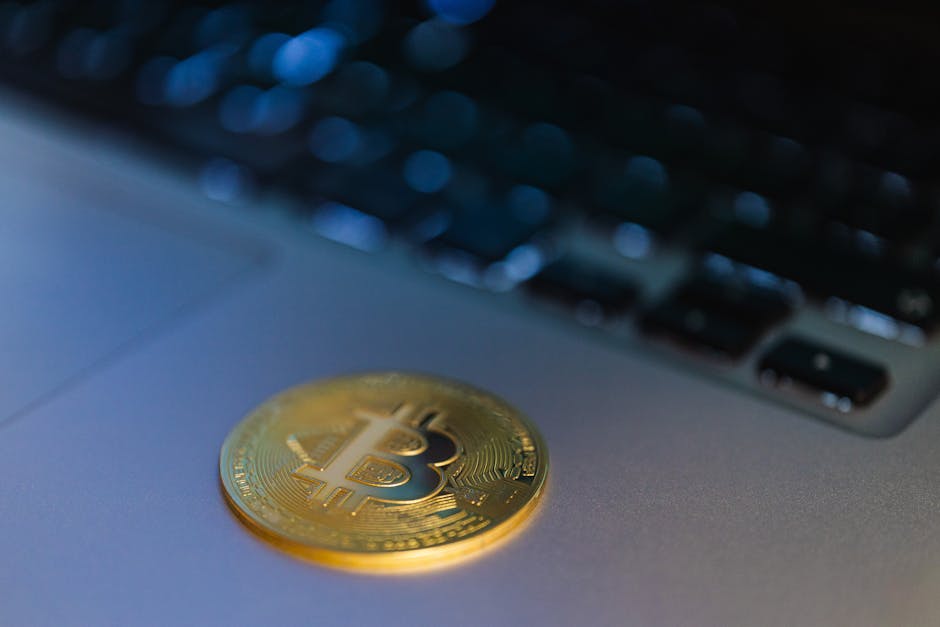

What Makes a Cryptocurrency Trending?
The cryptocurrency market moves fast, and certain digital assets regularly capture the attention of traders, investors, and media outlets. **Trending cryptos** refers to those digital currencies experiencing heightened search interest, social media buzz, trading volume, or price movement over a given period. These assets can spike in popularity for many reasons: a major technology upgrade, celebrity endorsements, institutional adoption, or a new use case that captures the market’s imagination. Understanding what drives a cryptocurrency into the spotlight is the first step in evaluating whether the hype aligns with real value or speculative frenzy.
Trendy cryptocurrencies span a wide spectrum of categories. **Altcoins** — any cryptocurrency other than Bitcoin (BTC) — make up the majority of trending assets. Within the altcoin category, you will encounter several distinct types: **stablecoins** like Tether (USDT) and USD Coin (USDC) that maintain a fixed value tied to the US dollar; **utility tokens** that power specific blockchain applications; **governance tokens** that give holders voting rights in decentralized protocols; **meme coins** that rise largely on community enthusiasm and internet culture; and **layer-2 coins** associated with blockchain scaling solutions. Each type carries a different risk and reward profile, which every investor should understand before allocating capital.

Trending status alone tells you very little about an asset’s fundamental worth. A cryptocurrency can trend because of genuine innovation — or because of coordinated social media campaigns designed to pump and dump prices. Smart investors treat trending status as a starting point for research, not as a buy signal.
Current Market Trends Shaping Trending Cryptos
The broader cryptocurrency market in recent years has been shaped by macroeconomic forces that extend far beyond individual blockchain projects. Rising interest rates, tightening monetary policy, and concerns about global economic stability have pulled capital away from risk-on assets, including altcoins. Bitcoin (BTC) and Ethereum (ETH) tend to set the tone for the entire market, but altcoins often amplify these moves — rising faster during bull cycles and falling harder during corrections.
Several recurring themes keep surfacing among trending cryptocurrencies. **Decentralized finance (DeFi)** protocols continue to attract developers and capital, with platforms enabling lending, borrowing, and automated trading without traditional financial intermediaries. **Web3 infrastructure** projects building the backend for a more decentralized internet have also generated significant interest. **Blockchain interoperability** — the ability for different blockchain networks to communicate with each other — remains a compelling narrative as developers seek to eliminate the siloed nature of individual networks.
Institutional participation has also evolved the market’s structure. Futures exchange-traded funds (ETFs) approved for Bitcoin and Ethereum trading on US regulated exchanges have drawn traditional finance capital into the space. This institutional involvement has, in some cases, reduced extreme volatility in dominant assets while leaving smaller altcoins vulnerable to sharper swings. Retail investors should understand that trends in the largest cryptocurrencies by market capitalization — the total value of all tokens in circulation — often behave very differently from trends in smaller, less liquid altcoins.
Investment Risks You Must Understand Before Buying Trending Cryptos
**Volatility** is the defining characteristic of the cryptocurrency market, and it is especially pronounced in altcoins. While Bitcoin and Ethereum can swing 10% to 20% in a single day during turbulent periods, smaller altcoins routinely post moves of 30%, 50%, or more in 24 hours. This volatility cuts both ways — it creates the possibility of substantial gains, but it also creates the risk of catastrophic losses. An investor who buys a trending altcoin during a moment of peak enthusiasm can easily see the value of that position cut in half within days or weeks.
The cryptocurrency market also lacks the regulatory protections that investors take for granted in traditional financial markets. Stocks are regulated by the Securities and Exchange Commission (SEC) and must adhere to disclosure requirements. Cryptocurrency altcoins operate in a largely unregulated environment where project teams can issue new tokens, change tokenomics, or abandon development with limited legal recourse for investors. This regulatory gap also creates fertile ground for outright fraud: fake altcoins, phishing schemes, pump-and-dump groups, and Ponzi-style DeFi protocols have collectively cost investors hundreds of millions of dollars.
Liquidity risk represents another serious consideration. Many altcoins trade on a handful of exchanges and cannot be easily converted to cash without moving the market significantly. Attempting to sell a large position in a thinly traded altcoin can depress the price dramatically, resulting in losses far larger than the daily percentage decline would suggest. Before allocating any capital to trending cryptos, investors should honestly assess their risk tolerance and allocate only what they can afford to lose entirely.
Key Metrics and Indicators for Evaluating Trending Cryptos
Thorough research is not optional in the cryptocurrency market — it is a survival requirement. **Market capitalization**, often shortened to market cap, is calculated by multiplying the current token price by the total number of tokens in circulation. A high market cap alone does not indicate a good investment, but it does provide a useful baseline for assessing an asset’s size relative to other cryptocurrencies. A token with a $50 million market cap is far more susceptible to price manipulation than one with a $5 billion market cap.
**Trading volume** measures how much of an asset changes hands over a given period, typically 24 hours. High trading volume indicates active market participation and makes it easier to buy and sell without significantly moving the price. Low trading volume, conversely, signals illiquidity and higher slippage — the difference between the expected price of a trade and the actual executed price. Investors should compare an altcoin’s trading volume against its market cap to gauge whether the market is genuinely active or artificially inflated.
On-chain metrics offer another layer of analytical insight. **Active wallet addresses**, **transaction counts**, and **network activity** provide a window into real usage patterns independent of exchange price action. A cryptocurrency that is trending on social media but shows declining on-chain activity may be experiencing speculative hype rather than genuine adoption. Developer activity on platforms like GitHub can also signal whether a project is actively maintained or has been abandoned. Combining on-chain data with technical and fundamental analysis gives investors a more complete picture than relying on any single metric.
How to Choose the Right Altcoin for Your Portfolio
Selecting among trending cryptocurrencies requires a disciplined framework, not impulse decisions based on social media chatter. Start by asking a fundamental question: does this project solve a real problem? Many altcoins exist simply because developers wanted to raise capital through an initial coin offering (ICO) or token launch, not because they address an unmet need. Projects with clear, demonstrable utility — a decentralized application people actually use, a protocol that reduces costs for real businesses — are more likely to sustain value over time than those built purely on speculation.
**Tokenomics** — the economic structure of a cryptocurrency — deserves close scrutiny. Examine the total supply of tokens, whether the supply is fixed or inflationary, and how tokens are distributed among the founding team, investors, and the public. Tokens with extremely high inflation rates can dilute the value of existing holdings over time. Vesting schedules that lock up large portions of tokens for months or years are generally a positive sign, as they reduce the risk of sudden sell pressure from insiders.
Community quality matters as much as community size. A passionate, technically literate community that actively contributes to a project’s development is a stronger indicator of long-term health than raw social media follower counts. Evaluate the project’s presence on developer platforms like GitHub, its engagement on forums like Reddit, and the transparency of its communications. Diversification across multiple altcoins is strongly advisable, but spreading yourself too thin across dozens of tokens makes it impossible to track fundamentals effectively. Most financial advisors suggest limiting your cryptocurrency exposure to a small percentage of your total investment portfolio.
Common Altcoin Trading Strategies Used by Active Traders
Different investors employ different approaches when trading altcoins, and no single strategy is universally superior. **Buy and hold**, sometimes called the HODL strategy (a misspelling that has become internet folklore in the crypto community), involves purchasing an altcoin and holding it through short-term volatility with the expectation that long-term adoption will drive prices higher. This strategy works best for investors who believe in the long-term thesis of a particular blockchain and can stomach extended drawdowns without panic selling.
**Swing trading** targets medium-term price movements driven by market cycles, news events, or technical chart patterns. Swing traders may hold positions for days or weeks, aiming to capture a portion of a larger trend without committing capital for years. **Day trading** — buying and selling within the same 24-hour period — is the most time-intensive approach and carries the highest risk of losses. Statistics consistently show that the majority of day traders lose money, largely because of transaction fees, emotional decision-making, and the difficulty of consistently predicting short-term price movements.
Risk management is the thread that connects all successful strategies. Position sizing — never risking more than a small percentage of your portfolio on any single trade — prevents a single bad outcome from derailing your entire investment plan. Setting stop-loss orders, which automatically sell a position if the price falls below a predetermined level, can protect against devastating drawdowns during overnight news events or market crashes. Maintaining a trading journal to review past decisions honestly is a habit that separates disciplined traders from impulsive ones.
Popular Cryptocurrency Exchanges for Trading Altcoins
Accessing trending cryptocurrencies requires a reputable trading platform. **Coinbase**, **Kraken**, and **Gemini** are among the most established US-based cryptocurrency exchanges, all of which operate under varying degrees of regulatory oversight and offer fiat-to-crypto on-ramps for new investors converting US dollars into digital assets. These platforms typically list altcoins after they have demonstrated sufficient trading interest and passed internal review processes, which means the most speculative or newly launched tokens may not be available.
For traders seeking broader altcoin selections, offshore exchanges like Binance and Bybit offer significantly more trading pairs, but they come with tradeoffs. These platforms may lack the same level of US regulatory compliance, and US investors may face restricted access to certain features or assets. Verification requirements, known as Know Your Customer (KYC) protocols, vary significantly across platforms. More anonymous trading options exist but tend to attract regulatory scrutiny and carry higher fraud risks.
| Exchange | Best For | Notable Limitation |
|---|---|---|
| Coinbase | Beginners, regulatory clarity | Higher trading fees |
| Kraken | US regulatory compliance | Smaller altcoin selection |
| Binance | Altcoin variety | Limited US access |
| Kraken | Advanced traders | Complex interface |
Storage security is equally important as platform selection. **Hot wallets** — software wallets connected to the internet — are convenient for active trading but are vulnerable to hacking. **Hardware wallets**, which store private keys offline on physical devices, provide significantly stronger protection against remote attacks. Ledger and Trezor are two widely recognized hardware wallet brands. For long-term holdings, moving assets off exchanges and into cold storage is one of the most effective risk-reduction steps any cryptocurrency holder can take.
Frequently Asked Questions (FAQ)
Q: What are the main risks of investing in trending altcoins?
A: The primary risks include extreme price volatility that can wipe out significant portions of your investment in hours, lack of regulatory protection compared to traditional securities, and the prevalence of scams, rug pulls, and fraudulent projects in the space. Liquidity risk is also substantial for smaller altcoins, as large positions may be difficult to exit without moving the price sharply against you. Always do your own research and never invest more than you can afford to lose.
Q: How do I evaluate whether a trending cryptocurrency is worth investing in?
A: Examine the project’s real-world use case, the team behind it, its tokenomics (total supply, inflation schedule, distribution), and on-chain activity metrics such as active addresses and transaction volume. Compare these fundamentals against the current market cap and trading volume. Be especially skeptical of projects that promise guaranteed returns, lack a clear use case, or have teams that are anonymous or unverifiable.
Q: What is the safest way to store trending cryptocurrencies?
A: The safest approach for most investors is to use a hardware wallet — a physical device that stores your private keys offline — combined with secure backup practices such as writing down your recovery phrase on paper and storing it in a secure location. Keeping the bulk of your holdings off exchanges eliminates the risk of exchange hacks, which have collectively stolen billions of dollars in cryptocurrency over the past decade.
*This article is for informational and educational purposes only. It does not constitute financial advice, a recommendation to buy or sell any cryptocurrency, or an endorsement of any specific investment strategy. Cryptocurrency markets are highly volatile and speculative. All investments carry risk, and past performance is not indicative of future results. Consult a licensed financial advisor before making investment decisions.*
Charting & Exchange Resources
| Platform | Use Case | Key Feature | Fee Model | Action |
|---|---|---|---|---|
| TradingView | Charting & technical analysis | Indicators, multi-timeframe charts | Free / Pro tiers | View Platform |
| Coinbase | Exchange (beginner-friendly) | Simple USD on-ramp, educational tools | Varies by region | View Platform |
| Binance | Exchange (advanced pairs) | Wide altcoin coverage, spot markets | Varies by region | View Platform |
Affiliate Disclosure: This post contains affiliate links. We may earn a commission if you buy through our links, at no extra cost to you. Investment Risk Disclaimer: Cryptocurrency and digital asset markets are highly volatile. This content is for informational and educational purposes only and is not financial, investment, or trading advice. You may lose some or all of your capital. Do your own research and consult a licensed financial advisor before making investment decisions.



