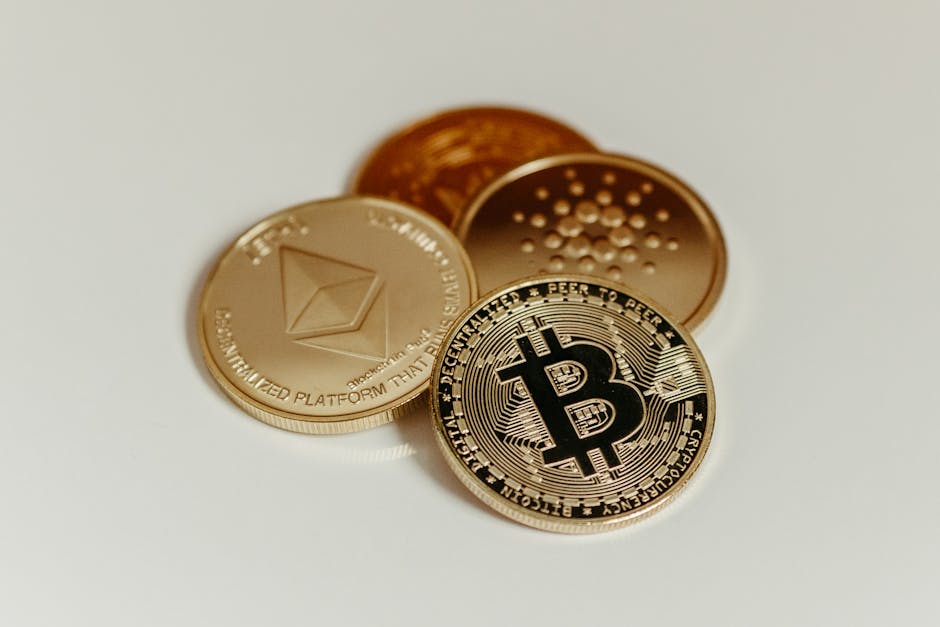
Altcoin Market Overview
The term altcoin refers to any cryptocurrency other than Bitcoin, encompassing thousands of digital assets that have emerged since Bitcoin’s inception in 2009. The broader crypto market now represents a multi-trillion-dollar ecosystem, and altcoins collectively account for a significant portion of total market capitalization. While Bitcoin remains the dominant player by a wide margin, the altcoin market offers exposure to diverse use cases, from smart contract platforms to decentralized finance (DeFi) protocols and enterprise blockchain solutions. Understanding the dynamics of the altcoin market requires awareness of how these assets behave in relation to Bitcoin and the broader macroeconomic environment.
The relationship between Bitcoin and altcoins is complex and often characterized by periods of correlation followed by decoupling. During bull markets, altcoins frequently experience amplified percentage gains compared to Bitcoin, a phenomenon sometimes called the “altseason.” Conversely, during prolonged downturns, altcoins can experience sharper drawdowns as capital rotates back into perceived safe havens within the crypto space. Investors tracking market cycles should monitor Bitcoin’s relative strength as a potential signal for altcoin performance. When Bitcoin dominance—the percentage of total crypto market cap held by Bitcoin—declines noticeably, it historically correlates with increased altcoin activity.
Current market trends show growing institutional interest in select altcoin categories, particularly smart contract platforms with strong developer ecosystems. Layer-1 and Layer-2 networks continue to attract attention, while privacy-focused coins and interoperability protocols represent niche segments with distinct risk profiles. Regulatory developments remain a persistent source of volatility for the entire sector, and investors should monitor policy announcements from major economies, particularly the United States, the European Union, and China. The regulatory environment can shift sentiment rapidly, sometimes erasing gains or creating unexpected buying opportunities depending on the nature of the intervention.
Factors Influencing Altcoin Prices
Altcoin prices are driven by a complex interplay of market forces, sentiment, and fundamental developments. Trading volume and market liquidity serve as foundational indicators of asset health. Highly liquid altcoins with deep order books tend to experience less extreme price slippage during large transactions, while lower-cap assets with thin trading can see dramatic price swings on relatively modest volume. Investors should understand that many altcoins trade primarily against Bitcoin or stablecoins on a limited number of exchanges, which can amplify volatility significantly compared to traditional financial markets.
Hype cycles and media coverage exert considerable short-term influence on altcoin valuations. Social media platforms, cryptocurrency-focused news outlets, and influencer commentary can create feedback loops that drive prices well beyond fundamental values in the short run. Community sentiment on forums and messaging platforms often serves as a real-time barometer for retail interest in specific projects. However, hype-driven rallies are inherently unsustainable, and experienced analysts emphasize the importance of distinguishing between genuine adoption momentum and speculative excess. News events ranging from exchange listings to partnership announcements can trigger sharp price movements within hours.
Technological advancements and real-world adoption remain the primary long-term drivers of altcoin value. Upgrades to blockchain networks, increased transaction throughput, and growing developer activity all signal healthy project momentum. On the flip side, security vulnerabilities, protocol failures, or escalating competition can erode token values rapidly. Geopolitical events and macroeconomic trends also impact altcoin markets, as digital assets increasingly correlate with risk-on and risk-off sentiment in traditional markets. Central bank policy decisions, inflation data, and currency devaluations in emerging markets can redirect capital flows into or out of the cryptocurrency ecosystem.
Understanding Altcoin Volatility
Volatility in cryptocurrency markets refers to the degree to which an asset’s price fluctuates over a given period, typically measured using standard deviation or average true range indicators. Altcoins routinely exhibit volatility levels that dwarf traditional assets like equities, bonds, and commodities. While the S&P 500 might experience daily swings of one to three percent under normal conditions, it is not uncommon for altcoins to move five to fifteen percent in a single day, and larger-cap altcoins sometimes see double-digit percentage shifts within hours. This elevated volatility stems from smaller market capitalizations, thinner order books, and the speculative nature of the investor base.
Comparisons to traditional assets reveal the magnitude of risk involved in altcoin investing. The average annual volatility of major altcoins frequently exceeds that of growth stocks during earnings season, without the benefit of established regulatory frameworks or institutional safeguards. Margin trading and leverage products, which are widely available on cryptocurrency exchanges, further amplify price swings and increase the risk of cascading liquidations. For context, an altcoin experiencing 100% annual volatility could realistically swing thirty percent or more in a single week during periods of market stress. Investors must calibrate position sizes accordingly and avoid over-allocating capital to any single digital asset.
Understanding the causes of extreme volatility helps investors develop appropriate strategies. Liquidity crises, where buyers dry up faster than s rs can absorb positions, create rapid price dislocations. Regulatory crackdowns or exchange outages can trigger panic selling. Whale activity—large-volume transactions by major holders—can create artificial supply-demand imbalances on smaller-cap tokens. Network events such as hard forks, token migrations, or staking unlock periods also introduce temporary volatility. The psychological dimension cannot be overlooked: fear and greed cycles in crypto markets move faster and more violently than in traditional finance, often creating opportunities for disciplined investors who maintain rational frameworks during periods of market euphoria or panic.
Risk Management Strategies for Altcoin Investors
Effective risk management is the cornerstone of sustainable altcoin investing, and no strategy should omit proper diversification and portfolio allocation principles. Rather than concentrating capital in a single or handful of tokens, spreading exposure across multiple projects, sectors, and risk tiers reduces the impact of any individual asset’s failure. A common framework involves allocating a core position to established large-cap assets while dedicating a smaller, defined portion of capital to higher-risk mid-cap and small-cap opportunities. Investors should periodically rebalance to maintain target allocations as price movements naturally shift portfolio weightings over time.
Position sizing and risk-reward analysis determine how much capital should be allocated to any single trade or investment. Professional traders often limit loss per position to one to three percent of total portfolio value, ensuring that even a string of losing trades does not result in catastrophic drawdown. Calculating the risk-reward ratio—comparing potential upside to defined stop-loss levels—helps identify whether a given opportunity justifies the inherent risk. Positions that offer less than a two-to-one reward-to-risk ratio typically fail to compensate for the statistical edge required to be profitable over time, accounting for the high variance in altcoin markets.
Stop-loss orders and other risk mitigation tools provide mechanical safeguards against emotional decision-making during market turbulence. Trailing stop-losses can lock in gains during volatile rallies while protecting against sudden reversals. Take-profit orders help ensure gains are realized rather than surrendered to subsequent drawdowns. Fundamental analysis and thorough due diligence form the int ctual foundation of any sound strategy: investing in projects without understanding their technology, market positioning, or competitive advantages is speculation rather than investing. Investors should maintain a disciplined research process that evaluates both quantitative metrics and qualitative assessments before committing capital.
Analyzing Altcoin Fundamentals
Fundamental analysis for altcoins extends well beyond price charts and trading volume, requiring investors to evaluate the underlying project’s viability and long-term potential. The whitepaper remains an essential starting document, outlining the project’s goals, technical architecture, tokenomics, and roadmap. Investors should critically assess whether the whitepaper solves a genuine problem, offers meaningful innovation compared to existing solutions, and presents a realistic path to adoption. Whitepapers that overpromise while lacking technical depth or concrete milestones warrant skepticism.
The development team represents one of the most critical factors in assessing altcoin fundamentals. Evaluating the experience, credentials, and track record of core contributors provides insight into the project’s likelihood of executing its vision. Open-source projects with active GitHub repositories, regular code commits, and transparent communication channels demonstrate ongoing development effort. Community engagement, including developer participation and ecosystem growth, signals organic interest rather than manufactured hype. Conversely, anonymous teams, stalled development, or leadership changes without clear explanation introduce elevated uncertainty and risk.
Tokenomics—the economics of the token itself—directly influences long-term value appreciation or depreciation. Scarcity mechanisms such as burning, staking, and supply caps create potential deflationary pressure that can support price over time. Demand drivers, including real utility within the project’s ecosystem, transaction fee payments, or governance rights, tie token value to actual use cases rather than pure speculation. On-chain metrics provide objective data points: wallet growth, transaction counts, active addresses, and staking participation rates reveal whether genuine adoption is occurring. Investors should monitor these metrics over time to identify trends, as price appreciation without corresponding on-chain growth often signals speculative excess rather than fundamental strength.
Sentiment Analysis and Trading Signals
Social media sentiment has become an inseparable component of altcoin trading strategies, as platforms like X (formerly Twitter), Reddit, and Telegram host active communities discussing specific projects, market trends, and trading ideas. Positive sentiment surrounding a project can create self-reinforcing buying pressure as retail investors pile in, while negative sentiment or coordinated short campaigns can trigger cascading selloffs. Monitoring follower growth, engagement rates, and trending hashtags provides insights into the level of retail attention directed at specific assets. However, sentiment analysis requires careful interpretation, as coordinated pump-and-dump schemes frequently weaponize social media to mislead traders.
Sentiment analysis tools have proliferated across the cryptocurrency industry, offering quantified metrics derived from social media activity, news coverage, and search trends. These platforms aggregate data from multiple sources and generate sentiment scores that can be compared against historical patterns. While no tool provides perfect predictive accuracy, consistent divergences between sentiment readings and price action can signal potential reversals or continuation opportunities. For example, deeply negative sentiment readings during a market-wide selloff, followed by stabilization, have historically preceded short-term bounces. Investors should use these tools as one input among many, not as standalone trading signals.
Technical analysis remains a widely used methodology for timing entries and exits in altcoin markets, despite debates about its universal efficacy. Chart patterns, moving averages, relative strength indicators, and volume analysis provide frameworks for identifying potential support and resistance levels. Bollinger Bands, RSI (Relative Strength Index), and MACD (Moving Average Convergence Divergence) are among the most commonly referenced indicators in cryptocurrency trading communities. However, technical analysis in altcoin markets must account for thinner liquidity, greater susceptibility to whale manipulation, and the influence of perpetual futures funding rates on price discovery. Combining technical analysis with fundamental research and sentiment monitoring creates a more robust decision-making framework than any single methodology in isolation.
Regulatory Considerations for Altcoin Investors
The regulatory landscape for altcoins continues to evolve rapidly, with major jurisdictions taking distinct approaches to digital asset oversight. In the United States, the Securities and Exchange Commission (SEC) and Commodity Futures Trading Commission (CFTC) have both asserted varying degrees of jurisdiction over different cryptocurrency categories. The SEC has focused on tokens it classifies as securities—digital assets offered through investment contracts—while the CFTC oversees derivative products and has classified Bitcoin as a commodity. European Union markets are adapting to the Markets in Crypto-Assets (MiCA) regulation, which establishes comprehensive frameworks for crypto asset service providers operating within the bloc. These regulatory developments directly impact which altcoins can be listed on regulated exchanges and how they can be marketed to investors.
Regulatory changes create both risks and opportunities for altcoin investors. Enforcement actions against projects deemed non-compliant can trigger dramatic price declines, while clear regulatory pathways can catalyze institutional adoption and price appreciation. News of potential bans, restrictions, or unfavorable tax treatments historically correlates with increased volatility and negative price action across the sector. Investors should maintain awareness of regulatory developments in their home jurisdictions and in major markets that could indirectly impact their holdings. Geographic diversification of crypto holdings can provide some insulation against region-specific regulatory risk.
Frequently Asked Questions (FAQ)
What are the most significant factors contributing to altcoin volatility?
Altcoin volatility stems from multiple interconnected factors: smaller market capitalizations that amplify buyer and s r pressure, lower liquidity on many trading pairs, speculative investor bases prone to herd behavior, and sensitivity to regulatory announcements. Network events, exchange listings or delistings, whale activity, and broader crypto market sentiment all contribute to price swings. Unlike traditional equities, cryptocurrency markets operate around the clock without circuit breakers, meaning price adjustments can occur continuously. Leverage products available on major exchanges also magnify volatility through forced liquidations during rapid moves.
How can investors mitigate the risks associated with altcoin investments?
Risk mitigation requires a multi-layered approach: diversifying across multiple projects and sectors, sizing positions conservatively relative to total portfolio value, using stop-loss orders to cap potential losses, and avoiding over-leverage. Maintaining adequate cash reserves to weather drawdowns without forced selling preserves optionality. Conducting thorough fundamental research before allocating capital and avoiding investments driven purely by social media hype reduces exposure to pump-and-dump schemes. Dollar-cost averaging—systematically buying fixed dollar amounts at regular intervals—smooths entry point variance and reduces the risk of mistiming major market moves.
What are the key considerations when analyzing an altcoin’s fundamentals?
Fundamental analysis should evaluate the project’s whitepaper for technical merit and realistic goals, assess the development team’s experience and transparency, examine tokenomics including supply mechanisms and utility, and review on-chain activity metrics such as active addresses and transaction volumes. Competitive positioning relative to Bitcoin, Ethereum, and other established platforms matters significantly. Investors should also assess ecosystem growth, including developer activity, partnership announcements, and real-world adoption milestones. Red flags include anonymous teams, lack of transparent code repositories, tokenomics that heavily favor insiders, and roadmaps that consistently miss deadlines.
How do regulatory changes impact the altcoin market?
Regulatory changes affect altcoin markets through several channels: direct enforcement actions can eliminate trading venues for specific tokens, classification decisions influence which assets qualify for institutional investment, and tax reporting requirements affect the cost basis for investors. Positive regulatory clarity often catalyzes institutional adoption and price appreciation, while hostile or uncertain regulatory environments can trigger prolonged bear markets. Investors should monitor regulatory developments across major jurisdictions, maintain awareness of their personal reporting obligations, and recognize that regulatory risk is a permanent feature of the cryptocurrency landscape requiring ongoing attention rather than one-time assessment.
Explore more altcoin guides on our site.
Charting & Exchange Resources
| Platform | Use Case | Key Feature | Fee Model | Action |
|---|---|---|---|---|
| TradingView | Charting & technical analysis | Indicators, multi-timeframe charts | Free / Pro tiers | View Platform |
| Coinbase | Exchange (beginner-friendly) | Simple USD on-ramp, educational tools | Varies by region | View Platform |
| Binance | Exchange (advanced pairs) | Wide altcoin coverage, spot markets | Varies by region | View Platform |
Affiliate Disclosure: This post contains affiliate links. We may earn a commission if you buy through our links, at no extra cost to you. Investment Risk Disclaimer: Cryptocurrency and digital asset markets are highly volatile. This content is for informational and educational purposes only and is not financial, investment, or trading advice. You may lose some or all of your capital. Do your own research and consult a licensed financial advisor before making investment decisions.
Leave a Reply